What Time of Year Do Ducks Lay Eggs Naturally?
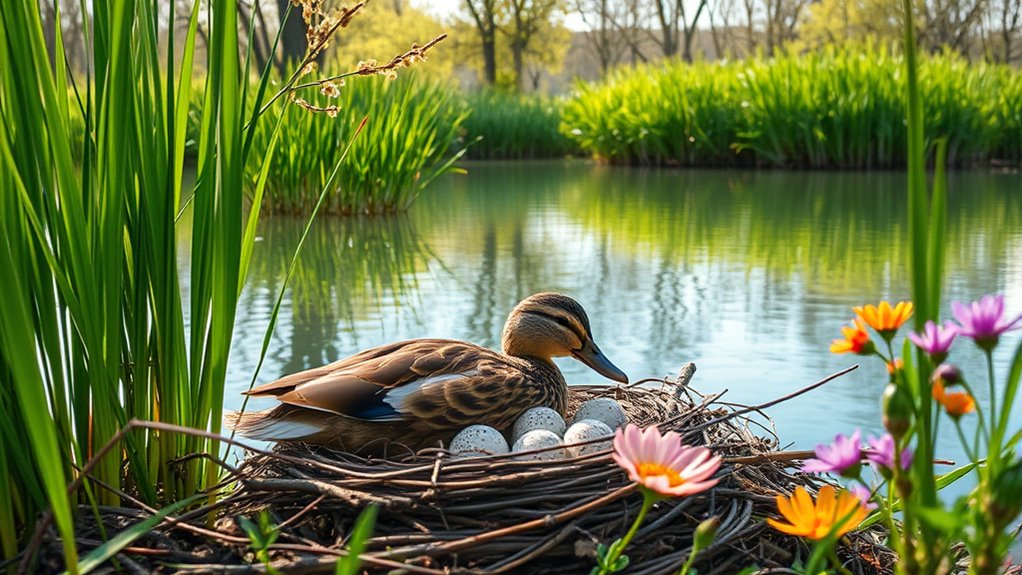
You’ll find ducks naturally laying eggs mainly in spring and early summer when daylight hours lengthen and temperatures warm up. These longer days trigger hormones, prompting ducks to start laying.
As fall and winter bring shorter days and colder weather, ducks slow down or stop laying altogether.
Temperature and breed also influence when they begin, but daylight is key. If you want to understand why these seasonal changes matter and how they affect egg production, keep exploring for more details.
When Do Ducks Typically Start Laying Eggs?

Although the exact timing varies by breed and individual development, ducks typically start laying eggs between 4 to 8 months of age. You’ll notice smaller breeds like Bantams and Runners often begin laying as early as 4 months, while larger breeds such as Pekins and Muscovies usually wait closer to 7 months.
While mating behaviors can start around 3 to 6 months, they don’t directly cause ducks to lay eggs. Instead, seasonal factors like increasing daylight in spring play a big role in signaling when ducks lay eggs.
Plus, environmental conditions and good nutrition can speed up or delay this process. Understanding these factors helps you predict when your ducks will begin their egg-laying season.
How Breed and Age Affect When Ducks Lay Eggs
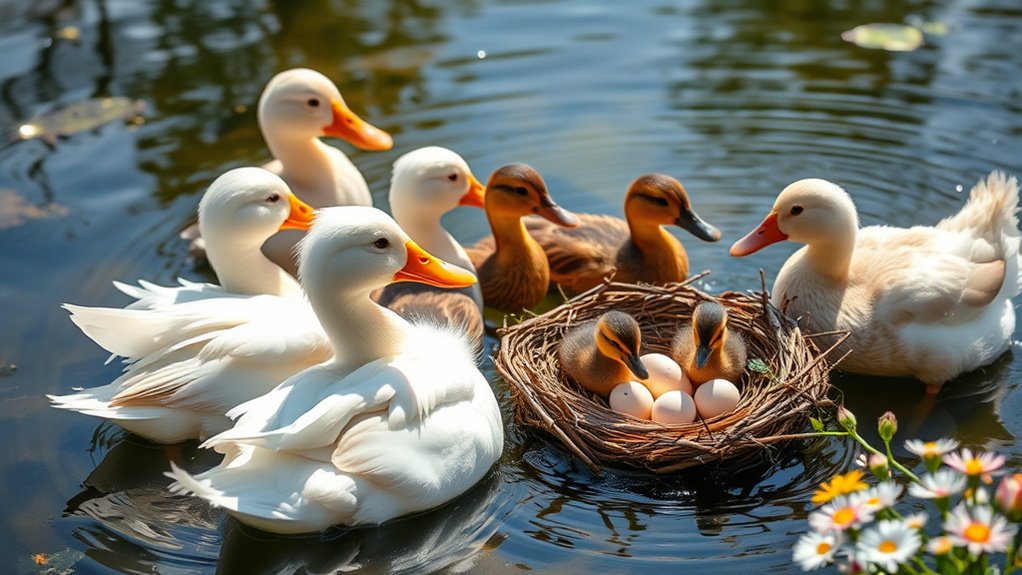
You’ll notice that smaller breeds like Bantams start laying eggs earlier than larger ones such as Pekins. Age plays a big role, with most ducks beginning to lay between 4.5 to 7 months, but individual development can vary.
Understanding these differences helps you predict when your ducks will start producing eggs.
Breed Variations In Maturity
When do ducks start laying eggs, and how does their breed influence this timing? Breed variations in maturity play a key role in when your ducks begin egg production. Smaller breeds usually mature faster, while larger ones take more time.
Here’s what you should know:
- Bantams and Runners often start laying around 4 months.
- Pekins and Muscovies may not lay eggs until 7 months or later.
- Genetic maturity and growth rate vary with breed size.
- Peak laying periods range from 16 to over 28 weeks, depending on breed.
- Individual health and nutrition also impact laying onset.
Understanding these breed variations in maturity helps you anticipate your ducks’ egg-laying schedule and manage their care accordingly.
Age Range For Laying
Because breed and age considerably influence egg-laying, you should expect smaller ducks like Khaki Campbells and Runners to start laying around 4 months, while heavier breeds such as Pekins and Muscovies usually begin closer to 7 months.
Most ducks reach sexual maturity between 4 to 8 months, but genetics can shift this range. When you observe young ducks, watch for signs like swollen vents and visible pubic bones—these often signal that laying is about to start or already has.
Knowing this helps you anticipate when your ducks will begin laying eggs naturally. So, the age range for laying varies, but understanding breed differences and maturity signs lets you better manage and care for your ducks during their egg-laying phase.
Individual Development Differences
Understanding how breed and age affect egg-laying helps explain why individual ducks start laying at different times. You’ll notice that individual development varies widely, so ducks start laying eggs based on a mix of genetics and environment.
For example:
- Smaller breeds like Bantams and Runners often start laying around 4 months.
- Heavier breeds such as Pekins and Muscovies usually begin closer to 7 months.
- Genetic variation means some ducks mature faster or slower than average.
Environmental factors like light, temperature, and nutrition influence when ducks start laying. Some ducks delay laying until they reach full body maturity, which differs individually.
How Seasonal Changes Influence Duck Egg Laying
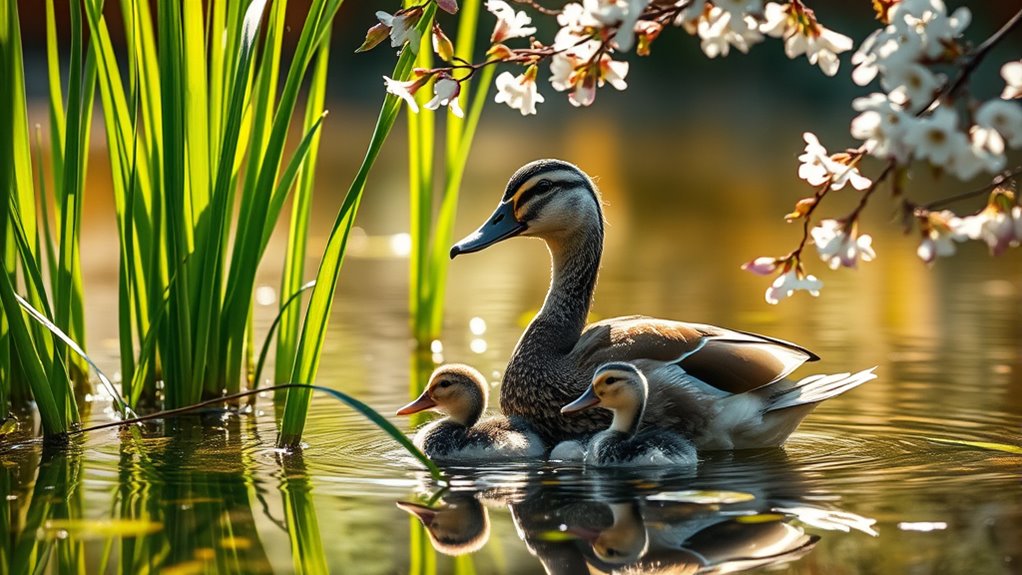
You’ll notice that changes in daylight play a big role in when ducks start laying eggs, as longer days trigger their hormones. Temperature also affects their laying habits, with colder weather slowing down or stopping egg production.
Plus, the timing of a duck’s maturation often aligns with these seasonal shifts to maximize their reproductive success.
Daylight and Egg Production
As daylight hours increase in early spring, ducks ramp up their egg production, responding to the lengthening days. Daylight plays a vital role by stimulating reproductive hormones that trigger egg laying. You’ll notice that in the wild, ducks lay eggs mostly during spring and early summer, when daylight peaks.
If you keep ducks in captivity, artificial lighting can mimic longer daylight hours, extending their laying season. Here’s what daylight means for duck egg production:
- Longer daylight boosts hormone levels for egg development
- Peak laying happens in spring and early summer
- Shorter days signal ducks to reduce or pause laying
- Artificial light can simulate daylight to extend laying
- Natural cycles depend heavily on daylight length changes
Understanding daylight’s impact helps you predict and support your ducks’ laying patterns.
Temperature Effects on Laying
While longer daylight sparks the start of egg laying, temperature plays a significant role in how consistently ducks lay throughout the year. Seasonal temperature drops during fall and winter often cause ducks to stop laying eggs, as cold weather below 40°F forces them to focus on maintaining body heat rather than reproduction.
You’ll notice that in colder climates, egg production slows or halts with the harsh weather. However, by managing the environment with supplemental lighting and warmth, you can help ducks continue laying despite natural seasonal shifts. This combination of proper lighting and controlled temperature mimics spring conditions, encouraging more regular egg laying.
Understanding how climate and temperature interact with lighting helps you support ducks’ natural rhythms and improve egg production year-round.
Maturation Timing and Seasons
Because seasonal changes signal important biological cues, ducks usually start laying eggs in early spring when daylight increases. You’ll notice that this timing aligns with nature’s rhythm, ensuring the best conditions for ducklings to thrive. When you observe ducks, consider these factors influencing when they start laying eggs:
- Increased daylight triggers hormonal changes in ducks.
- Spring’s warmer temperatures encourage maturation and breeding.
- Wild ducks synchronize egg-laying with optimal food availability.
- In fall and winter, shorter days suppress egg production naturally.
- Domestic ducks may lay longer with artificial lighting but still peak in spring.
Understanding these seasonal cues helps you appreciate how ducks’ reproductive cycles adapt to their environment, ensuring their offspring have the best chance of survival.
What Environmental Cues Trigger Ducks to Lay Eggs?
When daylight stretches to about 13-14 hours, ducks receive a clear signal to start laying eggs. This increase in daylight triggers hormonal changes that make ducks and geese start mating and laying. Typically, ducks usually start laying eggs once they reach maturity, which can be around 20 weeks of age, but it’s important to make sure they’re healthy before breeding.
As temperatures rise and fresh vegetation becomes abundant, these environmental cues reinforce the start of the egg-laying season. Keep ducks in conditions that mimic this natural cycle to encourage consistent laying. When daylight shortens or conditions worsen, ducks stop laying.
If you keep ducks like the Muscovy duck, understanding these cues helps you manage their reproductive cycles better. For more tips, feel free to email us.
Why Daylight Length Matters for Duck Egg Laying
As daylight stretches beyond 13 hours, your ducks’ bodies ramp up hormone production to kickstart egg laying. This natural trigger helps them know when to begin producing eggs consistently. Here’s why daylight length matters for your ducks:
- Longer daylight boosts reproductive hormones, stimulating egg formation.
- Ducks start laying eggs in spring as daylight exceeds 12 hours.
- Less daylight in fall signals ducks to slow or stop egg production.
- Artificial lighting can mimic longer days, encouraging eggs even in winter.
- Consistent daylight hours guarantee steady egg laying cycles.
How Temperature Affects Duck Egg Laying Cycles
Although increasing daylight signals your ducks to start laying eggs, temperature plays an essential role in maintaining their production cycles. If temperatures drop below 40°F (4°C), your ducks will slow or even stop laying as they conserve energy to stay warm.
Keeping the environment between 55°F and 65°F (13°C to 18°C) helps them maintain consistent egg production during colder months. When extreme cold or freezing conditions hit, your ducks divert energy from reproduction to thermoregulation, reducing egg output.
To counteract this, you can use artificial heating or controlled environments, which help sustain year-round egg laying by minimizing the impact of low outdoor temperatures. So, managing temperature is crucial for reliable duck egg production beyond just daylight cues.
Why Do Ducks Lay Fewer Eggs in Fall and Winter?
Temperature plays a significant role in your ducks’ egg production, but daylight changes also have a strong influence. During fall and winter, shorter days and colder weather signal your ducks’ bodies to slow down reproductive processes. This natural pause helps them conserve energy when conditions aren’t ideal for raising ducklings.
Here’s why your ducks lay fewer eggs in these seasons:
- Reduced daylight decreases reproductive hormones like estrogen and progesterone.
- Hormonal shifts trigger a break in egg-laying activity.
- Cold temperatures increase energy demands, limiting egg production.
- Food becomes scarcer, affecting their nutrition and laying capacity.
In the wild, ducks focus on breeding only when conditions favor survival, mainly in spring and early summer.
Understanding this helps you align care with their natural cycles.
When Do Ducks Lay the Most Eggs Each Year?
When daylight hours increase in spring, your ducks naturally ramp up egg production. They lay the most eggs from April to June, which is their peak season. This surge happens because longer days and warmer temperatures stimulate hormonal changes that boost laying frequency.
If you provide proper lighting and nutrition, many domestic ducks will keep laying consistently from early spring through mid-summer. However, as daylight decreases in late summer and fall, their egg production slows down.
Understanding this natural cycle helps you create the best environment for your ducks to lay eggs when they’re most productive each year. So, expect the highest egg yield during spring and early summer, aligning with nature’s rhythm.
Frequently Asked Questions
What Months Do Ducks Lay Eggs?
Ducks lay eggs mainly between March and September. You’ll notice they start in early spring as daylight increases and continue through summer, tapering off by early fall when days grow shorter and temperatures drop.
Do Ducks Mate in October?
You might think ducks throw October parties, but they rarely mate then—nature’s way of saying, “Not now!”
Unless you control their environment, they’ll skip October, waiting for spring’s warmer invitation to romance and reproduce.
What Does It Mean When Ducks Are in Your Yard?
When ducks show up in your yard, it means they’re searching for food, water, or shelter.
You might also catch them during breeding season or migration, so it’s a sign your yard offers resources they need.
Can Ducks Have Babies in the Fall?
You know what they say, “Where there’s a will, there’s a way.”
Yes, ducks can have babies in the fall if conditions are right—some breeds lay eggs then, and with proper care, those eggs hatch healthy ducklings.
Conclusion
You might think ducks lay eggs year-round, but they actually lay most eggs in spring and early summer when daylight and temperatures are ideal.
Understanding this natural cycle helps you appreciate why egg production slows in fall and winter.
By knowing how breed, age, and environment affect laying, you can better care for your ducks or simply enjoy observing their rhythms.
Embrace their seasonal patterns—they’re part of what makes ducks so fascinating! Knowing the time of year ducks lay eggs naturally is key to supporting their health and productivity.