
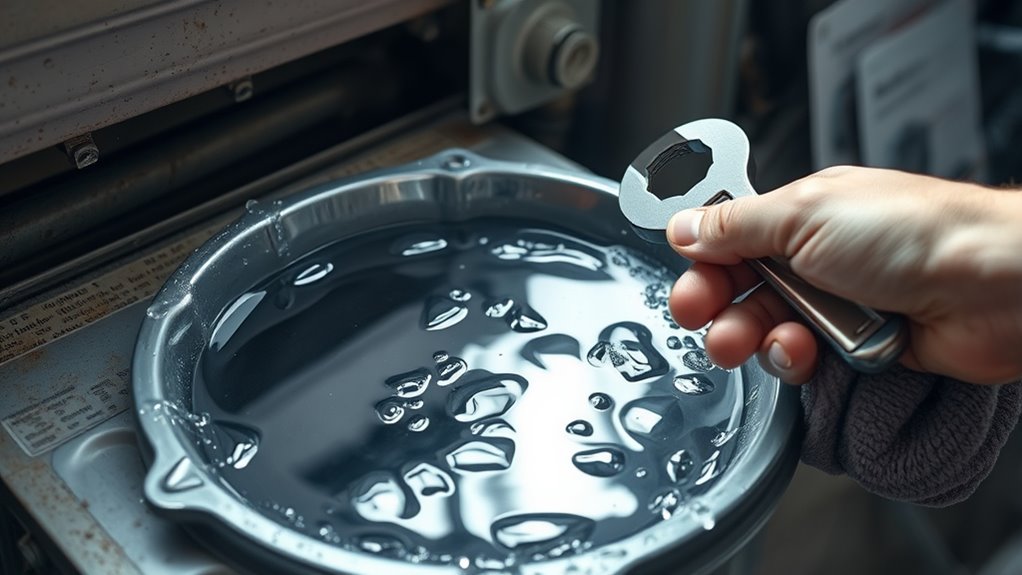
Why Is My AC Drip Pan Filling Up and How Can I Fix It Fast?
Your AC drip pan is filling up because the condensate drain line is likely clogged with algae, dirt, or debris, causing water to back up and overflow. This common issue can lead to water damage if not addressed quickly.
You can fix this fast by turning off your unit, safely draining the pan with a sponge or vacuum, and clearing the drain line using a wet/dry vacuum or vinegar flush.
Dirty filters or frozen coils might also contribute to the problem, so be sure to check those components as well. Regular maintenance helps keep your AC system running smoothly and prevents future clogs.
Keep exploring to find more ways to protect your system and prevent future issues.
Common Causes of AC Drip Pan Water Buildup
When your AC drip pan fills up with water, it’s usually because something’s blocking the normal drainage process. A clogged drain caused by algae, mold, or debris in the condensate drain line often leads to water buildup in the pan.
If the evaporator coil freezes due to restricted airflow or refrigerant issues, it creates excess melting water that causes an overflow. Sometimes, a drain pan full condition results from improper installation or a poor tilt, which prevents water from flowing out properly.
Additionally, a broken condensate pump can’t expel water, causing backups. High humidity can also overwhelm your drainage system, flooding the pan frequently. Understanding these common causes helps you spot why your AC drip pan is filling up and prevents damage from overflow or frozen coil issues.
How to Turn Off and Empty Your AC Drain Pan Safely

Before you start emptying your AC drain pan, make sure you turn off the unit at the thermostat or circuit breaker to avoid electrical hazards. Safety is key when handling water near electrical components.
To empty your drain pan safely, follow these steps:
- Turn off the AC system completely.
- Use a sponge, towel, or wet/dry vacuum to remove standing water.
- Check and clear any clog in the drain line with a wet/dry vacuum.
- Dry the drain pan area thoroughly to prevent mold and damage.
- Reinstall the drain pan cover securely before turning the AC back on.
Clearing Your AC Drain Line: Tools and Techniques
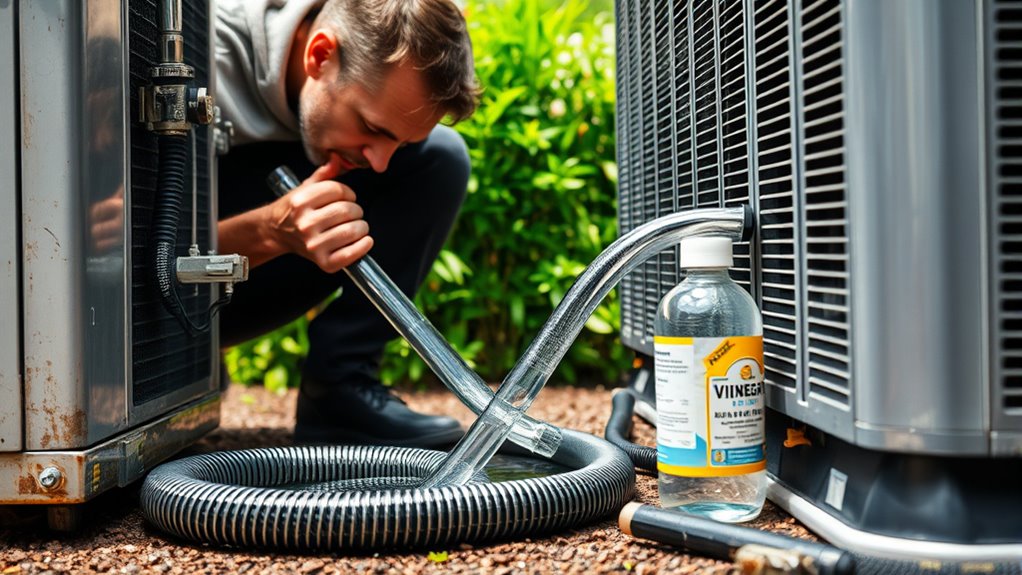
To clear your AC drain line, you’ll need a few essential tools like a wet/dry vacuum, a plumber’s snake, and a brush for regular cleaning. Flushing the line with a vinegar and water mix helps break down buildup and keeps things flowing smoothly.
Making sure the drain line is properly pitched also makes a big difference in preventing clogs.
Essential Drain Line Tools
Although clearing your AC drain line might seem formidable, having the right tools makes the job much easier and more effective. You’ll want to gather equipment that tackles clogs and obstructions efficiently to restore proper flow and prevent your drip pan from filling up.
Here are essential tools to keep on hand:
- Wet/dry vacuum: creates suction to pull out debris causing the clog
- Plumber’s snake: breaks up stubborn blockages resistant to vacuuming
- Air compressor: blows out obstructions and clears tight spots
- Cleaner (vinegar or specialized solution): used to flush and dissolve organic buildup
- Protective gear: ensures safety from mold and debris during maintenance
Always disconnect power before you start working on the drain line to stay safe.
Effective Cleaning Techniques
When you tackle cleaning your AC drain line, using the right techniques guarantees you clear clogs effectively and keep water flowing smoothly. Start by inspecting the drain pan and drain line for algae buildup or any blockage causing it to be clogged. Use a wet/dry vacuum to suck out debris by sealing over the drain opening.
Next, flush the drain line with a cup of vinegar followed by water to dissolve algae and prevent mold growth. For stubborn clogs, insert a pipe cleaner or flexible brush to dislodge buildup. Regularly inspect and clean the drain line every 1-3 months, especially in humid seasons, to maintain proper drainage.
Avoid harsh chemical cleaners—stick with natural solutions to protect your drain line and prevent future drain pan overflow.
How a Clogged Drain Line Causes Water Overflow
When your AC’s drain line clogs with algae, dirt, or debris, water can’t flow out properly and starts to back up into the drip pan. This overflow can cause water damage and even system shutdowns if not addressed quickly.
You’ll need to clear the blockage using tools like a wet/dry vacuum or plumber’s snake to restore proper drainage and prevent further issues.
Causes Of Drain Clogs
Since a clogged drain line stops condensate water from flowing outside, it forces the water to back up into the drip pan. This happens when debris blocking the drain pipe narrows or completely obstructs the flow, causing water overflow.
Common culprits include:
- Algae buildup that thrives in moist environments
- Mold in drain pan contributing to blockages
- Organic matter like dust and dirt accumulating over time
- Debris blocking drain pipe restricting water flow
- Lack of regular cleaning allowing gradual drain line’s blockage
When the drain line clogs, water pressure in the drip pan rises, leading to overflow and potential damage. You might notice musty odors or water pooling near your AC unit as warning signs.
Keeping the drain line clear through regular cleaning helps prevent these issues.
Clearing The Drain Line
Clogged drain lines stop condensate water from exiting your AC system, forcing it to back up into the drip pan and causing overflow. This blockage usually happens because of algae buildup, dirt, or debris inside the drain line’s pipe.
To clear the line, start by using a wet/dry vacuum at the drain outlet to suck out minor clogs. After that, flush the drain with a mixture of vinegar and water. This helps dissolve organic buildup and keeps the line clear.
When the drain pan fills repeatedly, it’s a sign the drain line is still blocked or partially clogged. Regularly flushing the drain and cleaning the drain line’s components prevents future clog buildup, ensuring your AC system drains properly and avoids water overflow issues.
How Dirty Air Filters Lead to Water Buildup
If you don’t replace or clean your air filters regularly, restricted airflow will cause the evaporator coils to freeze and then melt, leading to excess water in the drip pan. Dirty air filters cause airflow restriction, which forces your HVAC system to work harder and raises indoor humidity.
This results in water buildup and a drain pan full of condensate. A clogged filter can cause coil freezing, increasing the risk of overflow. To keep your condensate drain clear and prevent water issues, focus on maintaining clean filters.
Here’s why dirty air filters matter:
- Airflow restriction reduces coil efficiency
- Clogged filter causes coil freezing and melting
- Increased indoor humidity leads to more condensation
- Excess water collects in the drain pan
- Regular filter changes protect your HVAC system and prevent water buildup
How Frozen Evaporator Coils Cause Drain Pan Overflow
When evaporator coils freeze, they trap refrigerant and disrupt heat exchange, causing excess condensation to build up. Frozen evaporator coils lead to ice buildup, blocking airflow and worsening the problem. This ice traps condensate that would normally drain away, causing water to pool.
Once the coils begin thawing, a sudden surge of water runoff pours into the drain pan. If your drain pan overflow occurs, it’s often due to this rapid melt combined with a clogged drain line, preventing proper drainage. Airflow obstruction from dirty filters or blocked vents commonly triggers coil freezing.
To fix this, you need to clear airflow issues and ensure refrigerant levels are correct. Thawing coils temporarily reduces ice, but without addressing the root cause, drain pan overflow will likely return.
Why Poor AC Installation Can Flood Your Drain Pan
Thawing frozen evaporator coils and clearing airflow issues are important steps, but they won’t solve drain pan flooding caused by poor AC installation. If your system was poorly installed, you might face persistent water buildup and flooding in the drain pan.
Thawing coils and fixing airflow won’t stop drain pan flooding from poor AC installation.
Here’s why poor installation can cause these issues:
- An improperly tilted drain pan traps water instead of draining it.
- Misalignment or blockages in the drain line cause water overflow.
- A missing or faulty float switch fails to stop the system during overflow.
- Condensate leaks result from inadequate sealing or insulation.
- Using incompatible parts creates drainage problems and misalignment.
Addressing these installation flaws is key to stopping your AC drip pan from filling up and preventing costly water damage.
Preventive Tips to Keep Your AC Drain Pan Dry
To keep your AC drain pan dry and avoid water damage, you need to take proactive steps that prevent clogs and overflow. First, regularly replace or clean your air filter to prevent a clogged filter, which can cause excess condensation and water pooling around the pan.
Next, inspect the drain frequently and clear the drain line of any buildup. Flushing it periodically with a vinegar solution helps inhibit algae growth and keeps water flowing freely from the drain. Also, keep the outdoor drain exit clear of debris to avoid blockages.
Scheduling regular maintenance with a professional at least once a year ensures the drain and pan stay in good shape. Taking these steps helps prevent clogs and keeps your AC drain pan dry and functioning properly.
When to Call a Professional for Persistent AC Drain Pan Issues
If your AC drain pan keeps filling up even after you’ve cleared clogs and replaced filters, it’s time to call a professional. Persistent issues with a drain pan full of water often point to deeper problems like a clogged drain line or a faulty float switch. Ignoring these can lead to system malfunctions or serious water damage.
You should seek expert help if you notice:
- Repeated overflow despite DIY cleaning
- Signs of leaking refrigerant or a frozen evaporator coil
- Float switch failure causing frequent system shutdowns
- Condensate pump failure hindering proper drainage
- Any suspicion of hidden damage risking your home’s safety
A licensed HVAC technician can diagnose and fix these complex problems safely and efficiently.
Frequently Asked Questions
Why Does My AC Drain Pan Keep Filling Up?
Your AC drain pan keeps filling up because the drain line might be clogged, the pan could be damaged or tilted wrong, or the float switch isn’t working right.
Check and clear clogs, fix the pan, and test the switch.
How to Fix AC Pan Full of Water?
Turn off your AC, then remove standing water from the pan using a sponge or vacuum. Clear the condensate drain line, clean the pan, and replace the air filter to prevent future overflow and keep it running smoothly.
Should There Be Standing Water in an AC Drain Pan?
Oh sure, you want standing water in your AC drain pan—said no one ever.
You shouldn’t have standing water; it means drainage’s clogged. Fix it quickly to avoid mold and system damage before it’s too late.
Will AC Shut off if Drip Pan Is Full?
Yes, your AC will shut off if the drip pan is full, as long as the float switch is working properly.
If it’s faulty, the unit might keep running, risking water damage. Check and maintain it regularly.
Conclusion
Now that you know why your AC drip pan is filling up, you’re ready to tackle the problem fast—no need for a carrier pigeon! From clearing clogged drain lines to changing dirty filters, these quick fixes can prevent water overflow and keep your AC running smoothly.
Remember, regular maintenance is key to avoiding future issues. However, if problems persist despite your efforts, don’t hesitate to call a professional for help.
Stay cool and dry with these simple tips, and ensure your AC drip pan and overall system stay in top condition. Proper care will keep your air conditioner efficient and prevent water damage.