7 Best Pans to Fry Chicken Perfectly Every Time
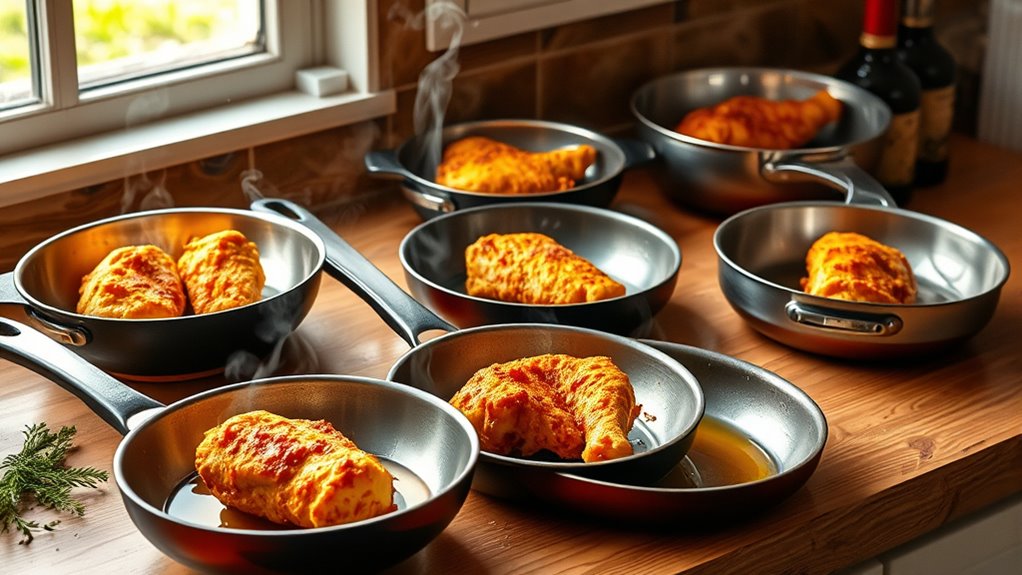
For perfect fried chicken every time, choosing the right pan is essential. Cast iron skillets and enameled cast iron pans provide even heat distribution and help create a crispy crust that’s hard to beat.
Stainless steel pans offer excellent searing control, ideal for achieving that perfect golden-brown finish.
Nonstick pans are great for gently frying delicate chicken pieces without sticking.
A wok is another versatile option, working well for quick, high-heat frying in small batches.
Size matters too—avoid overcrowding the pan to ensure each piece cooks evenly and crisps up nicely.
Mastering the strengths of these pans can truly elevate your fried chicken game, making every batch better than the last.
How to Choose the Best Pan for Frying Chicken
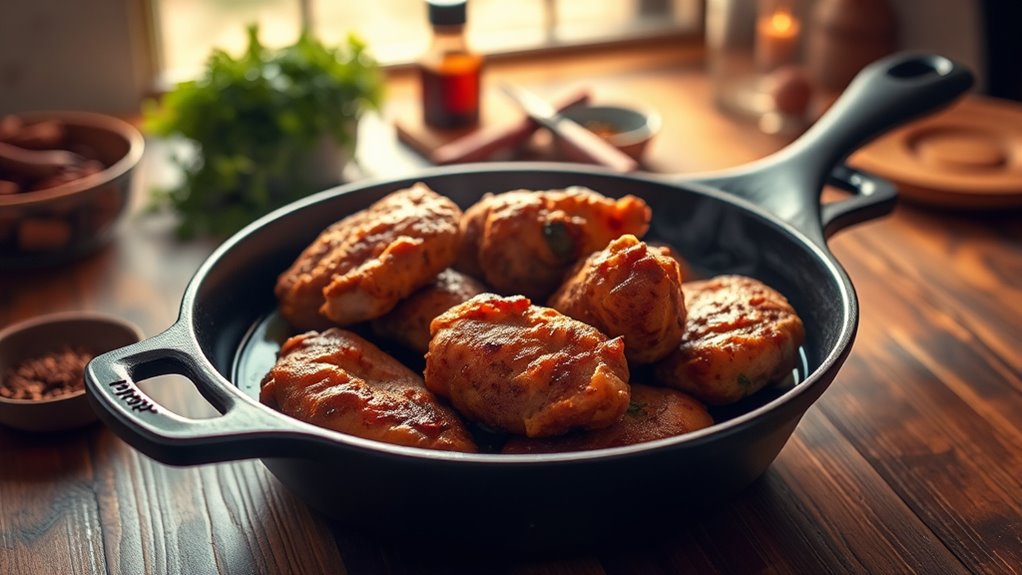
When you want perfectly fried chicken, choosing the right pan is essential. Cast iron pans, like those from Lodge or Le Creuset, are top picks because their excellent heat retention guarantees even cooking and a crispy crust. Stainless steel skillets, such as All-Clad D3, offer precise temperature control, making them great for searing and browning chicken evenly.
Avoid relying solely on a nonstick surface, as it may not handle high heat well for frying. Make sure your pan is properly preheated with enough oil; this helps prevent sticking and seals in moisture. While the size of the pan matters, matching it to your batch ensures even cooking and enough airflow.
With the right pan, your fried chicken will turn out tender and golden every time.
Choosing the Right Pan Size and Shape
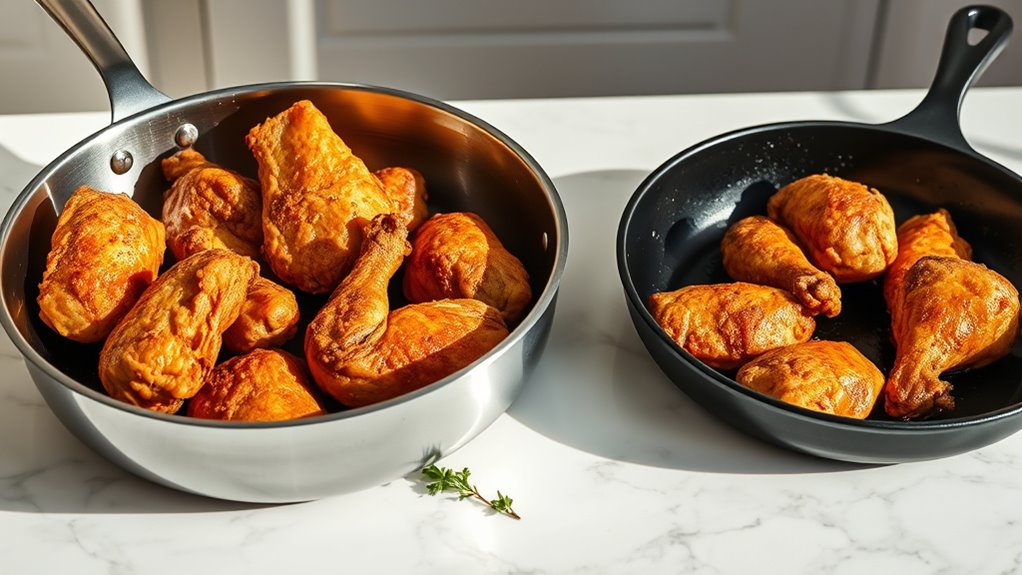
Picking the right pan size and shape plays an essential role in frying chicken perfectly. For 2-3 people, a 10-inch skillet offers enough surface area to avoid overcrowding, which is critical to prevent steaming. If you’re cooking for a crowd, a 12-inch or larger pan works best to keep pieces separated.
Wide, shallow pans promote even heat distribution and encourage a crisp sear by allowing moisture to evaporate quickly. On the other hand, pans with high sides, like Dutch ovens, are ideal for larger batches since they reduce splattering and contain the oil safely.
Choosing the correct pan size and shape ensures your chicken fries evenly, with a golden, crispy crust every time—avoiding overcrowding is key to maintaining that perfect texture and flavor.
Why Cast Iron Skillets Are Perfect for Frying Chicken
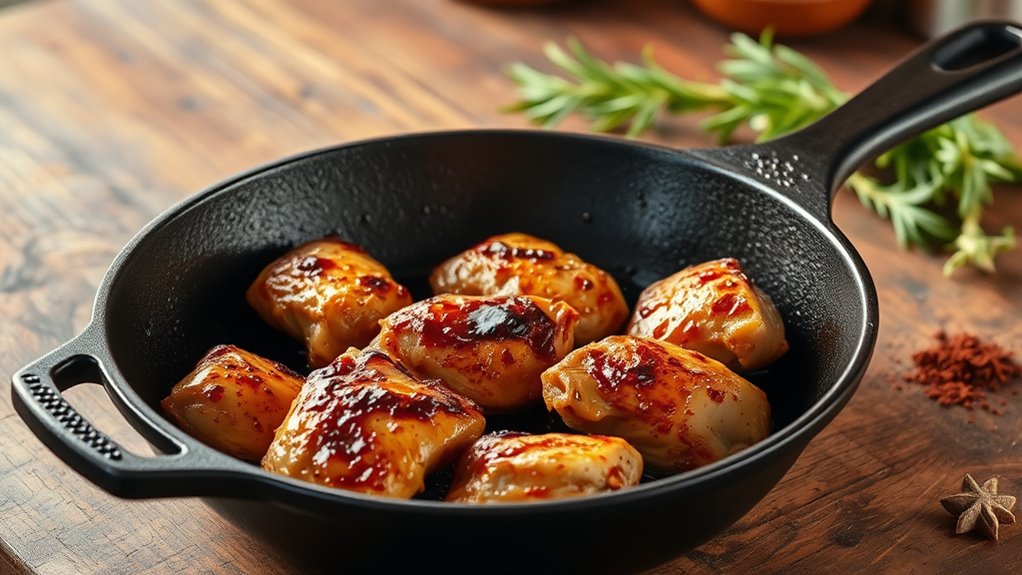
You’ll love how cast iron skillets hold heat so well, giving your fried chicken an even, crispy crust every time. Their natural nonstick surface, developed through seasoning, makes flipping and removing chicken a breeze.
With these features, cast iron is a reliable choice for perfect frying.
Superior Heat Retention
Because cast iron skillets retain heat exceptionally well, they keep the frying temperature steady, ensuring your chicken cooks evenly every time. This pan material’s superior heat retention means it holds a consistent temperature even when you add cold chicken pieces, preventing the oil from cooling down too much.
When frying chicken, that steady heat helps create a perfect sear and crispy crust without soggy spots. Plus, cast iron reduces hot spots, so every piece browns uniformly. Unlike thinner pans that struggle to maintain heat, cast iron’s high heat capacity means you won’t have to constantly adjust the stove.
If you want reliably crispy, golden fried chicken, using a cast iron skillet gives you a clear advantage through its excellent heat retention and temperature consistency.
Natural Nonstick Surface
When you season a cast iron skillet regularly, it develops a natural nonstick surface that only gets better with use. This seasoned surface acts like a durable nonstick coating, allowing you to fry chicken without it sticking, even at high temperatures. The porous nature of the cast iron skillet enhances oil retention, which not only boosts the nonstick properties but also promotes even heat distribution.
This combination ensures your chicken browns beautifully, developing a crisp, golden crust every time. Unlike synthetic coatings, the natural nonstick surface of cast iron withstands intense heat without degrading, so you can fry with confidence. With proper maintenance—cleaning and oiling—you’ll keep this surface in top shape, making your cast iron skillet perfect for frying chicken to perfection every time.
Enameled Cast Iron for Easy, Even Frying
Enameled cast iron pans, like those from Le Creuset, offer three key benefits that make frying chicken easier and more reliable: even heat distribution, a non-reactive surface, and low maintenance. Thanks to even heating, your chicken cooks uniformly with a crispy crust.
The enamel coating is rust resistant and easy to clean, so no seasoning or special care is needed. Plus, these pans support versatile cooking, going seamlessly from stovetop to oven.
| Feature | Benefit | Why It Matters |
|---|---|---|
| Even Heating | Consistent frying temp | Avoids unevenly cooked spots |
| Low Maintenance | No seasoning required | Saves time and effort |
| Versatile Cooking | Stovetop to oven use | Perfect for sear and finish |
With enameled cast iron, frying chicken becomes simple and foolproof.
How Stainless Steel Pans Help You Get a Perfect Sear
While enameled cast iron offers even heating and easy maintenance, stainless steel pans bring a different advantage to frying chicken: achieving a perfect sear. Stainless steel heats quickly and evenly, giving you precise control over the searing temperature. By preheating your pan before adding oil, you create a non-stick surface that promotes excellent browning.
These pans handle high heat well, essential for developing that deep, caramelized crust on your chicken. As you cook, the fond—the flavorful browned bits—builds up, enriching your dish’s taste. Plus, stainless steel pans are durable, resisting warping even with frequent high-heat cooking.
Using a quality stainless steel pan ensures consistent, restaurant-quality searing results every time you fry chicken.
When Does a Wok Work Best for Fried Chicken?
Because of its unique shape and quick heating ability, a wok works best for frying small batches of chicken that need a crispy, evenly cooked exterior. The wok’s high, sloped sides promote quick temperature changes and even cooking, making it perfect for frying chicken with precision.
When you use a wok, its rounded design lets you toss and stir-fry the chicken pieces easily, ensuring they cook uniformly without sticking. Thanks to its thin, concave bottom, the wok heats rapidly over high heat, allowing you to maintain control and achieve that perfect crispy crust.
If you want quick, flavorful fried chicken using high heat, a wok is your go-to pan for consistent, professional results every time.
Nonstick Pans for Frying Chicken: When to Choose Them and What to Expect
You’ll want to choose a nonstick pan when easy cleanup and gentle cooking matter most, but keep in mind it won’t give you that deep, crispy sear like cast iron can.
These pans work best at medium heat and need a bit of extra care to protect their coating and extend their lifespan. Knowing these limits helps you get the best results without wearing out your pan too quickly.
Benefits Of Nonstick
When should you reach for a nonstick pan to fry chicken? You’ll want one when quick release and easy cleanup matter most, especially with delicate cuts like chicken breasts or tenders. Nonstick pans make frying simpler since they’re easy to maneuver and require less oil, helping you achieve a healthier meal without sticking issues.
The surface ensures your chicken slides right off, which means less frustration flipping or transferring pieces. Cleanup is a breeze because food residue doesn’t cling stubbornly. Keep in mind, though, that these pans work best at medium or medium-low heat to protect the coating.
While nonstick pans excel at gentle frying and quick release, they’re less suited for heavy searing or deep browning. Overall, they’re a convenient choice for everyday chicken frying.
Limitations For Searing
Although nonstick pans excel at frying delicate chicken pieces, they fall short when it comes to high-heat searing. You’ll face coating degradation if you push a nonstick pan beyond moderate heat. It can’t handle the oven temperatures needed to finish a perfect sear.
Plus, its non-reactive surface won’t develop the deep crust you get with cast iron. For true searing, cast iron is the better choice.
| Feature | Nonstick Pan | Cast Iron |
|---|---|---|
| High-Heat Searing | Not recommended (coating degrades) | Ideal (withstands high heat) |
| Oven Temperatures | Limited (may damage coating) | Excellent (great for finishing) |
| Surface Reaction | Non-reactive (less browning) | Reactive (deep crust formation) |
Maintenance And Longevity
Nonstick pans offer great convenience for frying chicken, especially when you want quick clean-up and gentle cooking. To guarantee your pan’s longevity, focus on proper care and maintenance. Always hand-wash your nonstick pan to protect the delicate nonstick coating, avoiding the harshness of dishwashers.
Steer clear of metal utensils, which can scratch and degrade the surface over time. Be mindful of temperature limits; overheating your pan frequently weakens the coating and shortens its lifespan. While nonstick pans excel at easy release and cleaning, they aren’t designed for high-heat searing or oven use beyond specified limits.
Frequently Asked Questions
What Is the Best Type of Pan to Fry Chicken In?
You’ll want a cast iron skillet for frying chicken because it retains heat evenly and develops a natural nonstick surface. It helps you get that perfect crispy crust every time while ensuring even cooking throughout.
Cast iron skillets hold temperature well, which is key for frying. This means your chicken cooks evenly without hot spots. Plus, with proper seasoning, the surface becomes naturally nonstick, making it easier to flip and remove the chicken.
How to Pan Fry Chicken so It’s Not Tough?
You’ll keep chicken tender by cooking it over medium heat, avoiding overcrowding, and using a meat thermometer to hit 165°F.
Let it rest after frying so juices redistribute, preventing toughness and ensuring juicy, flavorful meat.
Is It Better to Cook Chicken in a Glass or Metal Pan?
You’ll want to use a metal pan to cook chicken since it heats quickly and evenly. It helps you get that perfect crispy, browned exterior, unlike glass pans, which heat slower and can cause uneven cooking.
Is It Better to Fry in Stainless Steel or Nonstick?
You’ll prefer stainless steel for frying chicken if you want a crispy, evenly browned crust and high heat control.
Use nonstick if you’re cooking delicate pieces or want easier cleanup, but it won’t sear as well.
Conclusion
Now that you know which pans work best for frying chicken, are you ready to elevate your cooking game? Whether you choose a cast iron skillet for its heat retention or a nonstick pan for easy cleanup, the right pan makes all the difference.
Remember, the perfect pan helps you achieve that crispy, golden crust every time. So, why settle for less when you can fry chicken perfectly every time? Using the best pans to fry chicken ensures delicious results with every bite.