
Why Is My AC Drain Pan Full of Water and How Do I Fix It
Your AC drain pan fills with water mainly because the drain line is clogged with debris or algae, causing water to back up. Dirty air filters and frozen coils can also increase condensation, overwhelming the pan. Understanding why your AC drain pan is full of water is key to fixing the issue promptly.
To fix it, clear the drain line using vinegar or a wet/dry vacuum, replace filters regularly, and check for proper drain pan tilt. Regular maintenance helps prevent blockages and keeps your system running smoothly.
If problems persist, having a technician inspect your system is best.
Keep going to explore effective prevention and maintenance tips that will protect your AC unit and ensure it operates efficiently throughout the year.
What Causes an AC Drain Pan to Fill With Water?
If your AC drain pan is full of water, it’s usually because something is blocking the normal flow of condensation. A clogged drain line is the most common cause, often due to debris, algae, or organic material buildup preventing water from draining properly. When this happens, water backs up, causing water buildup and an overflowing drain pan.
Another culprit could be a frozen evaporator coil; when it thaws, excess water can flood the pan. Low refrigerant levels or system issues often lead to coil freezing, worsening the problem. Additionally, improper installation or a poorly tilted drain pan may hinder drainage.
Regular system maintenance, including clearing drain lines and inspecting components, can help prevent your drain pan from filling with water and avoid costly damage.
How to Spot Signs Your AC Drain Pan Is Overflowing
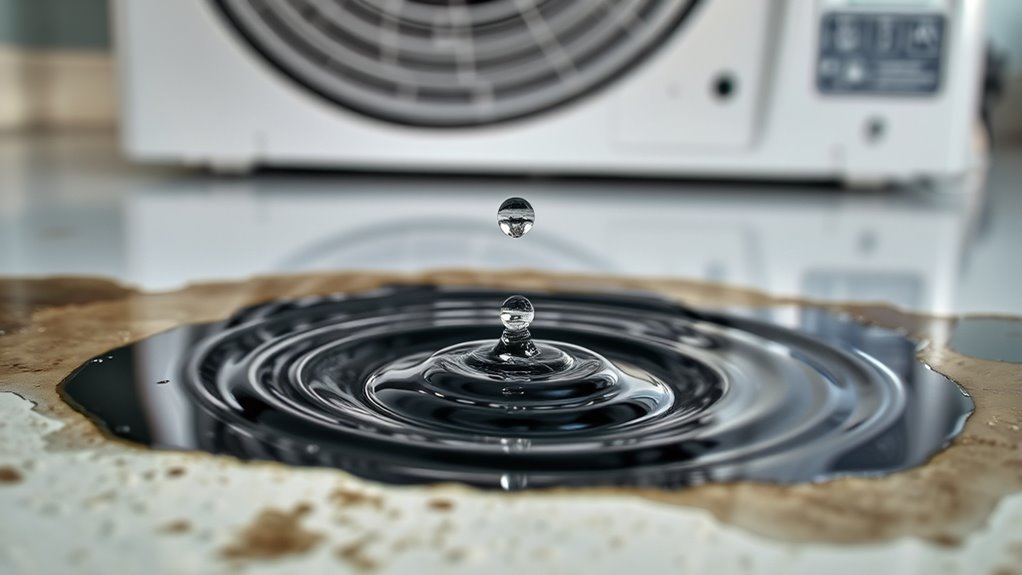
When your AC drain pan starts overflowing, you’ll often notice visible water pooling or even leaking around your indoor unit. This overflow usually means the drain pan is clogged or full. Pay attention to musty odors near the system—standing water trapped in the drain pan often causes that smell.
You might also see water leaks or damp spots around the air handler, clear signs of an overflowing drain pan. Another clue is if your AC frequently shuts down or shows error alerts, which can happen when water overflow affects the system. Frost or ice buildup on the evaporator coils can also indicate drainage issues that lead to overflow.
Spotting these signs early helps prevent damage and keeps your AC running smoothly.
Why Does a Clogged AC Drain Line Cause Water Buildup?
Because a clogged AC drain line blocks the flow of condensate, water has no way to exit and backs up into the drain pan. When debris, algae, or dirt cause a blockage in the drain line, condensate can’t drain outside as it should. This leads to water buildup in the drain pan, which may overflow and cause leaks.
If you notice musty odors or your AC shutting down, a clogged drain line could be the culprit, as safety features try to prevent water damage. To fix this, regularly clean or flush the drain line using vinegar or a wet/dry vacuum. Doing so prevents blockage and keeps condensate flowing freely, avoiding water buildup and potential damage to your system.
How Dirty Air Filters and Frozen Coils Affect Your AC Drain Pan
Although you might not realize it, dirty air filters can cause your AC evaporator coil to freeze up, leading to serious problems with your drain pan. When air filters get clogged, airflow over the coil reduces, causing frozen coils to develop ice buildup. As the ice melts, excess water drains into the pan, increasing the risk of water overflow.
Additionally, restricted airflow prevents proper condensation drainage, causing water to accumulate in the drain pan. Repeated freezing due to neglected air filters worsens this issue, potentially damaging your system.
To prevent these problems, prioritize regular system maintenance by replacing air filters on schedule. This simple step keeps frozen coils at bay and guarantees your drain pan functions properly, avoiding costly repairs and water damage.
How Improper Installation Leads to AC Drain Pan Overflow
If your AC drain pan isn’t installed correctly, you’ll likely face overflow problems that can cause water damage. Improper installation often leads to a tilted drain pan, which disrupts proper water drainage and results in drain pan overflow. When the drain line isn’t aligned or sealed correctly, clogs and backups can cause water to pool in the pan.
Without a proper slope for the drain line, water stagnates, increasing overflow risk. Additionally, incorrect placement or poor sealing of the pan can cause leaks and water accumulation. Using untrained technicians may overlook these critical issues, worsening the problem.
Regular system maintenance can help spot installation flaws early, but ensuring proper installation from the start is key to preventing AC drain pan overflow.
How to Safely Clear and Empty Your AC Drain Pan
Before you start, make sure to turn off your AC and disconnect the power for safety. Use a wet/dry vacuum to remove the water from the drain pan carefully, then clear any blockages in the drain line with a vinegar solution or pipe cleaner.
Finally, clean out debris and dry the area to prevent future overflow issues.
Drain Pan Water Removal
When you notice your AC drain pan is full of water, you should first turn off the air conditioner and disconnect the power to guarantee your safety. For effective drain pan water removal, use a wet/dry vacuum to suck out standing water and dislodge debris that may cause a clogged drain line.
Next, flush the drain line with a vinegar-water mix to clear organic buildup. Wipe the pan clean to prevent mold growth and dry the surrounding area thoroughly before restoring power.
| Step | Tool/Material | Purpose |
|---|---|---|
| Turn off power | None | Ensure safety |
| Remove water | Wet/dry vacuum | Clear standing water |
| Flush line | Vinegar and water | Remove buildup |
| Clean pan | Cloth or sponge | Prevent mold |
| Dry area | Towel | Avoid water damage |
Clearing Drain Line Blockages
Although clearing a clogged AC drain line might seem formidable, you can safely handle it by turning off your unit and disconnecting the power first. A clogged drain line often causes a drain pan full of water and leads to water overflow, so it’s vital to clear the line promptly to maintain your system.
Follow these steps to clear the line:
- Use a wet/dry vacuum at the drain line’s exterior to suction out debris causing blockages.
- Pour a vinegar and water mixture or a commercial pipe cleaner into the drain line to dissolve algae and grime.
- Insert a flexible wire or pipe cleaner to dislodge stubborn clogs, then flush with water.
- Schedule regular system maintenance by inspecting and cleaning the drain line every 3 to 6 months to prevent future water overflow.
Preventive Maintenance Tips to Keep Your AC Drain Pan Dry
You can keep your AC drain pan dry by regularly replacing air filters and cleaning the drain line every few months to prevent clogs. Make sure to schedule professional inspections at least once a year to catch any hidden issues early.
Taking these steps helps your system run smoothly and avoids water buildup.
Regular Filter Replacement
Since your AC’s filter directly affects airflow, changing it every 1 to 3 months helps prevent dust buildup that can block air and cause the coils to freeze or produce excess condensation. Proper filter replacement is a key part of system maintenance to keep your drain pan dry.
Here’s what you need to do:
- Replace filters regularly to maintain steady airflow across the evaporator coil.
- Use high-quality, correctly sized filters for better filtration and efficiency.
- Avoid neglecting filter changes to prevent humidity buildup and excess condensate.
- Schedule filter replacement as part of routine maintenance to stop ice formation on coils.
Following these steps ensures your AC runs smoothly, preventing water overflow in the drain pan and extending your system’s lifespan.
Drain Line Cleaning
How often do you check your AC’s drain line? A clogged drain line is a common cause of water buildup in your AC drain pan. To prevent blockages, regularly flush the drain line with a mixture of vinegar and water. This helps stop algae and mold from forming.
Use a wet/dry vacuum to remove any debris that might be blocking the line, ensuring water flows freely. Don’t forget to inspect the drain line cap and replace it if it’s damaged or leaking, maintaining a sealed system. Keep the area around the drain line clean and dry to reduce the risk of future clogs.
Regular drain line cleaning is key to keeping your AC running smoothly and your drain pan dry.
Professional System Inspections
Although regular maintenance can help, scheduling professional system inspections is essential to keep your AC drain pan dry and functioning properly. These inspections catch early signs of drainage problems before water buildup causes overflow. During routine maintenance, HVAC technicians clean and flush the condensate drain line to prevent clogs.
They also check the drain pan’s tilt and integrity to ensure proper drainage. Professional assessments can identify hidden issues like refrigerant leaks or coil freezing that contribute to water buildup. To keep your system in top shape, focus on:
- Scheduling regular system inspections with a qualified technician
- Ensuring thorough cleaning of the drain line to avoid clogs
- Verifying the drain pan’s proper alignment and condition
- Detecting and addressing underlying problems early
These steps reduce water damage risk and extend your AC’s lifespan.
When to Call a Professional HVAC Technician for Drain Pan Issues
If you notice persistent water buildup or overflow in your AC drain pan, you should call a professional HVAC technician right away. This often signals a clogged drain line or a system malfunction that needs expert attention. Don’t ignore frequent water overflow or recurring water buildup, as these issues can cause significant damage if left untreated.
Additionally, if your AC frequently shuts down or shows error codes related to drainage, a professional HVAC specialist can diagnose and fix underlying problems. Avoid trying complex repairs yourself; licensed technicians have the tools and skills to safely resolve drainage issues.
Regular professional maintenance also helps prevent future drain pan problems and keeps your AC running efficiently without risking costly water damage.
Common Mistakes That Cause AC Drain Pan Overflow and How to Avoid Them
When you overlook small leaks or try quick fixes like chemical drain cleaners, you increase the chance of your AC drain pan overflowing. Avoid these common mistakes to prevent drain pan overflow:
- Neglecting system maintenance: Skipping routine tasks like changing a dirty air filter or cleaning the condensate line leads to blockages and water buildup.
- Ignoring a clogged condensate line: Letting clogs persist causes water to back up into the drain pan, increasing overflow risk.
- Delaying repairs on a frozen coil: A frozen coil can cause excess condensation, overwhelming the drain pan’s capacity.
- Attempting DIY repairs without proper knowledge: This can worsen issues or damage components, leading to bigger problems.
Stay proactive with maintenance and call a professional when needed to keep your AC draining properly.
Frequently Asked Questions
What to Do if an AC Pan Is Full of Water?
Turn off your AC, then carefully remove the water from the pan. Clear the drain line using a vacuum or vinegar, check for blockages, and guarantee proper drainage.
Call a technician if the problem persists or worsens.
Why Is There so Much Water in My AC Drip Pan?
You’ve got a mini indoor lake because your AC’s drainage isn’t keeping up. It’s likely clogged or tilted, causing water to gather.
Check for blockages, frozen coils, or damage to get things flowing smoothly again.
Should There Be Standing Water in an AC Drain Pan?
You shouldn’t have standing water in your AC drain pan. A little moisture is normal, but if water pools, it means the drain line’s clogged or blocked.
You’ll want to clean and clear it promptly to avoid damage.
How Do I Unclog My AC Drain Pan?
Don’t put off till tomorrow what you can do today: use a wet/dry vacuum to clear water, pour vinegar solution to dissolve buildup, and inspect the drain line.
Call a pro if clogs persist to avoid damage.
Conclusion
If your AC drain pan is full of water, don’t let it become a ticking time bomb. Regularly checking for clogs, replacing dirty filters, and ensuring proper installation can keep your system running smoothly.
Think of your drain pan as the unsung hero—when it’s working right, everything stays cool and dry. But if you spot trouble or feel overwhelmed, don’t hesitate to call a professional.
Taking action now saves you headaches later. Proper maintenance of your AC drain pan is essential to prevent water damage and ensure your air conditioning system functions efficiently.