

Why Is My AC Pan Filling With Water and How to Fix It
Your AC pan fills with water mainly because the drain line is clogged with dirt or algae, the float switch isn’t working properly, or your evaporator coils have frozen and melted. These common issues cause water buildup that can damage your system or home.
You can fix it by clearing the drain line with a vacuum, checking the float switch, cleaning or replacing dirty filters, and inspecting the drain pan for damage.
Proper maintenance helps prevent future issues and ensures your AC runs efficiently.
Keep exploring to discover how to troubleshoot and avoid water buildup effectively, protecting your air conditioning unit from further problems.
Common Causes of a Full AC Drain Pan
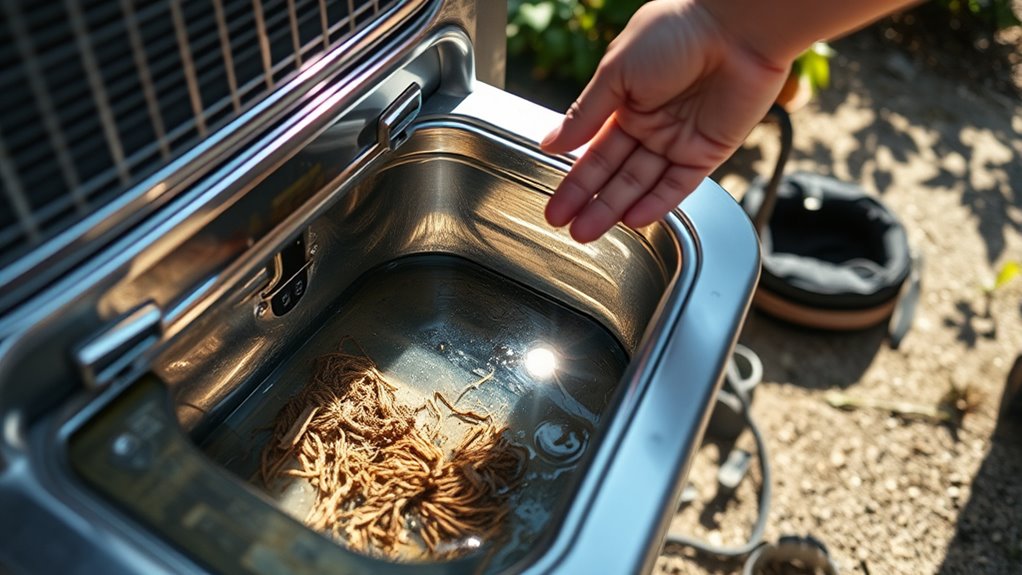
When your AC drain pan fills up, it’s often because the drain lines are clogged with algae, dirt, or debris, preventing water from flowing out properly. A clogged drain pipe blocks the condensate drain line, causing water to back up into the drain pan.
You might also face issues with a frozen coil due to dirty air filters restricting airflow; when the coil thaws, excess water can overflow the pan. Besides clogs, malfunctioning condensate pumps and misaligned drain components can cause water to accumulate in the drain pan.
High humidity levels can produce more condensate than the system can drain, filling the pan quickly. Understanding these common causes helps you pinpoint why your AC drain pan is filling with water and take steps to fix it.
How a Clogged AC Drain Pan Drain Line Causes Overflow
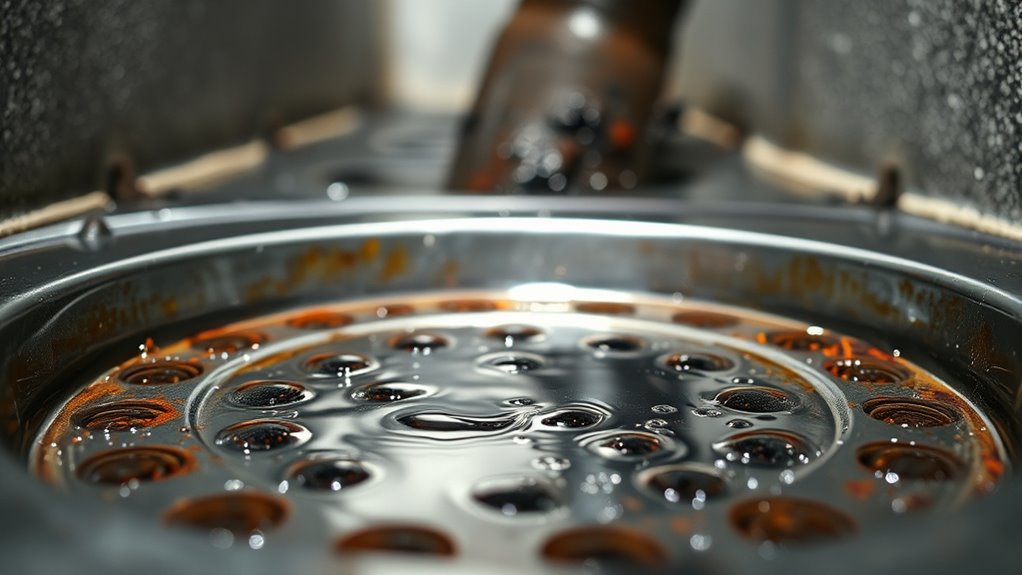
If your AC drain line gets clogged with dirt, algae, or debris, water can’t flow out properly and starts backing up into the drain pan. You might notice water pooling or even leaking near your indoor unit as a clear sign of blockage.
To fix this, you’ll need to clear the drain line using a vacuum or plumber’s snake before the overflow triggers your system’s safety shutoff.
Causes of Drain Clogs
Because algae, dirt, and debris gradually build up inside your AC drain line, water flow can become obstructed, leading to clogs. This algae buildup, combined with accumulated sludge and mineral deposits, creates a stubborn blockage that stops condensate from draining properly.
When your clogged drain line blocks water flow, the water backs up into the drain pan. If the blockage isn’t cleared, this causes water overflow, which can damage your home and might even shut down your AC system.
External elements like leaves or dirt can also enter the drain outlet, worsening the clog. Without regular cleaning and maintenance, these factors contribute to persistent drain line blockages, so staying on top of them is key to preventing water overflow in your drain pan.
Signs of Drain Blockage
Although your AC system quietly works to keep you comfortable, a clogged drain pan drain line can quickly cause water to overflow and create noticeable problems. When the drain line is clogged with algae, dirt, or debris, water can’t exit the drain pan, leaving the drain pan full and causing overflow.
You might notice water pooling around your indoor unit or detect musty odors—a clear sign of blockage. If ignored, this overflow can lead to water damage and even mold growth. In some cases, your system may shut down to prevent further issues.
Recognizing these signs early helps you act before serious damage occurs, keeping your AC running smoothly and your home dry.
Clearing the Drain Line
When water can’t flow freely through the drain line, it backs up into the AC drain pan, causing overflow and potential damage. A clogged drain pan often results from algae, dirt, dust, or mold buildup inside the drain line. To fix this, you need to clear the line to prevent water buildup.
Start by using a wet/dry vacuum at the drain outlet to suck out debris. If the clog is stubborn, insert a plumber’s snake or flexible brush to break it up. After clearing the blockage, flush the drain line regularly with a bleach or vinegar solution to keep it clean and prevent future clogs.
Taking these steps will help maintain proper drainage and avoid water overflow in your AC pan.
How Dirty Air Filters Lead to Water in Your AC Drain Pan
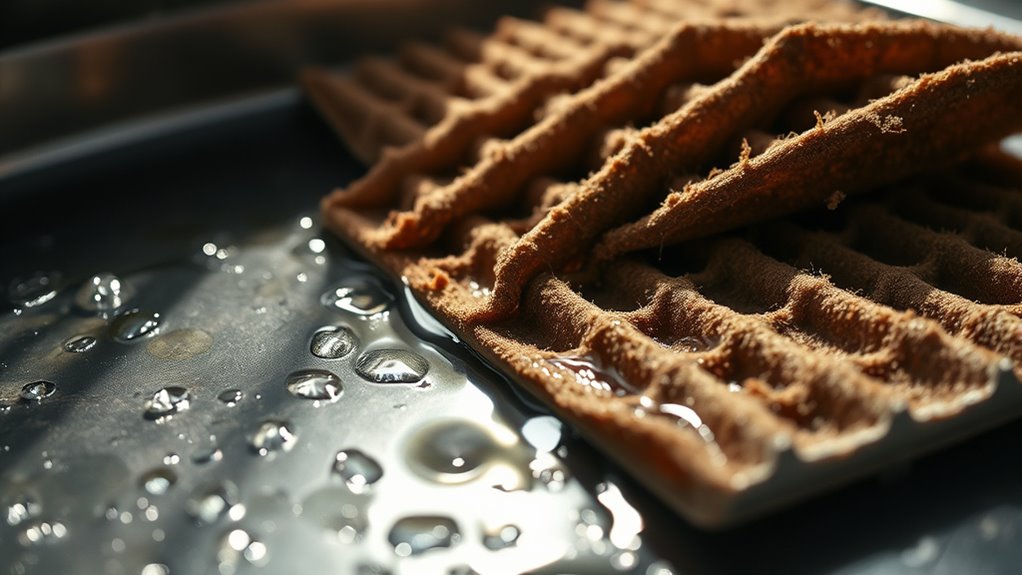
When your air filter gets dirty, it blocks airflow and causes the evaporator coil to freeze. Once the ice melts, excess water drips into the drain pan, risking overflow.
Keeping your filters clean helps prevent this cycle and protects your AC system.
Filter Clogging Effects
If you don’t replace your air filter regularly, dust and debris will build up and restrict airflow across the evaporator coil. This filter clogging reduces the coil’s ability to absorb heat efficiently, causing it to get too cold. As a result, water can accumulate excessively in the drain pan, leading to drain pan overflow.
When the evaporator coil can’t function properly due to a dirty air filter, your AC system works harder, which increases the risk of water buildup. To prevent these issues, make sure you check and replace your air filter about every 90 days. Doing so keeps airflow steady, protects the evaporator coil, and avoids water spilling into your drain pan from filter clogging problems.
Ice Formation Risks
Because dirty air filters restrict airflow over your AC’s evaporator coil, the coil can get too cold and freeze. These frozen coils block proper condensate drainage, causing excess water to build up in the drain pan. When the ice melts, it suddenly releases a large amount of water, which can lead to drain pan overflow.
This ice formation not only disrupts your AC’s efficiency but also creates a risk of water damage. To avoid these issues, you should regularly replace or clean your air filters.
- Dirty filters reduce airflow by 15-20%
- Restricted airflow causes coil freezing
- Frozen coils block condensate drainage
- Melting ice causes sudden water surge
- Overflow risks damage and costly repairs
Keep your filters clean to prevent these ice formation risks.
How a Faulty Condensate Pump Causes Drain Pan Water Build-Up
Since the condensate pump plays a crucial role in removing water from your AC’s drain pan, a faulty pump can quickly lead to water buildup and overflow.
When the condensate pump fails, it can’t pump water out, causing the drain pan to fill up and potentially spill over. You might notice strange noises from the pump, water pooling around your unit, or even unexpected system shutdowns.
Often, the pump’s float switch gets stuck or malfunctions, stopping it from activating to expel water. To avoid these issues, inspect and maintain your condensate pump regularly.
If you spot a problem, contact a licensed HVAC technician to repair or replace the pump, ensuring your AC’s drain pan stays clear of water build-up and overflow.
Why Frozen Evaporator Coils Flood Your AC Drain Pan
When your AC’s evaporator coils freeze up, they block warm air from circulating properly, causing excess condensation to drip into the drain pan. This ice buildup happens because airflow restriction — often from dirty filters, blocked vents, or low refrigerant — prevents the coils from staying cold but not frozen.
Once the ice melts, it can cause drain pan overflow, flooding your AC pan with water. To prevent frozen evaporator coils and the resulting drain pan overflow, you should:
- Change filters regularly
- Keep air vents clear
- Maintain proper refrigerant levels
- Schedule professional AC maintenance
- Address persistent coil freezing promptly
Ignoring these signs risks water damage and system failure, so act quickly to keep your AC running smoothly.
Installation Mistakes That Cause AC Drain Pan Drainage Problems
If your AC drain pan isn’t removing water properly, installation mistakes often play a key role. One common issue is incorrect angles during setup, causing the drain pan to slope improperly and result in water pooling. Using subpar materials or weak support brackets can cause the drain pan to sag or crack, disrupting proper drainage.
Another frequent mistake is failing to position the drain outlet at the lowest point, which stops gravity from doing its job. Improper sealing or misalignment of the drain line can lead to leaks or blockages, making water back up in the pan.
Also, inadequate support or poor clearance around the unit might cause the drain pan to shift or tilt, further impairing water flow and causing drainage problems.
Step-by-Step Troubleshooting for a Full AC Drain Pan
When your AC drain pan is full, start by turning off the unit and inspecting the drain line for clogs that block water flow.
Next, check the float switch to make sure it’s working properly and can shut off the system if needed.
Finally, clear any standing water from the pan to prevent overflow and potential damage.
Inspect Drain Line
How do you know if your AC’s drain line is causing the pan to overflow? You’ll want to inspect the drain line for any clog or blockage restricting water flow.
Start by locating the PVC drain line near your indoor air handler. Carefully disconnect it and look inside for visible debris or algae buildup. Use a wet/dry vacuum at the pipe’s end to suck out any clog. Then, pour a water and vinegar mixture to disinfect and loosen remaining residue.
Finally, reattach the drain line securely and run your AC to see if the pan drains properly.
- Locate the PVC drain line near the air handler
- Disconnect and visually inspect for blockages
- Use a wet/dry vacuum to clear clogs
- Pour water and vinegar to disinfect and loosen buildup
- Reattach and test water flow by running the system
Check Float Switch
Since the float switch monitors water levels in your AC’s drain pan, you need to guarantee it operates correctly to prevent overflow. Start by inspecting the float switch for dirt, debris, or corrosion that could cause it to stick or malfunction. A stuck float switch won’t trigger the system to shut off, allowing water overflow in the drain pan.
To test, gently lift the float and see if it activates the shut-off mechanism. If it doesn’t, the switch may need cleaning or replacement. Regularly inspecting the float switch not only helps avoid water overflow but also prevents potential water damage.
Keeping this component in good working order is key to maintaining your AC’s drainage system and avoiding costly repairs.
Clear Pan Water
Wondering what to do if your AC drain pan fills up with water? Start by turning off the unit to prevent further water overflow. Next, carefully remove standing water from the drain pan using a sponge or wet/dry vacuum to clear pan water effectively.
Then, inspect the AC drain line for clogs or debris that may block drainage. Check the drain pan for cracks or damage that could cause leaks. Finally, test the float switch to ensure it stops the system during overflow.
After clearing clogs and removing water, run the AC briefly to verify proper drainage.
- Turn off AC and remove standing water from drain pan
- Inspect and clear AC drain line clogs
- Check drain pan for cracks or rust
- Test float switch functionality
- Run AC to confirm no more water overflow
How to Safely Clear Your AC Drain Pan and Drain Line
Before you start clearing your AC drain pan and drain line, make sure you turn off the unit and disconnect the power to stay safe. Begin by using a wet/dry vacuum to carefully remove any standing water from the drain pan.
Next, inspect the AC drain line for clogs or debris that might block water flow. Use a plumber’s snake or vacuum to clear out any obstructions.
After clearing, pour a mixture of bleach and water or vinegar into the drain line to disinfect it and prevent algae buildup. Regularly checking and clearing the drain pan and drain line helps maintain proper drainage and prevents water overflow, keeping your AC system running smoothly and avoiding potential damage.
Preventive Maintenance Tips to Keep Your AC Drain Pan Dry
To keep your AC drain pan dry and functioning properly, you should regularly inspect and clean the drain line every one to two months. This preventive maintenance helps prevent water buildup and keeps the AC drain pan free from blockages.
Follow these tips to maintain your AC system:
- Clean or replace air filters every 90 days to ensure proper airflow.
- Flush the drain line with a vinegar-water or bleach solution bi-monthly to inhibit mold growth.
- Remove dust, leaves, and debris around indoor and outdoor units for unobstructed drainage.
- Check the drain pan for cracks or damage during inspections.
- Schedule annual professional maintenance to catch and fix potential issues early.
Consistent care prevents water buildup and keeps your AC drain pan working efficiently.
When to Call a Professional for AC Drain Pan Problems
Regular maintenance can keep your AC drain pan dry, but sometimes problems persist despite your efforts. If you notice continuous drain pan overflow after cleaning, it’s time for professional diagnosis. Issues like faulty float switches, damaged drain line’s, or clogged evaporator coils often require expert repair.
When water buildup causes damage, mold, or safety switch activations, calling a licensed HVAC technician ensures safe, lasting fixes. Complex components and installation errors also demand specialized skills beyond DIY.
| Issue | When to Call a Professional |
|---|---|
| Persistent drain pan overflow | After DIY cleaning fails |
| Faulty float switch | If water keeps accumulating |
| Damaged drain line’s | Visible cracks or leaks |
| Mold growth or water damage | Signs of mold or structural damage |
| Evaporator coils clogged | Reduced cooling or water backup issues |
Frequently Asked Questions
What to Do if an AC Pan Is Full of Water?
Turn off your AC, then carefully remove the water using a wet/dry vacuum or sponge. Check and clear the drain line for clogs.
Inspect the pan for damage, and call an HVAC technician if problems persist.
How Much Does It Cost to Fix a Condensate Drain Line?
Think of fixing your drain line like untangling headphones—it usually costs $150 to $300.
If it’s worse, like replacing parts, expect up to $600. Regular cleaning saves you money and headaches down the road.
How Do I Unclog My AC Drain Pan?
You’ll want to turn off your AC, use a wet/dry vacuum to clear standing water and debris, flush the drain line with a bleach solution, and clean the pan with vinegar or detergent to unclog your AC drain pan effectively.
Why Does My AC Unit Pipe Keep Filling With Water?
Your AC pipe’s like a busy river blocked by fallen logs—water keeps piling up because debris or damage stops flow.
You’ll want to clear those blockages and check for leaks to keep the water moving smoothly.
Conclusion
If your AC drain pan is feeling a little overwhelmed, don’t fret—you’ve got this! A bit of routine TLC can keep things flowing smoothly and prevent those unwanted water surprises.
By staying on top of filter changes, drain line clearing, and keeping an eye on your system, you’ll avoid most hiccups. Regular maintenance helps prevent water from filling your AC pan and causing potential damage.
But if your AC starts acting like it needs a spa day, calling in a pro can make all the difference. Proper care and timely repairs ensure your AC drain pan stays dry and your system runs efficiently.