Will Stainless Steel Utensils Scratch Stainless Steel Pans?
You can scratch stainless steel pans if you use stainless steel utensils too aggressively or apply a lot of force. Stainless steel utensils are generally safe for stainless steel cookware, but rough handling can cause scratches.
Gentle stirring or cooking usually won’t cause visible damage, and minor scratches don’t affect cooking.
To protect your pans, be mindful of how you handle utensils and consider softer options like wood or silicone for delicate tasks. Keeping these tips in mind helps maintain your cookware’s look and performance longer.
There’s more to explore on how to best care for your pans.
Do Stainless Steel Utensils Scratch Stainless Steel Pans?
Although stainless steel utensils can scratch stainless steel pans if used aggressively or with rough edges, you’ll usually see minimal or no visible damage when you handle them gently. When you use stainless steel utensils with care, especially during high-heat cooking, the likelihood of noticeable scratches decreases.
Metal utensils can cause superficial scratches over time, but these often don’t affect your pan’s performance. The severity of scratches depends on how much force you apply and the utensil’s design.
To keep your cookware looking its best, focus on proper care and maintenance—avoid scraping too hard and consider using silicone or wooden utensils on more delicate surfaces. With the right approach, your stainless steel pans can stay smooth and functional for years.
When Stainless Steel Utensils Cause Scratches and Why
You might not notice scratches when you handle stainless steel utensils gently, but applying too much force or using utensils with rough edges can cause visible marks on your pans. Scratches occur because metal utensils, especially those made from harder metals, can abrade the surface of stainless cookware.
Over time, repeated contact without gentle techniques leads to accumulated superficial damage on the surface of stainless steel.
Consider these factors that increase the risk of scratches:
- Using stainless steel utensils with rough or textured surfaces instead of smooth ones
- Applying excessive pressure or scraping aggressively against cookware surfaces
- Frequent use of metal utensils without proper care or attention to handling
Comparing Stainless Steel, Silicone, Wood, and Nylon Utensils
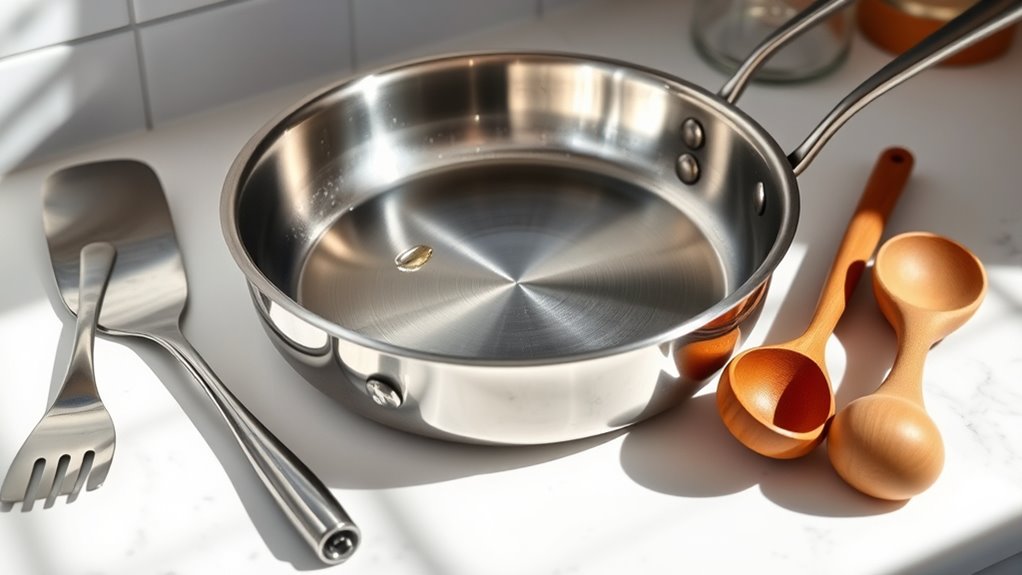
When choosing utensils for your stainless steel pans, understanding the differences in materials can help you protect your cookware. Stainless steel utensils are durable but can cause scratching stainless steel pans, especially if you apply force or use them frequently.
In contrast, non-abrasive utensils like nylon utensils and wooden utensils are gentler options that prevent panning surface damage. Wooden utensils allow effective stirring without the risk of scratches, while nylon utensils offer a soft touch that’s safe for your pans.
Using stainless steel utensils carefully and gently can reduce the chance of scratching stainless steel surfaces, but if you want to minimize panning surface damage entirely, opting for wooden or nylon utensils is a smart choice. This balance helps keep your cookware looking and performing its best.
When to Avoid Stainless Steel Utensils to Protect Your Pans
Stainless steel utensils can handle a lot, but they’re not always the best choice for every type of pan. To avoid scratching and guarantee pan surface protection, you should be cautious when using metal utensils on certain cookware. Specifically, avoid stainless steel utensils on:
- Coated stainless steel pans or nonstick surfaces, as they can easily scratch the coating.
- Stainless steel pans with delicate or polished finishes, which show scratches quickly.
- Pans used for cooking acidic foods for long periods, since metal utensils may cause pitting and damage.
In these cases, opting for softer utensils like silicone or wood helps you maintain your pans’ appearance and longevity while preventing surface damage. Knowing when to avoid stainless steel utensils protects your investment and keeps your cookware performing well.
Choosing Utensils for Stainless Steel Cookware by Cooking Technique
Although stainless steel cookware is durable, choosing the right utensils for each cooking technique helps protect your pans and enhances your cooking experience. For delicate tasks like stirring or tasting, opt for sturdy, heat-resistant silicone, wood, or nylon utensils to guarantee surface protection and scratch prevention.
When handling high-heat cooking techniques such as searing or frying, stainless steel utensils work well, but avoid aggressive scraping to protect your cookware. For tossing or flipping foods, ergonomic silicone or nylon tools reduce pan contact and minimize scratches.
During scraping or deglazing, silicone spatulas or wooden spoons effectively loosen stuck bits without damaging the cookware. Matching utensil material and design to your cooking techniques ensures durability and preserves your pan’s surface, maintaining its performance and appearance over time.
Minimizing Scratches From Stainless Steel Utensils
Since stainless steel utensils can leave superficial scratches on your pans, you’ll want to handle them with care to keep your cookware looking its best. Minimizing scratches involves reducing surface friction and using proper techniques. You can protect your pans by applying a thin layer of oil before cooking, which helps create a smooth barrier.
Handle stainless steel utensils carefully and apply oil before cooking to minimize scratches and protect your pans.
Always use gentle motions when stirring or scraping to avoid unnecessary abrasion. Whenever possible, swap stainless steel utensils for silicone utensils—they’re softer and kinder to your pan’s surface.
- Use silicone utensils to reduce direct metal-on-metal contact.
- Apply oil before cooking to lower surface friction.
- Inspect your cookware regularly to catch early scratches and adjust your utensil choice accordingly.
These simple steps improve your cookware care and extend your pan’s pristine appearance.
How Scratches Affect Pan Performance and Lifespan
Even small scratches on your pan won’t usually affect how it cooks, but deeper gouges can cause problems like uneven heating and trapped food residues.
Superficial scratches generally don’t impact heat distribution or structural integrity. However, deep scratches may lead to uneven heating, rust, and reduced durability, shortening your pan’s lifespan.
| Scratch Type | Effect on Heat Distribution | Impact on Lifespan |
|---|---|---|
| Superficial Scratches | Minimal | Negligible |
| Moderate Scratches | Slight Uneven Heating | Possible Wear |
| Deep Scratches | Significant Uneven Heating | Accelerated Corrosion & Rust |
| Extensive Gouges | Severe Heat Distribution Issues | Structural Integrity Loss |
Best Care Practices for Stainless Steel Cookware and Utensils
To keep your stainless steel cookware and utensils in top shape, you should always use non-abrasive tools like silicone, wood, or nylon when cooking. Avoid metal utensils during high-heat cooking to prevent scratching and surface damage. Following proper care instructions and regular maintenance helps preserve your cookware’s lifespan.
Here are key tips to prevent scratching and maintain your stainless steel cookware:
- Regularly inspect utensils and cookware for signs of wear or damage.
- Hand wash with gentle cleaning tools to avoid surface damage.
- Store properly following manufacturer care instructions to maintain integrity.
Frequently Asked Questions
Does a Stainless Steel Spatula Scratch a Stainless Steel Pan?
Yes, a stainless steel spatula can scratch your stainless steel pan if you use too much force or have rough edges on the spatula.
To avoid damage, handle it gently and consider softer utensils instead.
What Are the Best Utensils to Use on Stainless Steel Pots?
You’ll want to use silicone, wooden, or nylon utensils on stainless steel pots since they’re gentle and prevent scratches.
If you prefer stainless steel tools, pick high-quality ones with smooth edges and handle them carefully to avoid damage.
Is It Normal for Stainless Steel Pans to Scratch?
Think of your stainless steel pan as a well-loved book—yes, it’s normal for it to show scratches from everyday use. These minor marks tell a story, but you’ll want to avoid deep gouges that harm its surface.
Which Spatula Is Best for a Stainless Steel Pan?
You’ll want to use a silicone or wooden spatula for your stainless steel pan. They’re gentle, heat-resistant, and durable, preventing scratches while letting you cook efficiently without worrying about damaging your cookware surface.
Conclusion
Think of your stainless steel pan as a sturdy ship sailing the kitchen seas, and your utensils as the crew. Stainless steel utensils can sometimes leave small marks, like the occasional scratch on the hull after a long voyage.
But with gentle handling and the right tools, you’ll keep your ship shining and seaworthy for many journeys. Treat your cookware well, and it’ll reward you with smooth sailing every time you cook.
In conclusion, while stainless steel utensils might scratch stainless steel pans lightly, careful use and proper care can minimize any damage. Using the right utensils and cleaning methods will help maintain the quality and longevity of your stainless steel cookware.