How Do Eggs Come Out of a Chicken?
When you see an egg come out of a chicken, it’s already traveled a complex path inside her. The process of egg formation begins with the yolk developing in the ovary.
Then, it enters the oviduct, where layers of egg white and protective membranes form around it.
Next, a hard shell, built mainly of calcium carbonate, coats the egg. This shell provides protection and structure.
Finally, gentle muscle contractions push the egg out through the cloaca.
The egg emerges with the pointed end leading to prevent breaks. Keep going, and you’ll discover how every step protects the egg perfectly.
How the Egg Begins Inside the Hen
Although a hen’s ovary holds thousands of tiny ova, only the left ovary usually functions. Inside this ovary, each ovum develops into a yolk, nourished by blood vessels and protected by the vitelline membrane.
When a yolk matures, the hen undergoes ovulation, releasing it from the ovary. This yolk release sends the yolk into the infundibulum, the upper part of the oviduct. If a rooster is present, fertilization can occur here.
The initial egg formation starts as the yolk moves into the oviduct, taking about 30 minutes to complete this stage. You’ll find that this carefully timed process ensures the yolk is ready for the next steps in developing into a full egg.
What Happens as the Egg Moves Through the Oviduct?
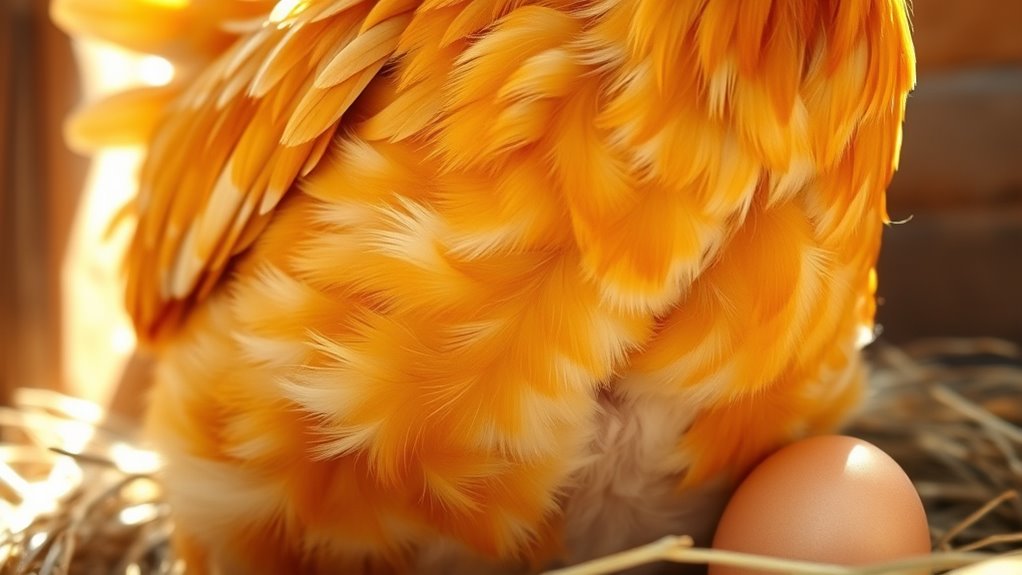
Once the yolk enters the infundibulum, it begins a carefully timed journey through the oviduct where layers of the egg are formed. In the magnum, the yolk is spiraled while egg white layers build up over about three hours.
Next, the egg moves into the isthmus, where protective membranes develop around the albumen, preparing for shell formation. Then, in the shell gland, calcium carbonate deposits gradually harden into the egg’s shell, a process lasting nearly 20 hours and sometimes adding pigmentation.
Finally, the egg passes through the cloaca, receiving a protective cuticle that seals pores and guards against bacteria. Throughout this egg passage, each section of the oviduct plays a crucial role in creating a complete, secure egg ready to be laid.
How the Egg Gets Its Shape and Protective Membranes
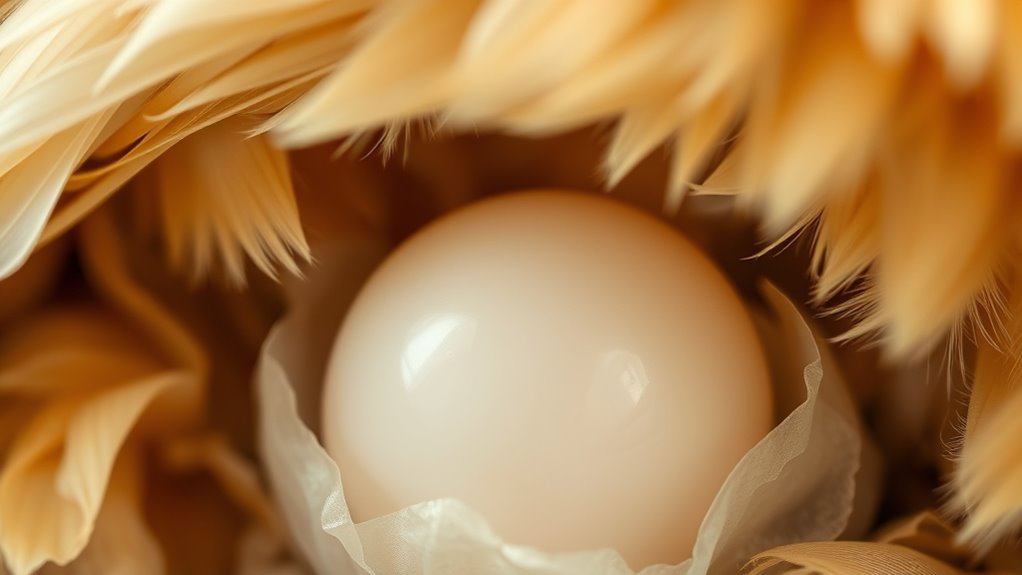
As the egg moves into the isthmus, you’ll notice it starts to take on its familiar shape while protective membranes form around the albumen. During this crucial stage of the egg formation process, the inner and outer shell membranes develop, creating a barrier that shields the egg yolk and albumen from bacteria.
This membrane layer is essential for protecting the formed egg as it passes through the oviduct. The egg shape finalization happens just before the egg enters the shell gland, where the oviduct’s contours influence its smooth, oval form.
These protective membranes not only safeguard the egg’s contents during laying but also support the overall structure, ensuring the egg shape is maintained throughout the rest of its journey.
When and How the Eggshell Forms
While the egg travels through the shell gland, it starts forming its hard outer layer by depositing calcium carbonate onto the surface. Shell formation begins about 20 hours before egg laying, with shell membranes added in the isthmus roughly an hour after entering the shell gland.
The eggshell initially forms white, and pigmentation is added in the last 5 hours of shell development, giving the eggshell color unique to each breed. This precise process guarantees the egg structure is strong and protective.
| Stage | Description |
|---|---|
| Isthmus | Adds shell membranes |
| Shell Gland | Deposits calcium carbonate for hardness |
| Last 5 Hours | Pigmentation added for eggshell color |
| Egg Laying | Shell formation completes |
How the Egg Comes Out Safely Through the Cloaca
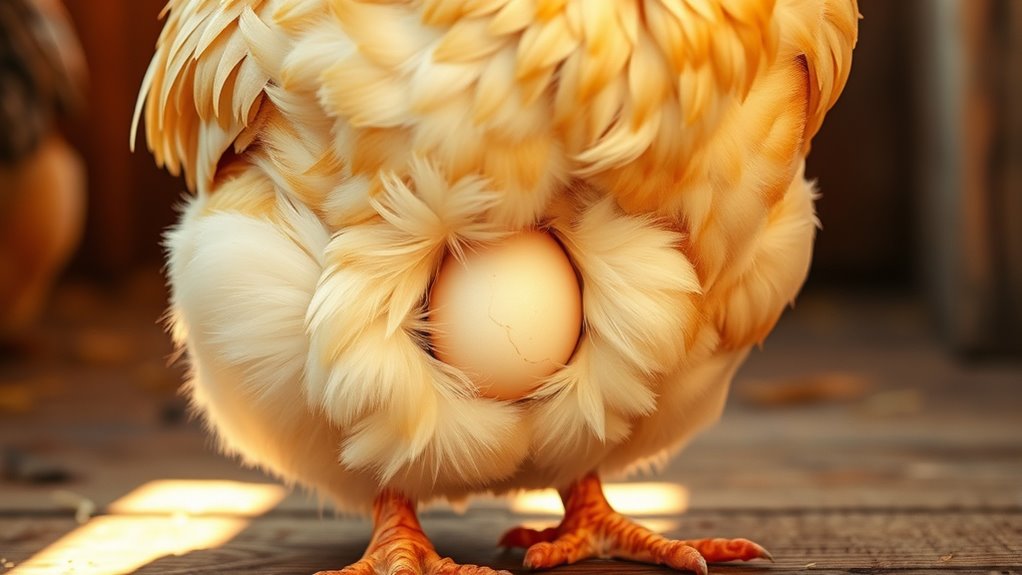
Although the egg has formed its protective shell, it still needs to exit the hen’s body carefully through the cloaca, a unique opening that handles both reproduction and waste. When the egg is ready to be laid, the vaginal tissue briefly protrudes, forming a seal around the egg to protect it during its passage.
The egg rotates so the pointed end comes out first, reducing the chance of cracking. The cloaca expels the egg with a gentle muscular squeeze, ensuring a safe and smooth exit. Once the egg is laid, the cloaca quickly seals, preventing contamination from dirt or bacteria.
This precise process allows the egg to safely leave the hen’s body through the same opening used for waste.
Frequently Asked Questions
How Exactly Does a Rooster Fertilize an Egg?
A rooster fertilizes an egg by depositing sperm into the hen’s reproductive tract during mating. The sperm travels to meet the ovulated yolk, fertilizing it in the oviduct before the egg forms and is laid.
How Do Chickens Produce Eggs Without a Rooster?
You don’t need a rooster for hens to produce eggs because their bodies release yolks regularly. The hen’s reproductive system adds egg white and shells, creating eggs naturally without fertilization or a rooster’s involvement.
Is It Okay to Eat Fairy Eggs?
Sure, you can eat fairy eggs if you’re feeling adventurous and don’t mind a weird, shell-less surprise. Just clean them well and enjoy—though your taste buds might wonder why you’re experimenting with chicken anomalies.
How Do Chickens Get Out of Eggs?
You’ll see chicks hatch by breaking the eggshell with their sharp beak, a process called pipping.
They slowly chip away until they can push themselves out, ready to start life outside the egg.
Conclusion
Now that you know the journey of an egg inside a hen, you see it’s quite the natural masterpiece. From its gentle beginnings to the final journey through the hen’s secret passage, each step is carefully designed.
So next time you enjoy your breakfast, remember the delicate dance that brings that perfect egg to your plate—nature’s little miracle, delivered with care and a touch of magic.
Understanding how eggs come out of a chicken helps us appreciate the incredible process behind every egg we eat. It’s truly a fascinating cycle of life and nature’s ingenuity at work.