Where Do Eggs Come From in Chickens?
You get eggs from hens, which develop them inside their single active ovary, where yolks form over several days.
The yolk is released into the oviduct, where layers of egg white, membranes, and finally the shell build around it, mainly from calcium carbonate.
This entire process takes about 24-26 hours, resulting in roughly one egg a day without a rooster’s involvement.
If you want to understand how environment and timing affect this cycle, there’s more to discover.
Where Egg Formation Begins Inside a Hen
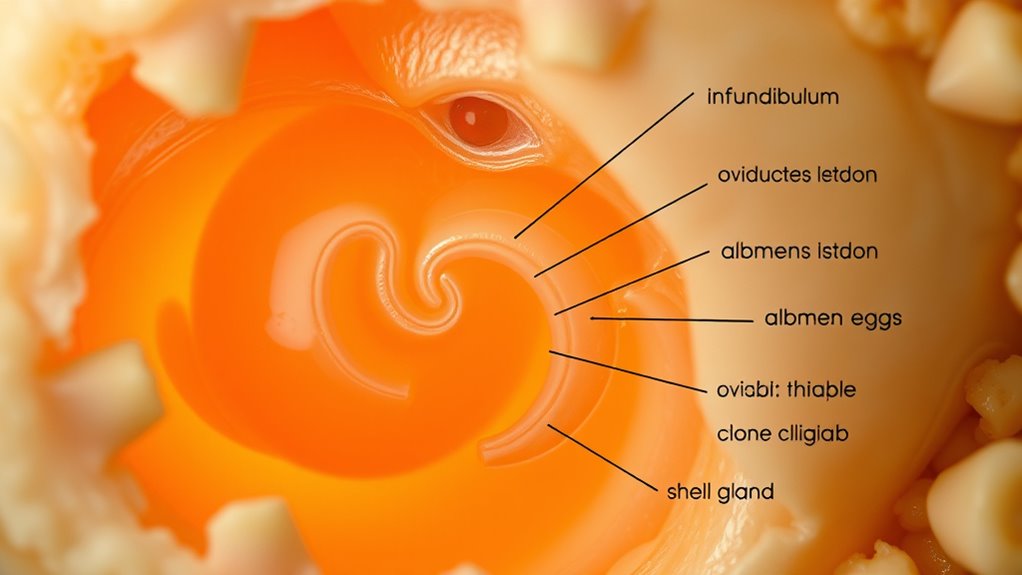
Although a hen’s ovary contains thousands of tiny undeveloped ova, only the left ovary matures to produce eggs. Inside this ovary, each ova grows into a yolk, developing over several days until it’s ready for release. When the yolk is mature, ovulation occurs, and it exits the ovary into the infundibulum, the first part of the oviduct.
From there, the yolk travels through the oviduct, where various layers, including the egg white and membranes, will eventually form. This journey culminates in shell formation around the developing egg, a vital step before the egg is laid.
Understanding this process shows how the hen’s reproductive system efficiently transforms tiny ova into fully formed eggs.
How Egg Whites and Membranes Form in the Oviduct
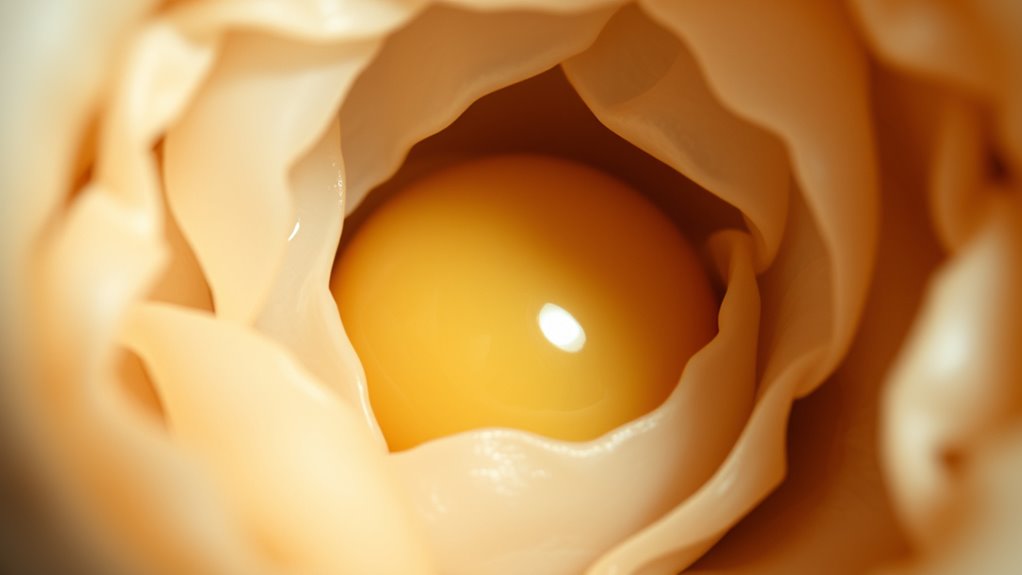
Once the yolk enters the magnum section of the oviduct, the hen begins forming the egg white, or albumen, by secreting thick and thin layers of proteins over the next three to four hours. This egg white formation creates the protective albumen around the yolk. Spiral-shaped chalazae develop within the albumen to keep the yolk centered.
Afterward, the egg moves to the isthmus, where inner and outer shell membranes form, encasing the albumen.
| Stage | Location in Oviduct | Key Process |
|---|---|---|
| Yolk Entry | Magnum | Egg white (albumen) formation |
| Layering | Magnum | Thick and thin protein layers |
| Chalazae | Magnum | Yolk anchoring strands |
| Membranes | Isthmus | Inner and outer membranes |
| Transition | Isthmus to Shell | Preparing for shell formation |
Eggshell Formation and Composition
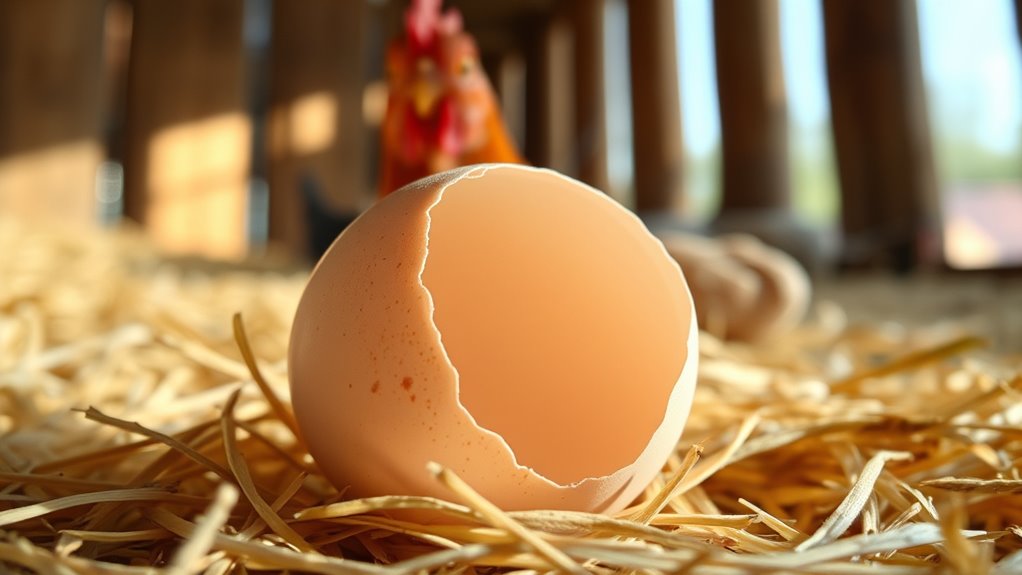
You’ll see the eggshell forms over about 20 hours in the shell gland, mainly from calcium carbonate. Calcium is key to building a strong shell that protects the egg.
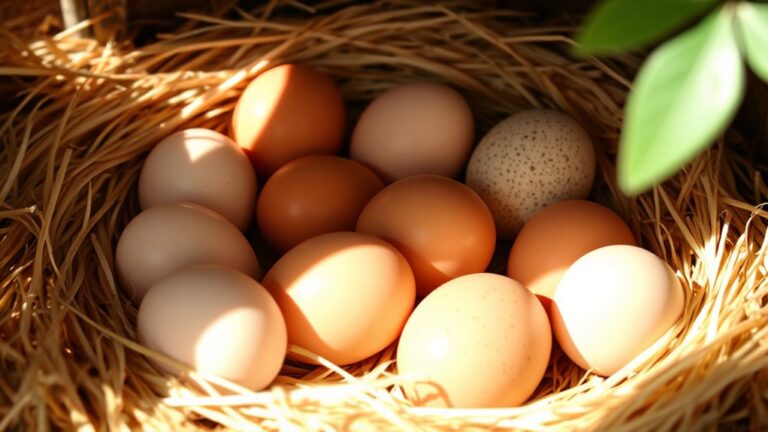
Depending on the chicken’s breed, pigments get added last to give the shell its color, from white to shades of brown, blue, or green.
Shell Formation Process
While the eggshell takes about 20 hours to form in the hen’s shell gland, you can appreciate how this process relies on the precise deposition of calcium carbonate and other minerals that harden to build the shell’s strong structure. The shell forms around the egg white and shell membranes, creating a protective barrier.
During the last 5 hours, pigments add eggshell color, influenced by genetics. The cuticle seals pores, protecting the egg from bacteria.
| Component | Role in Shell Formation |
|---|---|
| Calcium Carbonate | Hardens to form the shell’s structure |
| Shell Membranes | Support shell, separate egg white |
| Eggshell Color | Added by pigments in final hours |
This careful shell formation ensures the egg stays safe and intact.
Calcium’s Role In Shell
Because calcium carbonate makes up nearly 95% of the eggshell, your hen needs a steady supply of calcium in her diet to build a strong shell. During shell formation, calcium is deposited in the shell gland over about 20 hours, mostly at night. This process guarantees the eggshell forms with the right hardness and structure.
If your hen’s diet lacks sufficient calcium, the eggshell can become thin or even missing, which compromises egg quality and your hen’s health. Providing sources like oyster shell or limestone helps maintain proper calcium levels. Remember, calcium absorption also depends on vitamin D3, which supports healthy shell formation.
Shell Color Pigmentation
Although calcium carbonate forms the eggshell’s structure, the shell’s color comes from pigments deposited during the final hours of shell formation in the shell gland. This eggshell pigmentation varies by breed genetics, affecting shell color and sometimes the interior shell liner.
Blue eggs get their unique color from porphyrin pigments deposited early, resulting in color throughout the shell. Brown eggs show protoporphyrin pigments applied on the surface, while white eggs lack pigmentation, staying naturally white.
| Egg Type | Pigment Type |
|---|---|
| Blue | Porphyrin |
| Brown | Protoporphyrin |
| White | None |
| Shell Gland | Site of Pigmentation |
| Breed Genetics | Determines Pigment |
You see, shell color pigmentation is a fascinating mix of biology and genetics.
How Long It Takes for a Hen to Lay an Egg
If you watch a hen closely, you’ll notice it takes about 24 to 26 hours for her to lay a complete egg from the moment a yolk is released. The process starts with ovulation, when the ovary releases a yolk into the oviduct. As the yolk travels, layers of egg white form around it.
Shell formation then occurs in the shell gland, taking roughly 20 hours, mostly overnight. This careful shell formation protects the egg and is a key part of egg laying. Once the egg is laid, the hen’s reproductive cycle continues, releasing a new yolk every 30 minutes.
Under ideal conditions, hens maintain steady egg production, typically laying one egg per day, thanks to this continuous reproductive cycle.
Do Hens Need Roosters for Egg Laying?
Wondering whether hens need roosters to lay eggs? They don’t. Hens will continue egg laying regardless of a rooster’s presence because the entire process happens inside their ovary and reproductive system.
Hens lay eggs independently; roosters aren’t required for egg production since it occurs within their reproductive system.
The eggs you see are unfertilized eggs when no rooster is around, meaning they can’t develop into chicks. Fertilization only occurs if a rooster mates with a hen, which is necessary for breeding purposes.
In fact, commercial egg farms usually don’t have roosters at all, so all eggs produced are unfertilized. So, if you’re raising hens just for eggs, you don’t need to worry about having roosters.
The hens’ bodies handle egg production on their own, without the need for fertilization to lay eggs regularly.
How Light and Environment Keep Hens Laying Year-Round
Because hens rely heavily on light cues to regulate their egg production, managing their exposure to about 14 hours of light daily is key to keeping them laying consistently throughout the year. In natural settings, seasonal changes reduce daylight in winter, causing hens to slow or stop egg laying.
To counter this, many henhouses use artificial lighting to simulate longer days, encouraging steady egg production regardless of the season. By controlling light exposure, you help maintain suitable hormone levels in hens, preventing disruptions like molting that can halt laying.
Whether hens are indoors or outdoors, understanding how light affects their cycles lets you create an environment that supports continuous egg laying all year round, ensuring a reliable supply of fresh eggs no matter the season.
What Happens to Eggs After Laying
Once a hen lays an egg, it passes through the cloaca and is protected by a natural coating called the bloom. You’ll want to collect eggs daily to keep them fresh and reduce contamination risks.
After collection, eggs are cleaned, sorted, and stored properly to maintain their quality.
Egg Collection Practices
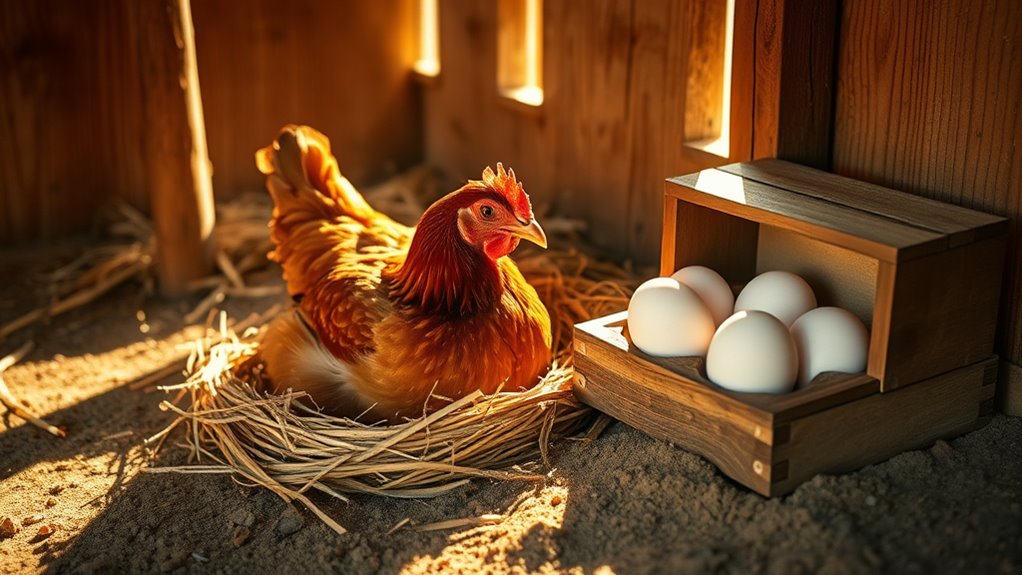
After hens lay their eggs, farmers collect them daily to keep them fresh and safe. You’ll find that eggs come from nesting boxes where laying hens rest. Farmers perform egg collection multiple times a day to prevent damage and contamination.
Once gathered, eggs enter the grading process, where they’re cleaned, inspected for cracks, and sorted by size. Proper egg handling during collection and grading is essential to maintain freshness and quality before packaging.
| Step | Location | Purpose |
|---|---|---|
| Egg Collection | Nesting boxes | Prevent contamination |
| Grading Process | Grading room | Inspect and sort eggs |
| Handling & Storage | Storage area | Maintain freshness |
Post-Laying Egg Handling
Although eggs leave the hen’s body through the cloaca, you’ll typically find farmers collecting them daily from nesting boxes or henhouses to keep them fresh. After egg collection, unwashed eggs retain their natural bloom, a protective coating that helps maintain freshness and slows contamination. When handling these eggs, you need to avoid cracks and exposure to contaminants to keep them safe.
Commercially, eggs are often cleaned and sanitized, removing the natural bloom, so they require refrigeration to preserve freshness. Once gathered, eggs are sorted by size and quality, then stored in cool, dry places or refrigerated. Proper post-laying egg handling ensures you get fresh, safe eggs whether from backyard hens or commercial sources.
Frequently Asked Questions
Where Do Eggs Come From in a Chicken?
Eggs come from inside the hen’s body. You’ll find them developing in her ovary, traveling through the oviduct where layers form, and finally, she lays the egg through her vent about every 24 hours.
How Do Hens Produce Eggs Without a Rooster?
Hens produce eggs without a rooster because they release yolks naturally through their ovary, which travel through the oviduct to develop egg whites and shells.
You don’t need a rooster for this process to happen.
Are Hens Born With All Their Eggs?
You aren’t born with all your eggs, and hens aren’t either. Instead, they develop eggs gradually, starting with thousands of tiny ova that mature over time, allowing hens to produce eggs continuously once they reach maturity.
Is a Rooster Necessary for Chickens to Lay Eggs?
You don’t need a rooster for hens to lay eggs; they’ll produce eggs naturally regardless. Roosters only matter if you want fertilized eggs to hatch chicks, but they don’t affect the laying process itself.
Conclusion
Now that you know eggs begin as tiny miracles inside a hen, you can picture the journey—like a delicate dance—from yolk to shell. Each egg is a masterpiece, crafted carefully over hours, even without a rooster’s help.
Just as sunlight nudges hens to keep laying, nature’s rhythm whispers life into every shell.
So next time you crack an egg, remember the hidden story wrapped inside that fragile, perfect orb. Understanding where eggs come from in chickens adds appreciation to every delicious bite.