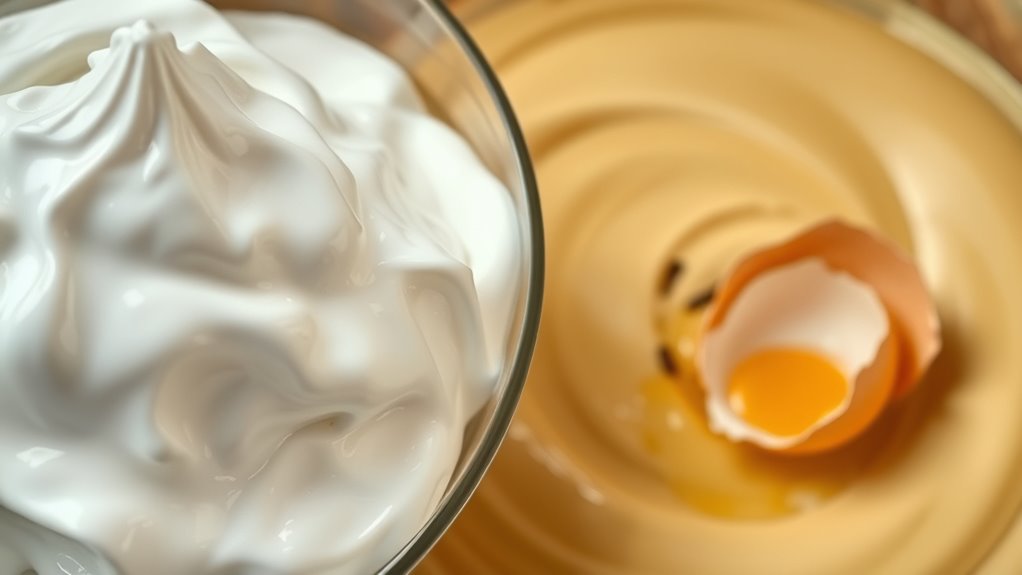
What Do Eggs Do to Cake Texture and Flavor?
Eggs play a key role in your cake’s texture and flavor by building structure and locking in moisture. The proteins provide stability and firmness while the yolks add richness, tenderness, and a natural yellow hue.
Whites lighten the crumb by trapping air and creating a soft, airy feel.
Balancing yolks and whites lets you customize moisture, softness, and density. If you want to explore how to perfect your cake’s crumb and taste, there’s plenty more to discover.
How Egg Proteins Build Cake Structure During Baking
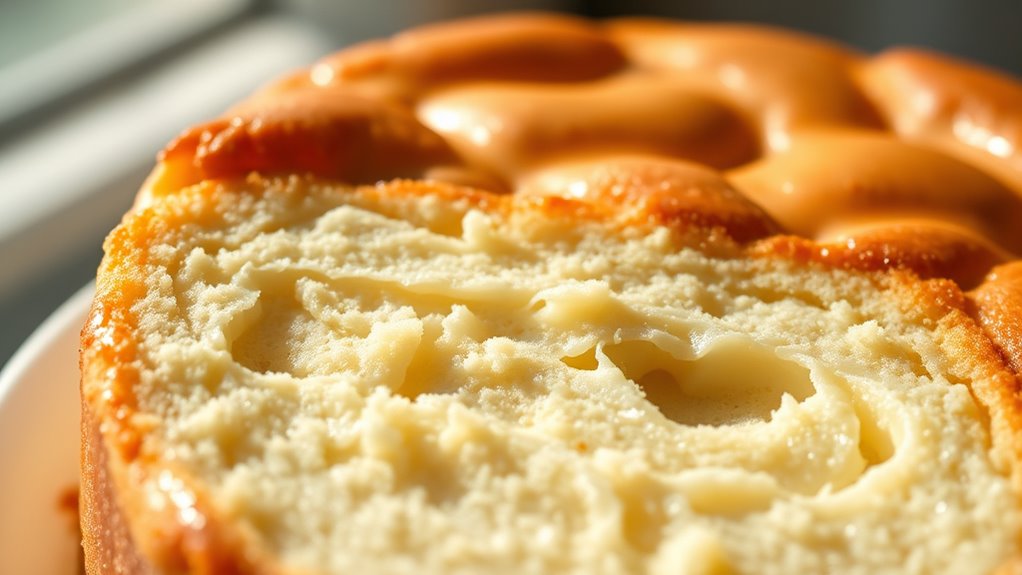
When you bake a cake, the heat causes egg proteins to unfold and form new bonds, creating a stable network that traps air and moisture. This protein network is essential because it supports the cake’s rise and helps develop a tender crumb.
As the temperature climbs, egg proteins partially coagulate, giving the cake firm structural support. You’ll notice that this interconnected protein network works alongside flour starch to shape the delicate crumb structure.
Without proper coagulation and bonding of egg proteins, the cake wouldn’t hold its shape or achieve that resilient, spongy texture you want. So, egg proteins are key players in building the cake’s structure during baking, ensuring it’s both light and sturdy.
How Whole Eggs Balance Moisture and Rise in Cakes
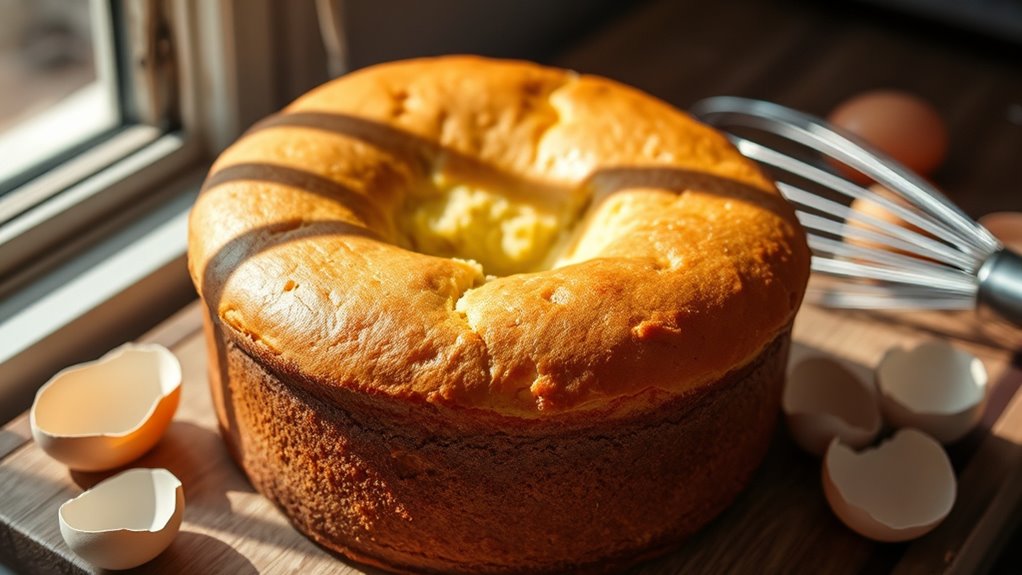
Although eggs provide essential proteins that build structure, their unique composition also plays a crucial role in balancing moisture and rise in cakes. Whole eggs contain about 75% liquid and 25% dry matter, offering both moisture and structure simultaneously.
As the proteins unfold and bond during baking, they create a stable network that supports the cake’s rise and shape. Meanwhile, the fats in the yolk contribute to moistness, preventing dryness and enhancing tenderness. Eggs also act as emulsifiers, blending water and fats evenly to improve moisture retention throughout the batter.
Using whole eggs ensures your cake achieves the perfect balance of moisture and structure, resulting in a tender crumb with adequate rise and a pleasing texture.
How Egg Yolks Enhance Cake Richness and Flavor
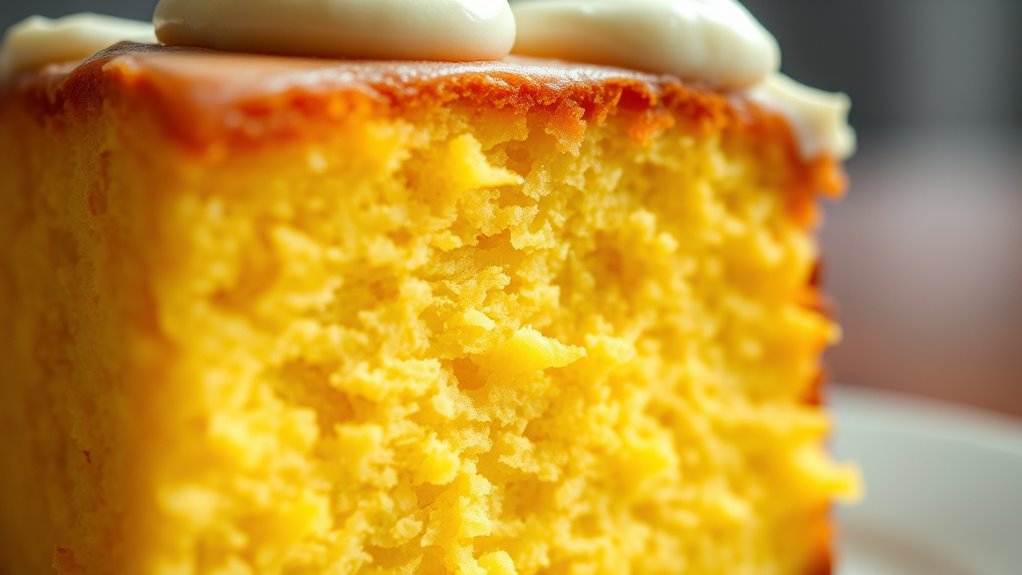
Egg yolks do more than just support moisture and structure; they bring a rich depth of flavor and luxurious texture to cakes. When you add egg yolks, their fats and emulsifiers like lecithin create a velvety crumb and enhance the cake’s moistness.
Plus, their natural yellow tint boosts the cake’s color and rich flavor, making every bite more decadent.
| Component | Role in Cake | Effect on Texture/Flavor |
|---|---|---|
| Fats | Add richness | Velvety, moist crumb |
| Lecithin | Emulsifies ingredients | Stable, smooth batter |
| Proteins & Lipids | Bind water and fat | Tender, soft crumb |
Using extra egg yolks elevates your cake’s softness and richness, making it irresistibly flavorful.
How Egg Whites Lighten and Aerate Cakes
When you whip egg whites, you trap tiny air bubbles that help lighten the cake’s texture. These whites not only add softness but also create a delicate crumb by providing structure as they cook.
Whipping Creates Air Bubbles
Since whipping egg whites traps tiny air bubbles, you create a stable foam that helps your cake rise and become light. When you whip egg whites, their proteins unfold and coagulate, stabilizing the foam and preventing it from collapsing. Adding an acid like lemon juice or cream of tartar while beating strengthens these protein networks, making your foam even more stable.
Whipped egg whites can reach soft, medium, or stiff peaks—the stiffer the peaks, the more lift you get in your batter. By folding whipped egg whites into your cake batter, you introduce air pockets that expand during baking, resulting in a tender, airy crumb. This process of creating a foam with whipped egg whites is key to achieving a light texture in your cakes.
Whites Provide Softness
You’ve seen how whipping egg whites traps air to create lift, but their role doesn’t stop there. When you fold whipped egg whites into cake batter, they lighten the texture by reducing density and promoting softening.
As the cake bakes, the proteins in egg whites coagulate, setting a tender, delicate crumb that feels airy and moist. This partial coagulation helps maintain the cake’s structure while contributing to its softness.
| Egg Whites Role | Effect on Cake |
|---|---|
| Trap air in foam | Lightens and aerates |
| Protein coagulation | Sets soft crumb |
| Water content | Enhances moistness |
How Whipped Egg Whites Add Lift and Softness
When you whip egg whites, you trap air bubbles that create a light foam, giving your cake extra lift. The proteins in the whites stabilize this foam, so your cake holds its airy texture as it bakes.
This process makes your cake softer and noticeably fluffier with a tender crumb.
Air Incorporation Benefits
Although whipping egg whites takes a bit of effort, it dramatically improves your cake’s texture by trapping tiny air bubbles that expand during baking. This air incorporation creates a foam that helps your cake rise and stay light.
When you whip egg whites, you:
- Trap air bubbles that expand, leavening the cake.
- Increase cake volume and produce a soft, airy crumb.
- Set air pockets as proteins coagulate during baking, maintaining texture.
- Use acid, like lemon juice, to stabilize the foam for better lift.
Foam Stability Effects
Whipped egg whites don’t just trap air—they form a stable foam that holds those tiny bubbles as your cake bakes. This foam stability is essential because the proteins in egg whites coagulate when heated, locking in air and preventing the foam from collapsing. That process gives your cake lift and a softer, lighter crumb.
Adding a bit of acid, like lemon juice, can enhance foam stability by strengthening the protein network, so the bubbles stay intact longer. To keep that foam stable, you need to fold the whipped egg whites gently into your batter—vigorous mixing can deflate the foam and reduce its effect.
When done right, this stable foam increases your cake’s volume and creates an open, delicate texture that’s irresistibly airy.
How Egg Ratios Affect Cake Crumb and Firmness
Because egg ratios play a crucial role in cake texture, you’ll notice significant differences in crumb and firmness depending on how many yolks and whites you use. Adjusting egg ratios directly influences the cake crumb and its firmness:
- More egg yolks add moisture and richness, resulting in a denser, velvety cake crumb.
- Extra whipped egg whites create a lighter, more open crumb with increased rise and softness.
- Using more whites than yolks yields a firmer, lighter-colored cake with greater height.
- A higher yolk-to-white ratio produces a softer yet firmer crumb, balancing delicacy with structure.
Understanding these effects helps you predict how your cake’s crumb and firmness respond to different egg ratios, letting you tailor texture precisely.
How to Adjust Egg Ratios for Desired Cake Texture
Now that you understand how different egg ratios impact cake crumb and firmness, you can start tweaking those ratios to get the texture you want.
If you’re aiming for a moist, rich cake with a velvety crumb, increase the number of yolks. On the other hand, if you want a lighter, airier cake with more height, add more whites or whip them separately before folding into the batter.
Keep in mind, replacing whites with extra yolks will boost flavor and moisture but may make your cake denser and reduce its rise.
Adjusting eggs thoughtfully lets you control moisture, tenderness, and volume, so experiment to find the perfect balance for your ideal cake texture.
Why Balancing Yolks and Whites Matters for Flavor and Moisture
When you balance yolks and whites correctly, you create a cake that delivers both rich flavor and ideal moisture. Understanding the role each plays helps you get the perfect result. Yolks add depth and velvety moisture, while whites lighten the texture and create an airy crumb.
Here’s why balancing matters:
- Yolks provide richness and moisture, enhancing flavor intensity.
- Whites contribute fluffiness and leavening, preventing density.
- Too many yolks make the cake heavy and overly rich.
- Excess whites lead to dryness and a crumb that’s too airy.
Practical Tips for Using Eggs to Perfect Your Cake
Although eggs serve multiple roles in cake baking, mastering how to use their components can transform your results. Using whole eggs strikes a perfect balance, giving your cake structure, moisture, and flavor—ideal for most standard recipes.
If you want a richer, moister crumb, try replacing some egg whites with extra yolks; this enhances the cake’s texture without sacrificing taste. On the other hand, whipping egg whites separately and folding them into the batter adds airiness and height, perfect for lighter cakes.
Understanding the role of eggs means you can adjust yolk-to-white ratios to customize texture—from soft and tender to fluffy and tall. By controlling these elements, you’ll harness the full potential of eggs to perfect your cake every time.
Frequently Asked Questions
Do Eggs Add Flavor to Cake?
Yes, eggs add flavor to your cake by enriching its taste with natural fats and emulsifiers. They enhance richness, deepen complexity, and help distribute other flavors evenly, making your cake more delicious and satisfying every bite.
How Do Eggs Add Texture?
Eggs add texture by trapping air when whipped, making your cake lighter and fluffier. Their proteins firm up during baking, giving structure and tenderness while retaining moisture, so your cake stays soft and moist.
How Do Eggs Contribute to the Texture and Flavor of Baked Goods?
Eggs give your baked goods structure and moisture by trapping air and coagulating proteins. They add richness and tenderness through yolks, while whites create lightness, resulting in a balanced texture and enhanced, complex flavor you’ll love.
What Is the Purpose of Egg in Cake?
Think of eggs as the glue in your favorite scrapbook—they hold everything together. In cake, they bind ingredients, trap air for fluffiness, and add richness, giving your cake structure, tenderness, and a delicious, moist flavor you’ll love.
Conclusion
When you crack eggs into your batter, you’re not just adding ingredients—you’re crafting texture and flavor. Imagine yolks weaving richness while whites stretch the crumb light and airy. Balancing these elements is like tuning an instrument, where each note affects moisture, rise, and firmness.
By adjusting egg ratios thoughtfully, you control your cake’s personality. So next time, don’t just add eggs—use them to compose the perfect, delicious harmony in every bite. Understanding what eggs do to cake texture and flavor can transform your baking from good to extraordinary.