How Do You Incubate Chicken Eggs at the Perfect Temperature?
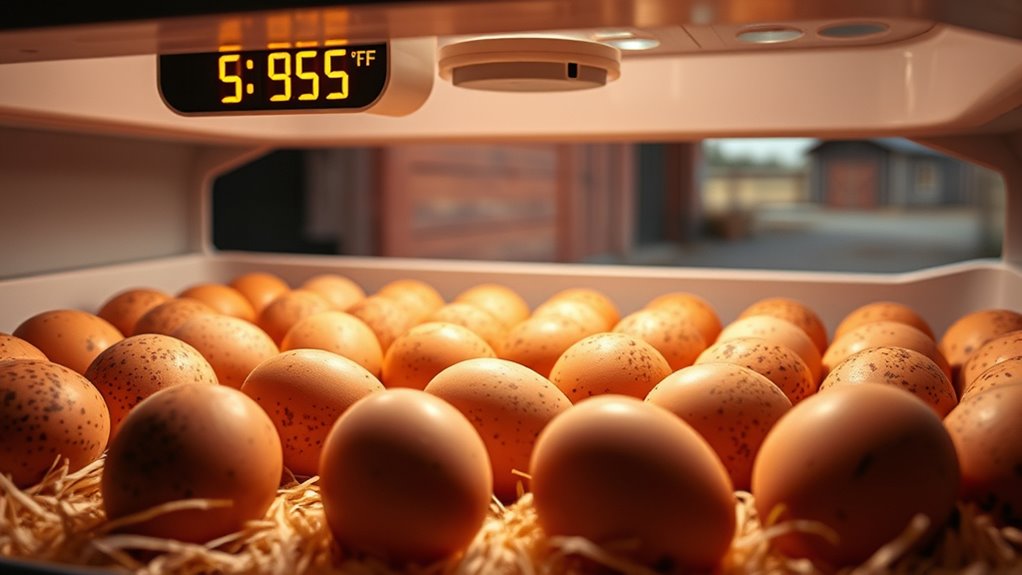
To incubate chicken eggs at the perfect temperature, it is essential to set your incubator between 99.5°F and 101°F, depending on the type of incubator you are using. Regularly check the temperature with a well-calibrated thermometer placed at egg level to ensure accuracy. Maintaining the right temperature is crucial for successful hatching.
Use an incubator that provides stable airflow and automatic controls to prevent temperature fluctuations. Turn the eggs gently and frequently, minimizing the time the incubator is open to keep conditions stable.
During the final days of incubation, lower the temperature slightly and increase humidity to support the hatching process. Following these steps guarantees healthier hatches, and there’s more to discover about perfect incubation conditions.
How to Choose an Incubator That Maintains Stable Temperature
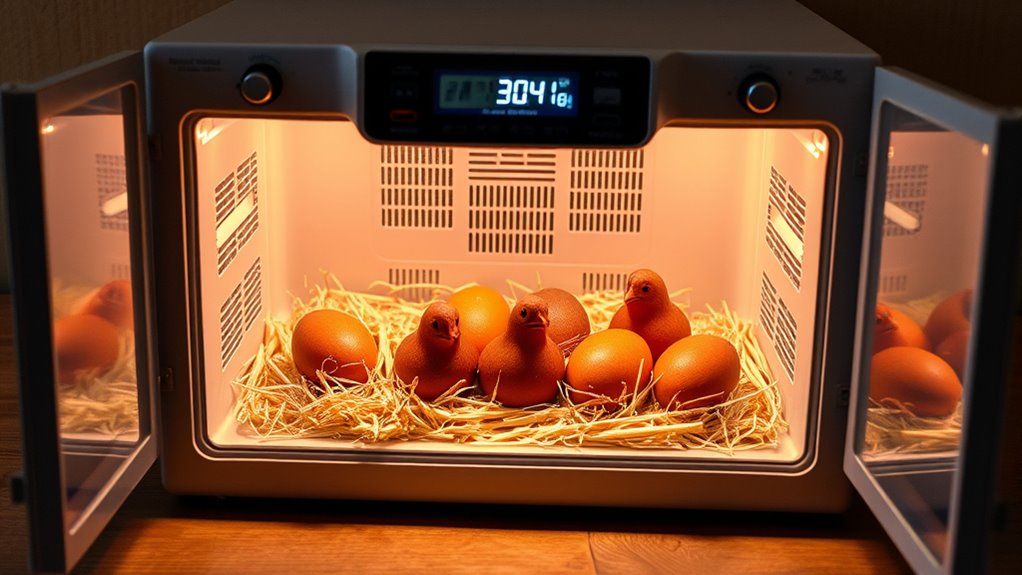
When you choose an incubator that maintains a stable temperature, you’ll increase the chances of successfully hatching your chicken eggs. Look for an incubator with automatic temperature control and a reliable thermostat to keep heat steady between 99.5°F and 101°F. A forced-air incubator is ideal since it circulates warm air evenly, preventing hot or cold spots around your eggs.
Make sure it includes a digital thermometer and hygrometer for easy calibration and precise monitoring. Don’t overlook the importance of a stable power supply and surge protection to avoid sudden temperature drops. Finally, check the incubator’s insulation and airflow design; good insulation minimizes temperature fluctuations, helping maintain consistent conditions throughout incubation.
These features ensure your eggs develop in the best environment possible.
How to Set the Optimal Temperature for Chicken Egg Incubation
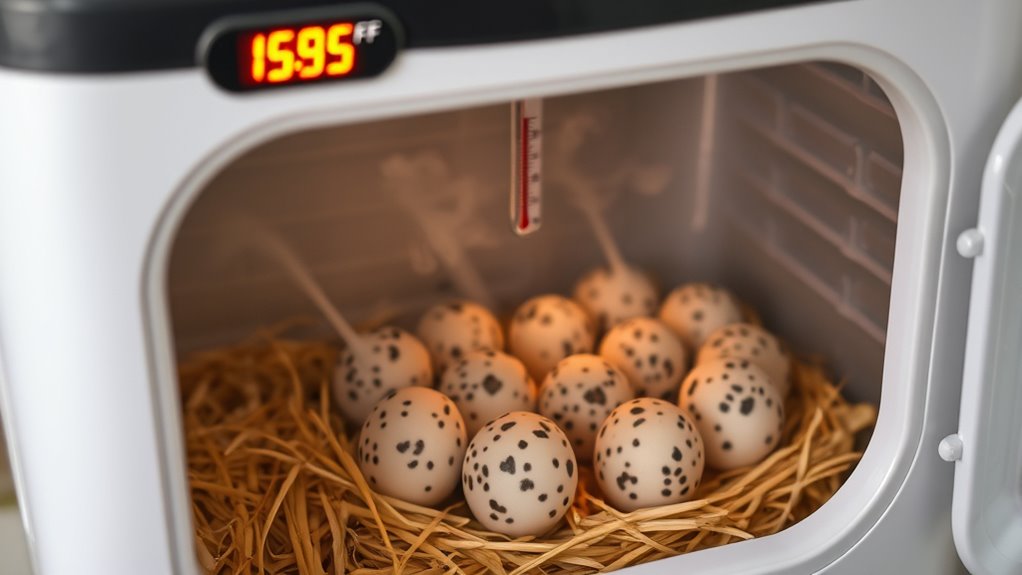
Because maintaining the right temperature is essential, you’ll need to set your incubator precisely to guarantee healthy embryo development. Use a reliable thermometer, and calibrate it regularly to avoid errors. The ideal temperature depends on your incubator type; forced-air incubators require 99.5°F (37.5°C), while still-air models need 101–102°F (38.3–38.9°C).
Keep the temperature stable within ±0.5°F (±0.3°C) throughout the 21-day incubation. Avoid opening the incubator frequently to prevent temperature and humidity fluctuations that could harm the eggs.
| Incubator Type | Temperature °F | Temperature °C |
|---|---|---|
| Forced-air | 99.5 | 37.5 |
| Still-air | 101–102 | 38.3–38.9 |
| Stability | ±0.5 | ±0.3 |
How to Measure and Monitor Incubator Temperature Accurately
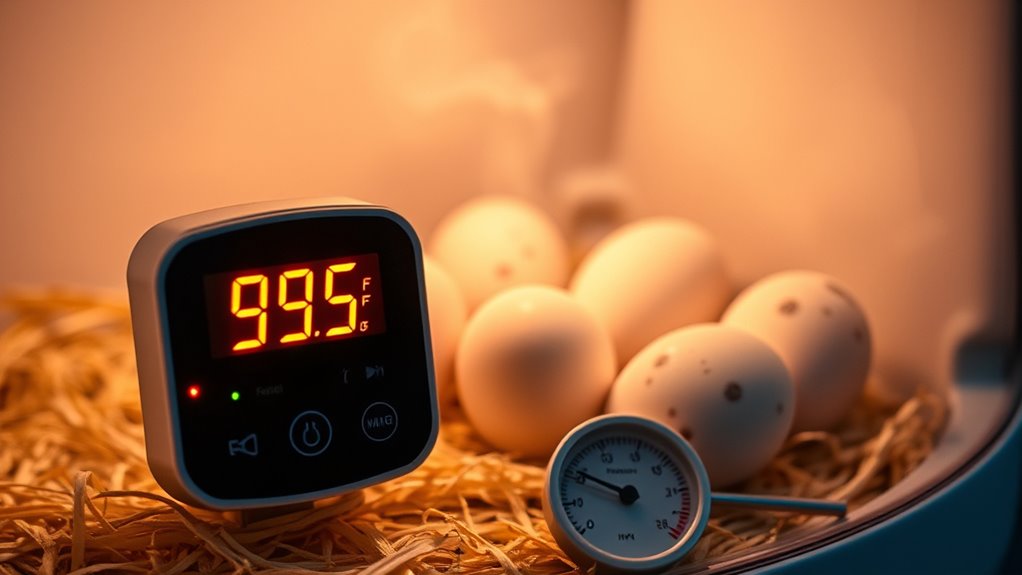
To measure and monitor your incubator’s temperature accurately, start by choosing a reliable digital thermometer or hygrometer with a probe. Make sure to calibrate it regularly using melting ice to keep readings precise.
For best results, set up continuous monitoring with alarms to catch any temperature fluctuations early.
Thermometer Types Explained
Although many thermometers exist, you should choose a digital or analog model designed for precise temperature measurement rather than a general kitchen thermometer to guarantee accuracy in your incubator. Digital thermometers often provide quick, clear readings, making them user-friendly, while analog thermometers offer reliable, continuous monitoring without batteries.
For the best results, place the thermometer’s probe in direct contact with the eggs or egg tray, especially at the top in still-air incubators. Accurate readings depend on proper placement and regular calibration—check your thermometer by placing it in melting ice to ensure it reads 32°F (0°C).
Daily monitoring with a dependable device helps you spot temperature fluctuations early, keeping your incubator environment ideal for successful hatching. Proper thermometer choice and use are key to precise temperature control.
Calibration Techniques Simplified
How can you guarantee your incubator maintains the perfect temperature for hatching? Start by using reliable digital or analog thermometers and regularly calibrate them to assure accuracy. One common calibration technique involves placing your thermometer in melting ice water, which should read 32°F (0°C).
Compare your incubator thermometer’s reading to this standard and adjust or note any differences for future reference. For better consistency, consider the salt test instead of ice water. Always place the thermometer probe at egg level inside the incubator, away from direct heat sources, to monitor true temperature conditions.
Check and record your thermometer’s accuracy at least once a week, especially before setting eggs. These calibration techniques will help you maintain precise temperature control, ensuring a successful hatch every time.
Continuous Temperature Monitoring
Why does continuous temperature monitoring matter so much in egg incubation? Because maintaining a consistent temperature is vital for developing healthy embryos. Use a reliable digital thermometer with a probe to measure temperature directly on the eggs, guaranteeing you get accurate readings.
Place the thermometer at egg level inside the incubator, away from heating elements and airflow vents, which can cause false readings. Regular calibration of your thermometer—by checking it in melting ice and adjusting if needed—keeps your measurements trustworthy.
Check and record the temperature at least twice daily to spot any temperature fluctuations early. An incubator with precise controls and alarms helps maintain the ideal environment, alerting you if temperatures stray. This careful temperature monitoring ensures your eggs develop under excellent conditions.
How to Manage Incubation Humidity to Support Stable Temperature
When you manage incubation humidity carefully, you support stable temperatures essential for healthy embryo development. Use a hygrometer to monitor humidity levels inside your incubator. Keep humidity between 45-55% for days 1-18, then raise it to 65-70% during the lockdown phase.
Adding water to trays or using sponges increases surface area, helping maintain consistent moisture. Proper calibration of your hygrometer guarantees accurate readings, preventing issues with hatching eggs. Here’s a quick guide:
| Incubation Stage | Humidity Levels | Tips for Stability |
|---|---|---|
| Days 1-18 | 45-55% | Use water trays |
| Days 19-21 | 65-70% | Increase water surface |
| Monitoring | Daily | Calibrate hygrometer |
| Adjustments | As needed | Maintain temperature stability |
Consistent humidity supports the incubation process and improves hatch success.
How to Turn Chicken Eggs Without Affecting Incubator Temperature
You’ll want to turn your eggs at least three times a day, handling them gently to prevent damage. Mark each egg to keep track and guarantee consistent turning without guesswork.
To keep the incubator temperature steady, minimize how often and how long you open it during this process.
Timing And Frequency
How often should you turn chicken eggs to keep the incubator’s temperature steady? During the incubation period, maintaining a consistent turn frequency is vital for embryo development and hatch day success. You should turn eggs at least three times daily but no more than five to mimic natural hen behavior.
Turn eggs gently and smoothly until day 18, following incubation guidelines to prevent embryo sticking and guarantee proper air cell formation.
Use a pencil to mark eggs, helping you track each turn and maintain consistent handling.
If you use an automatic turner, check it regularly to confirm it operates correctly without disrupting temperature stability.
Gentle Handling Techniques
Although turning eggs regularly is essential, handling them gently makes sure you don’t disrupt the incubator’s temperature or harm developing embryos. Use clean hands or gloves to prevent contamination and protect the eggshell.
Turn eggs smoothly at least 3 to 5 times daily using a consistent technique to support embryo development without stressing the incubation process. Avoid sharp objects or sudden movements that risk cracking the eggshell or damaging the embryo.
| Action | Purpose | Tips |
|---|---|---|
| Gentle handling | Protect embryo development | Use soft, steady motions |
| Turning eggs | Promote proper growth | Mark eggs to track turns |
| Contamination prevention | Maintain hygiene | Wash hands or wear gloves |
Minimizing Incubator Exposure
Since maintaining a stable temperature is crucial during incubation, minimizing the time you open the incubator is key when turning eggs. Excessive incubator exposure can disrupt temperature stability and harm embryo development. To turn eggs without affecting temperature, follow these tips:
- Use an automatic turner to flip eggs consistently without opening the incubator.
- Mark eggs with a pencil to track turns and avoid unnecessary handling or opening incubator doors.
- When you must turn eggs manually, do it quickly and gently, limiting exposure time and minimizing handling.
Only open the incubator for essential tasks like candling or adding water. By reducing incubator exposure, you ensure the eggs experience minimal temperature fluctuations, promoting healthy embryo growth throughout incubation.
How to Handle Incubator Temperature Fluctuations
When temperature fluctuations occur in your incubator, they can disrupt embryo development and lead to delays or deformities. To handle these temperature swings, monitor the incubator temperature closely using a reliable digital thermometer and perform regular calibration to guarantee accuracy. Keep your incubator in a stable environment free from drafts, which can cause sudden drops or rises in temperature.
If you notice a fluctuation, quickly adjust the thermostat or heating element to bring the temperature back within 1°F of the ideal range. Minimize opening the incubator lid, as this causes temperature drops that can stress the embryos. Record any adjustments you make to track patterns and prevent repeated temperature swings.
How to Adjust Temperature During the Final Days Before Hatching
Maintaining a stable temperature is essential throughout incubation, but you’ll need to make specific adjustments during the final days before hatching. As you approach lockdown, lowering the incubator temperature to about 95°F (35°C) encourages successful hatching. Use a reliable, calibrated thermometer to verify this setting.
During these final days, follow these steps:
- Reduce the temperature carefully and monitor it closely with your thermometer.
- Maintain humidity around 70% to assist chicks in breaking through shells.
- Avoid opening the incubator frequently during lockdown to prevent harmful temperature fluctuations.
Frequently Asked Questions
What Is the Best Temperature for Incubating Chicken Eggs?
You should keep chicken eggs at about 99.5°F in a forced-air incubator or slightly higher, around 101–102°F, in still-air ones.
Make certain you maintain steady temperature to ensure healthy embryo development throughout incubation.
What Are the Mistakes for Incubation Eggs?
You’ll make mistakes if you don’t calibrate your thermometer, rely solely on the incubator’s built-in readings, place the thermometer improperly, ignore temperature fluctuations, or fail to monitor and adjust temperature regularly, especially during the final days.
Is 102 Too Hot for Hatching Eggs?
You’re playing with fire if you set 102°F for hatching eggs—it’s a bit too toasty.
Stick closer to 99.5°F to keep embryos happy and healthy, ensuring a better hatch rate without risking harm.
What Temperature Kills a Fertilized Egg?
You’ll kill a fertilized egg if the temperature rises above 104°F (40°C). Prolonged exposure over 102°F (39°C) also damages development, so keep it steady around 100.5°F to ensure healthy embryo growth.
Conclusion
Maintaining the perfect temperature is key to hatching success—you’ll want to keep it steady around 99.5°F. Did you know that even a 1°F drop can reduce hatch rates by up to 20%?
By choosing a reliable incubator, monitoring temperature closely, and adjusting as needed, you’ll give your eggs the best chance to develop properly. Remember, small changes make a big difference.
Stay attentive throughout the incubation process to ensure optimal conditions. Keeping the right temperature is crucial when you incubate chicken eggs, as it directly impacts hatch rates and the health of your chicks.