How to Clean Baked Grease From Pots and Pans Quickly
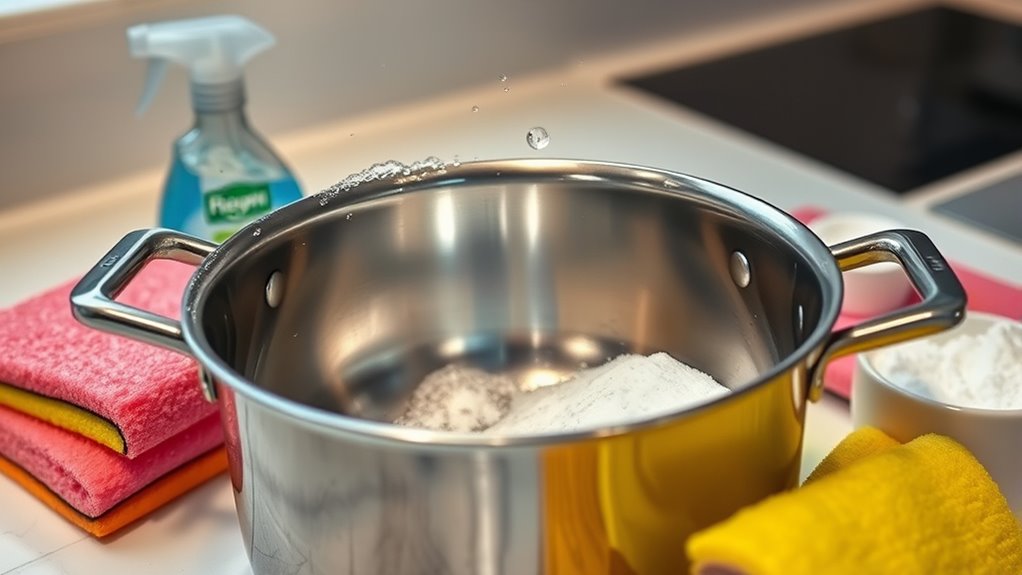
To quickly clean baked grease from pots and pans, start by soaking them in hot water mixed with a tablespoon of detergent for at least an hour to soften the buildup. This simple step helps loosen stubborn grease, making it easier to remove later.
Next, use a non-abrasive scrubber and firm, circular motions to lift away grease without damaging your cookware.
For tougher spots, try applying a baking soda paste or soaking in vinegar before scrubbing. These natural cleaners break down grease effectively.
Keep your pots and pans well maintained, and you’ll find they stay cleaner longer. With regular care, you can avoid heavy grease buildup.
You’ll discover even more helpful cleaning and care tips ahead.
Why Baked Grease Builds Up on Pots and Pans
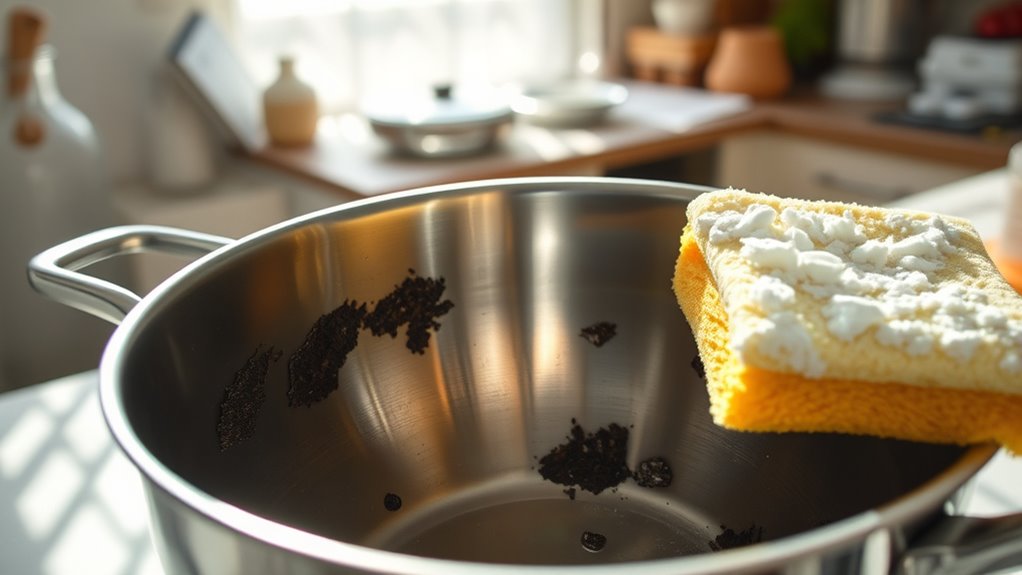
Because you often cook at high temperatures and don’t clean your pots and pans thoroughly afterward, baked grease builds up over time. When you repeatedly expose stainless steel pans to overheated oils, the grease starts to caramelize and harden, forming stubborn layers.
Using cooking oils with low smoke points speeds up this process, making grease bond stronger to the pan’s surface. If you skip proper cleaning or delay it, these initial grease deposits worsen, sticking more firmly and becoming tougher to remove.
Over time, the buildup creates a tough residue that not only affects your cookware’s appearance but also impacts cooking performance. Understanding why grease accumulates helps you tackle the problem more effectively and maintain your stainless steel pans in good condition.
How to Soak Pots and Pans to Loosen Baked Grease
To loosen baked grease effectively, fill your pots or pans with hot water until the greasy areas are fully covered. Adding about a tablespoon of dishwasher detergent will boost the cleaning power during soaking.
Let the cookware sit for at least an hour, or longer if needed, to make scrubbing much easier.
Soaking Techniques
When you fill your pots and pans with hot water and add about a tablespoon of dishwasher detergent, you create a powerful solution that loosens baked-on grease effectively. Start by ensuring the hot water covers all greasy areas completely. Adding detergent enhances the soaking process, breaking down stubborn residues.
Let your cookware soak for at least an hour; if the grease is especially tough, leave it overnight. This soaking technique softens baked-on grease, making it easier to remove without harsh scrubbing. After soaking, the grease should wipe away easily with a sponge or cloth.
Detergent Selection
Although you might reach for regular dish soap out of habit, choosing dishwasher detergent for soaking your pots and pans can make a significant difference in loosening baked-on grease. Dishwasher detergent contains powerful enzymes and surfactants that break down stubborn residues more effectively than typical dish soap. Its alkaline nature helps emulsify and lift grease, making soaking much more efficient.
To create the best soaking solution, fill your cookware with hot water and add about one tablespoon of dishwasher detergent. Let your pots and pans soak for at least an hour, or overnight for tougher stains, to loosen baked-on grease effortlessly. This method is cost-efficient and often outperforms specialty cleaners or abrasive scrubbing, saving you time and effort in the kitchen.
Scrubbing Techniques for Stubborn Grease
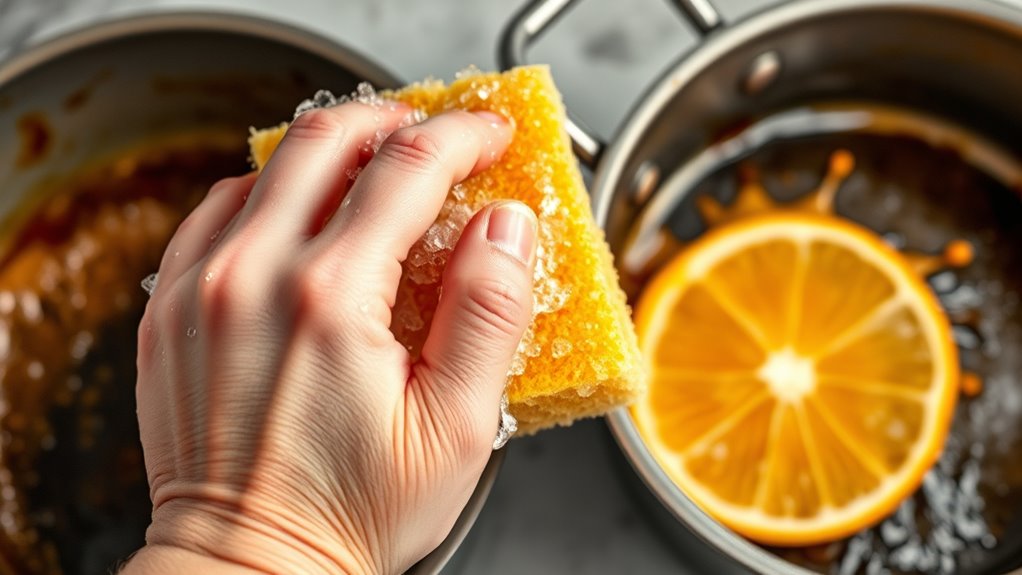
When scrubbing baked-on grease, use firm, circular motions with a non-abrasive pad to avoid damaging your cookware. Steer clear of steel wool or harsh scrubbers, especially on non-stick surfaces, since they can cause scratches.
For tough spots, gentle tools like a toothbrush can help reach tricky areas without harming your pans.
Effective Scrubbing Motions
If you want to tackle stubborn baked-on grease effectively, mastering your scrubbing motions is key. Start by using circular motions with a sponge or scrub brush to evenly loosen the grease. Apply firm pressure as you scrub, but avoid being too rough to protect your pots and pans.
For tougher spots, combine circular motions with firm back-and-forth scrubbing to break down residues, especially in crevices. This combination maximizes surface contact and helps dislodge burnt grease more efficiently. Remember to repeat your scrubbing motions consistently until the grease lifts completely.
Using these effective scrubbing techniques will make cleaning quicker and prevent damage to your cookware, leaving your pots and pans spotless every time.
Tools To Avoid
Since stubborn baked-on grease demands careful cleaning, you should avoid tools that can damage your cookware. Using steel wool or abrasive scrubbers might seem effective, but they can ruin non-stick coatings and scratch surfaces. Harsh chemical cleaners can corrode or discolor your pots and pans, so steer clear of those as well.
Avoid relying solely on scrubbing without soaking, as this increases the risk of damaging your cookware. Also, refrain from harsh metal utensils that worsen baked-on grease by scratching the surface.
Here are tools to avoid:
- Steel wool pads
- Abrasive scrubbers
- Harsh chemical cleaners (e.g., bleach)
- Metal utensils used for scraping
- Excessively aggressive scrubbing motions
Choose gentler methods to preserve your cookware’s lifespan and appearance.
How to Clean Nonstick and Stainless Steel Pans Safely
Although nonstick and stainless steel pans require different care, you can clean both effectively without damaging their surfaces. For nonstick pans, avoid abrasive scrubbers that harm the non-stick coating. Use a gentle cleaning agent like mild dish soap mixed in warm, soapy water.
Soak the pan for 10-15 minutes to loosen baked grease, then wipe with a soft sponge. If residue persists, gently scrub with a baking soda paste, but never use steel wool or metal utensils. Rinse thoroughly with warm water and dry immediately to protect the coating.
Stainless steel pans tolerate more vigorous scrubbing but still benefit from a mild cleaning agent and soapy water to avoid scratching. Treat both types carefully to keep them looking and performing their best.
Home Remedies for Baked Grease: Baking Soda, Vinegar, and Salt
When baked grease clings stubbornly to your pots and pans, you can turn to simple home remedies like baking soda, vinegar, and salt to tackle the mess effectively. These natural ingredients work together to break down grease without harsh chemicals.
- Mix baking soda with water to form a thick paste; apply it to greasy spots.
- Pour vinegar directly on the grease and let it sit for about an hour to soften residues.
- Sprinkle salt over the surface, then scrub with a damp sponge for extra abrasion.
- Combine baking soda, vinegar, and salt into a paste for tougher grease buildup.
- Use this mixture regularly to prevent hardened grease and ease future cleaning.
Using baking soda, vinegar, and salt not only cleans but also protects your cookware from stubborn baked-on grease.
When and How to Use Commercial Cleaners
If home remedies can’t fully tackle tough baked-on grease, commercial cleaners like oven degreasers or Bar Keepers Friend offer powerful alternatives. When using commercial cleaners, always follow the manufacturer’s guidelines on application time and safety precautions to protect yourself and your cookware.
Apply the cleaner evenly to the greasy areas, then let it sit for the recommended period to break down stubborn residues. Afterward, scrub gently with a non-abrasive pad to avoid scratching the surface.
Finally, rinse your pots and pans thoroughly with hot water to remove any chemical traces. By respecting application time and safety precautions, you’ll efficiently remove baked-on grease without damaging your cookware or exposing yourself to harmful substances.
Preventing Burnt Grease on Pots and Pans
Since burnt grease can stubbornly cling to your pots and pans, taking proactive steps during and after cooking is key to preventing buildup. Proper prevention not only saves you time on cleaning but also extends your cookware’s life.
Here’s what you can do to keep grease from baking onto surfaces:
- Clean your pots and pans immediately after use to stop grease from hardening.
- Use a grease trap or filter to catch excess grease before it sticks.
- Apply baking soda or vinegar while cooking to break down grease early.
- Avoid overheating oils, as high heat speeds up burnt grease formation.
- Maintain consistent cleaning habits to minimize stubborn grease buildup.
Bonus Tips: Maintaining Sparkling Clean Cookware
To keep your cookware looking its best, you’ll want to develop a few simple habits that prevent grease buildup and maintain their shine. After each use, wipe down pots and pans to avoid Burnt Grease Stains from forming. For deeper cleaning, use a baking soda and vinegar mix monthly to naturally lift stubborn grime.
When cleaning non-stick pans, steer clear of abrasive scrubbers to protect their coating. Store your cookware in a dry, organized space to reduce dust and make cleaning easier. Don’t forget to periodically polish stainless steel pots with a microfiber cloth or specialized cleaner to restore shine and prevent water spots.
These quick steps will keep your cookware sparkling and ready for your next meal.
Frequently Asked Questions
How Do I Get Baked on Grease off Pans?
You soak your pan in hot, soapy water, then apply a baking soda paste. Let it sit, scrub gently with a soft sponge, and rinse.
Repeat if needed or try vinegar and salt for tough spots.
What Will Dissolve Baked Grease?
You know what they say, “Where there’s a will, there’s a way.”
You’ll dissolve baked grease best by soaking your pans in hot water with dishwasher detergent—its enzymes and alkaline nature break down stubborn grease quickly.
How to Clean Burnt Pots and Scorched Pans?
Soak your burnt pots in hot, soapy water for an hour. Then scrub with a baking soda paste or boil vinegar water inside.
Avoid abrasive scrubbers on delicate surfaces to protect them while cleaning effectively.
How to Remove Baked on Oil From Cookware?
Think of baked-on oil as stubborn barnacles on a ship’s hull. You soak your cookware in hot, soapy water, scrub gently, then fizz with baking soda and vinegar to blast away the grease quickly and effectively.
Conclusion
With a little TLC and the right tricks, those stubborn baked-on grease spots don’t stand a chance. You’ve got the know-how to gently refresh your pots and pans without harsh scrubbing marathons. Whether you lean on natural remedies or the occasional commercial helper, keeping your cookware gleaming is easier than you think.
So go ahead, give your kitchen essentials the pampering they deserve—because a little care goes a long way in keeping your cooking space happily spotless. Quick and effective cleaning methods make removing baked grease from pots and pans simple and stress-free. Embrace these tips to maintain your cookware’s shine and extend its lifespan.