How to Clean a Burnt Carbon Steel Pan Quickly
To quickly clean a burnt carbon steel pan, start by letting it cool completely. This simple step prevents warping and makes cleaning safer.
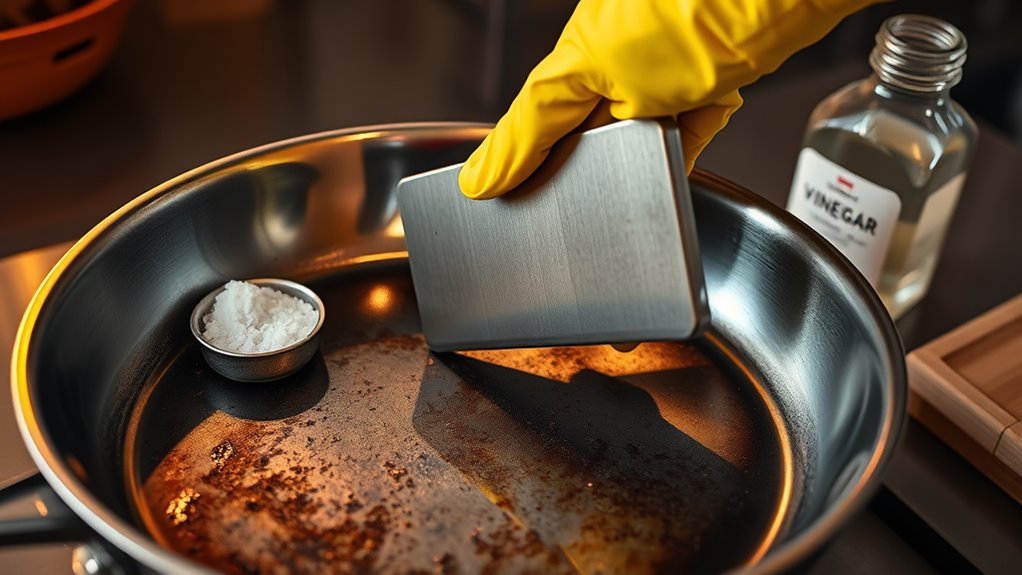
Next, sprinkle a generous amount of salt and add a little neutral oil, like canola. Use a paper towel to scrub in circular motions, lifting burnt bits without harming the pan’s seasoning.
For tougher spots, create a baking soda paste and gently scrub the area.
Always dry the pan thoroughly afterward and reapply oil to keep it well-seasoned.
If you want to keep your pan in great shape, there’s more to learn about maintaining and caring for it properly.
Get Your Carbon Steel Pan Ready for Cleaning
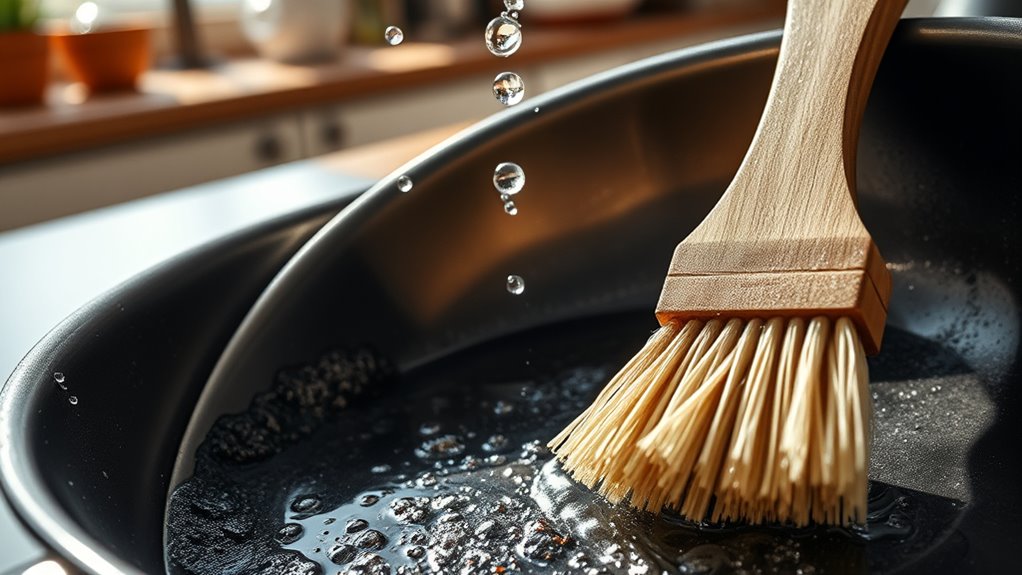
Before you start cleaning your burnt carbon steel pan, make sure it has cooled completely to prevent any warping or damage. Once cooled, remove any excess food residue by wiping the pan with paper towels or a soft cloth. This step reduces buildup and makes cleaning easier.
If you spot stuck-on food, gently scrape it off with a spatula to protect the pan’s surface. Avoid harsh soaps or abrasive scrubbers at this stage, as they can strip the pan’s natural seasoning. For light stains, a quick wipe with a damp cloth or paper towel usually does the trick.
When you’re ready, rinse the pan thoroughly with hot water to loosen remaining residue before proceeding with deeper cleaning steps. This prep guarantees your carbon steel pan is ready for effective cleaning.
Quick Ways to Remove Burnt Food From Carbon Steel Pans
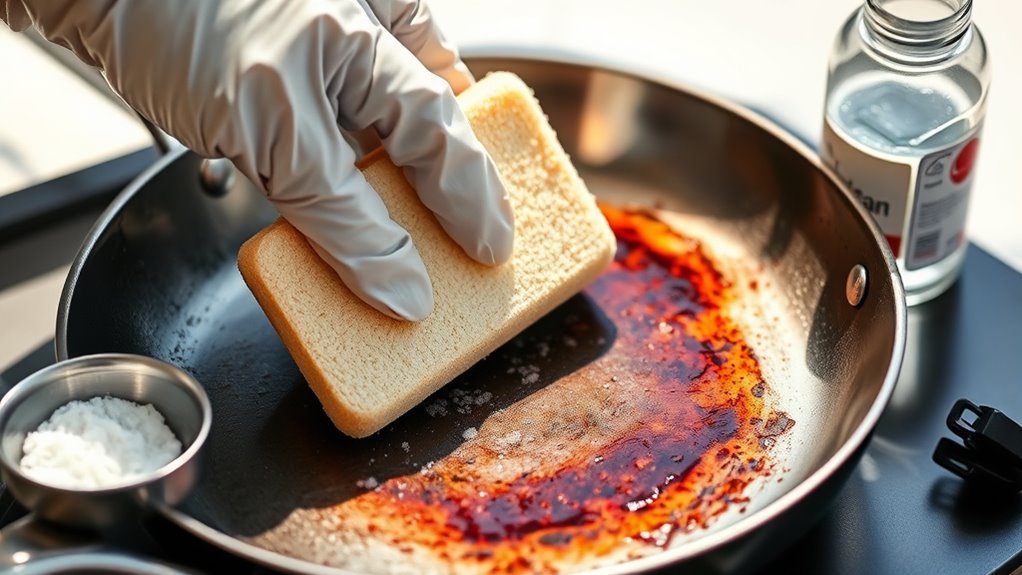
When burnt food sticks to your carbon steel pan, you can tackle it quickly with simple household items. Start by making a baking soda paste and apply it to the burnt areas. Use a scouring pad or crumpled aluminum foil to scrub gently; this cleaning方法 removes burnt food in about three minutes with little effort.
Alternatively, place a dishwasher tablet on the pan’s bottom to lift residues instantly, often needing no scrubbing afterward. Boil water in the pan to loosen stuck food, then scrape it off easily with a spatula. After cooking, wipe your carbon steel pans with kitchen paper or a soft cloth to prevent buildup.
These quick cleaning方法 keep your pans ready for the next use without damage or heavy scrubbing.
Clean Burnt Residue Using Salt and Oil
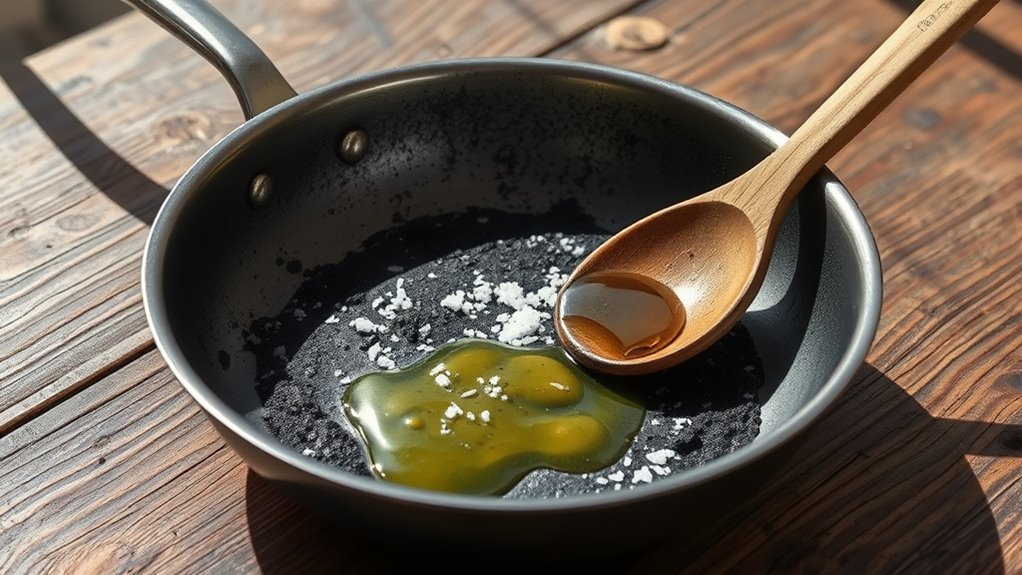
If you want to remove burnt residue without harming your pan’s seasoning, try scrubbing it with a mix of coarse salt and a neutral oil like canola or grapeseed oil. First, apply a generous amount of salt combined with oil to the cooled carbon steel surface. Use a paper towel or kitchen cloth to scrub in circular motions.
This method loosens burnt food and carbon deposits effectively while preserving the pan’s seasoning. Keep scrubbing until the residue is visibly gone, then wipe clean or rinse with warm water. After cleaning, reseason your pan by applying a thin layer of oil and heating it.
Regularly using salt and oil for cleaning prevents stubborn buildup and helps maintain your carbon steel pan’s non-stick surface and durability over time.
Remove Stubborn Burns With Baking Soda Paste
To tackle stubborn burns, start by mixing equal parts baking soda and water to create a thick paste. Spread the paste over the burnt areas and let it sit for 15-30 minutes to loosen the residue.
Then, gently scrub with a soft brush or cloth to lift the burnt food without harming your pan’s seasoning.
Making Baking Soda Paste
Although burnt residue can be tough to remove, you can tackle stubborn spots by making a simple baking soda paste. This paste works wonders to clean burnt spots without harming your carbon steel pan. Here’s how to make it:
- Mix baking soda with just enough water to form a thick, spreadable paste.
- Apply the paste generously onto the burnt spots, covering them completely for maximum effect.
- Let the paste sit for 15-20 minutes to loosen the burnt residue before you scrub.
This baking soda paste softens the stubborn burns, making them easier to clean. Once the paste has done its job, you’ll be ready to scrub gently and restore your pan’s surface without damage.
Scrubbing Techniques With Paste
Once the baking soda paste has softened the burnt residue, you can start scrubbing to lift the stubborn spots. Apply gentle pressure with a soft cloth or non-metallic sponge, moving in circular motions to avoid damaging your pan’s seasoning. The baking soda creates a mild abrasive surface that effectively loosens stubborn residues without scratching.
Make sure to let the paste sit for 10-15 minutes before scrubbing for best results. Focus on burnt areas, scrubbing patiently until the residue lifts. After you’ve removed the burnt food, rinse the pan thoroughly to wash away all baking soda and debris.
This method guarantees your carbon steel pan is clean and ready for your next use while preserving its seasoning and extending its lifespan.
When and How to Soak Your Pan Safely
You should soak your burnt carbon steel pan in warm water for about 10-15 minutes to loosen residue without jeopardizing the seasoning.
Avoid soaking it for more than 30 minutes to prevent rust. Using warm—not hot—water helps ensure safe and effective cleaning.
Soaking Time Guidelines
When you soak your carbon steel pan, keeping the duration within recommended limits guarantees you loosen burnt residue without harming the seasoning. Follow these soaking time guidelines to clean effectively and prevent rust:
- Soak the pan in hot water for 15 to 30 minutes to break down burnt residues without damaging the seasoning.
- If rust is present, soak in a vinegar-water solution for 1 to 5 hours, but remember to re-season afterward.
- Never exceed 24 hours of soaking to avoid metal warping or deterioration.
Always avoid harsh detergents during soaking to preserve the pan’s natural patina. After soaking, dry your pan thoroughly to prevent rust from forming.
Sticking to these soaking duration tips keeps your carbon steel pan in top shape.
Water Temperature Tips
Although soaking your burnt carbon steel pan is essential for loosening residue, handling water temperature carefully prevents damage to the pan’s seasoning and structure. Use hot water between 140°F and 160°F for soaking to soften burnt-on food without harming the seasoning. Avoid pouring boiling water immediately after cooking, as the rapid temperature change can cause thermal shock, leading to warping or cracking.
Let your pan cool about 50°F before soaking to keep it safe. For rust removal, soak the pan in a vinegar-water solution at moderate temperatures—never boiling—to effectively loosen rust without damage. After soaking, always dry your pan thoroughly to prevent rust formation, especially if you used warm or hot water during soaking.
Proper water temperature control ensures your pan stays durable and clean.
Scrubbing Techniques to Protect Your Pan’s Seasoning
Since maintaining your pan’s seasoning is essential, choose scrubbing methods that remove burnt food without damaging its protective layer. Use scrubbing techniques that balance effectiveness and gentleness.
Preserve your pan’s seasoning by scrubbing burnt food gently without harming its protective coating.
- Start with a soft brush or non-abrasive scrubber to tackle burnt spots without stripping the seasoning.
- Sprinkle coarse salt on the pan, then add a bit of oil. This combo acts as a gentle abrasive, loosening stubborn residues while preserving the seasoning.
- Avoid harsh tools like steel wool unless you plan to re-season afterward, as they can remove the pan’s protective coat.
After scrubbing, rinse and dry your pan immediately to prevent rust.
Finally, apply a thin layer of oil to keep the seasoning intact and ready for your next cooking adventure.
Common Cleaning Mistakes to Avoid With Carbon Steel Pans
Protecting your pan’s seasoning requires more than careful scrubbing; you also need to avoid common cleaning mistakes that can damage your carbon steel pan. Don’t overuse abrasive scrubbers like steel wool, as they strip seasoning and cause permanent damage.
Avoid harsh chemical cleaners—they corrode the surface and ruin the pan’s protective patina. Never wash a hot pan with cold water to prevent warping. Also, skipping thorough drying leads to rusting, compromising the pan’s non-stick quality.
Finally, avoid dishwashers since they remove seasoning and expose your pan to moisture.
| Mistake | Effect |
|---|---|
| Excessive steel wool use | Strips seasoning, damages pan |
| Using chemical cleaners | Corrodes surface, ruins patina |
| Washing hot pan with cold | Causes warping/cracking |
| Poor drying | Leads to rusting |
How to Dry and Oil Your Carbon Steel Pan After Cleaning
After you finish cleaning your carbon steel pan, make sure to dry it immediately with a clean towel or paper towel to prevent rust. Proper drying removes moisture that causes corrosion and keeps your pan in great shape.
Here’s how to dry and oil your pan effectively:
- Place the pan on low heat for a few minutes to evaporate any remaining moisture.
- Apply a thin, even layer of high smoke-point oil (like flaxseed, grapeseed, or canola) using a paper towel or cloth.
- Heat the oiled pan until the oil just begins to smoke, reseasoning and protecting the surface.
Let it cool completely before storing. Regular drying and oiling maintain your pan’s seasoning and ensure long-lasting non-stick performance.
Keep Your Carbon Steel Pan Burn-Free With Proper Maintenance
To keep your carbon steel pan burn-free, you should clean and maintain it consistently after every use. Start by wiping the pan with paper towels or a soft cloth to remove food residues and prevent buildup. For stubborn stains, scrub gently with coarse salt and a bit of oil; this won’t harm the seasoning.
Avoid soaking your pan in water since prolonged exposure can cause rust and damage the protective coating. After cleaning, dry your pan thoroughly on the stovetop or with a towel, focusing on any rusty spots. Finally, reapply a thin layer of high-smoke-point oil to preserve the seasoning and maintain its non-stick surface.
Proper cleaning, drying, and oiling are key to keeping your carbon steel pan in excellent condition and burn-free.
Frequently Asked Questions
How to Get Burnt Residue off Carbon Steel Pan?
You soak the pan in hot water to loosen residue, then scrub with a baking soda paste and crumpled aluminum foil.
For tough spots, boil vinegar water briefly, scrub, rinse, dry, and reapply a light seasoning layer.
How to Clean a Heavily Burnt Steel Pan?
You might think soaking alone removes heavy burns, but it’s just the start. Soak your pan with baking soda, scrub gently with steel wool, boil vinegar solution for stubborn spots, then rinse, dry, and re-season thoroughly.
What Dissolves Baked on Carbon?
You can dissolve baked-on carbon using baking soda, vinegar, or a combination of both. These create a chemical reaction that loosens the residue, especially when heated or applied as a paste, making it easier to scrub off afterward.
Applying the mixture as a paste allows it to cling to the surface, increasing its effectiveness. Heat can enhance the reaction, helping to break down stubborn carbon deposits. After letting the solution sit for a while, scrubbing with a brush or sponge should remove the loosened carbon.
How Do I Get the Black Stuff off My Burnt Pan?
You’ll get the black stuff off by boiling vinegar and water in the pan, then scrubbing with a crumpled aluminum foil ball and baking soda paste.
Rinse well, dry immediately, and repeat if needed for stubborn stains.
Conclusion
Cleaning your burnt carbon steel pan doesn’t have to be a hassle. By using simple tricks like salt, oil, or baking soda paste, you can restore your pan quickly without damaging its seasoning. Remember to scrub gently and soak when needed to loosen tough burnt residues.
Always dry and oil your pan afterward to keep it rust-free and maintain its non-stick surface. With proper care, your pan will stay as reliable as a trusty old friend. This quick cleaning method ensures your carbon steel pan remains in great condition, ready for many more delicious meals.