

How Does Moth Eggs Look Like on Clothes: A Visual Guide
You’ll find moth eggs as tiny, white or cream-colored specks less than 0.5mm, often blending into fabric folds, seams, collars, or cuffs on natural fibers like wool or cotton.
These moth eggs on clothes can look like tiny dust or lint and may cluster in hidden, dark spots.
Using a flashlight or magnifying glass helps you spot them more easily.
If you want to protect your clothes, discovering how to identify and handle these eggs is a smart next step.
Recognizing moth eggs on clothes early can prevent damage to your favorite garments.
What Do Moth Eggs Look Like on Clothes?

Although moth eggs on clothes are tiny and often go unnoticed, you can spot them if you look closely. Moth eggs on clothes appear as soft white specks, usually less than 0.5mm in size. They blend seamlessly into fabric fibers, making them easy to miss at first glance.
You’ll often find these eggs scattered individually or grouped in small clusters, sticking tightly to natural fibers like wool or silk. Because they’re sticky, moth eggs cling to areas such as seams, collars, or creases where they remain hidden. Fresh eggs look smooth and pearly white, but as they age, they may turn translucent right before hatching.
At a glance, they resemble tiny bits of lint or dust resting on your clothes.
Where Do Moths Lay Moth Eggs on Fabrics?

Now that you know what moth eggs look like on clothes, it’s important to understand where moths prefer to lay them. Clothes moths typically choose natural fibers like wool, cashmere, and silk, as these materials nourish their larvae. You’ll often find moth eggs in hidden spots—seams, folds, collars, cuffs, and behind buttons—where they’re less visible.
Clothes moths favor dark, undisturbed places such as inside closets, drawers, or under furniture, especially if fabric stains or organic residues are present. Moth eggs are sticky, so they adhere firmly to fibers, often laid in small clusters or scattered individually close to the fabric’s surface or within fibers.
Knowing these common egg-laying sites helps you target inspections and prevent infestations effectively.
How to Spot Moth Eggs Using Light and Magnification
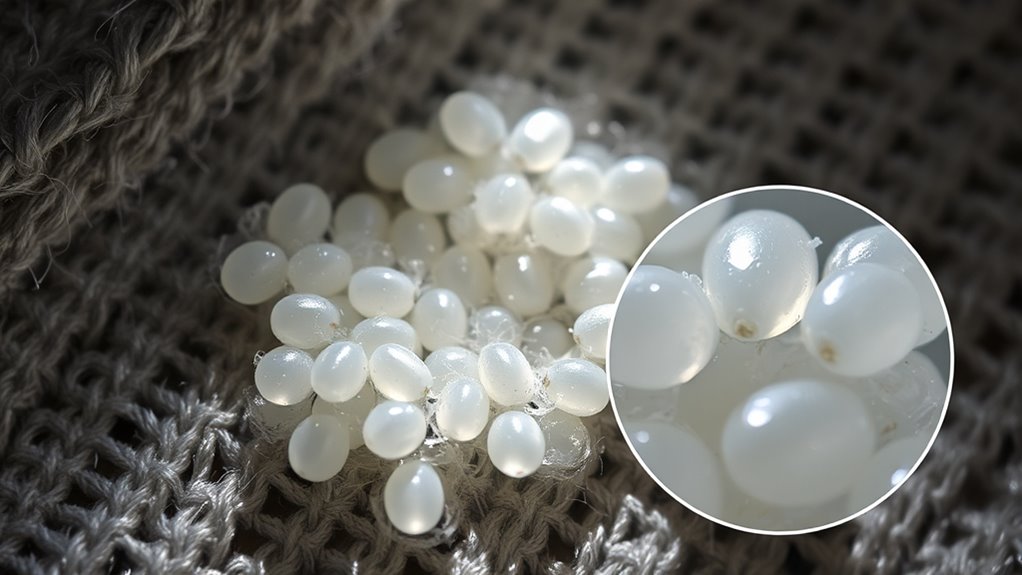
When you want to detect moth eggs on your clothes, using light and magnification makes the tiny eggs much easier to see. Grab a bright flashlight or use natural light to illuminate the fabric clearly. Then, employ a 10× hand lens or a smartphone macro lens to closely examine hidden areas like seams, cuffs, collars, and folds where moth eggs often hide.
Gently run your fingers along these spots to feel for gritty eggs embedded in the fibers. Focus on dark, concealed places such as under buttons or inside pockets. Make it a habit to check stored clothing regularly, especially after long storage or in humid conditions.
This combination of light and magnification helps you spot moth eggs before they develop into a bigger problem.
How to Tell Moth Eggs Apart From Other Fabric Pest Eggs
Since moth eggs are small, soft, and blend seamlessly into natural fabrics, you need to pay close attention to tell them apart from other fabric pest eggs. Moth eggs look like tiny, grain-like specks on wool or silk, often laid singly or in small clusters.
To identify them correctly, compare these traits with other pest eggs:
| Feature | Moth Eggs |
|---|---|
| Size | Tiny, grain-like |
| Texture | Soft, sticky |
| Location on fabric | Surface of natural fibers |
| Clustering | Single or small clusters |
| Appearance | White, blends with fabric |
Unlike carpet beetle eggs that are rounder, shinier, and embedded, moth eggs are more inconspicuous and usually on the fabric surface. This helps you distinguish moth eggs from other pests effectively.
Signs Moth Eggs Have Hatched and Larvae Are Present
Although moth eggs are tiny and often go unnoticed, you’ll recognize they’ve hatched when you spot small, cream-colored larvae about 1 to 2 millimeters long, along with webbing, silk cases, or frass on your clothes. These larvae emerge within 4 to 10 days in warm conditions and start feeding immediately.
You’ll notice irregular holes or trails in fabrics where larvae have burrowed or spun silk tunnels. The presence of webbing is a clear sign that larvae are actively feeding and moving around your stored clothing. Keep an eye out for tiny silk cases as well, which larvae create for protection.
Spotting these signs means the infestation is ongoing, and it’s time to take action to protect your textiles from further damage.
How Temperature and Humidity Affect Moth Eggs
You’ll notice moth eggs hatch faster when temperatures rise, often within just a week in warm conditions.
Humidity also plays a key role, as higher moisture levels help eggs develop and increase hatch success.
Temperature Impact On Hatching
When you expose moth eggs to warmer temperatures, they hatch faster, usually within 4 to 10 days. Temperature plays a vital role in the hatching process; higher temperatures speed up development, while cooler conditions slow it down.
If you keep moth eggs in cooler, drier environments, expect the hatching to take several weeks longer. Prime hatching happens around 25-30°C (77-86°F), where eggs develop efficiently and larvae emerge healthy.
However, fluctuating temperatures can disrupt this timing, causing irregular hatching patterns that might affect larval survival. So, if you want to predict or control when moth eggs hatch on your clothes, monitoring and managing the temperature is key.
Humidity’s Role In Development
Since humidity directly affects moth eggs’ development, managing moisture levels is essential to controlling their hatching process. Higher humidity speeds up egg development, shortening the incubation period and increasing the chances of a successful infestation.
On the other hand, dry environments cause moth eggs to remain dormant longer, delaying hatching and lowering infestation risks. However, too much moisture can lead to mold growth on your clothes, attracting moths and other pests.
To keep moth eggs from developing quickly, you should maintain low humidity by using dehumidifiers or ensuring proper ventilation. By controlling humidity around your clothes, you reduce egg viability and protect your fabrics from moth damage effectively.
How to Check Clothes for Moth Eggs
To check clothes for moth eggs, use a bright light to spot tiny white eggs, especially in dark folds and seams. Focus on high-risk items like wool and silk, where eggs often hide.
Run your fingers gently over collars, cuffs, and hems to catch any hidden signs.
Spotting Tiny White Eggs
Although moth eggs are incredibly tiny and often hard to spot, you can still find them by closely inspecting hidden areas of your clothes like seams, cuffs, and collars with a bright flashlight or a smartphone macro lens. Moth eggs on clothes appear as soft white specks, smaller than a grain of rice.
To effectively spot them:
- Use good lighting to reveal tiny white eggs in concealed fabric folds.
- Run your fingers gently over the fabric to detect any gritty or sandy textures signaling eggs or webbing.
- Focus on areas where moths prefer to lay eggs, such as near stains or sweat marks.
Regularly checking your clothes this way helps catch moth eggs early before they hatch and cause damage.
Inspect High-Risk Areas
Finding tiny white moth eggs on your clothes means you’ll want to focus your inspection on the areas where moths prefer to lay them. Target high-risk items like wool suits, cashmere jumpers, and vintage fabrics, as these materials attract moth eggs most. Carefully check dark spots, seams, cuffs, and inside folds where eggs often hide.
Run your fingers gently over the fabric to detect any gritty eggs or webbing signaling larvae presence. Don’t forget to examine spots with organic stains or residues, since moths like to lay eggs nearby. Also, look in storage spaces such as closet corners, drawer edges, and behind buttons, where moth eggs can easily go unnoticed.
Concentrating on these places helps you catch infestations early and protect your clothes effectively.
Use Bright Light
A bright light can be your best tool when checking clothes for moth eggs. Using a bright light during your inspection helps reveal tiny, pearly white eggs that often blend with fabric fibers.
Here’s how to make the most of it: Shine the bright light along seams, collar linings, and inside pockets—these are common egg-laying spots. Move the light slowly over fabric surfaces, focusing especially on dark or stained areas where eggs tend to cluster.
Perform regular inspections under bright light to catch early signs of infestation before larvae hatch.
How to Remove Moth Eggs From Clothes
Since moth eggs can hide in the tiniest folds and seams, you’ll need to take thorough steps to remove them from your clothes. Start by washing garments at 50°C or higher and tumble dry on high heat to destroy eggs on washable fabrics.
For non-washable items, freeze them at -8°C for at least 72 hours to kill moth eggs and larvae effectively. After treatment, seal affected clothes in airtight bags or containers to contain any remaining eggs and prevent new ones.
Don’t forget to vacuum storage areas thoroughly, focusing on seams, folds, and hidden corners where moth eggs may be concealed. Regularly inspect and clean your storage space using bright light or a magnifying lens to catch and remove eggs before they hatch.
How to Prevent Moths From Laying Eggs on Clothes
Although moths can be persistent, you can stop them from laying eggs on your clothes by taking proactive storage and cleaning measures. To prevent moth eggs from infesting your fabrics, follow these key steps:
Stop moths from laying eggs on your clothes with smart storage and cleaning habits.
- Store your clothes in airtight containers or sealed plastic bags to block moth access.
- Regularly clean and vacuum wardrobes, drawers, and surrounding areas to remove any hidden moth eggs or larvae.
- Use natural repellents like cedar blocks, cedar oil, or dried lavender sachets, as moths dislike their scent and avoid treated areas.
Additionally, washing clothes at high temperatures or freezing vulnerable garments can kill existing eggs.
Frequently Asked Questions
How Do I Know if My Clothes Are Moth Eggs?
You’ll notice tiny, soft white or cream-colored specks, often less than 0.5mm, stuck in seams or folds. They might look like lint but feel sticky.
Check wool or silk clothes regularly to catch them early.
What Do Moth Larvae Look Like on Clothes?
You might spot tiny cream-colored caterpillars with plump, segmented bodies and brown heads nestled in your clothes. They weave silk webbing and leave tiny dark specks, signaling their unwelcome feast on your fabric.
What Time of Year Do Clothes Moths Lay Eggs?
You’ll find clothes moths laying eggs mostly from late spring to early fall when it’s warm, usually between May and September. They’re less active in colder months unless your indoor environment stays warm year-round.
Do I Need to Wash All My Clothes if I Have Moths?
You don’t need to wash all your clothes if you have moths. Focus on washing or treating only the infested items at 50°C or higher.
Consider dry cleaning delicate fabrics to remove eggs effectively. This targeted approach helps prevent damage to your entire wardrobe while addressing the moth problem efficiently.
Conclusion
So, next time you spot what looks like fairy dust on your favorite sweater, don’t just admire it—those pesky moth eggs are throwing a party you weren’t invited to. Grab a magnifying glass, channel your inner detective, and evict those microscopic squatters.
Remember, ignoring them won’t turn your clothes into a moth buffet; it just guarantees their larvae will RSVP. Keep your wardrobe moth-free, or prepare for an unplanned “eaten-away” fashion statement!
Understanding how moth eggs look like on clothes is key to early detection and prevention. Stay vigilant and protect your garments from these tiny invaders.