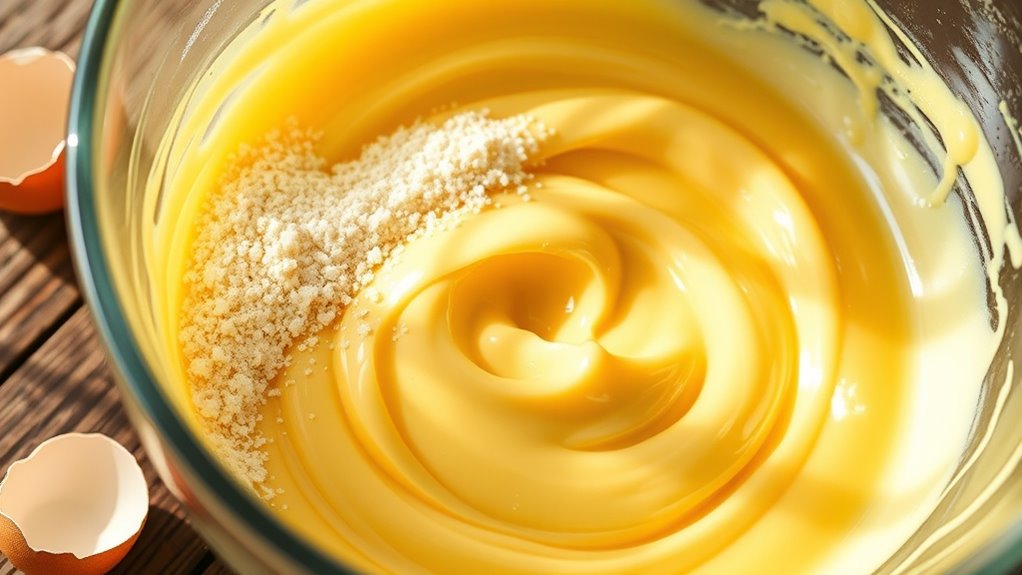
What Does Eggs Do in a Cake?
You use eggs in cake batter to build structure by forming a protein network that holds everything together. Eggs play a crucial role in baking cakes, impacting texture, moisture, and rise.
Yolks add moisture, richness, and tenderness, while whites lighten the texture and help the cake rise by trapping air.
Whipping egg whites creates fluffier cakes, and changing egg ratios can affect moisture and height.
If you omit or substitute eggs, expect differences in texture and rise. There’s plenty more to explore about how eggs transform your cake.
How Eggs Build Structure in Cake Batter
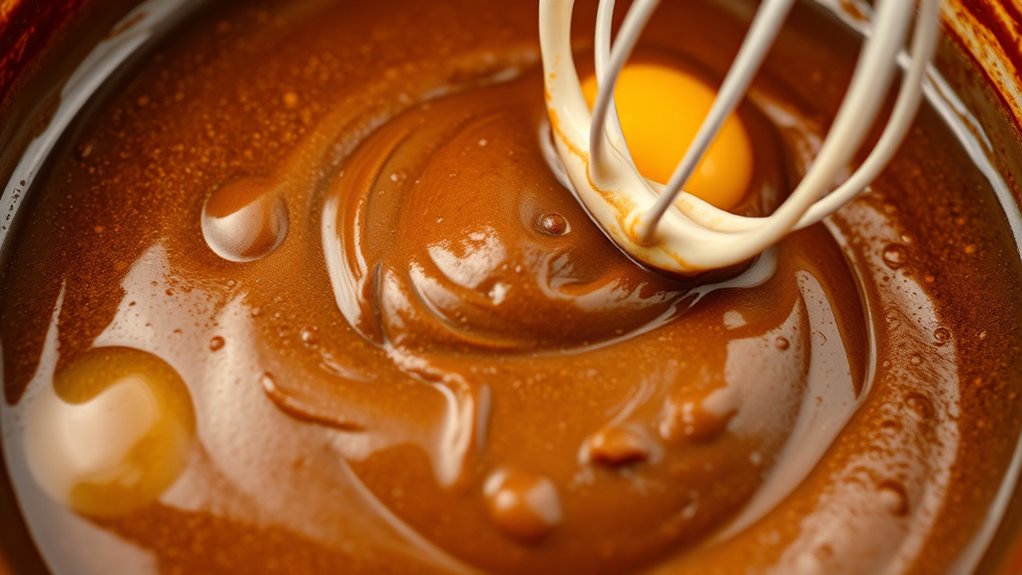
When you heat cake batter, the proteins in eggs unfold and link together, forming a strong network that creates the cake’s framework. Egg whites play an essential role here; their proteins expand and bond, forming a sturdy protein network that traps air and moisture. This network helps the cake rise and maintain its shape.
As the batter heats, the coagulation of these proteins solidifies the structure, giving your cake stability. Additionally, egg proteins interact with the starch gel from flour, which helps develop the cake’s crumb. If you incorporate eggs properly, you guarantee an even distribution of proteins throughout the batter, supporting a uniform and consistent structure.
This interplay between egg whites and other ingredients is fundamental to achieving a perfect cake texture.
What Egg Yolks Add to Cake Texture and Flavor
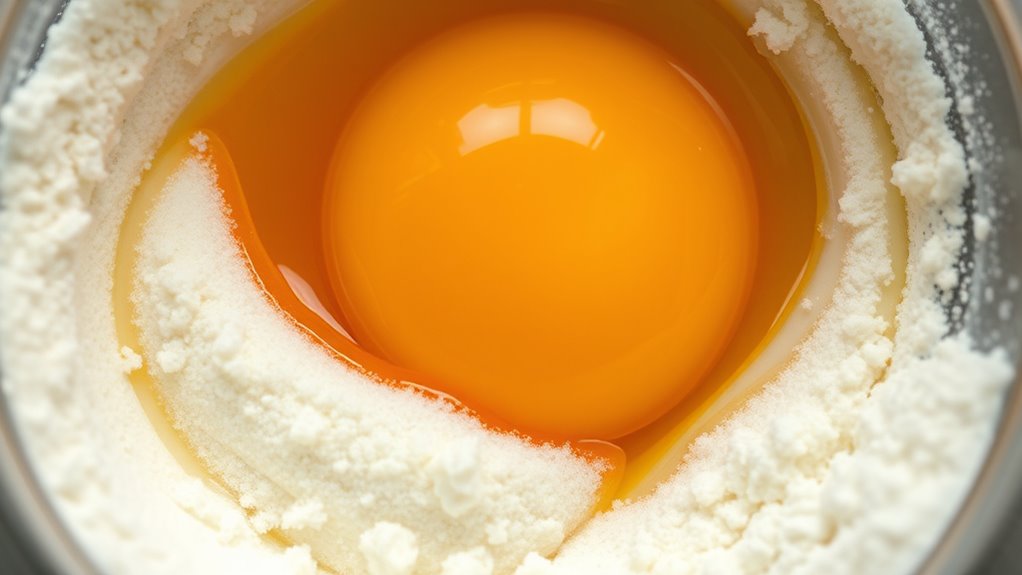
Although egg whites build the cake’s structure, egg yolks bring richness and smoothness by adding fat and emulsifiers like lecithin. When you include egg yolks in your batter, you enhance both cake texture and flavor in several key ways:
- The fat in egg yolks coats gluten strands, making the crumb tender and moist.
- Lecithin acts as an emulsifier, creating a smooth, cohesive batter that bakes evenly.
- Proteins in yolks support crumb stability, preventing it from becoming too crumbly.
- Vitamins and minerals in yolks deepen the cake’s flavor complexity and nutritional value.
How Egg Whites Lighten and Leaven Cakes
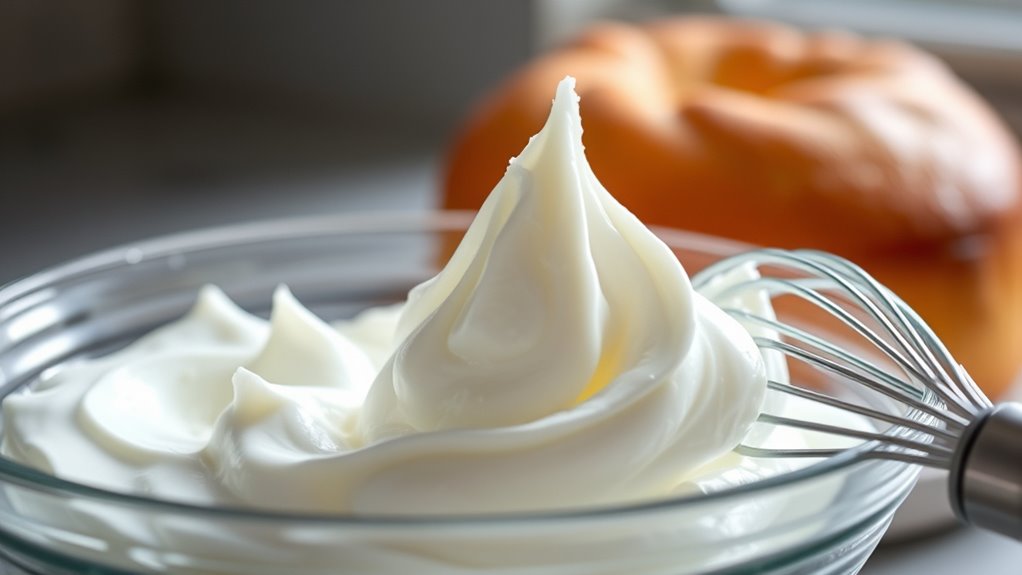
Egg yolks add richness and tenderness to your cake, but egg whites play a different role by making it lighter and airier. When you whip egg whites, you trap air bubbles, forming a foam that provides essential leavening.
During baking, these bubbles expand as the whites partially coagulate, helping your cake rise beautifully and creating a soft, open crumb.
| Stage | Effect on Cake | Key Factor |
|---|---|---|
| Whipping | Traps air bubbles | Foam formation |
| Adding acid | Stabilizes foam | Lemon juice/cream of tartar |
| Baking | Expands trapped air | Partial coagulation |
| Final texture | Light, airy crumb | Leavening effect |
Why Whipping Egg Whites Makes Cakes Fluffier
How exactly does whipping egg whites transform your cake’s texture? When you whip egg whites, you trap tiny air pockets that expand during baking, making your cake fluffier. Here’s why it works:
- Whipping egg whites incorporates air bubbles that create a light, airy texture.
- The foam traps moisture and leavening gases, boosting the cake’s volume.
- Partially coagulated egg proteins stabilize the foam, helping the cake rise higher.
- Gently folding whipped egg whites into the batter preserves those air pockets, resulting in a softer crumb.
How Changing Egg Ratios Affects Cake Moisture and Rise
Why does tweaking the ratio of yolks to whites change your cake’s texture so much? When you increase egg yolks, you add more fat and protein, making your cake moister and richer with a velvety crumb. On the other hand, adding more egg whites boosts leavening, helping your cake rise higher and become lighter with an airy texture.
If you swap some whole eggs for extra yolks, expect a denser but tender crumb. You can even fold in whipped egg whites for extra volume and height. By adjusting the egg ratios, you control whether your cake turns out moist and rich or light and fluffy.
Understanding this balance helps you tailor your cake’s moisture and rise to match your baking goals perfectly.
What Happens When You Substitute or Omit Eggs in Cakes?
Although eggs play multiple essential roles in cakes, you can substitute or omit them with some adjustments. Since eggs function in baking by providing structure, leavening, and moisture, replacing them affects your cake’s texture and rise. Here’s what to expect:
- Omitting eggs often leads to a denser cake with less tender crumb due to reduced structure.
- Using flaxseed gel or aquafaba mimics eggs’ binding and foaming but can change flavor and texture.
- Applesauce or yogurt add moisture but decrease lift, resulting in a softer crumb.
- Cakes without eggs might brown less and have a shorter shelf life because emulsification decreases.
Understanding eggs function in baking helps you pick the right substitute and adjust your recipe for the best results.
Egg Handling Tips for the Best Cake Results
Make sure to use room temperature eggs to help them blend smoothly into your batter. Take care when separating eggs to avoid getting yolk in the whites, which can ruin their ability to whip.
Add eggs one at a time and mix gently to keep your batter stable and avoid overmixing.
Proper Egg Temperature
When you use eggs at room temperature, around 68°F (20°C), you’ll find they whip up more easily and incorporate better into your cake batter.
Achieving the proper egg temperature is key for smooth, stable mixtures and fluffy whipped whites. Here’s why it matters:
- Cold eggs slow foam formation, reducing the volume and stability of whipped whites.
- Warming eggs slightly before mixing helps create a more consistent batter.
- Overcooling eggs can cause batter curdling or uneven mixing, affecting texture.
- Store eggs at room temperature before baking for ideal freshness; refrigerate only if not using immediately.
Gentle Egg Incorporation
Using eggs at room temperature sets the stage for smooth incorporation, but how you add them to your batter plays a big role in your cake’s final texture. For gentle egg incorporation, add eggs one at a time, ensuring each is fully mixed before adding the next. This prevents curdling and maintains a smooth, uniform batter.
To preserve batter aeration, avoid overmixing—fold eggs in slowly with a spatula when working with delicate batters to keep the mixture light and airy. This careful approach helps maintain the volume and airiness that give your cake a tender crumb and even rise.
Avoid Cross-Contamination
Although eggs add moisture and structure to your cake, handling them improperly can introduce harmful bacteria into your batter. To avoid cross-contamination and keep your cake safe, follow these tips:
- Wipe eggshells with a clean, damp cloth before cracking to remove dirt and bacteria.
- Store eggs in the refrigerator at 40°F (4°C) to slow bacterial growth and maintain freshness.
- Separate eggs carefully to prevent shell fragments and bacteria from mixing into the yolks or whites.
- Always wash your hands thoroughly with soap and water after handling raw eggs to avoid spreading bacteria to other ingredients or surfaces.
Frequently Asked Questions
What Happens if You Don’t Put Eggs in a Cake?
If you don’t put eggs in a cake, you’ll end up with a denser, flatter texture that lacks moisture and tenderness. Your cake might collapse or be dry, and the flavor and color won’t be as rich or vibrant.
What Is the Secret to Soft Fluffy Cakes?
You’ll find the secret to soft, fluffy cakes lies in gently folding whipped egg whites into your batter and using room temperature eggs.
This traps air bubbles, creating that perfect, tender crumb you’re craving every time.
Do Eggs Help Cakes Rise?
Yes, eggs help cakes rise by trapping air in whipped whites and expanding proteins during baking. You’ll get a lighter, fluffier cake because eggs create structure and steam that boosts the batter’s volume as it bakes.
What Happens to Cakes Without Eggs?
Imagine your cake as a castle without its sturdy walls—without eggs, it crumbles easily, feels heavy, and lacks the airy charm you expect.
You’ll need clever substitutes to keep it standing tall and tender.
Conclusion
Eggs are the unsung heroes of your cake, building structure, adding richness, and giving it that perfect lift. Without them, your cake might turn out as flat as a pancake on a griddle!
By understanding how yolks and whites work together, you can master moisture, texture, and fluffiness.
So next time you bake, treat your eggs with care—they’re the secret ingredient that turns simple batter into show-stopping cake magic! Eggs in a cake are essential for achieving the ideal rise, tenderness, and flavor that make your dessert truly irresistible.