
Why Is My AC Pan Full of Water and How Do I Fix It Fast?
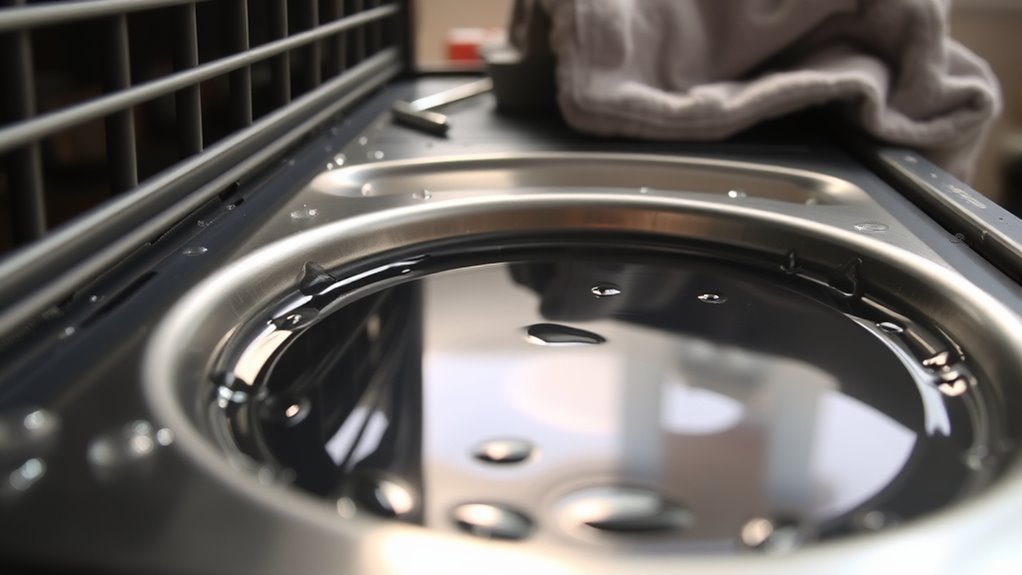
Your AC pan is full of water likely because the drain line is clogged with dirt, algae, or debris.
Another common cause is frozen evaporator coils, which can result from dirty filters or low refrigerant levels.
Understanding why your AC pan fills with water is key to fixing it fast.
To fix it quickly, first turn off the AC to prevent further overflow.
Then, clear the drain line using a vacuum or a vinegar solution to remove any blockages.
Don’t forget to replace any dirty filters to improve airflow and prevent coil freezing.
Taking these steps prevents water damage and keeps your AC running smoothly.
Keep following for simple tips to stop this problem quickly and maintain your unit’s efficiency.
Top Causes of Water Overflow in Your AC Drain Pan
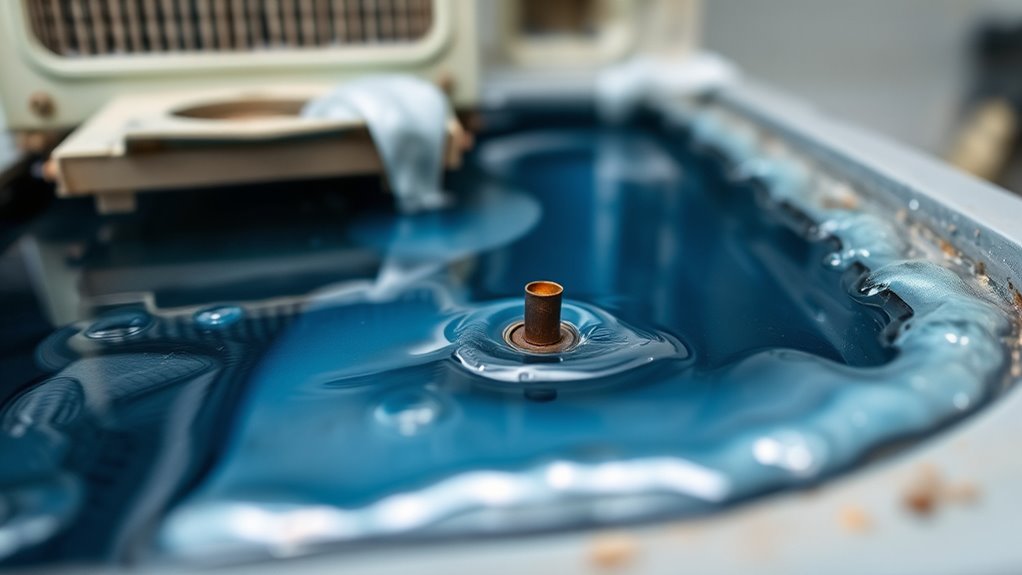
When your AC drain pan overflows, it’s often because clogged drain lines or debris have blocked the water’s path. A clogged drain caused by algae, dirt, or organic debris creates a drain line blockage that traps water, leading to an overflowing A/C pan.
Another common cause is a frozen evaporator coil, which happens when restricted airflow or low refrigerant pressures cause ice buildup. When the ice melts, excess water floods the drain pan. Improper installation or incorrect tilt of your unit can also hinder drainage, contributing to water accumulation.
Regular system maintenance is essential to prevent these issues. By keeping drain lines clear and ensuring your AC runs efficiently, you reduce the risk of an overflowing A/C pan and the damage it can cause.
Steps to Stop AC Drain Pan Overflow Quickly
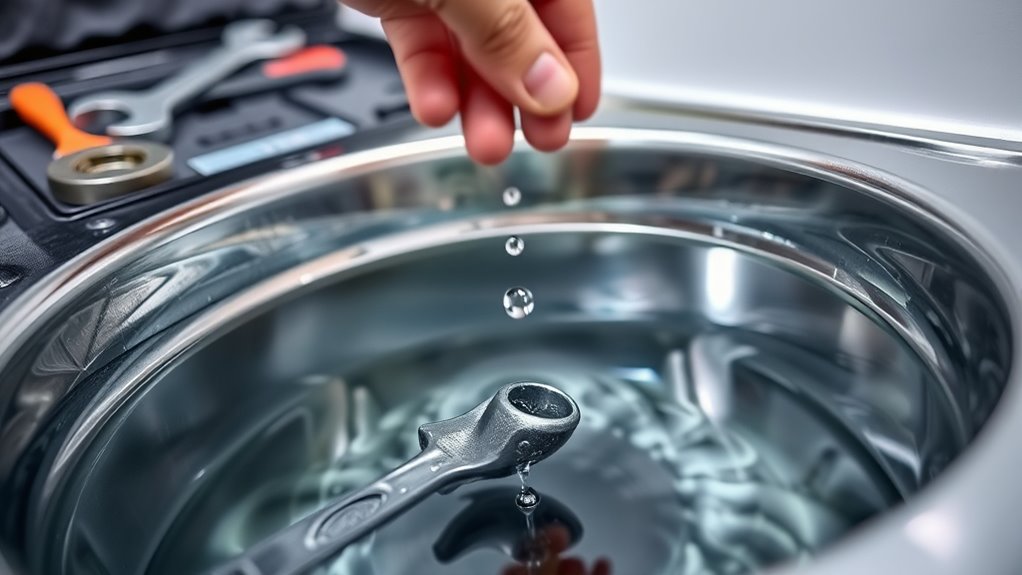
If you notice water pooling in your AC drain pan, act quickly by turning off the air conditioner to prevent further damage. Next, inspect the drain pan and the clogged drain line causing water overflow. Check your air filter and replace it if dirty to avoid a frozen coil.
Carefully remove the water from the drain pan, then dry it completely. If these steps don’t solve the issue, call a professional.
| Step | Action |
|---|---|
| 1. Turn Off AC | Prevents further water overflow |
| 2. Inspect Drain Line | Clear clogs with vacuum/vinegar |
| 3. Check Air Filter | Replace dirty filters |
| 4. Drain Pan Water Removal | Use towel or wet/dry vacuum |
| 5. Call Technician | For persistent or complex issues |
How a Blocked Drain Line Leads to AC Pan Overflow
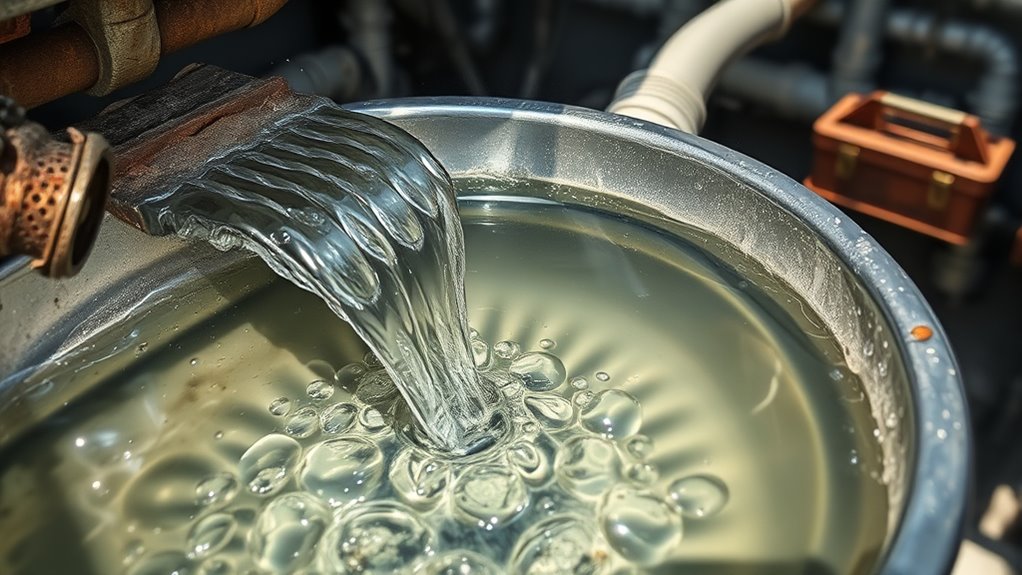
You’ve taken steps to stop water from overflowing in your AC drain pan, but understanding why this happens can help prevent it from recurring. A clogged drain line is often the culprit. Over time, algae, mold, dirt, and other debris build up in the drain line, blocking the flow of condensation water.
When this happens, water can’t exit properly and starts to back up into the drain pan. The pan fills beyond capacity, causing overflow that may lead to serious water damage around your unit. You might notice musty odors, leaks near the indoor unit, or even unexpected system shutdowns.
Clearing the blockage—whether by using a wet/dry vacuum, pipe cleaning, or hiring a professional—restores proper drainage and protects your home from further water damage.
Why Dirty Air Filters Cause Water Build-Up in Your AC Pan
Because dirty air filters restrict airflow over the evaporator coil, your AC system can develop ice buildup that melts into excess water in the drain pan. When air filters are clogged, your system runs longer to cool your space, increasing moisture accumulation in the drain pan.
This happens because reduced airflow causes the evaporator coil temperature to drop below freezing, forming ice. As the ice thaws, it drips more water than usual into the drain pan, risking overflow, especially if you also have a clogged line.
Regular system maintenance, including cleaning or replacing air filters, ensures proper airflow, preventing coil freezing and excessive water buildup. Keeping your air filters clean is a simple yet essential step to avoid water issues and maintain your AC’s efficiency.
How Frozen Coils Make Your AC Drain Pan Overflow
When your AC coils freeze, they block proper drainage and cause water to back up into the drain pan. This happens because low airflow or refrigerant issues lower the coil temperature, leading to ice buildup.
You’ll need to thaw the coils and fix these problems to stop the overflow.
Causes Of Coil Freezing
If your AC’s evaporator coils freeze, they’ll block airflow and refrigerant flow, causing the coil temperature to drop below freezing. This coil frost or ice buildup prevents proper heat absorption, leading to frozen coils.
One common cause is airflow restriction due to dirty filters or blocked vents, which reduces air moving over the coils. Another culprit is a refrigerant leak or improper refrigerant charge, which disrupts the cooling cycle and causes the coils to freeze.
When the ice melts, it produces excess water runoff, overwhelming the drain pan and causing water overflow. Understanding these causes helps you identify why your AC pan fills with water and points you toward the right solution before the problem worsens.
Thawing And Prevention Methods
Frozen evaporator coils block condensate from draining properly, causing water to back up and overflow your AC drain pan. To fix this, start thawing by turning off the AC and letting the ice melt naturally or use gentle heat.
After thawing, focus on coil cleaning and fixing airflow issues to prevent frozen coils from returning. Regular preventative maintenance like filter replacement keeps your system running smoothly and avoids drain pan overflow.
| Issue | Thawing Method | Prevention |
|---|---|---|
| Frozen coils | Turn off AC, melt ice | Clean filters, check refrigerant |
| Ice buildup | Gentle heat source | Coil cleaning regularly |
| Drain pan overflow | Clear blockages | Routine preventative maintenance |
How Poor Installation Causes AC Drain Pan Leaks
If your AC drain pan isn’t tilted correctly, water can pool and overflow instead of draining properly. Faulty drain line connections, often from poor installation, make leaks even more likely.
You’ll want to guarantee everything’s aligned and sealed right to keep your system running smoothly.
Incorrect Pan Tilt
Why does an incorrectly tilted drain pan cause your AC to leak? When the drain pan tilt is off during AC installation, water can’t flow properly to the drain pipe. Instead, it pools in the pan, causing a drainage problem that leads to leaks or overflow.
If the pan tilts away from the drain or isn’t level, water backs up, creating water pooling that damages nearby components. A misaligned drain worsens this by allowing water to flow where it shouldn’t, increasing the risk of leaks.
To prevent these issues, ensure your AC is installed by a licensed technician who sets the drain pan at the correct angle. Fixing an incorrect pan tilt prevents water buildup and protects your system from costly damage.
Faulty Drain Line
How does a faulty drain line lead to AC drain pan leaks? Poor installation is often the culprit, causing water to back up or overflow the drain pan. If the drain line isn’t aligned correctly or has an improper slope, gravity can’t do its job, leading to standing water and leaks.
Here’s what you should watch for during installation:
- A clogged or misaligned drain line that blocks water flow.
- Loose or improperly connected pipes allowing leaks.
- Missing or faulty drainage parts causing overflow.
Using unqualified technicians can worsen these issues, resulting in an overflowing drain pan and potential water damage. Make sure your AC’s drain line is installed properly, sealed well, and positioned to let condensate flow outside without obstruction.
How to Clear and Clean Your AC Drain Line Safely
Before you start clearing your AC drain line, make sure to turn off and unplug the unit for your safety. Locate the condensate drain line, usually a PVC pipe, and remove its cap or access panel.
If the drain line is clogged, use a wet/dry vacuum to create suction and remove any blockage or debris inside. This vacuuming is key to effective cleaning and restoring proper water flow.
After vacuuming, pour a mix of equal parts white vinegar and water into the drain line to break down algae and organic buildup that can cause future clogs.
Finally, reattach the cap, plug the AC back in, and run the system to ensure the drain line is draining freely and your AC pan won’t overflow.
How Regular Air Filter Changes Prevent AC Drain Pan Overflow
Although it might seem like a small task, changing your AC air filter every one to three months plays a crucial role in preventing your drain pan from overflowing. A clean air filter ensures proper airflow, which stops the evaporator coil from freezing and causing excess water buildup.
Regularly changing your AC filter prevents drain pan overflow by ensuring proper airflow and stopping coil freezing.
When you skip this maintenance, dirt and debris can lead to a clogged line and water overflow. By regularly replacing your filter, you:
- Maintain smooth airflow, allowing efficient condensation drainage.
- Reduce mold and algae growth that could block your drain pan’s line.
- Protect your system from costly water damage linked to an overflowing drain pan.
Keeping up with air filter changes is a simple yet powerful way to safeguard your AC system’s health and keep your home dry.
Preventive Maintenance Tips to Keep Your AC Drain Pan Dry
Keeping your air filter clean sets the stage for preventing water issues, but there are additional steps you should take to keep your AC drain pan dry. Flush the AC drain line with vinegar or a specialized cleaner every six months to avoid a clogged drain line, which can cause water overflow.
Make sure your system is properly installed and tilted slightly to help gravity move water away from the drain pan. Schedule annual system maintenance to inspect and clean coils, filters, and drainage components, ensuring everything runs smoothly.
Consider installing safety devices like float switches that automatically shut off the system if water levels rise too high in the drain pan. These preventive measures will help you avoid water overflow and keep your AC drain functioning efficiently.
When to Call a Professional for AC Drain Pan Problems
If your drain pan keeps filling up or overflowing despite your efforts, it’s time to call a professional. Persistent drainage issues often signal complex system malfunctions that need expert diagnosis.
Don’t wait—addressing these problems early can prevent costly damage and safety hazards.
Persistent Drainage Issues
When your AC drain pan keeps overflowing despite your efforts to clean it, you should consider calling a professional. Persistent drainage problems often signal a clogged line or an underlying system malfunction that DIY fixes can’t fully resolve. Ignoring these issues risks water damage and mold growth.
You should seek expert help if you notice:
- Frequent overflow of the drain pan even after clearing the drain line
- Foul odors or visible water leaks around the system
- Recurring drainage problems indicating possible installation or refrigerant issues
A licensed HVAC technician can diagnose and repair these persistent issues, ensuring your system runs smoothly and preventing costly repairs. Don’t rely on temporary fixes when professional inspection can offer lasting solutions.
Complex System Malfunctions
Although you might try basic cleaning, complex system malfunctions often cause AC drain pan overflow that simple fixes can’t solve. Issues like refrigerant leaks or compressor issues can create abnormal coil temperatures, leading to excess water buildup. A faulty float switch may fail to signal the system to shut off, causing continuous drainage problems.
Electrical troubles or control board failure can also make your AC run improperly, increasing the risk of overflow. When these problems cause persistent or recurring water in the drain pan, it’s time for professional diagnosis. HVAC experts have the tools and knowledge to accurately identify and repair these complex malfunctions, ensuring your system operates safely and efficiently without ongoing water damage.
Don’t hesitate to call a professional if simple fixes don’t work.
Frequently Asked Questions
What to Do if an AC Pan Is Full of Water?
If your AC pan is full of water, turn off the unit immediately to prevent any damage.
Next, clear the drain line using a vacuum or vinegar to remove any blockages. Remove the standing water from the pan carefully.
Clean the pan thoroughly to prevent mold and mildew buildup. If the pan keeps overflowing or you notice any issues, call a professional for assistance.
What Causes an AC Drain Pan to Fill Up?
Your AC drain pan fills up because of clogged drain lines, frozen evaporator coils thawing, debris buildup, improper installation, or low refrigerant.
These issues block drainage or create excess water that your pan can’t handle.
How Do I Unclog My AC Drain Pan?
Think of your AC drain line as a river; to unclog it, use a wet/dry vacuum or flush with vinegar solution.
If stubborn, gently insert a wire to clear debris, ensuring smooth water flow and relief.
Will AC Shut off if Drip Pan Is Full?
Yes, your AC will shut off if the drip pan is full. The float switch detects water and triggers a safety shutdown to prevent damage.
You’ll need to drain the pan and fix any clogs to restart it.
Conclusion
If your AC pan’s feeling a bit overwhelmed with water, don’t sweat it—you can usually handle it with some quick care. Keeping your drain line clear, changing filters regularly, and knowing when to call in the pros will keep things flowing smoothly.
Think of it as giving your AC a little spa day to stay happy and dry. With a bit of attention, your system will thank you by keeping cool without any unwanted puddles.
Regular maintenance is key to preventing your AC pan from filling with water. By addressing issues quickly and ensuring proper drainage, you can fix the problem fast and keep your air conditioner running efficiently.