3 Essential Tips to Properly Cook on Stainless Steel Pans
To cook perfectly on stainless steel pans, start by preheating your pan over medium heat for 2-3 minutes until water droplets dance and evaporate quickly. This essential step prepares the surface for optimal cooking.
Next, wait until the pan shimmers before adding 1-2 tablespoons of oil, swirling it to coat evenly.
Finally, control the heat carefully—start medium, then adjust to avoid burning. Mastering these tips will help you get great results every time.
As you keep practicing, you’ll discover even more ways to make the most of your stainless steel pan.
Preheat Your Stainless Steel Pan the Right Way
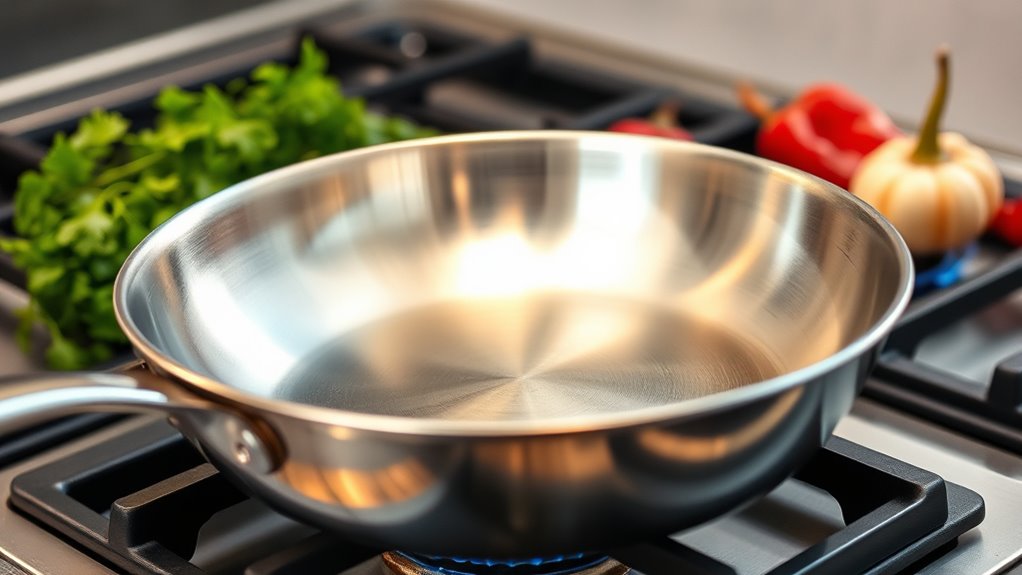
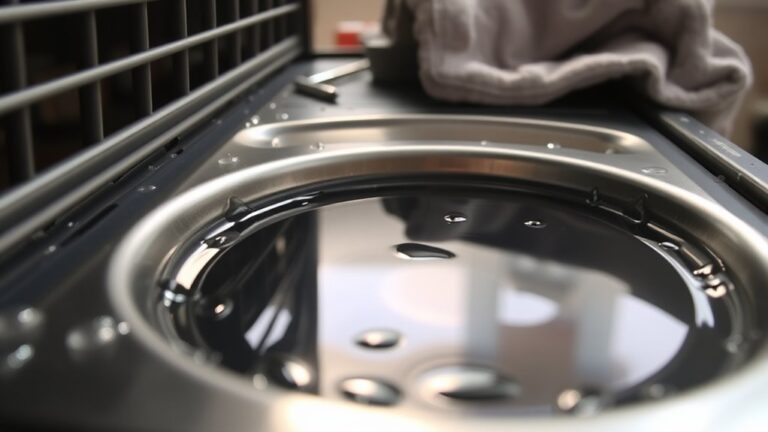
When you preheat your stainless steel pan over medium heat for 2-3 minutes, you create the perfect surface for cooking. This process guarantees even heat distribution and helps avoid sticking. To check if your pan is properly preheated, try the water droplet test: sprinkle a few drops onto the pan. If they dance and evaporate quickly, your pan temperature is just right.
Preheating creates a hot surface that promotes browning by forming a natural non-stick layer. Avoid rushing to add oil or ingredients before this step, as a cold pan increases the chance of uneven cooking and sticking. Taking time to preheat your pan correctly sets the stage for better texture and flavor in your dishes.
When and How to Add Oil to Your Stainless Steel Pan
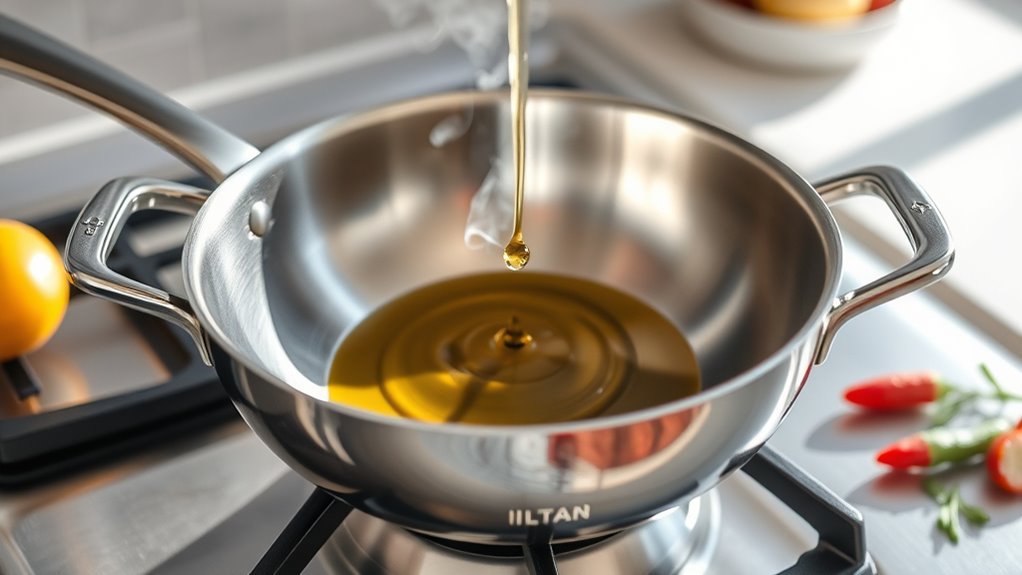
Although it might seem tempting to add oil right away, you should wait until your stainless steel pan is properly preheated and the surface shimmers before pouring in the oil. Preheating creates ripples that signal the pan’s ideal readiness.
Once you see this shimmer, add oil—about 1-2 tablespoons—to coat the entire surface evenly. This coating helps form a non-stick surface and ensures even heat distribution. Swirl the oil around until it moves smoothly and feels hot; this indicates the hot pan is ready for food.
Adding oil too early, when the pan is cold, increases the risk of sticking because the surface isn’t heated enough to prevent food from bonding. Proper timing in adding oil is key to achieving a flavorful sear and hassle-free cooking.
Control Heat and Timing on Stainless Steel Pans
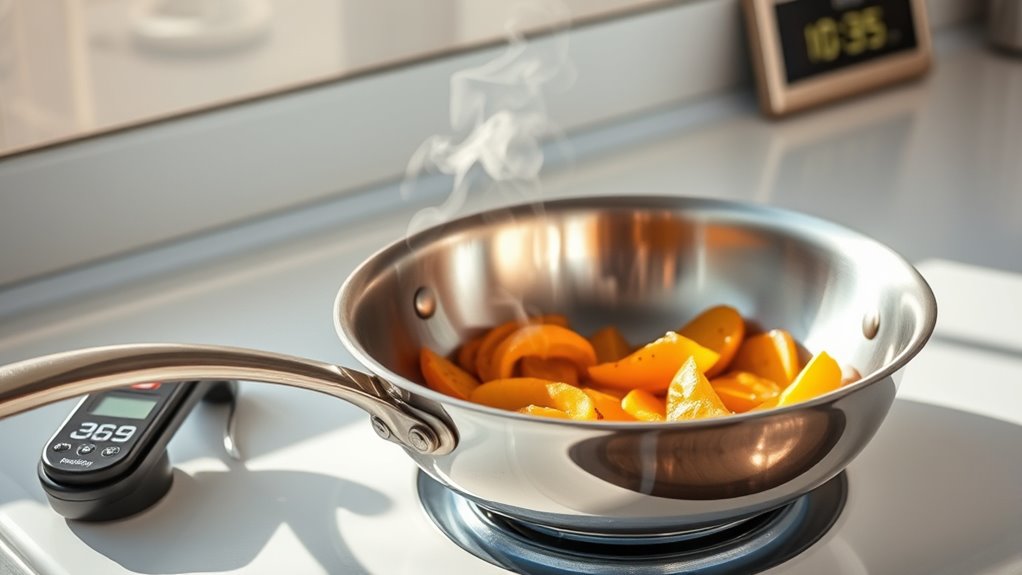
Since stainless steel pans respond quickly to temperature changes, you’ll want to preheat yours over medium heat for 2-3 minutes before adding any ingredients. To know when your pan is hot enough, try the water ball test: sprinkle a few drops on the cooking surface; if they dance, the temperature is just right.
For effective heat control, start cooking at medium heat and adjust the heat as needed, lowering to medium-low heat to prevent burning delicate foods. Always monitor temperature with a thermometer if you can—aim for 350-375°F to avoid overheating.
Proper heat management guarantees even cooking and minimizes sticking, so pay close attention to timing and temperature throughout your cooking process for the best results.
Frequently Asked Questions
What Is the Trick to Using Stainless Steel Pans?
The trick is preheating your pan properly, then adding oil once it shimmers.
Wait for the oil to heat before adding food, so it releases easily and browns nicely without sticking. Patience is key!
How Do I Keep Things From Sticking to My Stainless Steel Pans?
Like a magician’s secret, you’ll keep food from sticking by heating your pan well, adding enough oil, waiting for it to shimmer, and never overcrowding.
Pat ingredients dry and bring them to room temperature first.
What Is the Rule for Stainless Steel Pans?
The rule is to preheat your stainless steel pan over medium heat, use the water ball test, add oil only when the pan’s hot, and wait until the oil shimmers before adding food to prevent sticking.
This method helps create a natural non-stick surface and ensures even cooking. Following these steps can improve your cooking results with stainless steel pans.
Is There Anything You Shouldn’t Cook in a Stainless Steel Pan?
You shouldn’t cook highly acidic, sticky, or sugary foods for long in stainless steel pans, and avoid slow simmering or delicate sauces.
Also, don’t heat an empty pan on high or use metal utensils that can scratch.
Conclusion
Master the art of preheating your stainless steel pan, master the timing of adding oil, and master controlling heat for perfect results every time.
When you preheat properly, add oil at the right moment, and regulate your heat carefully, you prevent sticking, enhance flavor, and cook evenly.
Follow these steps, trust your instincts, and enjoy the confidence that comes from cooking flawlessly on stainless steel pans.
You’ll transform meals and elevate your kitchen skills effortlessly, making stainless steel pan cooking a breeze every time.