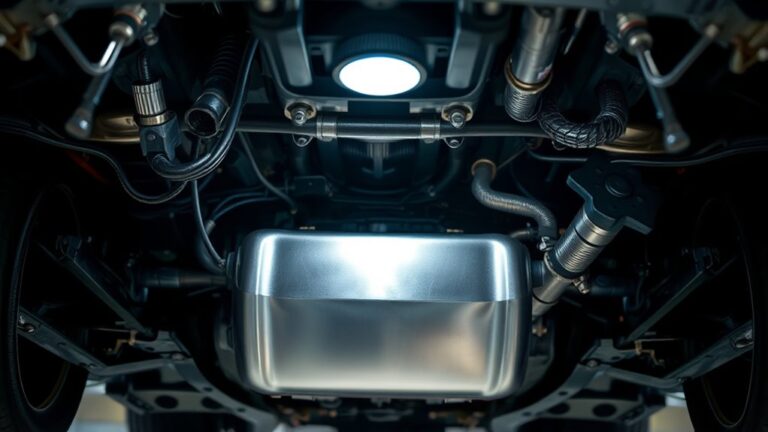
How to Locate the Oil Pan on Your Car
You can find the oil pan at the bottom of your engine, which is a key component in your car’s lubrication system. It is usually visible when you lift your car safely using a jack and secure it with jack stands.
The oil pan collects and stores the engine oil, making it essential for proper engine function.
It looks like a shallow metal bowl attached directly to the engine block and includes a drain plug.
Before you get under the car, make sure the engine is cool and the vehicle is stable to avoid injury.
If you keep going, you’ll discover how to identify features and properly inspect or remove it.
What Is an Oil Pan and Where Can You Find It?
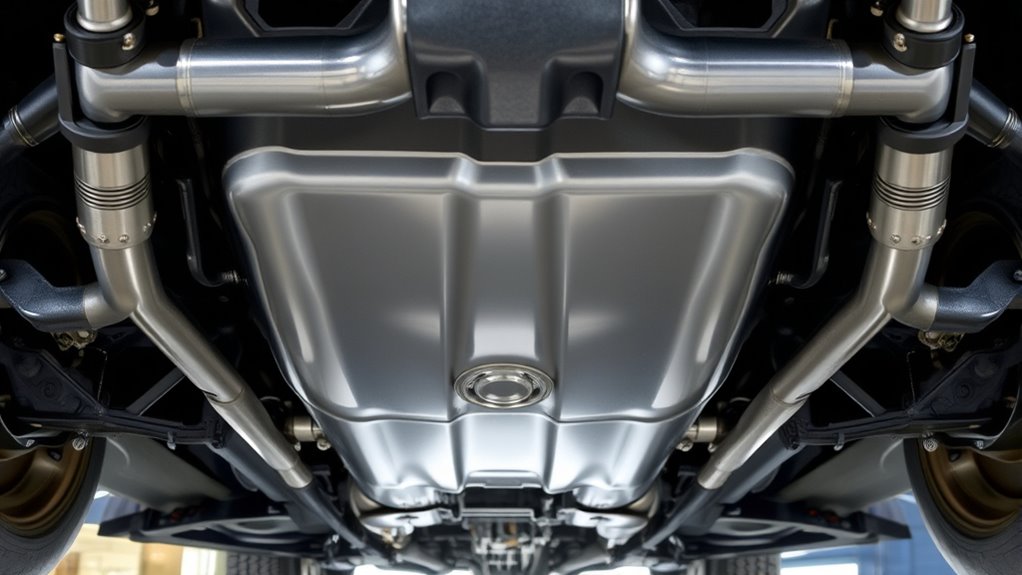
Although you might not have noticed it before, the oil pan plays a crucial role in your car’s engine by holding the engine oil. The oil pan is a metal reservoir located at the bottom of the engine, typically shaped like a shallow bowl. It’s attached directly to the engine block and collects the engine oil as it circulates.
You’ll find the drain plug on the oil pan, which allows you to easily drain the oil during an oil change. Usually, the oil pan is visible from underneath the vehicle, especially when the car is lifted. Sometimes, a protective shield covers it to guard against debris damage.
Knowing where the oil pan sits helps you understand this essential part of your engine’s lubrication system.
How to Safely Get Under Your Car to Locate the Oil Pan
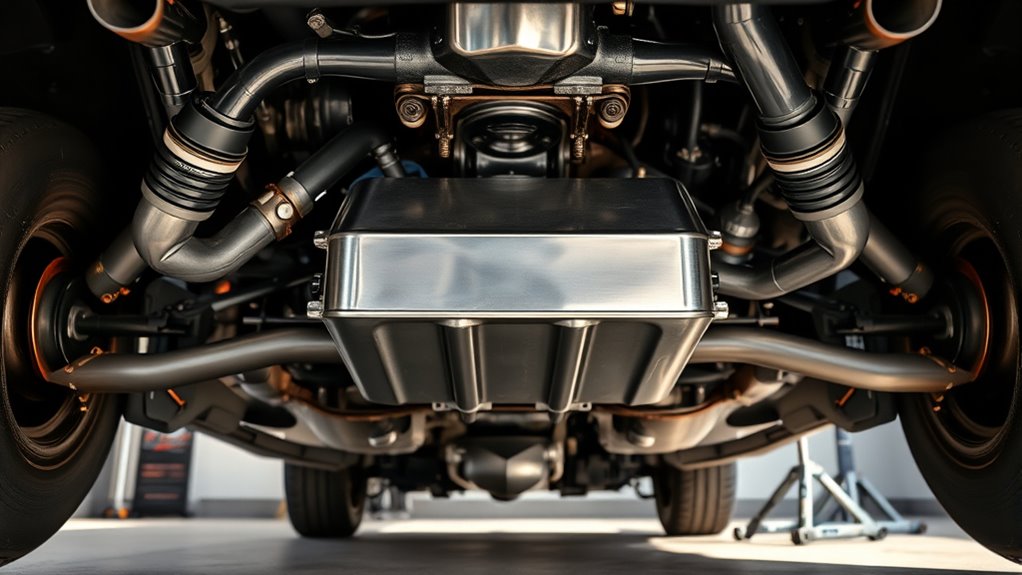
Before you get under your car, use a hydraulic jack and secure sturdy jack stands to lift and support the vehicle safely. Always engage the parking brake and place wheel chocks to keep the car from moving.
Don’t forget to wear safety goggles and gloves, and make sure the vehicle is stable before you begin.
Use Proper Lifting Equipment
When you need to get under your car to locate the oil pan, using proper lifting equipment is essential for safety. Start by positioning a hydraulic jack under the vehicle’s designated lift points, lifting smoothly to avoid sudden movements. Never rely solely on the hydraulic jack; always place jack stands securely under the frame before crawling underneath.
These safety precautions protect you from accidental drops or shifts. Make sure your vehicle rests on a flat, level surface to support proper lifting and reduce risks. Engage the parking brake and chock the rear wheels to prevent rolling.
Before lifting, confirm the engine is cool to avoid burns. Following these steps ensures a secure and safe environment for working under your car while locating the oil pan.
Ensure Vehicle Stability
After lifting your vehicle with a hydraulic jack and placing jack stands under the frame, you need to confirm the car’s stability before getting underneath. First, verify you parked on a flat, level surface and engaged the parking brake. Use wheel chocks on the wheels still on the ground to prevent any movement.
Your hydraulic jack must lift the vehicle smoothly, but never rely on it alone—jack stands provide the secure support essential for vehicle stability. Double-check that the jack stands are positioned correctly and rated for your car’s weight. Give the vehicle a gentle shake to confirm it’s firmly supported.
Only when you’re certain of stable, secure support should you crawl underneath to locate the oil pan safely and confidently.
Prioritize Personal Safety
Though you’ve secured the vehicle with a hydraulic jack and jack stands, you still need to prioritize your personal safety before crawling underneath. First, make sure the engine is completely cool to avoid burns from hot components or oil. Confirm the vehicle is on a level surface to prevent slipping or shifting while you work.
Always engage the parking brake and place wheel chocks on the rear wheels for added stability. Before getting under the car, put on safety gloves and eye protection to shield yourself from oil spills, debris, or sharp edges. Never rely solely on the hydraulic jack; always use sturdy jack stands to support the vehicle safely.
Following these steps ensures you minimize risks while locating the oil pan.
How to Identify the Oil Pan Drain Plug and Related Features
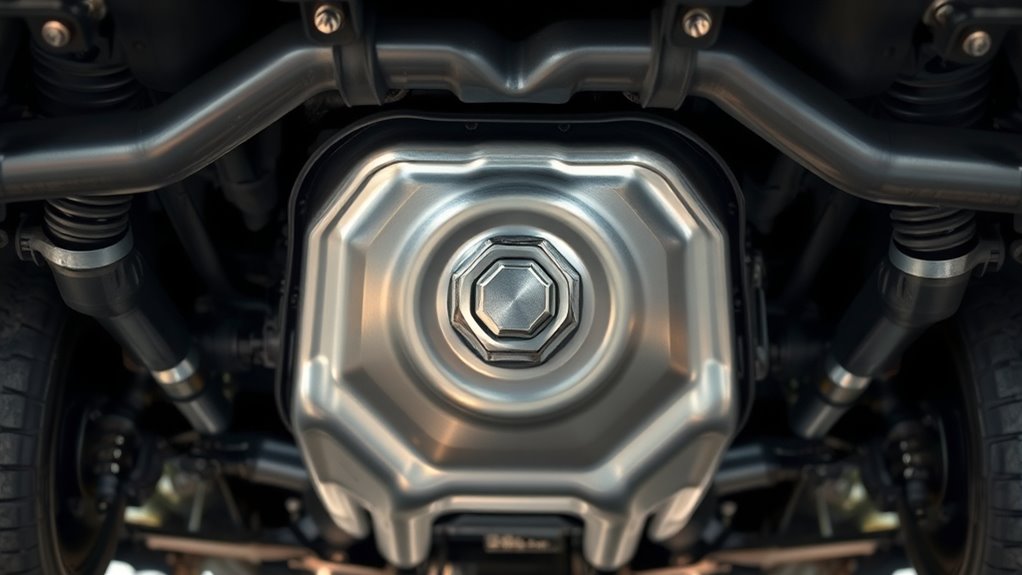
Because the oil pan drain plug sits at the lowest point of the oil pan, you’ll usually find it by looking underneath your vehicle. The oil pan is located at the engine’s bottom, and the drain plug is a metal bolt often hexagonal or square-shaped, designed for easy removal with a wrench or socket.
This oil drain plug often has a rubber gasket or washer to prevent leaks. Some drain plugs are even marked with symbols indicating their purpose. Before you attempt to remove the drain plug, make sure your vehicle is safely lifted and supported.
Identifying the oil pan and its drain plug correctly guarantees you can perform oil changes efficiently and safely.
How to Inspect the Oil Pan for Leaks and Damage
When you inspect the oil pan for leaks and damage, start by closely examining the perimeter for any signs of oil seepage or pooling. Perform a thorough leak inspection by checking the oil pan drain plug for tightness and look for oil or corrosion around its threads.
Next, inspect the oil pan’s surface for cracks, dents, or punctures, especially if you’ve recently hit road debris. Don’t forget to examine the gasket or seal between the oil pan and engine block; wear or gaps here often cause leaks.
Use a flashlight to inspect the underside of the oil pan carefully, spotting any fresh oil spots, drips, or wetness. This detailed inspection helps you catch leaks early and maintain your engine’s health.
How to Remove the Oil Pan for Repair or Replacement
To remove the oil pan, start by preparing your workspace and safely lifting the vehicle for clear access. Next, drain the engine oil and remove any components blocking the oil pan.
Finally, detach the oil pan bolts carefully, following the correct sequence to avoid damage.
Preparing Vehicle Access
Before you start removing the oil pan, make sure you’ve safely lifted and supported your vehicle using a jack and jack stands or ramps. Proper vehicle access is *essential* to avoid injury and make the process smoother.
Next, remove any underbody shields or splash guards blocking your view of the oil pan. Position a drain pan under the drain plug to catch oil during the oil change before loosening the plug. This prevents spills when detaching the oil pan later.
| Step | Action |
|---|---|
| 1 | Lift vehicle with jack |
| 2 | Secure with jack stands or ramps |
| 3 | Remove underbody shields |
| 4 | Place drain pan under drain plug |
| 5 | Drain oil before removing pan |
Detaching Oil Pan
Although you’ve already drained the engine oil, you’ll want to remove the oil drain plug completely to prevent any spills before proceeding. Next, carefully unbolt the oil pan bolts in a crisscross pattern to avoid warping the oil pan or damaging the gasket.
If the pan sticks due to gasket adhesion or corrosion, gently tap it with a plastic or rubber mallet to loosen it. Use a suitable pry tool to carefully pry the oil pan away from the engine block, taking care not to damage the mating surfaces.
Once removed, thoroughly inspect the oil pan and gasket area for damage or debris before installing a new gasket and reattaching the oil pan to ensure a proper seal.
Troubleshooting Common Oil Pan Problems and Maintenance Tips
When you notice oil spots under your car or a drop in oil levels, the oil pan is often the culprit. Oil leaks commonly happen due to damaged gaskets, cracked pans, or corroded drain plugs. During an oil change, inspect the oil pan closely for cracks, dents, or sludge buildup.
Cleaning the oil pan at this time prevents sludge from blocking oil flow. If you spot a worn or broken gasket, replace it immediately to stop leaks and protect your engine. Also, check the oil filter for tightness since a loose filter can cause leaks too.
Addressing these issues quickly with repairs or replacement not only stops oil leaks but also extends your engine’s life and saves you from costly breakdowns down the road.
Frequently Asked Questions
Where Is the Oil Pan Located on a Car?
The oil pan’s located at the very bottom of your engine, attached to the crankcase. You’ll see it when you lift your car or use ramps—it’s a shallow tray with a drain plug at its lowest point.
How to Find an Oil Pan?
You’ll find the oil pan at the engine’s bottom, usually visible under your car. Look for a flat metal container with a drain plug.
Use your vehicle’s manual or online diagrams if you’re unsure where exactly it sits.
Can You Replace an Oil Pan Without Removing an Engine?
You generally can’t replace an oil pan without removing or lowering the engine because of limited space. Some front-wheel drive cars let you do it by removing parts, but most vehicles need engine removal for proper access.
How Much Will It Cost to Replace an Oil Pan?
You’ll likely pay between $300 and $1,000 to replace your oil pan. Labor costs make up a big part, around $150 to $600, while parts and gaskets add $100 to $450, depending on your vehicle.
Conclusion
Now that you know exactly where to find your oil pan and how to get under your car safely, the real challenge begins. Spotting leaks or damage might seem simple, but what if a hidden problem is waiting to catch you off guard?
Removing the pan isn’t just about tools—it’s about patience and care. Stay sharp, follow each step closely, and you’ll master oil pan maintenance before you know it.
Ready to plunge in? With the right approach to locating and inspecting your oil pan, you can keep your engine running smoothly and avoid costly repairs.