What Is a Jelly Roll Cake Pan Used For?
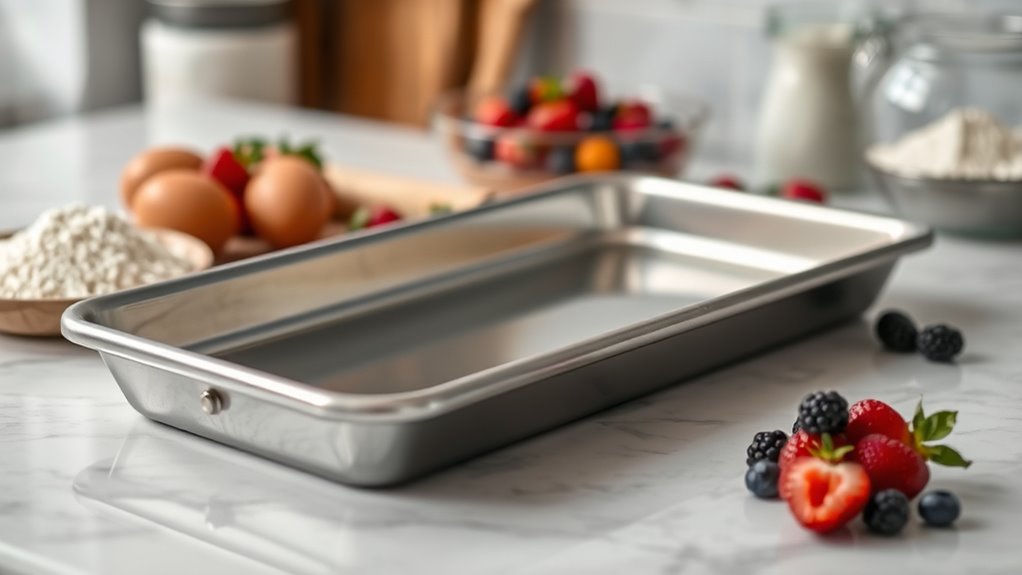
A jelly roll cake pan is perfect when you want to bake thin, even cake layers that roll up easily for jelly rolls and other rolled desserts. Its 15×10 inch size with raised edges helps keep batter contained while baking. You’ll get evenly cooked layers ideal for spreading and rolling without cracking.
Plus, it’s handy for roasting and sheet-pan dinners, too.
Keep exploring to discover how to choose, use, and even substitute this versatile pan in your kitchen.
Jelly Roll Pan vs. Other Bakeware: Key Differences?
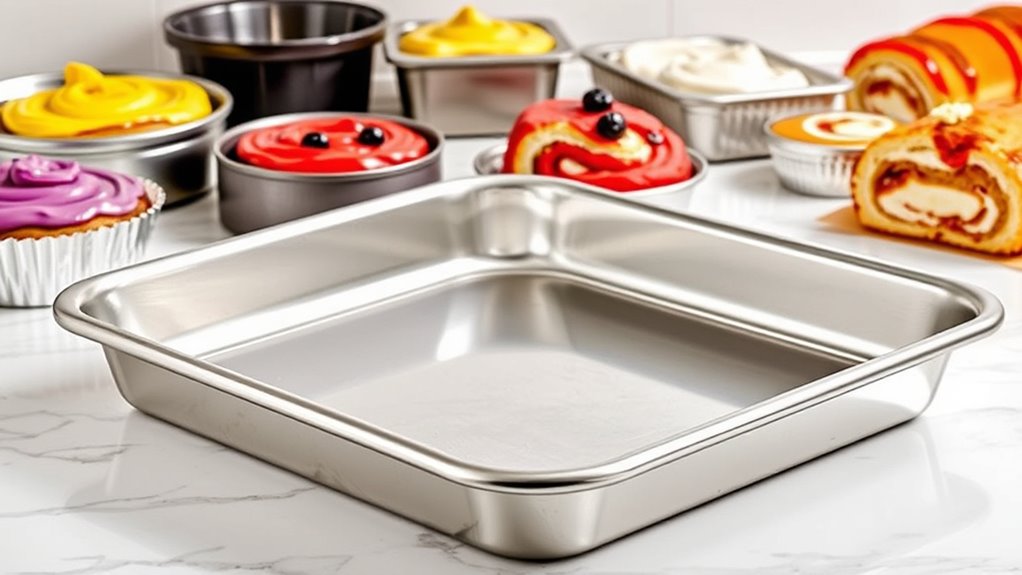
Although you might be familiar with various baking pans, a jelly roll pan stands out with its specific size and design. Measuring about 15×10 inches, jelly roll pans are smaller than the more common half sheet pan, which usually measures 18×13 inches.
Unlike flat cookie sheets or larger sheet pans, jelly roll pans feature raised edges about 1 inch high. These raised edges help contain batter and prevent spills, making them ideal for thin, even cake layers and rolled desserts.
While cookie sheets focus on even heat distribution for cookies, jelly roll pans are tailored to keep liquid batters contained. This distinct size and shallow, high-sided design set jelly roll pans apart from other bakeware you might use.
How to Choose the Right Jelly Roll Pan (Material and Size)
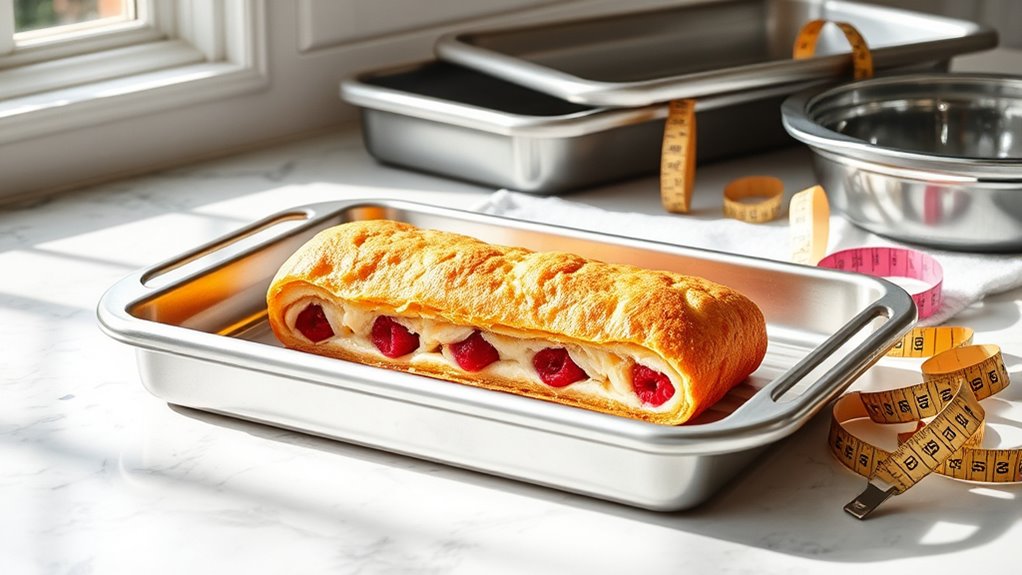
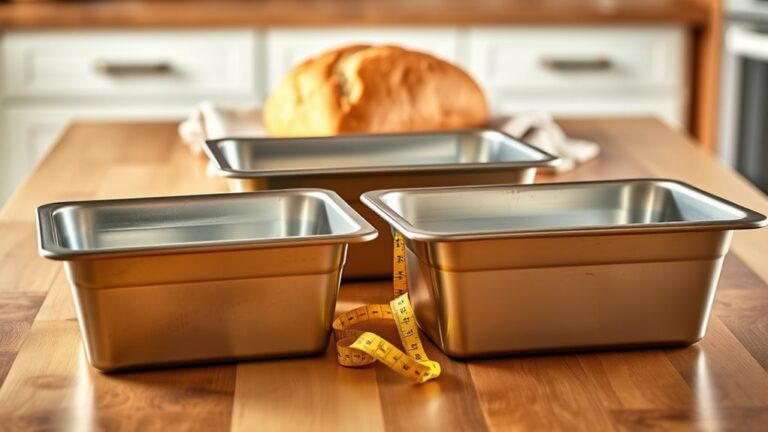
How do you choose the right jelly roll pan for your baking needs? Start by picking a pan around 15×10 inches—this half-sheet size is ideal for rolling cakes without making them too thick or thin. Look for one with 1-inch high sides to keep batter contained and prevent spills.
When it comes to material, nonstick aluminum pans are great for quick, even heating and easy cake release. Ceramic coatings offer nonstick benefits but can vary in durability and heat tolerance. You might also consider stainless steel pans with an aluminum core for lasting durability and even heat conduction.
Make sure the pan size fits your recipe; using a pan that’s too large or small impacts baking time and the cake’s final texture. Choose wisely for perfect jelly roll results every time.
How to Bake Classic Rolled Cakes With a Jelly Roll Pan
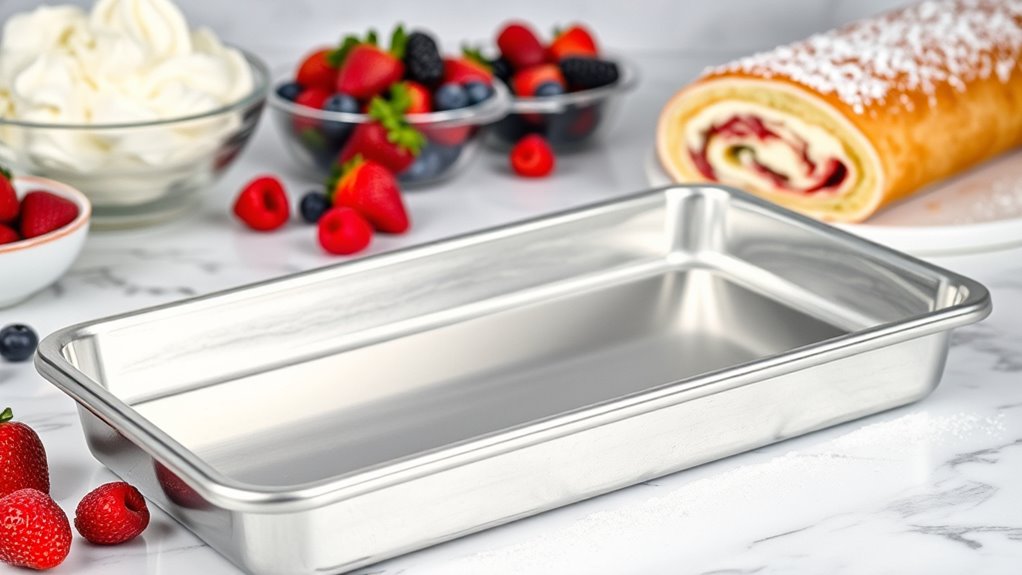
Choosing the right jelly roll pan sets you up for success when baking rolled cakes. Start by spreading your batter evenly on the baking sheet to create a thin layer. Bake at 375°F for 10–15 minutes until just set.
Once baked, invert the cake onto a towel dusted with powdered sugar. Roll it gently while warm, with the towel inside, to avoid cracks and shape a smooth spiral. After cooling, unroll, add filling, then re-roll carefully.
| Step | Action | Tip |
|---|---|---|
| 1 | Spread batter | Use an offset spatula |
| 2 | Bake | 375°F for 10–15 mins |
| 3 | Invert cake | Use sugared towel |
| 4 | Roll while warm | Roll with towel inside |
| 5 | Fill and re-roll | Handle gently to avoid cracks |
Versatile Sweet and Savory Recipes for Jelly Roll Pans
When you use a jelly roll pan, you open a world of sweet and savory possibilities beyond just rolled cakes. While it’s perfect for baking the thin, even layers needed for classic jelly rolls, this sheet pan’s shallow, raised sides also make it ideal for roasting vegetables, chicken, or fish.
You can easily prepare sheet-pan dinners that cook evenly and retain juices. The pan’s size is great for bar cookies, brownies, and blondies, giving you crisp edges and a perfect spread.
Plus, it’s excellent for small batch roasting of nuts or garlic and can handle slab pies and frittatas with ease. This versatile pan lets you experiment with a variety of recipes, making it a must-have in your kitchen.
When and How to Substitute a Jelly Roll Pan in Recipes
If you don’t have a jelly roll pan on hand, you can still achieve great results by substituting with a smaller or similarly sized pan, like a quarter-sheet. When choosing a substitute, make sure the pan size is close to the original to keep the batter thickness consistent.
Check that the sides are high enough to prevent overflow. If you use a larger pan, reduce the batter amount to avoid an overly thin cake that could dry out or burn.
Keep in mind that baking time will vary depending on the pan size and batter thickness—thinner layers bake faster, while thicker ones take longer. Always monitor your cake closely when using a substitute to ensure it bakes evenly and meets your recipe’s needs.
Frequently Asked Questions
What Is Special About a Jelly Roll Pan?
A jelly roll pan’s special because it has shallow, raised sides that keep batter contained and guarantee even baking.
You’ll find its size perfect for thin cakes, making rolling easier and cleanup quicker than with larger pans.
What’s the Difference Between a Jelly Roll Pan and a Cake Pan?
Imagine baking a thin cake for a rolled dessert. You’ll use a jelly roll pan—shallow with 1-inch sides—unlike a deeper, round cake pan meant for thick, layered cakes.
You’ll get perfect thin sheets every time!
What Do You Use a Jelly Roll Pan For?
You use a jelly roll pan to bake thin, even cake layers perfect for rolling into Swiss rolls or roulades.
It’s also great for sheet cakes, cookies, roasting veggies, and small batch meal prep tasks.
Do I Really Need a Jelly Roll Pan?
You don’t absolutely need a jelly roll pan, but it’s like having the right key for a tricky lock—it makes rolling cakes smooth and easy, preventing cracks and uneven layers, so your dessert turns out perfect every time.
Conclusion
Now that you know what a jelly roll pan is used for, you’re ready to roll up some delicious treats with ease. Whether you’re baking a classic rolled cake or experimenting with savory dishes, this pan’s versatility makes it a kitchen essential.
Choosing the right size and material will help you bake perfectly every time. So grab your jelly roll pan—like a knight wielding his trusty sword—and start creating timeless culinary delights today!
Remember, the jelly roll cake pan is perfect for rolling cakes smoothly and evenly, making it a must-have for any baking enthusiast.