

3 Main Differences Between Duck Eggs and Chicken Eggs
You’ll notice three main differences between duck eggs and chicken eggs. Duck eggs are larger with thicker, waxy shells that are harder to crack.
Nutritionally, duck eggs pack more protein, vitamins, and omega-3s but also have higher cholesterol.
Taste-wise, duck eggs offer a richer, creamier flavor and work better in baking due to their texture.
If you want to understand how these differences affect cooking and nutrition, exploring further will give you useful insights.
Size and Shell Characteristics of Duck vs. Chicken Eggs
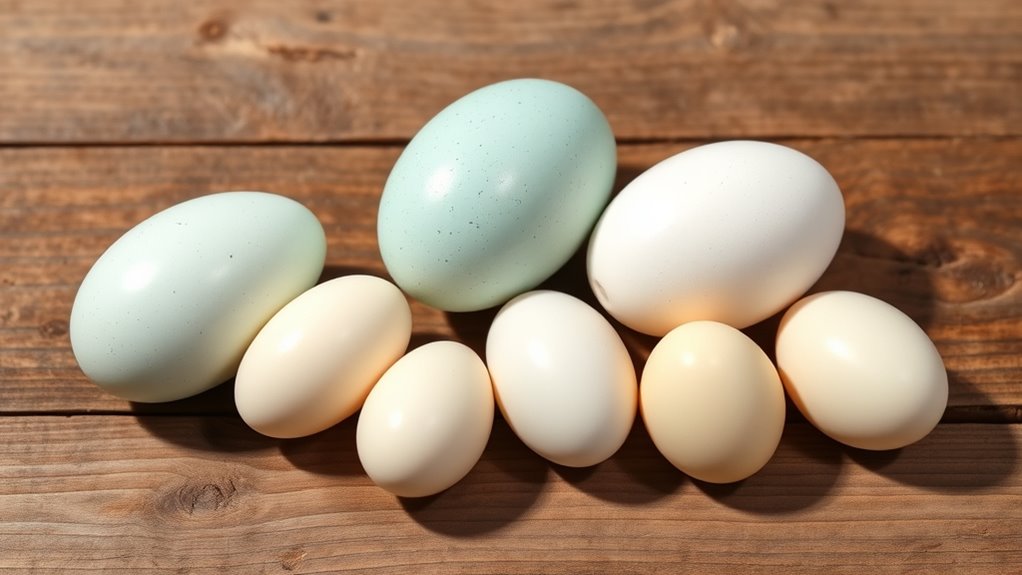
Although both duck and chicken eggs serve similar culinary purposes, you’ll notice distinct differences in their size and shell characteristics. Duck eggs are considerably larger, with an egg weight around 70 grams, compared to chicken eggs, which weigh about 50 grams. This difference in egg size impacts cooking and portioning.
When it comes to shell characteristics, duck eggs boast thicker shells that are waxy, water-resistant, and much harder to crack. This increased eggshell hardness enhances shell durability and provides better egg protection, extending shelf life. In contrast, chicken eggs have thinner, more fragile shells.
Duck egg shells come in white, gray, green, or speckled hues, whereas chicken eggs display white, brown, or pastel colors. These distinctions in egg shell thickness and color highlight the unique qualities of duck versus chicken eggs.
Nutritional Content and Health Benefits of Duck vs. Chicken Eggs
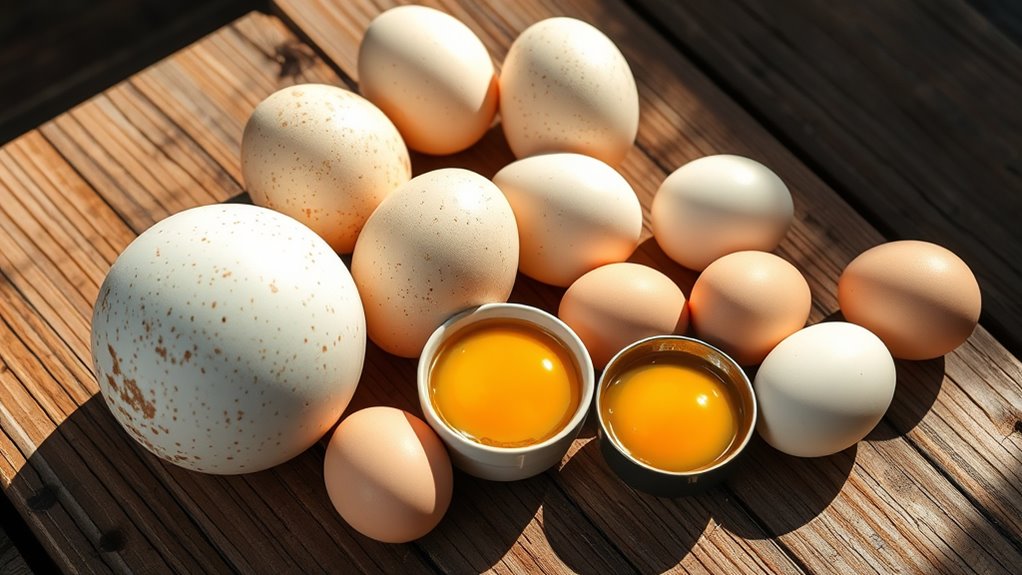
Beyond size and shell differences, duck and chicken eggs vary considerably in their nutritional content and health benefits. Duck eggs pack more protein—about 9 grams per 100 grams compared to 6 grams in chicken eggs—and have higher nutrient density overall. They contain markedly more vitamins like B12, vitamin A, and E, plus minerals such as iron, selenium, and zinc.
You’ll also find more omega-3 fatty acids in duck eggs, which boosts their health benefits. Both eggs offer choline for brain health, but duck eggs generally have more. However, duck eggs contain roughly double the cholesterol of chicken eggs, so moderation is key, especially if you’re watching heart health.
Choosing between them depends on your nutritional needs and preferences.
Taste, Texture, and Cooking Uses of Duck vs. Chicken Eggs
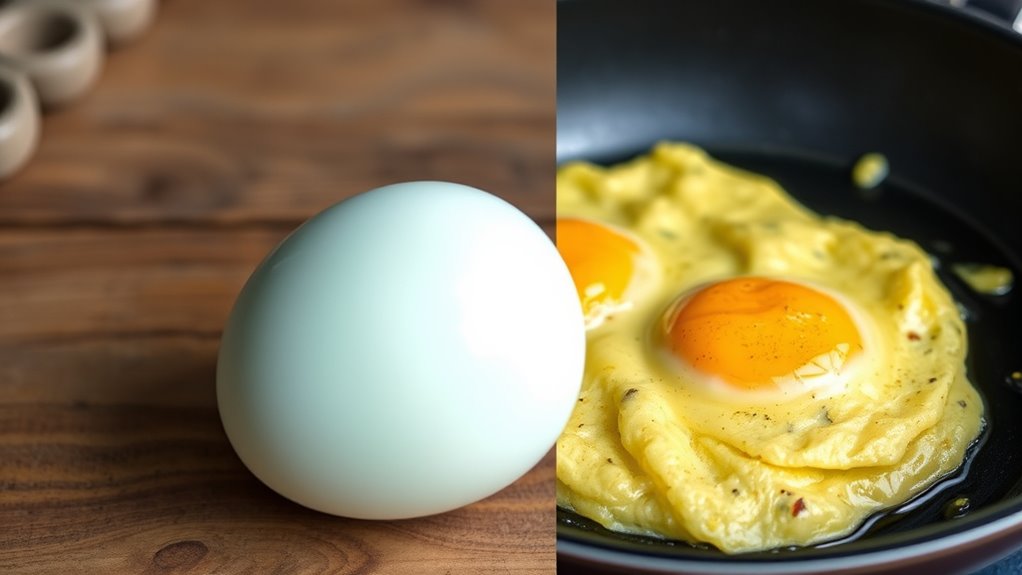
If you’re used to chicken eggs, duck eggs will surprise you with their richer, creamier flavor and more intense taste. Their flavor profile sometimes includes wild or gamy notes, unlike the mild, consistent taste of chicken eggs.
In regarding texture, duck eggs have larger yolks and egg whites, resulting in a firmer, more substantial feel when cooked. This affects cooking time; duck eggs need slightly longer boiling or frying to reach the perfect doneness due to thicker shells and size.
Thanks to their higher fat content, duck eggs excel in baking and other rich culinary uses, offering superior moisture and structure. Whether you’re scrambling, frying, or baking, adjusting cooking times will help you make the most of the unique taste and texture differences between duck eggs and chicken eggs.
Frequently Asked Questions
Is a Duck Egg Healthier Than a Chicken Egg?
You might find duck eggs healthier due to higher vitamins and omega-3s, but they also have more cholesterol and calories. It depends on your dietary needs and health goals, so choose accordingly and don’t overconsume.
Why Do Chefs Prefer Duck Eggs?
You’d think duck eggs are tiny flavor bombs—they pack richer yolks, creamier textures, and vibrant colors that transform your dishes.
Chefs love them for their bold taste, longer freshness, and the extra oomph they bring to baking.
How to Tell Between Duck Eggs and Chicken Eggs?
You can tell duck eggs by their larger size, thicker shells, and varied colors like blue or green.
Crack one open, and you’ll see a bigger, deeper orange yolk and a more substantial white than chicken eggs.
Why Are Duck Eggs More Expensive?
Duck eggs cost more because you’re paying for their rarity, larger size, and thicker shells. They’re harder to produce, need special care, and often come from small farms or specialty markets, boosting their price.
Conclusion
Choosing between duck and chicken eggs is like picking between two unique songs—each brings its own flavor and rhythm to your kitchen. You’ll notice the size and shell differences, feel the nutritional boost, and savor the distinct taste and texture.
Whether you want a richer bite or a familiar comfort, both eggs have their place. So, trust your palate and cooking needs to guide you in making the perfect choice for your next meal. Understanding the differences between duck eggs and chicken eggs can help you enjoy their unique qualities to the fullest.