
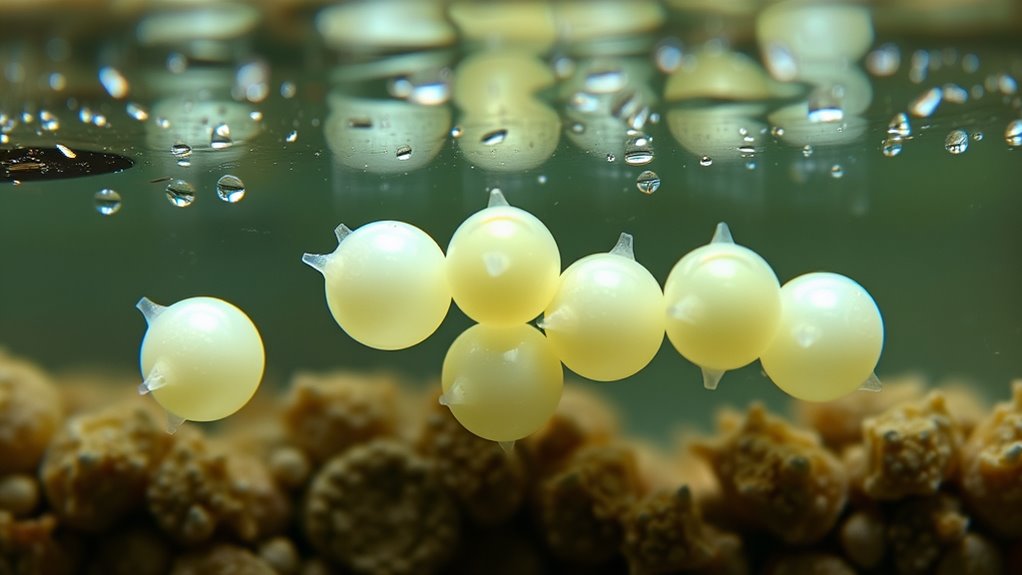
What Do Aquarium Snail Eggs Look Like?
You’ll spot aquarium snail eggs as small, jelly-like clusters or tiny sticky dots stuck firmly to glass, plants, or decorations. These eggs are a common sight in many aquariums and are important to recognize for proper tank management.
Depending on the species, they may look transparent, white, pink, or brown.
Fertilized eggs often darken and show embryo spots, while unfertilized ones stay clear or white and may mold.
Some snails even lay eggs above the waterline, which can be surprising if you’re not expecting it.
If you want to know how to identify, spot, and manage them properly, there’s more to uncover.
Understanding what aquarium snail eggs look like helps you decide whether to keep or remove them from your tank.
Typical Appearance of Aquarium Snail Eggs
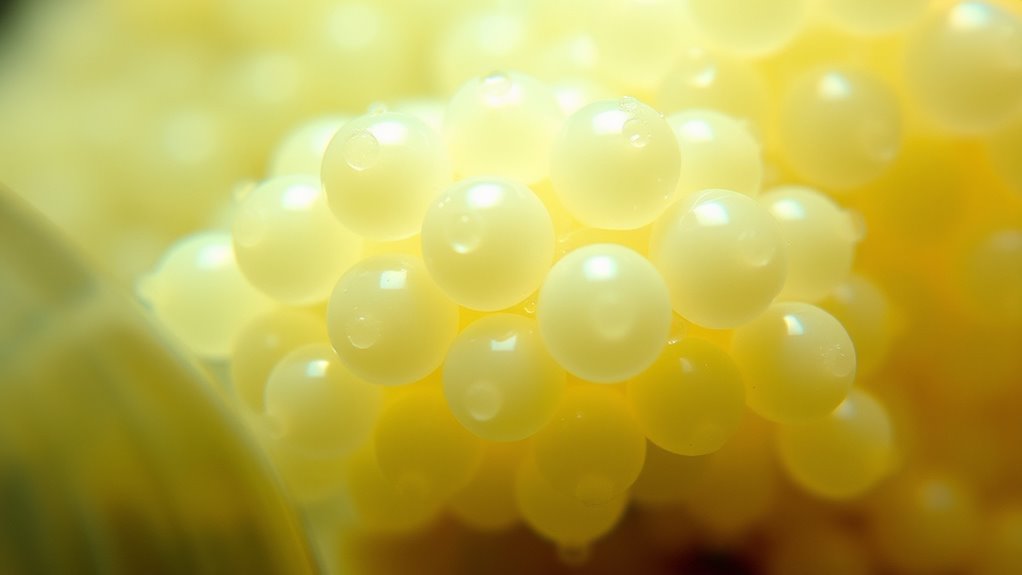
Although aquarium snail eggs vary by species, you’ll often find them small, round, and either translucent, white, pink, or brown. These snail eggs usually appear in clusters, making them easier to spot when you look closely. Depending on the type of snail, the clusters might be jelly-like or more solid.
For example, mystery snail eggs often form large, pink clusters, while nerite snail eggs are tiny and white. You’ll notice these eggs are attached firmly to a surface, whether it’s the glass wall, plants, or decorations in your tank. Some eggs, like those of ramshorn snails, are transparent capsules that blend in with their surroundings.
Where Snail Eggs Are Laid in Aquariums
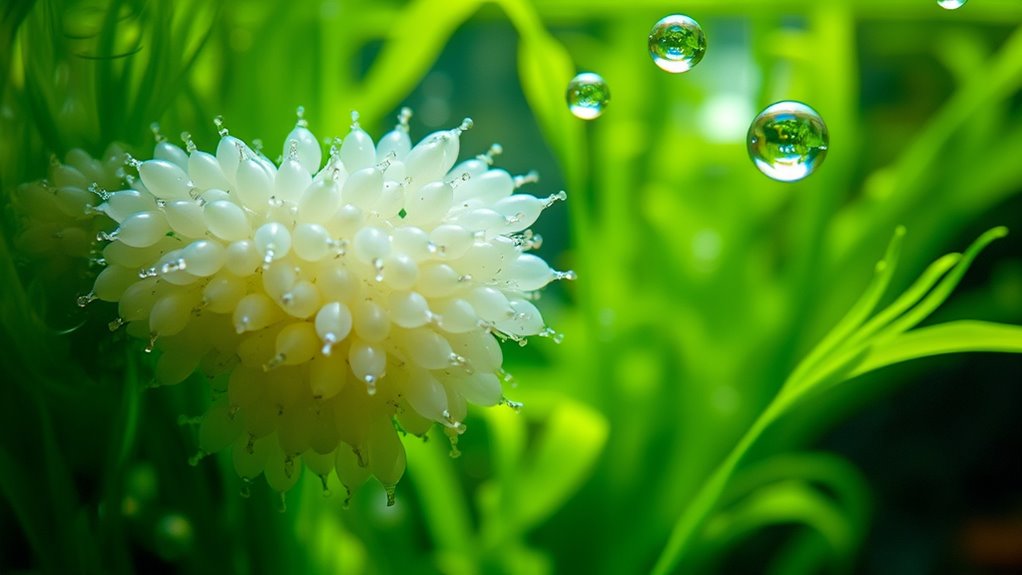
You’ll find snail eggs attached to various surfaces in your aquarium, like glass, plants, and decorations. Some species, like mystery snails, lay their bright egg clusters above the waterline on smooth surfaces.
Others may deposit eggs directly on the substrate, so keep an eye on different spots around your tank.
Common Egg Attachment Sites
Where do aquarium snails usually lay their eggs? Snail eggs are commonly found attached to various aquarium surfaces. These egg attachment sites include glass walls, live plants, decorations, and hard substrates like rocks or driftwood.
You’ll often spot egg clusters as gelatinous or bubble-like masses, their size and color varying by species. For example, Assassin snails stick their transparent egg capsules to tank walls or plants, while Nerite and Ramshorn snails prefer hard underwater surfaces. Snails choose protected spots that offer stability and proper humidity or water conditions, ensuring their eggs stay safe during incubation.
Above Waterline Eggs
When aquarium snails lay eggs above the waterline, they often create large, colorful clusters that look like bunches of tiny bubbles or blackberries. These clutches of snail eggs stand out with bright pink, red, or orange hues, making their gelatinous appearance easy to detect on the tank’s glass, lid, or decorations. You’ll notice the eggs are soft and semi-translucent, grouped tightly in a bubble-like sac.
Their above waterline placement helps guarantee proper oxygen exposure and protects the eggs from aquatic predators. Depending on temperature and humidity, these egg clusters usually hatch within one to four weeks. If you spot these vibrant clutches, you’re witnessing the early stage of new snails preparing to join your aquarium ecosystem.
Substrate Egg Deposits
Although many aquarium snails lay their eggs above the waterline, several species prefer to deposit their eggs directly into the substrate like gravel or sand. These substrate-laid egg deposits often appear as small, white or translucent capsules either buried beneath or resting on the substrate surface.
Species such as Malaysian Trumpet and Ramshorn snails typically lay hidden eggs in protected areas within the substrate to shield them from predators and environmental disturbances. Malaysian Trumpet snails, for example, bury individual eggs just below the surface, making them easy to overlook.
If you want to manage snail populations, regularly inspecting the substrate for these hidden, buried egg deposits is essential. Spotting and removing them early can prevent unexpected hatchlings from appearing in your aquarium.
How to Identify Different Snail Egg Types by Appearance
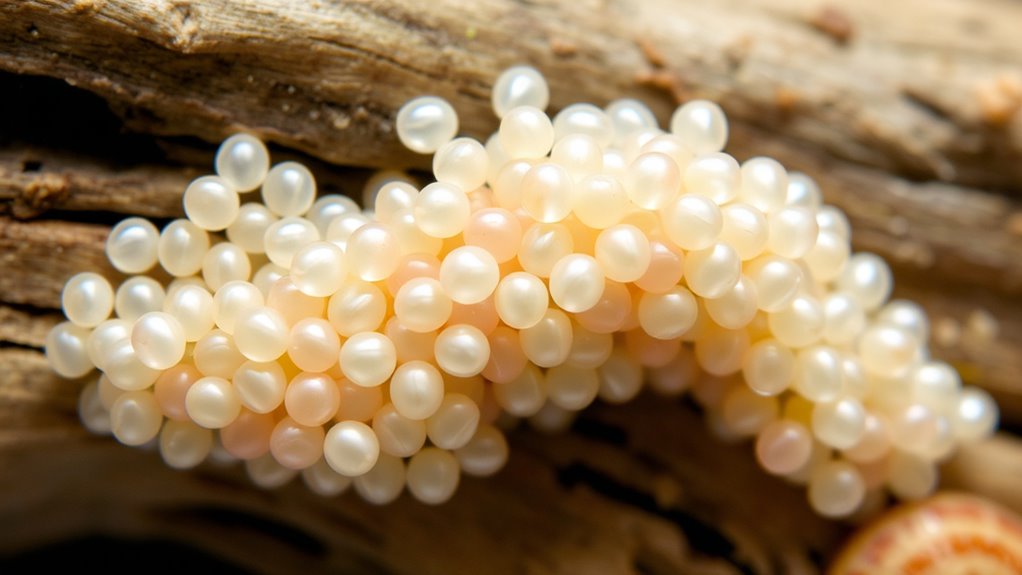
Since snail eggs vary widely in appearance, you can identify their species by closely examining their size, color, shape, and where they’re laid in the tank. Here’s how to spot common types by egg appearance:
- Mystery snail eggs form large, bright pink or red egg clusters resembling blackberries, usually laid above the waterline on glass or plants.
- Nerite snail eggs appear as tiny white sticky dots or small clusters on hard surfaces like driftwood and rocks; they won’t hatch in freshwater.
- Ramshorn snail eggs look like transparent, circular capsules grouped in clusters, attached to plants or tank surfaces.
- Assassin snail eggs are small, transparent or yellowish capsules laid singly or in tiny groups on hard surfaces.
Noticing where snail eggs appear helps you distinguish species easily.
Signs of Fertilized vs Unfertilized Snail Eggs
After identifying the type of snail eggs by their appearance and location, the next step is to determine whether those eggs are fertilized. Fertilized eggs usually change from translucent or white to a darker color, showing distinct dark spots as signs of development. These spots indicate embryo growth inside the eggs.
Fertilized eggs also tend to be firmly attached to surfaces and look more vibrant. In contrast, unfertilized eggs typically stay clear or white without dark spots and may become loose or develop mold over time. You might also notice a rotten egg smell from unfertilized eggs after several weeks.
Mold and deterioration clearly signal that unfertilized eggs won’t hatch. Watching for dark spots and overall egg condition helps you quickly identify which eggs are viable.
How Snail Species Affect Egg Appearance
When you observe snail eggs in your aquarium, you’ll notice their appearance varies widely depending on the species. Different snail species produce unique egg clusters, colors, and placements, helping you identify them easily.
- Mystery snails lay large, colorful egg clusters above water, making their egg color stand out.
- Nerite snails produce tiny, white spots usually on glass or tank surfaces.
- Ramshorn snails create transparent, circular egg capsules attached to plants or glass.
- Malaysian Trumpet snails bury small white eggs in the substrate, making egg placement less visible.
Understanding how snail species affect egg appearance helps you manage your aquarium better and recognize which eggs belong to which snails.
How to Spot Snail Eggs on Plants, Glass, and Decorations
You’ll often find snail eggs attached to plants, glass, or decorations in your aquarium. Look closely for small clusters that can be clear, white, pink, or even jelly-like, depending on the species.
Knowing where to check and what shapes or colors to expect will help you spot them quickly.
Common Egg Locations
Although spotting snail eggs might seem tricky at first, you can easily find them clustered on glass surfaces, plants, decorations, and sometimes even the substrate in your aquarium.
Here’s where to look for common snail egg clusters:
- Glass surfaces near the waterline – Mystery snail eggs often appear as pink or red bubble-like clusters just above the waterline on glass or tank lids.
- Plants – Ramshorn snail eggs, transparent and circular, are usually laid in clusters on submerged plants.
- Hard surfaces and aquarium decorations – Nerite snail eggs are tiny, white, and sticky, scattered across driftwood, rocks, and the undersides of plants. Assassin snail eggs are laid singly or in small groups on decorations and tank walls.
- Substrate – Occasionally, you may find eggs attached to the substrate, depending on the snail species.
Keep an eye on these spots to easily spot snail eggs in your tank.
Visual Egg Characteristics
How can you quickly identify snail eggs in your aquarium? Snail eggs often appear as small clusters attached to plants, glass, or decorations. Their appearance varies by species.
For instance, mystery snail eggs are large and bright pink or red, resembling blackberry clusters, usually laid just above the waterline. Ramshorn snail eggs are transparent, circular capsules grouped in clusters on tank surfaces, hatching within 5 to 10 days.
Nerite snail eggs look like tiny white sticky dots scattered on driftwood, rocks, or plants, though they typically don’t hatch in freshwater. Assassin snail eggs are small, translucent or yellowish sacs, slowly developing over 30 to 40 days.
Mistakes to Avoid When Spotting Snail Eggs
When spotting snail eggs, it’s easy to mistake them for algae or debris if you don’t check their attachment points and appearance carefully. To avoid common mistakes, keep these tips in mind:
- Don’t overlook tiny, translucent snail eggs—they can hatch unexpectedly, leading to rapid population growth.
- Be sure to distinguish Nerite eggs, which look like tiny white dots, from other surface spots for accurate eggs identification.
- Avoid assuming all egg clusters belong to desirable freshwater snails; some may be invasive species causing overpopulation.
- Recognize the difference between fertilized and unfertilized eggs to prevent removing eggs that won’t hatch.
Monitoring water conditions also helps you identify when eggs are likely present and thriving, improving your overall aquarium management.
How and When to Remove Snail Eggs
Once you learn to identify snail eggs accurately, the next step is managing their presence before they hatch. Regularly inspect your tank surfaces, plants, and decorations for small, jelly-like egg clusters or tiny white dots.
To control snail populations, promptly remove these egg clusters using a soft brush, razor blade, or algae scraper. For eggs on plants or decorations, gently detach and clean them with freshwater or a mild solution to prevent hatching. You can also use a fine net or tweezers to carefully remove visible snail eggs.
Consistently inspecting and removing eggs helps maintain a balanced aquarium environment and prevents overpopulation. Remember, timely removal is key to controlling snail numbers without harming your tank’s ecosystem.
Frequently Asked Questions
How Do You Identify Snail Eggs in a Fish Tank?
You identify snail eggs by spotting small, gelatinous clusters or capsules attached to tank surfaces like glass, plants, or decorations.
Colors and sizes vary by species, so observing location and appearance helps you distinguish them quickly.
Should I Remove Snail Eggs From My Aquarium?
You should remove snail eggs because one cluster can hatch up to 50 snails, quickly overwhelming your tank.
Scrape them off gently to keep your aquarium balanced and prevent unwanted overpopulation effectively.
Do Aquarium Snails Lay Eggs on the Glass?
Yes, many aquarium snails lay eggs on the glass, attaching sticky clusters there. You’ll often spot these groups easily, though some species prefer plants or decorations instead.
What Do Aquatic Snails’ Eggs Look Like?
You’ll see aquatic snail eggs as tiny clusters or single capsules, varying from bright pink or red to transparent or white.
They stick to surfaces like glass, plants, or decorations, differing by snail species.
Conclusion
So, next time you spot those mysterious jelly blobs on your aquarium glass, don’t panic—they’re probably just snail eggs plotting their slow takeover. Whether you love them or loathe them, knowing what to look for saves you from accidental snail incubator duty.
Just remember: those tiny spheres aren’t alien eggs (yet), and with a keen eye, you can decide if you’re hosting a snail family reunion or planning a snail eviction party.
Happy hunting! Recognizing what aquarium snail eggs look like is key to managing your tank’s ecosystem effectively.