7 Reasons Ceramic or Stainless Steel Pans Are Better
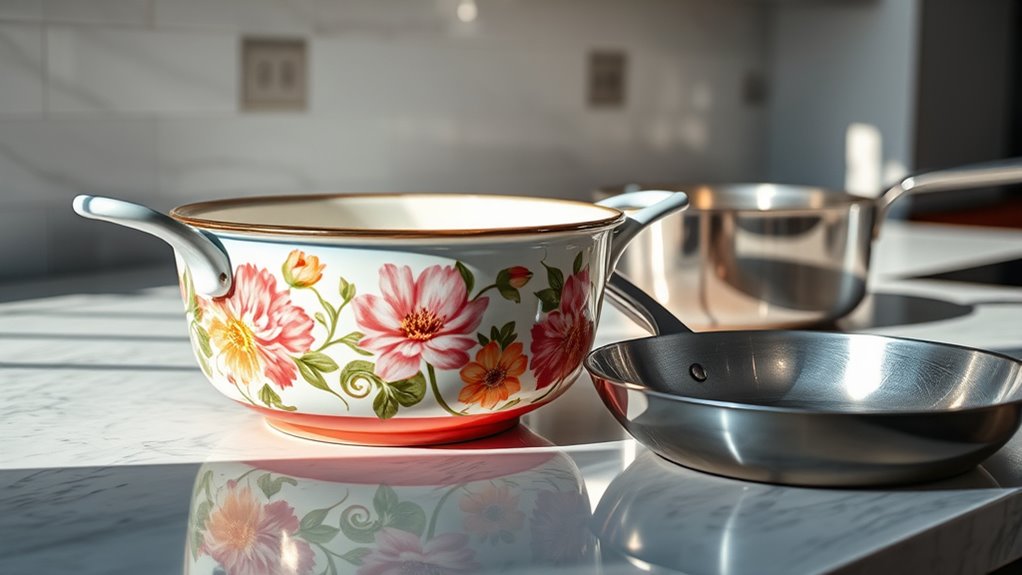
You’ll love ceramic pans for their instant non-stick surface, perfect for low-oil cooking and easy cleanup. These pans are especially popular for healthy cooking due to their ability to reduce the need for added fats.
Stainless steel pans, on the other hand, offer unmatched durability, resist scratching, and excel in high-heat searing and browning.
Ceramic pans are affordable upfront but wear out faster, while stainless steel’s long lifespan saves you money over time.
Both ceramic and stainless steel cookware are safe and eco-friendly in different ways.
To get the full scoop on how to choose and care for each type of pan, keep exploring the details. Understanding these key differences will help you pick the best option for your kitchen needs.
Ceramic vs Stainless Steel Pans: Which Should You Choose?
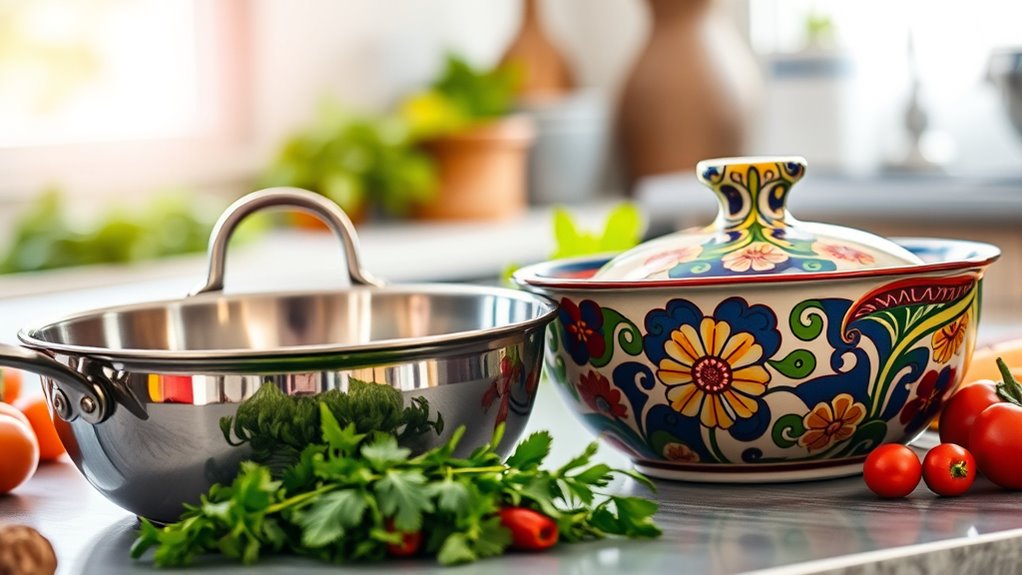
While ceramic pans provide immediate non-stick convenience and come in vibrant colors, stainless steel pans offer unmatched durability and versatility that can last for decades with proper care. If you want easy to clean cookware with a smooth non-stick coating, ceramic pans are great for low-to-medium heat cooking tasks. However, their coatings can chip and wear out after a few years, impacting cooking performance.
In contrast, stainless steel cookware excels with superior heat distribution and durability, handling high heat and searing like a pro. Though ceramic pans might seem more affordable initially, stainless steel is a better long-term investment due to its resilience and dishwasher-safe convenience. Choosing between ceramic pans and stainless steel depends on whether you prioritize short-term ease or lasting durability and versatility.
Non-Stick Performance: Comparing Ceramic and Stainless Steel
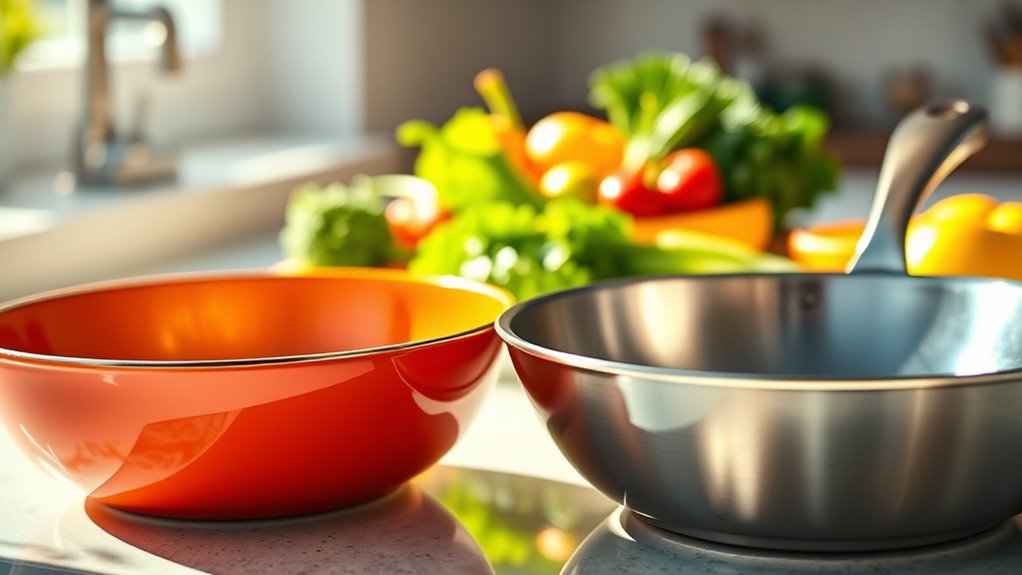
If you want hassle-free cooking, ceramic pans deliver immediate non-stick performance, letting foods like eggs slide off with little or no oil. This instant non-stick coating makes ceramic cookware a favorite for easy cleanup. However, ceramic non-stick surfaces can develop a scratched surface if you use metal utensils, which reduces their effectiveness.
On the other hand, stainless steel pans don’t have a non-stick coating but rely on proper preheating and oil to create a natural, lasting non-stick effect. While stainless steel requires technique to minimize sticking, it resists scratching and holds up better over time.
Durability and Lifespan of Ceramic and Stainless Steel Pans
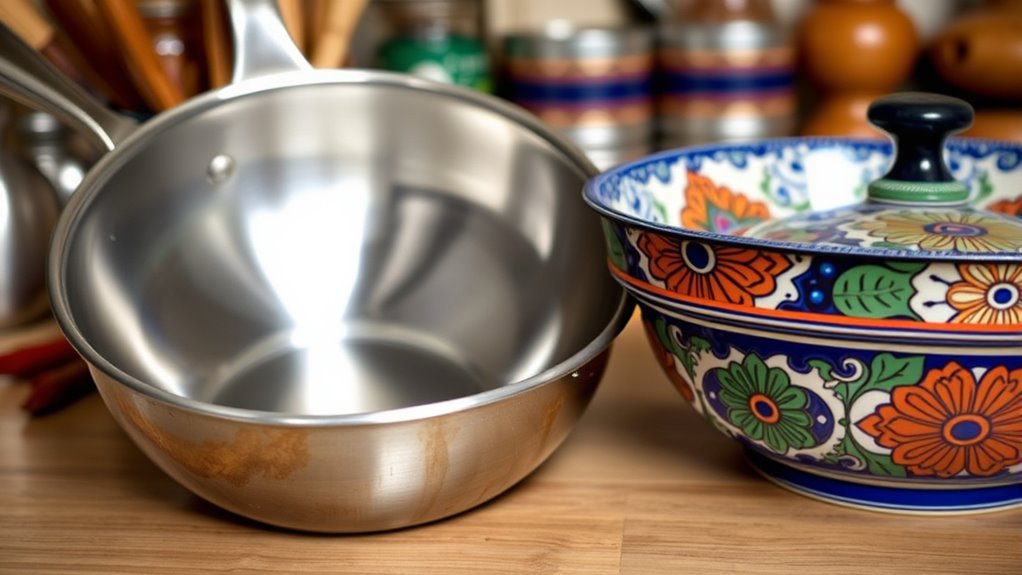
Choosing between ceramic and stainless steel pans means considering how long each will last in your kitchen. Stainless steel offers exceptional durability and a lifespan often exceeding 20 years with proper care. On the other hand, ceramic pans, despite their quality cookware status, have a shorter lifespan due to the ceramic coating’s wear and tear, usually needing replacement within 1 to 3 years.
- Stainless steel resists warping, scratching, and corrosion
- Ceramic coating degrades over time with use and cleaning
- Reinforced ceramic bases can extend lifespan but not indefinitely
- Frequent replacement is common with ceramic compared to stainless steel
Ultimately, stainless steel provides a more long-lasting investment, while ceramic pans require more regular replacement due to coating wear.
Safety and Environmental Impact of Ceramic vs Stainless Steel
You’ll want to contemplate the chemical safety of both ceramic and stainless steel pans, especially if you cook acidic foods often. Ceramic cookware usually avoids harmful chemicals, while stainless steel may release trace metals over time.
Plus, think about how their environmental footprints and long-term health effects compare before making your choice.
Chemical Composition Safety
Although both ceramic and stainless steel cookware offer safe options for your kitchen, their chemical compositions affect their long-term safety differently. Ceramic cookware, made from natural clay and mineral oxides, is non-toxic and free from harmful chemicals like PTFE, PFOA, lead, and cadmium. Stainless steel alloys, including chromium and nickel, provide excellent chemical stability with minimal risk of leaching.
However, ceramic coatings can chip over time, potentially releasing particles into your food, while stainless steel maintains long-term durability without degrading.
- Ceramic coating requires careful inspection for chips to guarantee safety
- Stainless steel alloys resist leaching and remain chemically stable
- Ceramic pans use natural, non-toxic materials
- Long-term durability favors stainless steel’s chemical stability
Both offer safety, but understanding their chemical composition helps you choose wisely.
Environmental Footprint Comparison
Understanding the chemical safety of ceramic and stainless steel pans naturally leads to contemplating their environmental impact. Stainless steel’s durability and longevity mean you won’t need to replace it often, reducing manufacturing waste and lowering its overall carbon footprint.
On the other hand, ceramic pans, while made from eco-friendly natural clay and oxides, tend to wear out or chip within 2-5 years, leading to more frequent replacement and greater environmental costs. Although both avoid harmful PFAS chemicals, ceramic’s shorter lifespan increases waste and environmental impact over time.
If you care about sustainability, you’ll appreciate that proper care of stainless steel pans helps extend their life, making them a smarter, more durable choice that minimizes waste and supports a greener kitchen.
Long-Term Health Considerations
When choosing cookware for long-term health, you should consider both safety and environmental impact. Ceramic pans are non-toxic and free from harmful chemicals like PFAS and lead, supporting food safety. However, their coatings can chip over time, raising safety concerns due to ceramic particle exposure.
Stainless steel offers durability and resists chemical leaching, minimizing metal exposure and replacement frequency. This durability also lessens environmental waste, aligning with your health considerations.
- Ceramic cookware avoids chemical leaching from harmful substances
- Stainless steel contains no coatings that degrade or chip
- Durability of stainless steel reduces waste and metal exposure
- Ceramic’s shorter lifespan may affect long-term health and safety
Cleaning and Maintenance Tips for Both Cookware Types
Because ceramic and stainless steel pans require different care methods, knowing how to clean and maintain each properly will help you preserve their performance and appearance. For ceramic pans, use non-abrasive sponges and mild detergents to avoid scratches and protect their non-stick surface. Always let them cool before cleaning to prevent warping or cracking. Avoid metal utensils that can damage the coating.
Stainless steel pans are more forgiving—you can clean them in dishwashers and tackle stains by boiling a mixture of water with baking soda or vinegar inside. This also helps loosen burnt residues and restore shine. For both cookware types, steer clear of abrasive scrubbers and harsh chemicals to extend their lifespan and keep them looking great.
Proper cleaning and maintenance guarantee your pans serve you well for years.
Cost Comparison: Upfront Price and Long-Term Value
When you’re choosing between ceramic and stainless steel pans, the upfront price is just one part of the picture. Ceramic pans may cost less initially but need replacing more often due to wear, which adds up over time.
Stainless steel might cost more at first, but its durability makes it a smarter long-term investment.
Initial Purchase Cost
Choosing between ceramic and stainless steel pans often comes down to balancing upfront cost with long-term value. Ceramic pans have a lower initial cost, usually between $15 and $30, making them appealing if you’re shopping on a budget. However, their shorter lifespan means you’ll face frequent replacement costs.
On the other hand, high-quality stainless steel pans require a larger initial investment, ranging from $100 to $300, but their durability pays off through long-term savings.
- Ceramic pans cost less initially but wear out faster
- Stainless steel offers greater durability over decades
- Replacement costs add up quickly for ceramic cookware
- Investing in stainless steel often yields better value over time
Replacement Frequency Impact
Upfront cost is just one piece of the puzzle; how often you replace your pans greatly affects overall expenses. Ceramic pans, despite their lower initial price of $15-$30, typically need replacement every 2-3 years due to coating wear. This frequent replacement increases your cumulative costs, reducing cost-effectiveness over the long term.
On the other hand, high-quality stainless steel offers superior durability and a lifespan that can exceed 20 years with proper care. Although stainless steel requires a higher upfront investment, its lower replacement frequency and long-term reliability make it more economical.
Long-Term Investment Value
Investing in stainless steel cookware means spending between $100 and $300 for a high-quality set that can last over 20 years, offering you greater long-term value. While ceramic pans cost less upfront, they tend to wear out within 2-5 years, leading to frequent replacements that add up over time.
Choosing stainless steel is a cost-effective long-term investment thanks to its durability and long lifespan. Here’s why stainless steel offers better investment value:
- High-quality cookware built to last longer without losing performance
- Reduced need for frequent replacements, saving you money over decades
- Durable materials resist wear, maintaining function and appearance
- Over 20 years, stainless steel can save you hundreds compared to ceramic options
Using Both Ceramic and Stainless Steel for a Versatile Kitchen
When you combine ceramic and stainless steel pans, you get the best of both worlds: ceramic’s non-stick surface makes cooking delicate foods like eggs and pancakes effortless, while stainless steel handles high-heat searing and browning with ease.
Using ceramic pans alongside stainless steel cookware boosts your cookware versatility, letting you master a wider range of cooking techniques. Ceramic pans offer non-stick ease for low-oil, quick meals, whereas stainless steel cookware excels in building flavor through fond development in complex dishes.
This combo creates a versatile kitchen setup that supports durability and efficiency. Plus, durable cookware like stainless steel reduces replacement needs as ceramic wears faster.
Frequently Asked Questions
Which Is Healthier, Ceramic or Stainless Steel Cookware?
You’ll find ceramic cookware healthier since it’s free from harmful chemicals like PTFE and PFOA. Still, stainless steel’s safe too, as it doesn’t have coatings, but small metal leaching can occur, especially with acidic foods.
What Is the Downside of Ceramic Pans?
Imagine your favorite book slowly losing pages—that’s ceramic pans. You’ll find their coating wears off in just 1-3 years, needing gentle care; otherwise, scratches and chips reduce non-stick quality, forcing you to replace them sooner.
Do Professional Chefs Use Ceramic Cookware?
Professional chefs rarely use ceramic cookware because it wears out quickly and can’t handle high heat well.
You’ll find they mostly prefer stainless steel for its durability, heat control, and versatility in demanding kitchen environments.
What Is the Healthiest Cookware to Use?
You’ll want to choose stainless steel or ceramic cookware since 90% of professional kitchens prefer stainless steel for health and durability.
These options avoid toxic chemicals, ensuring your meals stay safe and flavorful every time you cook.
Conclusion
Choosing between ceramic and stainless steel pans doesn’t have to be a tough decision. Both bring their own special charm to your kitchen, blending style and function in ways that suit different cooking adventures. Whether you’re after that smooth non-stick glide or the timeless durability of steel, embracing either option adds a touch of culinary magic.
So, why settle when you can elevate your cooking game with a little help from both? By choosing ceramic or stainless steel pans, you invest in cookware that enhances performance and longevity. These pans offer unique benefits that cater to various cooking needs, making them essential tools in any kitchen.