How to Understand Why It’s Called Pan’s Labyrinth
You might think *Pan’s Labyrinth* refers to the Greek god Pan, but it actually centers on a faun, a mystical creature from Roman mythology. The name “Pan” is used symbolically to evoke ancient, primal forces tied to nature and mystery, not to represent Pan himself.
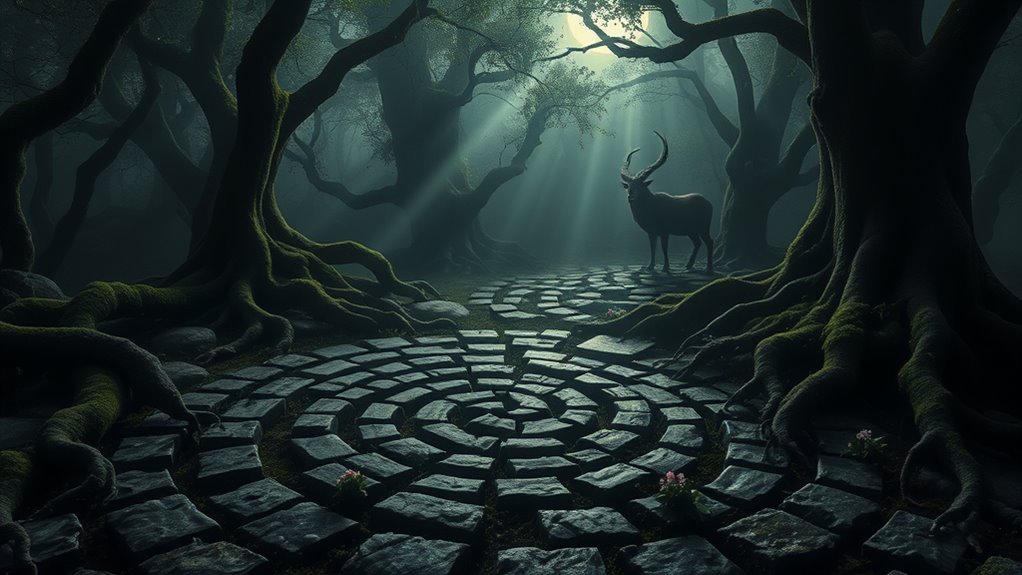
The labyrinth symbolizes a journey of self-discovery and moral testing within this mythic setting.
If you explore further, you’ll uncover why del Toro chose this creature and how it deepens the film’s themes.
What the Title “Pan’s Labyrinth” Means in Spanish and English
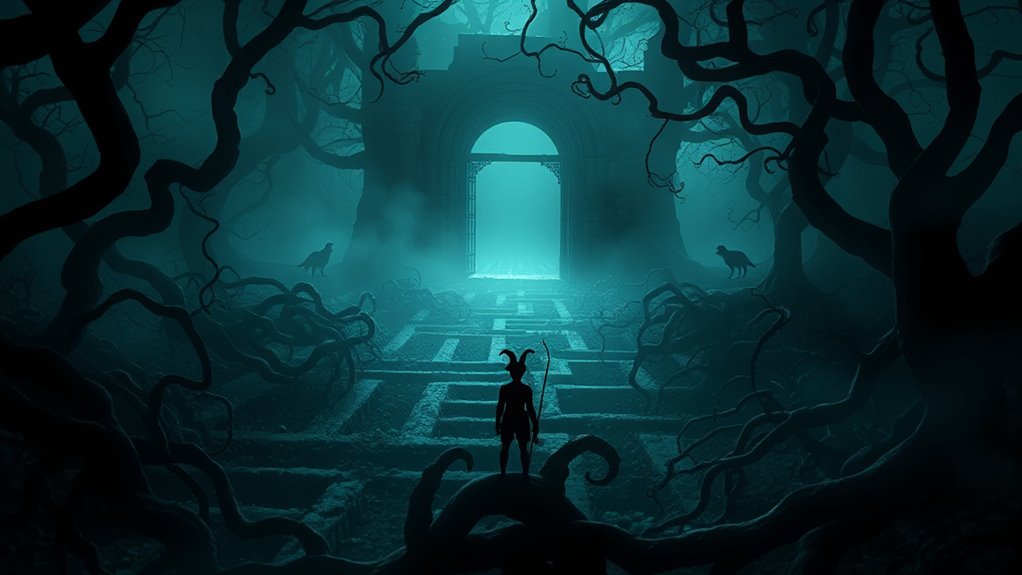
Although you might assume “Pan’s Labyrinth” directly translates from Spanish, the original title is actually “El Laberinto del Fauno,” meaning “The Faun’s Labyrinth.” The English title was chosen for marketing reasons and isn’t a literal translation.
When you watch the film, you’ll notice the central creature is a faun, not the Greek god Pan, which the English title might suggest. The term “Pan” was used simply because it’s more recognizable and connects mythologically to labyrinths.
The focus of the title is on the symbolic labyrinth and the mysterious faun guiding the story. So, while the English title hints at Pan, it really emphasizes the labyrinth’s magical, mythological nature through the faun in the original Spanish title.
Who Is the Faun (And Why It’s Not Pan)
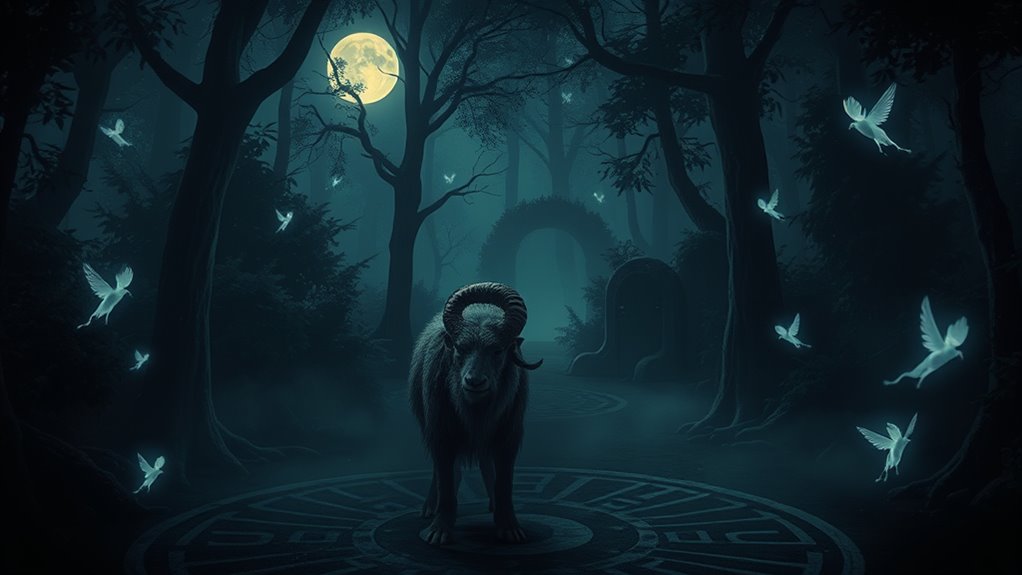
Who exactly is the faun in Pan’s Labyrinth, and why isn’t it Pan? You might think the creature is Pan because of the title, but it’s actually a faun. The original Spanish title, *El Laberinto del Fauno*, means *The Faun’s Labyrinth*, highlighting this distinction. The faun comes from Roman mythology and resembles a satyr, while Pan is a Greek god with different traits.
Guillermo del Toro designed the faun to look mossy and bark-like, adding mystery rather than depicting Pan. The use of “Pan” in translations is more a choice than a literal identity.
Guillermo del Toro’s faun design evokes mystery with natural, earthy textures instead of embodying the Greek god Pan.
- The faun is a Roman mythological creature
- Pan is a Greek god, not the faun here
- Spanish title focuses on the faun, not Pan
- Faun’s design is earthy, not god-like
- “Pan” is a translation shortcut, not fact
Pan vs. Faun: Mythological Background
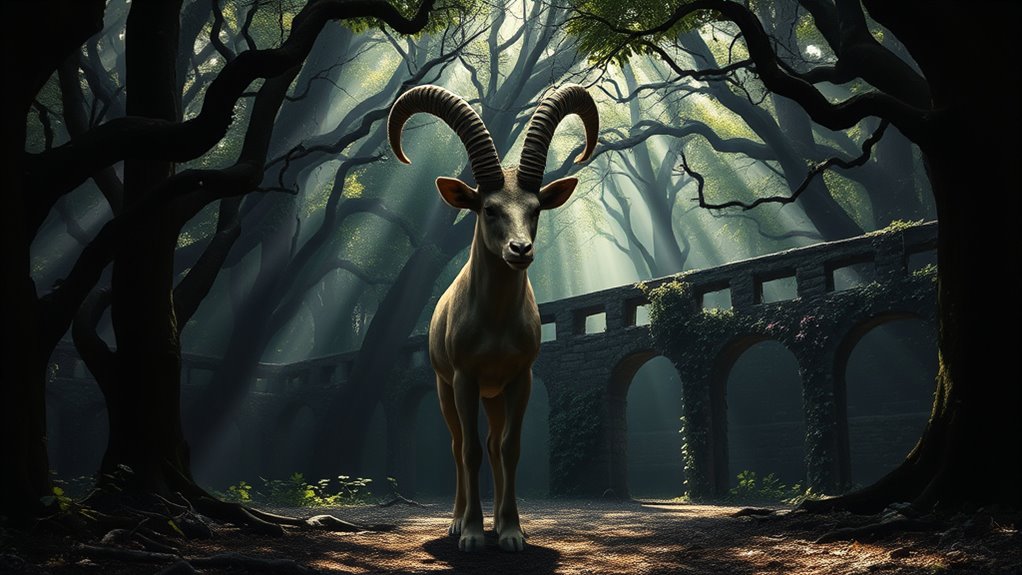
How do Pan and the faun differ in mythology, and why does it matter for the film? Pan is a Greek god linked to nature, shepherds, and wildness, often shown with goat legs and a more primal, sexual energy. The faun, on the other hand, is a Roman creature similar to the Greek satyr but tends to be whimsical and less overtly sexual.
In “Pan’s Labyrinth,” the creature you encounter is a faun, not Pan, despite the English title. This distinction is important because the film’s original Spanish title, “El Laberinto del Fauno,” highlights the faun’s role. Understanding the mythological background clarifies that the story draws on faun traits—mysterious and magical—rather than the chaotic, lustful nature typically associated with Pan.
Why Guillermo Del Toro Chose the Faun Over Pan
You might wonder why Del Toro chose the faun over Pan despite the film’s title. It’s because the faun fits the story’s tone better, avoiding Pan’s strong associations with sexuality and focusing on mythological accuracy.
Understanding this choice helps you see how symbolism shapes the film’s deeper meaning.
Pan Versus The Faun
Although many refer to the film as “Pan’s Labyrinth,” Guillermo del Toro deliberately chose to depict the creature as a faun rather than Pan to distance the character from the Greek god’s strong sexual connotations. You’ll notice the original Spanish title, *El Laberinto del Fauno*, highlights a faun, emphasizing its mythological roots rather than Pan’s.
Del Toro designed the faun with mossy, bark-like features, making it mysterious and distinct from the classical half-goat Pan. This choice reflects the difference between Pan, known for primal and sexual traits, and the Roman faun, symbolizing nature and whimsy.
- Original title focuses on the faun
- Faun’s design avoids Pan’s sexual imagery
- Faun linked to nature, Pan to primal urges
- English title “Pan’s Labyrinth” is a translation choice
- Creature’s look deepens the film’s mysterious tone
Sexuality And Symbolism
Guillermo del Toro’s choice to depict the creature as a faun instead of Pan highlights a deliberate shift in the film’s symbolism. You’ll notice that Pan’s mythological symbolism is heavily tied to sexuality, chaos, and primal instincts—elements that didn’t fit the film’s tone. Instead, del Toro wanted a figure that felt mysterious and ambiguous without carrying Pan’s explicit sexual connotations.
The faun in the movie serves as a whimsical, mystical guide, emphasizing nature and innocence with its mossy, bark-like appearance. By choosing the faun, del Toro sidestepped Pan’s provocative and hedonistic associations, allowing the story to focus on deeper mythological symbolism without distraction.
This choice shapes how you interpret the labyrinth’s magic and meaning throughout the film.
Mythological Accuracy Matters
Because del Toro aimed for mythological accuracy, he made a clear distinction between the faun in the film and the Greek god Pan. In El Laberinto del Fauno, the faun represents whimsy and mystery without Pan’s overtly sexual symbolism. This choice respects mythology and clarifies the creature’s role.
You’ll notice that the English title, Pan’s Labyrinth, is more poetic than precise, while the original Spanish title emphasizes the faun.
Here’s why this distinction matters:
- The faun is a Roman mythological figure, linked to music and playfulness.
- Pan is a Greek god with strong sexual connotations.
- Del Toro avoided confusion by choosing the faun character.
- Mythological accuracy deepens the film’s symbolism.
- Understanding this helps you grasp the creature’s true essence in the story.
The Role of the Labyrinth in *Pan’s Labyrinth
You’ll notice the labyrinth symbolizes Ofelia’s journey through moral challenges and self-discovery. It shapes the story by linking mythological trials with her real-world struggles.
Understanding its role helps you see how fantasy and reality intertwine in the film.
Symbolism Of The Labyrinth
- Represents Ofelia’s path to moral clarity
- Connects mortal world with mythical domains
- Embodies temptation and truth trials
- Highlights complexity of ethical decisions
- Symbolizes spiritual escape and transformation
Labyrinth’s Narrative Function
While exploring *Pan’s Labyrinth*, you’ll notice the labyrinth acts as more than just a backdrop—it drives the story by challenging Ofelia to face moral tests and encounter mythical beings. The labyrinth in *Pan’s Labyrinth* serves as a bridge between harsh reality and fantasy, reflecting Ofelia’s inner struggles amid war’s brutality.
As you navigate its moss-covered walls and hidden passages alongside her, you see how it symbolizes spiritual growth and the fight between innocence and corruption. The labyrinth’s design and function push the narrative forward, framing Ofelia’s journey of self-discovery and moral choice.
In *Pan’s Labyrinth*, the labyrinth isn’t just a setting—it’s an essential narrative device that deepens your understanding of the characters and the story’s themes.
Mythological Significance Of Labyrinth
- Symbolizes Ofelia’s self-discovery and moral testing
- Serves as a mythic space blending real and magical worlds
- Reflects classical mythological labyrinth designs
- Represents the path between innocence and experience
- Embodies themes of fate, destiny, and moral complexity
You’ll find the labyrinth essential in understanding the story’s mythological depth.
Common Misconceptions About Pan and the Faun in the Film
Have you ever wondered why the creature in Pan’s Labyrinth is called a faun rather than Pan? Despite the title, the character isn’t the Greek god Pan but a faun, a mythological creature from Roman and Greek traditions. The original Spanish title, “El Laberinto del Fauno,” highlights this distinction.
The English title uses “Pan” for simplicity in translation, which often leads to confusion. Pan, in mythology, is a goat-legged god linked to nature and sexuality, quite different from the film’s whimsical, less sexualized faun. Guillermo del Toro clarified that the name “Pan” wasn’t meant to directly refer to the god but served as an accessible label.
How *Pan’s Labyrinth* Explores Themes of Nature and Fantasy
- The faun represents primal, mythic elements of nature.
- The labyrinth is a metaphor for spiritual and moral trials.
- Nature and fantasy intertwine, creating a rich symbolic landscape.
- The faun’s dual nature mirrors human interaction with the environment.
- The title hints at deep-rooted, ancient connections with the wild.
You see how the film uses these elements to weave a powerful narrative.
Frequently Asked Questions
Why Is Pan’s Labyrinth Called Pan’s Labyrinth?
You call it Pan’s Labyrinth because the English title uses “Pan” for familiarity, even though the creature is actually a faun.
The original Spanish title means “The Faun’s Labyrinth,” reflecting the true mythological figure.
What Is the Hidden Meaning of Pan’s Labyrinth?
You’ll find the hidden meaning of Pan’s Labyrinth is a twisted fairy tale about innocence lost and brutal reality—where you don’t just get lost in a maze, but in moral choices and dark, haunting truths.
The story weaves fantasy with the harshness of the real world, reflecting on themes of oppression and resistance. It challenges viewers to question what is real and what is imagined.
Ultimately, it’s about the loss of childhood innocence in a cruel world, and the ways we cope with trauma through escapism and imagination.
What Is the Deeper Meaning of the Labyrinth?
The labyrinth symbolizes your journey through moral challenges and self-discovery. You’ll face confusion, temptation, and choices that reveal your true nature, guiding you through transformation while reflecting your internal struggles and emotional dilemmas.
What Does Ofelia Represent in Pan’s Labyrinth?
Ofelia embodies innocence, imagination, and integrity, inspiring you to interpret her as the pure, persistent protector of hope amid horrors.
She symbolizes your struggle against oppression, showing how moral courage can conquer cruelty and chaos.
Conclusion
As you step into *Pan’s Labyrinth*, imagine winding through twisting paths where shadows dance and secrets whisper. Though the faun guides you, it’s not Pan’s wild call you hear, but a deeper myth stirring beneath the leaves.
The labyrinth isn’t just stone and earth—it’s a gateway where nature and fantasy entwine, inviting you to lose yourself and find meaning in the mysterious, tangled roots of the story’s heart. Understanding why it’s called Pan’s Labyrinth reveals how the title reflects the blend of myth, nature, and fantasy that defines the film’s enchanting world.