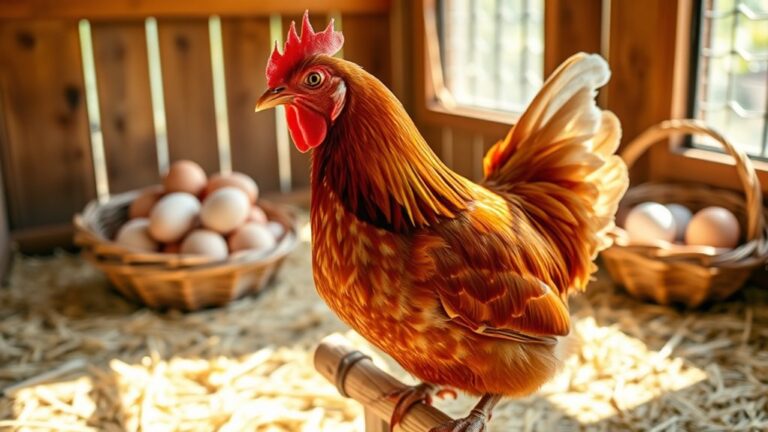
Where Does the Egg Come From Inside a Chicken?
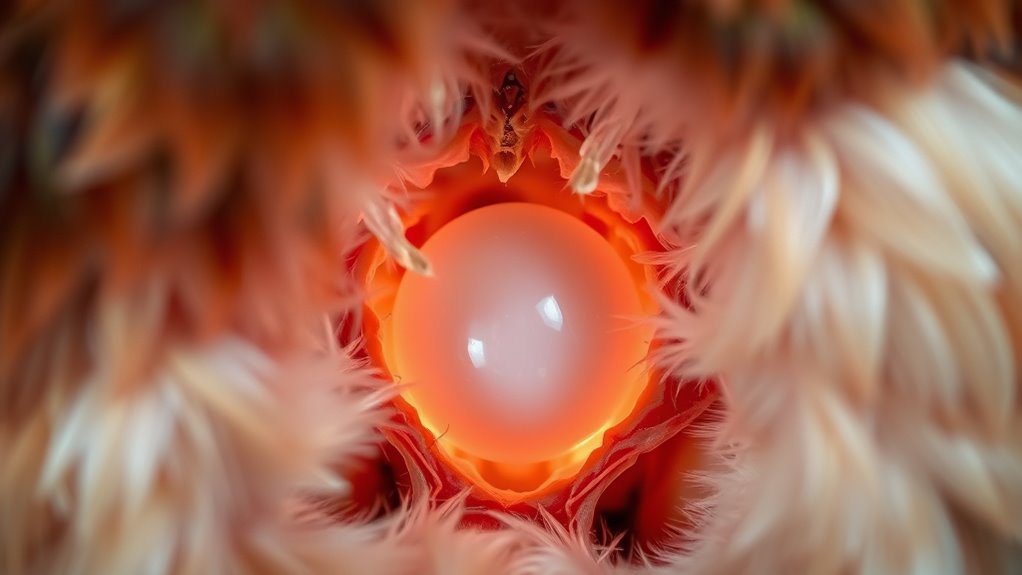
You’ll find the egg’s journey starts inside the hen’s ovary, where the yolk develops as the ovum. This initial stage is crucial in understanding where the egg comes from inside a chicken.
Once released, it travels through the oviduct, gaining egg white in the magnum and membranes in the isthmus.
The shell forms and hardens in the shell gland, finishing with a protective bloom to keep it safe.
What you see laid is the result of a fascinating series of transformations happening inside the hen’s body.
Keep exploring, and you’ll uncover how nutrition and environment shape the whole process.
Where Does Egg Formation Start Inside a Hen?
Although you might think egg formation happens all at once, it actually starts deep inside the hen’s ovary. Inside the ovary, thousands of follicles are developing, but only the largest one will release the ovum, which becomes the yolk. This process begins when hormonal signals mature the follicle, triggering ovulation.
Once released, the yolk starts its journey through the reproductive tract, surrounded by the germinal disc containing genetic material and nutrients. This release marks the very start of egg formation, a process that takes about 24 hours to complete.
Understanding that the ovary and its follicles are the true starting point helps you appreciate the complex, carefully timed nature of how an egg first begins inside a hen.
How the Yolk and Egg White Form During Egg Development
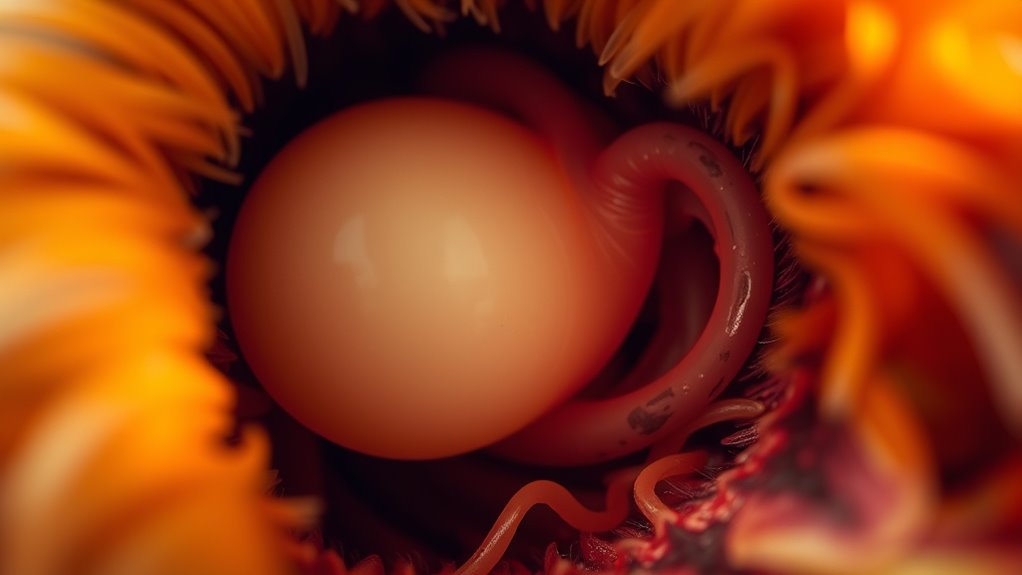
Once the yolk leaves the ovary, it enters the infundibulum, where fertilization can happen if sperm are present. From there, the yolk moves into the magnum, where the formation of the egg white begins. You’ll notice the thick albumen is added first, surrounding the yolk to provide protection.
Then, thinner layers of egg white form gradually, offering nutrients and cushioning essential for the developing egg. This entire egg white formation process takes about three hours. Afterward, the developing egg travels to the isthmus, where membranes form around the egg white and yolk.
Understanding this precise sequence helps you appreciate how the yolk and egg white develop together, setting the stage for the next steps in the egg’s creation inside the hen.
How the Eggshell Forms and Gets Its Color
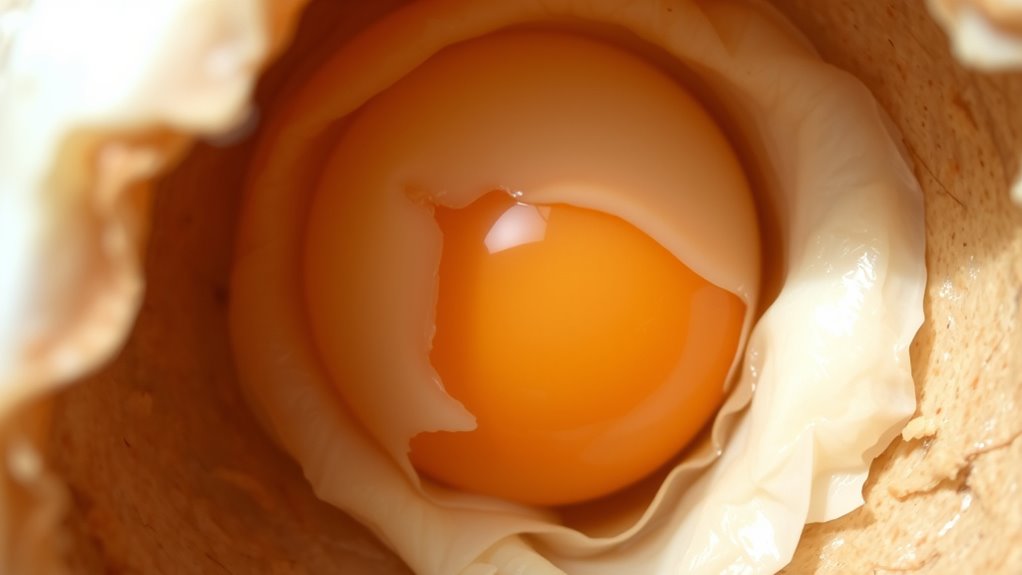
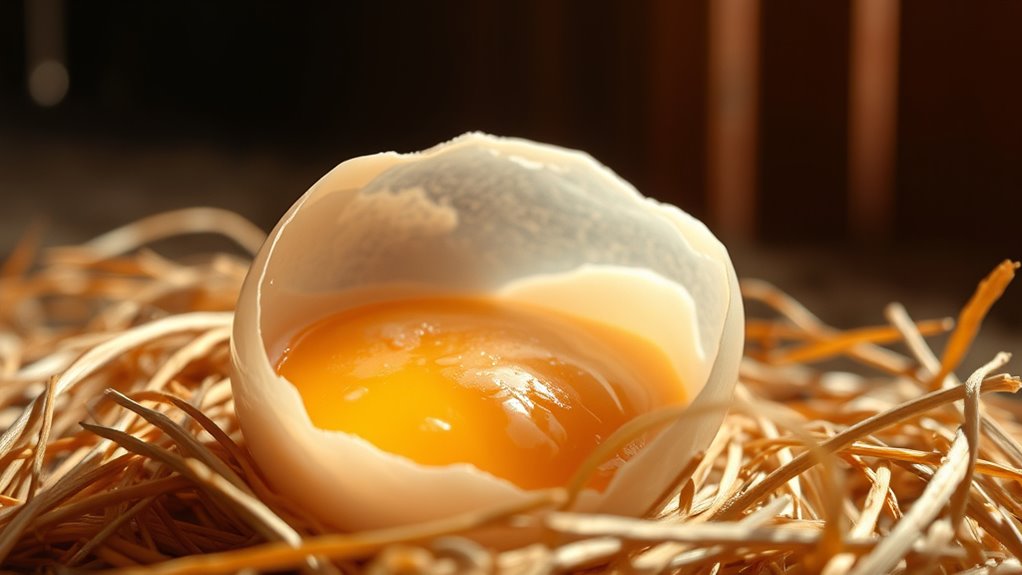
Where does the eggshell get its strength and color? The eggshell forms in the shell gland (uterus) during shell formation, where calcium carbonate crystals build up over about 20 hours. Initially, the shell is white.
Then, pigmentation adds color in the last 5 hours, varying by breed. Here’s how it works:
- Calcium carbonate creates a strong, protective shell.
- White shells remain unpigmented.
- Brown eggs get their color from protoporphyrins deposited on the shell’s surface.
- Blue eggs receive porphyrin pigments that seep throughout the shell, sometimes coloring the inside.
This pigmentation process is genetic, so you see different shell colors like white, blue, green, or brown depending on the chicken’s breed and genetics.
How an Egg Gets Its Protective Bloom Before Laying
How does an egg protect itself just before it leaves the hen? As the egg nears laying, it moves into the shell gland, also called the uterus. Here, the hen secretes the protective bloom, a nearly invisible coating that covers the eggshell’s surface.
This bloom seals the eggshell’s pores, acting like a natural waterproof wrap that keeps bacteria out and helps maintain freshness. It forms during the last few hours of the egg’s journey, typically within five hours before laying. Without this protective bloom, eggs would be more vulnerable to contamination and spoilage.
How Nutrition and Environment Affect Egg Formation and Quality
Though you might not realize it, a hen’s nutrition and environment play crucial roles in shaping the quality and formation of her eggs. When you guarantee she gets enough calcium and vitamin D, her eggshells turn out strong and healthy. The environment also impacts her laying cycle and egg consistency.
Keep these in mind to improve egg quality:
- Provide a balanced diet rich in nutrients for healthy yolks and albumen.
- Maintain proper temperature, humidity, and lighting to support regular laying.
- Avoid stressful, poorly ventilated conditions that harm egg quality.
- Allow outdoor foraging in a clean space to enhance yolk color and nutrient content.
Frequently Asked Questions
Where Does the Egg Come From in a Chicken?
The egg comes from inside the hen’s body, starting in her ovary where the yolk develops. It travels through the oviduct, gaining layers and a shell before you see it laid outside her body.
How Does a Chicken Get an Egg Inside of It?
You don’t just find an egg inside a chicken—it magically builds one!
Your chicken’s body grabs a yolk, wraps it in layers, and coats it with a shell, all before you even blink.
How Does an Egg Grow Inside of a Chicken?
You watch the yolk travel through the hen’s oviduct, gaining albumen, membranes, and a shell step-by-step.
Each part forms patiently, so the egg grows layer by layer inside the chicken until it’s ready to lay.
How Does a Chicken Lay an Egg Without a Rooster?
Ever wondered why hens lay eggs solo? You don’t need a rooster because hens’ hormones trigger egg formation.
Conclusion
Now that you know how an egg forms inside a hen—from the yolk’s start to the shell’s final color—you can appreciate the delicate process at work. Each egg develops like a carefully crafted masterpiece, with layers building one by one.
Just as a painter adds brushstrokes to a canvas, the hen’s body creates every part with precision. Understanding this helps you see eggs not just as food, but as nature’s intricate creation.
Recognizing where the egg comes from inside a chicken deepens your appreciation for this natural wonder. It reminds us of the fascinating biology behind every egg we enjoy.