
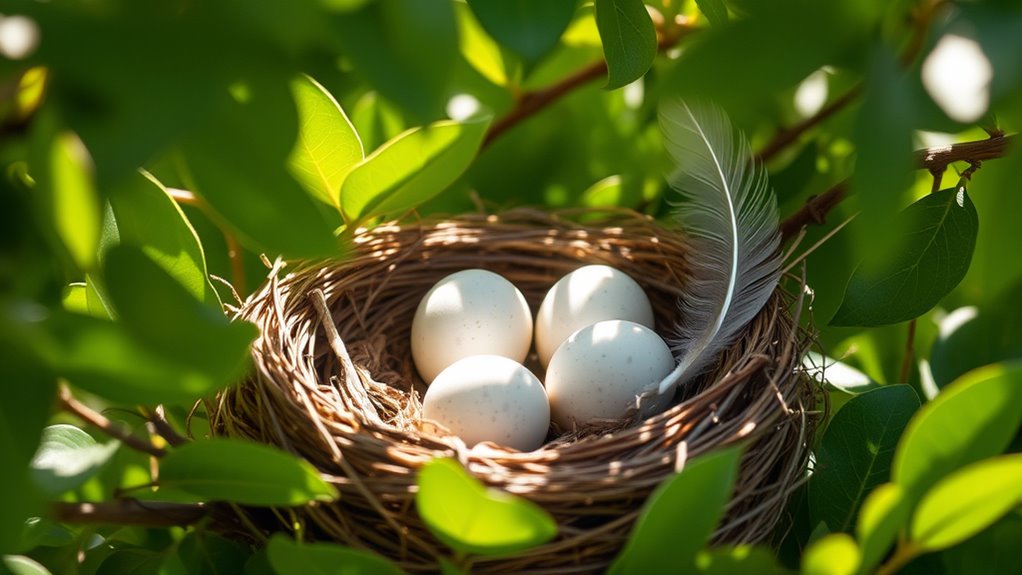
What Happens If Dove Eggs Don’t Hatch
If dove eggs don’t hatch, it usually means the eggs were infertile or conditions like temperature and humidity weren’t right for embryo development. This can happen for various reasons, affecting the chances of successful hatching.
Parents may stop incubating and abandon the nest after two weeks of no hatching. You might notice no parental care or signs of deterioration on the eggs during this time.
Avoid disturbing nests to keep the parents calm and improve success. If you want to support doves or try incubation yourself, there’s more helpful info ahead.
How Long Should Dove Eggs Take to Hatch?

Although mourning dove eggs typically hatch within 14 to 15 days after incubation starts, you might notice some variation depending on environmental factors and egg fertility. The incubation period is vital, as parent doves work diligently to keep the eggs warm by switching duties quickly to maintain consistent heat.
If you find unhatched eggs lingering beyond 16 to 17 days, it could signal issues, but slight delays are not uncommon due to individual differences. You should remain patient during this time, understanding that some dove eggs may take a bit longer to hatch.
Keeping an eye on the timing helps you monitor the health of the eggs without jumping to conclusions too early.
Why Don’t Dove Eggs Hatch? Common Causes Explained
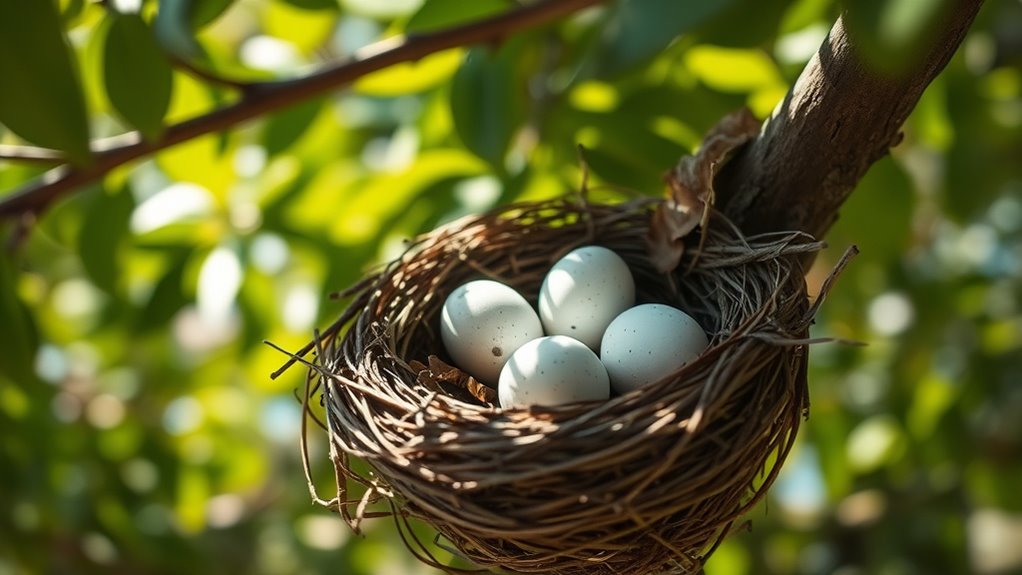
If your dove eggs don’t hatch after the usual 14 to 15 days, several factors might be at play. One common cause is infertility, where no embryo develops despite proper incubation. Even if the eggs are fertile, poor incubation conditions can prevent hatching.
Temperature fluctuations or incorrect humidity levels disrupt embryo growth, leading to failure. Exposure to harmful chemicals or physical damage to dove eggs during handling can also stop development. You need consistent warmth and a stable environment for successful incubation.
Understanding these causes helps you identify issues early and improve your approach, increasing the chances that your dove eggs will hatch healthy chicks next time.
How Can You Tell If Dove Eggs Are Fertile or Infertile?
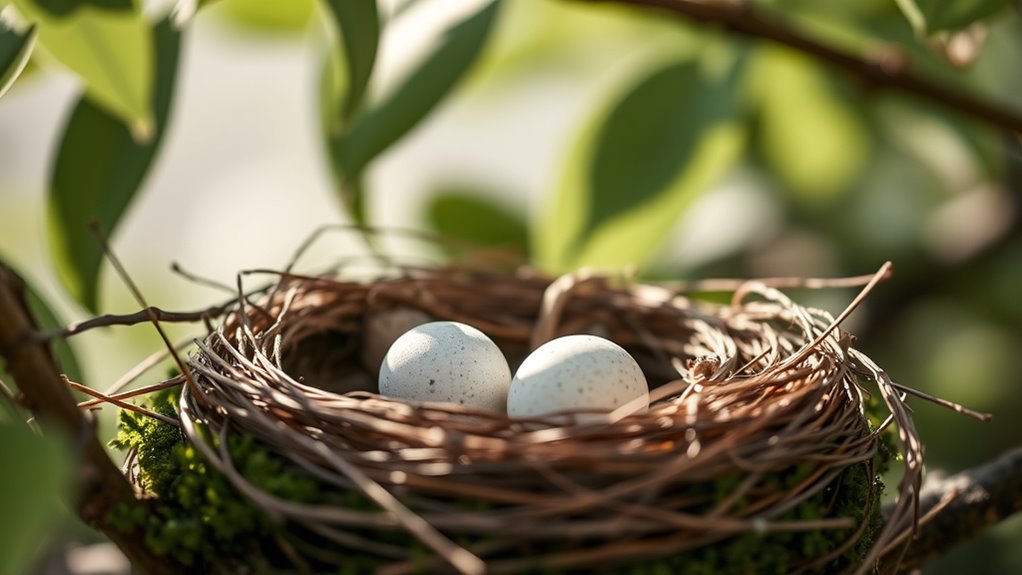
When you candle dove eggs between 7 and 10 days of incubation, you’ll usually see blood vessels and a developing embryo if the eggs are fertile.
To determine if your eggs are fertile or infertile, pay attention to these signs during candling:
- Fertile eggs show clear blood vessels and embryo movement inside the shell.
- Infertile eggs appear pale or yellow, with no visible veins or movement.
- After two weeks, an egg that remains clear or shows no change in the air cell size is likely infertile or non-viable.
How Do Dove Parents Respond to Unhatched Eggs?
You’ll notice that dove parents take turns incubating their eggs for about two weeks, but if the eggs don’t hatch, their behavior changes. They might stop warming the eggs and become less attentive, especially if the eggs seem infertile.
Eventually, they may abandon the nest to focus their energy elsewhere.
Parental Incubation Patterns
Although mourning dove parents diligently take turns incubating their eggs for about two weeks, you’ll notice they become restless if the eggs don’t hatch on time. Their parental incubation patterns change as they assess the fertility and viability of the eggs. Here’s what typically happens:
- They maintain steady incubation for 14-15 days, ensuring warmth and protection.
- If no hatching occurs, they grow restless and reduce incubation frequency.
- After several inactive days, they often abandon the nest, signaling a likely issue with fertility.
You’ll see that abandonment is a response to prolonged unhatched eggs, as parents conserve energy for future reproductive efforts rather than continuing futile incubation. Understanding these patterns helps you grasp how mourning doves balance care with practical survival instincts.
Response To Egg Infertility
Mourning dove parents closely monitor their eggs during incubation, and if hatching doesn’t happen within 14-15 days, they quickly recognize something’s wrong. When you notice no signs of embryo development or hatchling activity, it usually means the eggs are infertile.
At this point, dove parents often stop incubation and may abandon the nest altogether. You’ll find that after a few days without progress, they cease warming the eggs and start preparing a new nest instead.
Some doves might continue incubating infertile eggs briefly, but they eventually give up when hatching fails to occur. So, if you witness nest abandonment, it’s typically a response to infertile eggs and the natural end of incubation efforts for that clutch.
What Are Signs a Dove Egg Nest Has Been Abandoned?
When a parent dove doesn’t return to the nest for several hours or overnight, it often signals that the eggs have been abandoned. You can spot an abandoned dove nest by observing these signs:
If a parent dove skips returning for hours or overnight, the eggs may have been abandoned.
- No parental care: If you see no feeding, incubation, or warmth from the parent dove over an extended period, the eggs are likely abandoned.
- Egg condition: Abandoned eggs often show discoloration, foul odor, or other signs of deterioration after days without attention.
- Incubation timeline: If eggs remain unincubated beyond the typical 14-15 days without any parental return, the nest is probably deserted.
When Should You Remove Unhatched Dove Eggs?
If you notice that dove eggs haven’t hatched after about 21 days, it’s usually time to remove them from the nest. The typical incubation period for dove eggs ranges from 14 to 15 days, so if you see no signs of movement or hatching beyond this window, removal becomes necessary. Sometimes, waiting an extra week or two can help confirm that the eggs won’t hatch.
Make sure the parent birds have abandoned the nest or show prolonged inactivity before proceeding with removal. Properly removing unhatched eggs prevents spoilage, disease, and the attraction of pests, keeping the nesting site safe and clean. Timely removal helps maintain a healthy environment for any future nesting attempts.
Why You Should Avoid Disturbing Dove Nests
Because dove parents rely heavily on consistent incubation, you should avoid disturbing their nests to prevent them from abandoning their eggs. Disturbing dove nests not only frightens the parents but also interrupts the critical incubation period, lowering hatch success.
Here’s why you should keep your distance:
- Approaching or handling nests causes parents to leave eggs unincubated and vulnerable.
- Even minor noise or vibrations near the nest stress the birds and disrupt incubation rhythms.
- Frequent disturbances increase the chance of eggs cooling or getting damaged, preventing hatching.
Can You Incubate Dove Eggs at Home?
You can try incubating dove eggs at home, but it takes careful control of temperature and humidity to keep them viable. Using an incubator set to the right conditions is key, yet even small mistakes can harm the eggs.
If home incubation feels overwhelming, considering foster parenting with experienced birds might be a safer option.
Home Incubation Challenges
Although incubating dove eggs at home can seem rewarding, it demands precise control over temperature and humidity to succeed. You’ll need to replicate natural incubation conditions, which is tough without specialized equipment.
Here are the main challenges you’ll face:
- Maintaining a steady temperature around 99.5°F (37.5°C) — even slight fluctuations can harm the embryos.
- Keeping high humidity levels consistent to prevent the eggs from drying out or rotting.
- Turning the eggs regularly, as parent doves do, to ensure proper development and avoid the embryo sticking to the shell.
Without careful monitoring, your incubation efforts may lead to lower hatch rates or complete failure. Home incubation requires dedication and precision to give dove eggs the best chance to hatch successfully.
Foster Parenting Options
Managing the delicate conditions required for home incubation often leads bird enthusiasts to explore foster parenting options for dove eggs. Mourning dove eggs are especially fragile, and successful incubation demands precise temperature and humidity control, which can be tough to maintain at home.
One effective foster parenting method involves placing mourning dove eggs with ring-neck doves, who are better surrogate parents and can naturally incubate and care for the eggs. While artificial incubation is possible, it requires constant monitoring and experience, making foster parenting a preferable alternative for many.
If you’re considering incubating mourning dove eggs yourself, be aware that the process is complex and often unsuccessful without expert knowledge. Foster parenting offers a natural, reliable way to increase the chances of hatching these delicate eggs.
How Can You Support Mourning Doves During Breeding?
How can you create the best environment to support mourning doves during breeding? It’s essential to provide a calm, undisturbed space near their nesting area to help the mourning dove feel safe during incubation.
You can also support their health and nesting success by following these steps:
- Offer a nutritious diet rich in calcium to promote strong eggshell development.
- Place a shallow dish of water nearby to keep the doves hydrated while incubating.
- Avoid disturbing or handling the nest to prevent interrupting the natural incubation process.
What to Expect When Fostering or Raising Dove Chicks
Supporting mourning doves during breeding sets the stage for what comes next: caring for their chicks. If you found two eggs yesterday afternoon that hatched, be ready to provide warmth and maintain proper temperature and humidity, mimicking natural conditions.
Dove chicks are tiny and fragile, needing frequent feeding within hours of hatching. When fostering or raising them, avoid disturbances and stress to ensure their survival. If you’re hand-raising, use specialized formula and regulate their environment carefully.
Frequently Asked Questions
What Happens if Dove Eggs Don’t Hatch?
If dove eggs don’t hatch, you’ll notice parents eventually abandon the nest.
Leaving eggs too long can cause mold and pests, so you should remove unhatched eggs to prevent odors and maintain nest hygiene.
What Do Birds Do if Their Eggs Don’t Hatch?
If their eggs don’t hatch, birds typically stop incubating and may abandon the nest. You’ll see them either start a new clutch elsewhere or remove unhatched eggs to prevent spoilage and avoid attracting predators.
How Long Does It Take Mourning Dove’s Eggs to Hatch?
Like waiting for spring’s first bloom, mourning dove eggs hatch in about 14 to 15 days.
You’ll see one parent incubate, then switch, ensuring warmth until those tiny lives emerge, ready to greet the world.
What Happens if Eggs Don’t Hatch in 21 Days?
If dove eggs don’t hatch in 21 days, you’ll want to remove them to prevent mold and odor. The parents usually abandon the nest by then, so cleaning up helps them start fresh with a new clutch.
Conclusion
If dove eggs don’t hatch, you’ll face uncertainty, patience, and care. You’ll watch, wait, and wonder. You’ll learn to recognize signs, respect nature’s rhythms, and decide when to step in or step back.
You’ll support the parents, protect the nest, and nurture new life if needed. By staying attentive, gentle, and informed, you’ll help guarantee that whether eggs hatch or not, you’re doing your part in the delicate dance of dove breeding.
Understanding what happens if dove eggs don’t hatch is essential. It allows you to provide the right care and make informed decisions to support the birds’ wellbeing.