
What Color Eggs Do Wyandotte Chickens Lay?
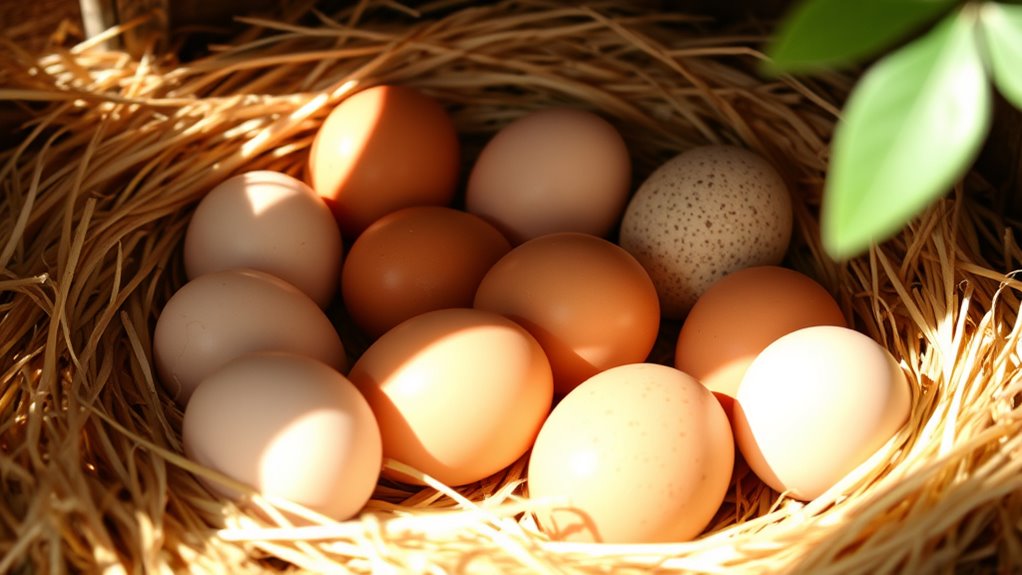
Wyandotte chickens are known for their distinctive egg-laying qualities, primarily producing light to medium brown eggs. These eggs sometimes exhibit cream or pinkish shades, adding a subtle variety to their typical egg color.
You won’t often see true white eggs from Wyandottes since their genetics favor brown hues. Egg color can vary between hens due to genetics, age, diet, and environment.
Despite these color differences, the egg quality and shell strength remain consistent.
If you want to understand why their egg colors shift and how they compare to other breeds, there’s more to explore.
What Color Eggs Do Wyandottes Usually Lay?

Although egg colors can vary among chicken breeds, Wyandottes usually lay light brown eggs. When you raise a Wyandotte, you’ll notice their egg color tends to stay within a range of light brown to pinkish or cream hues. These brown eggs have a consistent shape and strong shells, making them reliable for collection and use.
While some people mention white eggs, most Wyandotte owners confirm that their hens rarely, if ever, lay white. The egg color depends mainly on the specific Wyandotte variety and individual hen genetics, but brown eggs remain the standard.
Why Do Wyandotte Egg Colors Vary Among Hens?

You’ll notice that egg colors vary among Wyandotte hens mainly because of genetics, which shape each hen’s unique shade. Environmental factors like diet and age also play a role in changing the egg’s hue.
Understanding these influences helps explain why no two eggs look exactly alike.
Genetic Influence On Color
Because Wyandotte hens carry different genetic traits, their eggs can vary noticeably in color. Genetic differences among individual hens affect how pigment deposition occurs during eggshell formation, resulting in a spectrum of shades. Some hens express genes that produce a deeper, richer brown eggshell color, while others have alleles leading to lighter, cream or pinkish tints.
These variations happen even within the same flock due to the breed’s genetic diversity. So, when you collect eggs, you might notice some with a soft pink hue and others with classic light brown shells. Understanding these genetic influences helps explain why Wyandotte eggs don’t all look identical—they’re a direct reflection of each hen’s unique genetic makeup controlling pigment patterns on the shell.
Environmental Effects On Hue
When you notice differences in the color of Wyandotte eggs, environmental factors often play a key role alongside genetics. While genetic differences set the baseline for egg color, things like diet, age, and health status can shift the hue subtly.
For example, a hen under stress or experiencing changes in her living conditions might lay eggs with lighter or darker shells temporarily. Younger hens usually produce lighter eggs, while older hens tend to lay eggs with a richer, more consistent color.
Even though the breed generally lays brown eggs, environmental factors can influence their shade enough for you to see slight variations. Understanding these influences helps explain why eggs from your Wyandottes won’t always match perfectly in color.
Individual Hen Variability
Besides environmental influences, the egg color differences you notice in Wyandotte chickens often come down to each hen’s unique characteristics. Hen variability plays a big role in the range of egg color, from light brown to pinkish or cream shades.
Individual hens, especially those from Silver Laced or Golden Laced varieties, can lay eggs with subtle color shifts due to genetics and feather patterns. Understanding this helps you appreciate why no two eggs look exactly alike.
| Hen Variety | Common Egg Color | Emotional Connection |
|---|---|---|
| Silver Laced | Light Brown to Cream | Elegance in every shell |
| Golden Laced | Pinkish Hues | Warmth in your hands |
| Buff Wyandotte | Cream to Light Brown | Comfort and familiarity |
| Blue Wyandotte | Slightly Pinkish | Surprise and delight |
| White Wyandotte | Creamy White | Purity and simplicity |
What Shades Of Brown Are Common In Wyandotte Eggs?
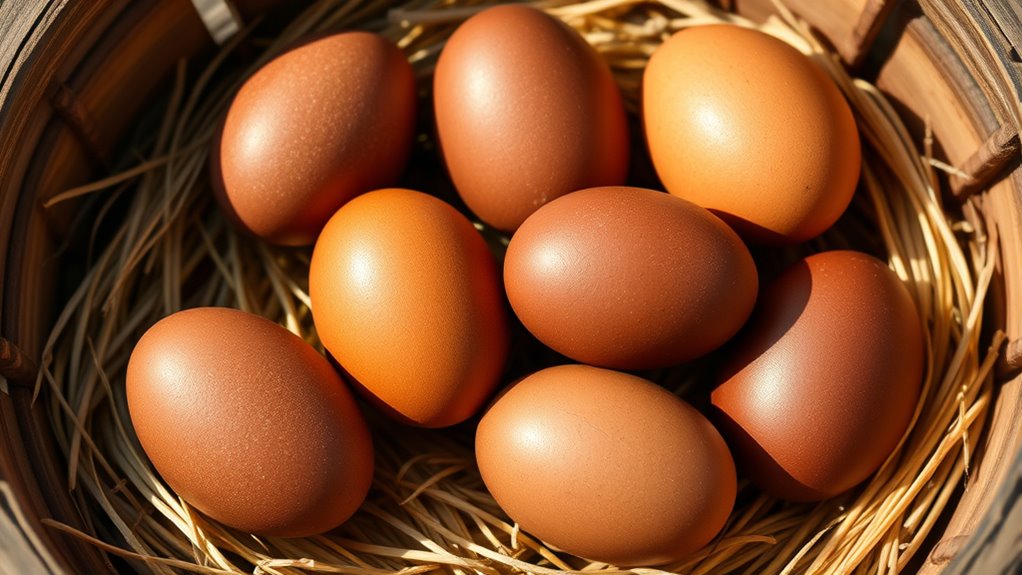
Although Wyandotte hens lay eggs primarily in shades of brown, you’ll find a range from light tan to deeper, richer browns. The brown eggs they produce can vary from light brown and medium brown to occasionally pinkish or cream-colored shells. This variation in egg color depends on individual hens, so some Wyandotte chickens might lay slightly lighter or darker brown eggs than others.
Most owners describe their Wyandotte eggs as consistently brown, but the exact shade differs hen by hen. If you’re raising Wyandotte chickens, expect warm brown tones to be the norm in their egg color, making these birds reliable layers of attractive, brown eggs rather than white or pale eggs.
Are Wyandotte Eggs Ever Truly White?
Can you expect Wyandotte hens to lay truly white eggs? Generally, no. Wyandotte chickens are known for producing brown eggs, not white eggs. Here’s what you should know about their egg color:
Most Wyandottes lay eggs in shades of light brown, cream, or pinkish, rather than pure white. Some eggs may appear very pale or almost white, but this is rare and not typical for the breed.
Reports from owners consistently show that white eggs are not characteristic of Wyandotte chickens.
How Do Diet And Environment Affect Wyandotte Egg Color?
While diet and environment play key roles in your Wyandotte hen’s overall health and egg production, they don’t substantially alter the brown tones of her eggs. The diet, especially calcium intake, mainly affects shell strength rather than egg color. Providing a balanced diet ensures your hen lays healthy eggs but won’t shift the inherent brown shades.
Similarly, environmental factors like lighting, stress, and overall well-being influence how often your Wyandotte lays eggs but have minimal impact on egg color itself. Variations in shade—such as lighter or pinkish hues—stem mostly from genetics and individual differences, not changes in diet or environment.
Can A Wyandotte’s Feather Color Affect Its Egg Color?
Since egg color is determined by genetics rather than plumage, your Wyandotte’s feather color won’t directly change the shade of its eggs. The genetic influence on egg color is strong, and Wyandottes typically lay brown eggs regardless of their feather color.
Here’s what you should know:
- Feather color varieties like silver-laced or golden-laced don’t alter the egg color, which stays light to medium brown.
- Some Blue Laced Red Wyandottes may produce eggs with a faint pinkish tint, but this is a minor variation in genetic influence, not feather color.
- Individual genetic differences can cause subtle shade changes, but these are unrelated to plumage.
How Does Wyandotte Egg Color Compare To Other Breeds?
You’ll notice Wyandotte eggs usually range from light to medium brown, sometimes with pinkish or cream tones. While these colors can vary between hens, Wyandottes rarely lay white eggs like Leghorns or White Orpingtons do.
Let’s compare how their egg colors stand out against other popular breeds and explore what causes these differences.
Wyandotte Egg Color Spectrum
Although Wyandotte chickens primarily lay brown eggs, their egg color ranges from light brown and cream to a subtle pinkish-brown, offering more warmth and variety than the plain white eggs of breeds like Leghorns.
When you consider the Wyandotte egg color spectrum, keep these points in mind:
- Wyandotte chicken eggs typically fall within light to medium brown shades, adding a lovely natural tone to your collection.
- Their brown eggs are consistent in size and have strong shells, making them dependable layers.
- While most lay brown eggs, occasional variations to very pale or almost white eggs occur but are rare.
This range makes Wyandotte eggs more colorful and appealing compared to breeds that lay uniformly white eggs.
Egg Color Variability Factors
When comparing Wyandotte egg colors to other breeds, you’ll notice a wider range of shades, from light brown to nearly white. This variability stems largely from genetics, which influence not only the base egg color but also subtle differences among individual hens.
For example, Silver Laced Wyandottes often lay more consistent brown eggs, yet even within this variety, some hens produce paler eggs. Environmental factors also play a role; diet, age, and stress levels can lighten or darken the egg color over time.
Unlike some breeds with very uniform egg colors, Wyandottes show more fluctuation, making their egg color less predictable. Understanding how genetics and environmental factors interact helps explain why Wyandotte egg color varies more than you might expect.
Comparisons With Other Breeds
While Wyandottes primarily lay brown eggs, their shades tend to vary more than some other breeds you might be familiar with. When comparing Wyandotte chickens to others, you’ll notice distinct differences in egg color patterns:
- Leghorns and Andalusians mostly lay white eggs, contrasting with Wyandotte chickens’ steady production of brown eggs.
- Wyandottes offer a range of brown egg shades, from light brown to pinkish or cream, while many breeds maintain a consistent egg color.
- The variation in Wyandotte egg color relates to their genetics and feather patterns, unlike breeds with uniform egg colors regardless of individual traits.
How Can You Identify Wyandotte Eggs In A Mixed Flock?
How can you easily spot Wyandotte eggs in a mixed flock? Start by focusing on egg color. Wyandotte eggs usually have a consistent light to medium brown shade, sometimes cream-colored or slightly pinkish. This uniform brown hue sets them apart from white or blue eggs laid by other breeds.
When identifying Wyandotte eggs, note their medium to large size and strong shells, which also help distinguish them. Since egg color can vary slightly based on individual genetics, observe each hen’s eggs over time to confirm. Remember, reports of white Wyandotte eggs are often due to misidentification.
Does Egg Color Affect Wyandotte Egg Quality And Use?
You might wonder if the color of Wyandotte eggs changes their nutrition or shell strength. While shades can vary from pale to deeper brown, the nutritional content stays consistent across colors.
You’ll also find that the shell durability remains strong, no matter the egg’s shade.
Egg Color And Nutrition
Even though Wyandotte chickens lay eggs that vary from light to rich brown, you won’t notice differences in their quality or nutrition. The egg color mainly influences appearance, not the nutritional value or shell quality. Here’s what you should know:
- Egg color varies naturally among hens but doesn’t impact the egg’s taste or health benefits.
- Shell quality remains consistently strong, protecting the egg regardless of its brown shade.
- Nutritional value stays stable across the color spectrum, providing you with reliable protein, vitamins, and minerals.
Eggshell Shade And Durability
While Wyandotte eggs display a range of light to medium brown shades, their color doesn’t affect shell strength or durability. You’ll notice eggshell hues vary from pale cream to a pinkish-brown, but these differences don’t compromise the egg’s integrity.
The brown eggshells of Wyandotte chickens are known for their durability, offering solid protection that helps keep the egg contents safe. Whether you get a lighter or deeper brown, you can trust the shell to be strong.
This consistent durability makes Wyandotte eggs practical for everyday use and cooking. So, when selecting Wyandotte eggs, focus on freshness rather than shell color, since the brown shade won’t impact the egg’s quality or how you can use it in your kitchen.
What Factors Influence Wyandotte Egg Shell Color?
Although Wyandotte hens usually lay brown eggs, the exact shade can vary widely depending on several factors. You’ll notice differences in egg shell color even among hens of the same breed because:
Wyandotte hens lay brown eggs, but shades vary due to breed, environment, diet, and age factors.
- Breed variety: Different varieties like silver or golden laced Wyandottes can influence the tone of the eggshell, making it lighter or deeper in color.
- Environmental factors: Conditions such as temperature and stress levels can subtly impact the pigment deposited on the eggshell.
- Diet and age: What your hens eat and their age also play roles in the shell’s appearance, sometimes causing cream or pinkish hues instead of standard light brown.
Understanding these factors helps you predict and appreciate the natural variation in Wyandotte eggshell color.
Frequently Asked Questions
What Is the Rarest Wyandotte Color?
The rarest Wyandotte color is Blue Laced Red. You’ll find its vibrant red and blue-gray laced feathers truly unique.
It’s highly sought after because breeders carefully maintain its limited genetic lines, making it stand out beautifully.
What Color Eggs Do the Wyandotte Chickens Lay?
Think of Wyandotte eggs as autumn leaves—mostly warm brown hues with occasional hints of cream or pink.
You’ll find their eggs consistently medium to large, never white, adding cozy charm to your morning breakfast.
What Are the Top 3 Best Egg Laying Chickens?
You’ll want to contemplate Leghorns, Rhode Island Reds, and Sussex chickens. They’re top egg layers, producing lots of large, consistent eggs.
Each breed’s hardy and reliable, making them perfect if you want steady, high-quality egg production.
Which Parent Determines Egg Color in Chickens?
You’ll find that the hen determines egg color because her genetics control pigment deposition. The rooster doesn’t influence the eggshell color, so it’s all about the mother hen’s inherited traits shaping the eggs you get.
Conclusion
So, you’re curious about Wyandotte egg colors? You might expect a rainbow of shades, but mostly, you’ll get lovely brown eggs—sometimes light, sometimes darker, but never quite white.
Ironically, despite all the diet tweaks and environmental changes you try, those eggs won’t suddenly turn blue or green.
But hey, at least you’ll always know a Wyandotte egg when you see one—even if it’s just a humble brown! When it comes to Wyandotte chickens, they consistently lay brown eggs, making egg color one of their distinctive features.