How Do Shower Pans Come in Different Sizes
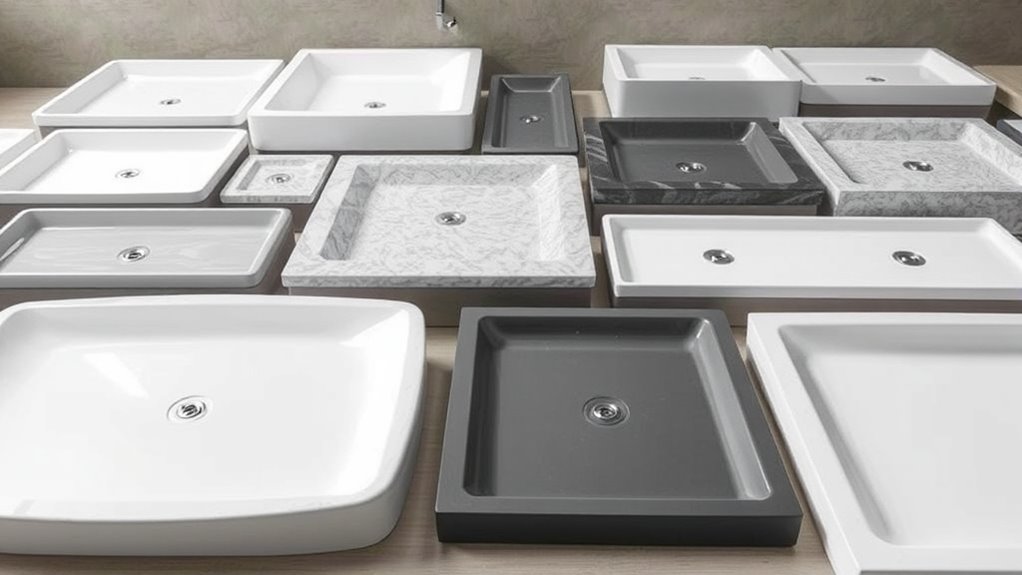
Shower pans come in a variety of sizes and styles to accommodate different bathroom designs and preferences. Standard sizes range from square pans measuring 30×30 inches to rectangular ones up to 60×30 inches.
Additionally, you’ll find unique shapes like neo-angle or corner pans that maximize space in smaller or oddly shaped bathrooms.
The threshold height of shower pans also varies. Some have a zero-threshold design for easy, step-in access, while others feature raised edges that help contain water more effectively.
Customization is another option—using materials such as mortar or polystyrene allows for tailoring the pan to fit unusual or specific spaces perfectly.
Choosing the right size, shape, and drain placement is crucial for optimal function and comfort.
Beyond these factors, there are additional considerations to ensure the shower pan suits your needs and complements your bathroom layout.
Standard Shower Pan Sizes and Shapes
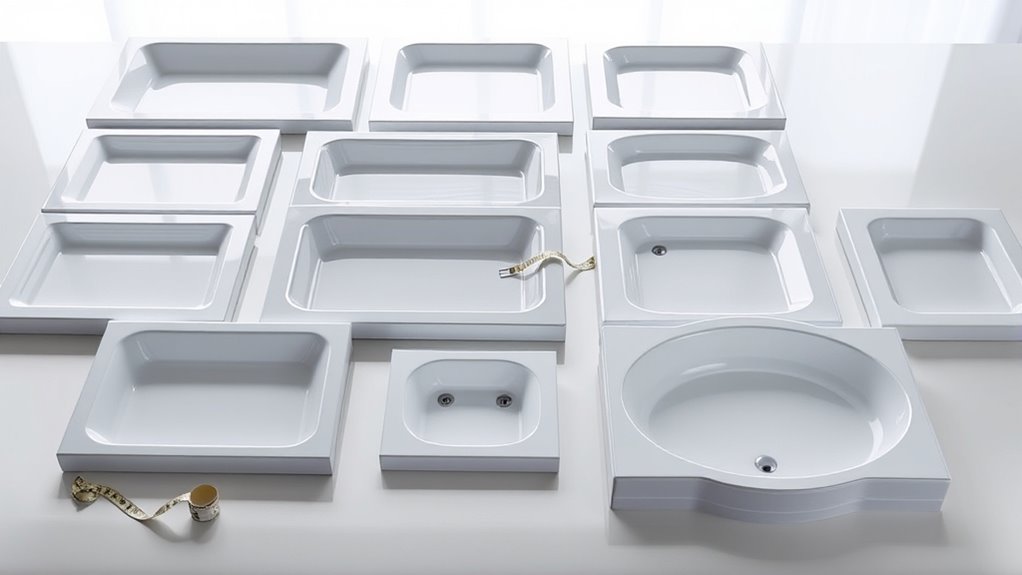
When you choose a shower pan, you’ll find standard sizes and shapes like square, rectangular, corner, and neo-angle, each tailored to fit different bathroom layouts. Square shower pans are popular for small to medium spaces, typically ranging from 30×30 inches to 42×42 inches. If you want more room, rectangular shower bases usually measure around 60×30 inches, offering versatility for walk-in showers.
Corner and neo-angle shower pans maximize space by fitting neatly into corners, with sizes often between 32 to 60 inches diagonally. These standard sizes help you find a ready-made shower base that fits your bathroom without custom work. Prefabricated shower pans come in these standard sizes but can also be customized if your layout demands something unique.
How Threshold Height Affects Shower Pan Size
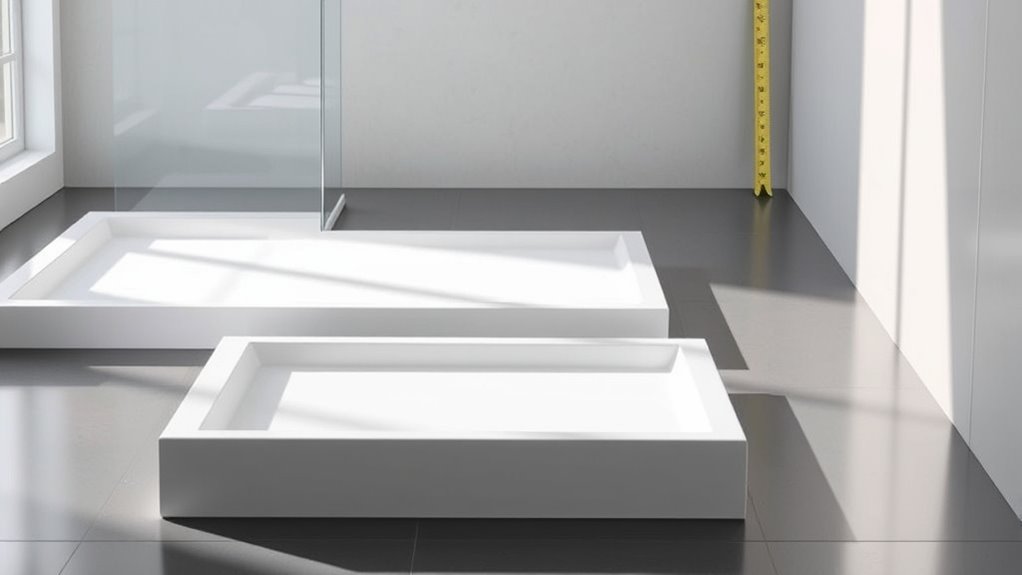
Although shower pan size often refers to length and width, the threshold height plays a crucial role in your shower’s overall dimensions and functionality. The threshold height typically ranges from 1 to 6 inches, affecting both accessibility and water containment.
When choosing the right shower pan size, consider how the threshold height impacts your bathroom’s design and usability.
Here’s what to keep in mind:
- Higher thresholds improve water containment but may hinder entry for some users
- Standard threshold height is about 4 inches, balancing function and access
- Curbless showers have a zero threshold height, offering seamless entry
- Threshold height influences the total height of the shower pan and ease of use
Understanding threshold height helps you select a shower pan size that fits your needs perfectly.
Curbless vs. Raised Shower Pan Sizes: Pros and Cons
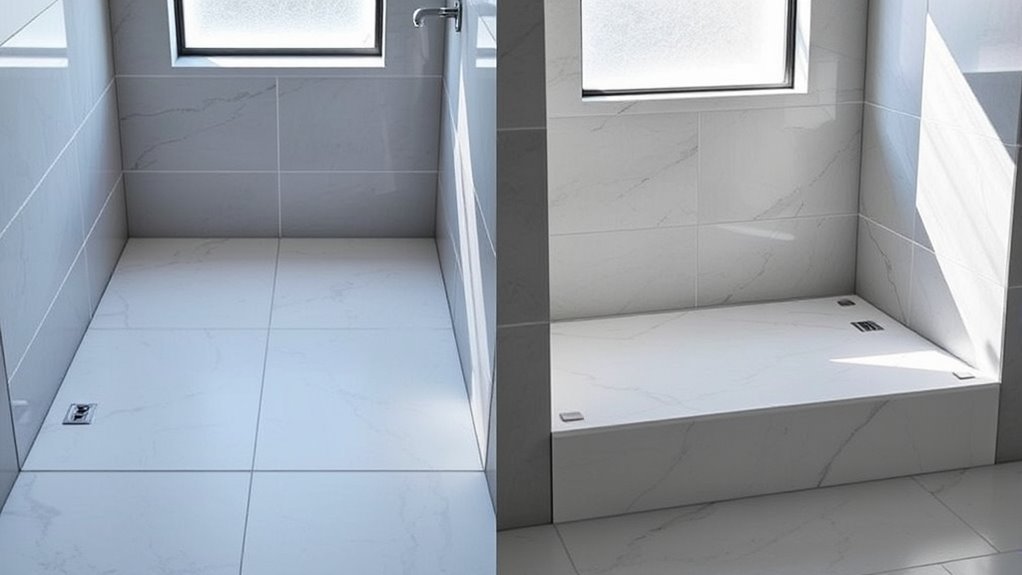
When choosing between curbless and raised shower pans, you’ll want to weigh accessibility against water containment. Curbless pans offer easy entry but demand careful waterproofing to avoid leaks.
Raised pans keep water in more effectively but can be a barrier for those with mobility challenges.
Accessibility Benefits Comparison
Because accessibility is a top priority, choosing between curbless and raised shower pans greatly impacts your bathroom’s usability. A curbless shower offers seamless entry with no threshold, making it ideal for wheelchair users and those with mobility challenges. Raised shower pans, while featuring a threshold that can be a barrier, provide traditional style and effective water containment.
Consider these accessibility benefits when deciding:
- Curbless designs lower tripping hazards and simplify movement
- Raised pans have thresholds from 1 to 6 inches, which may impede access
- Proper drainage and slope are critical for curbless shower functionality
- Raised pans often need more space and precise installation to avoid leaks
You’ll find curbless shower pans better suited for accessible remodeling due to their safety and modern appearance.
Water Containment Challenges
Water containment poses unique challenges depending on whether you choose a curbless or raised shower pan. With curbless showers, you won’t have a threshold to stop water, so the shower pan sizes and slope must be perfectly designed to direct water toward the drain and prevent leaks. This requires meticulous waterproofing and installation.
On the other hand, raised shower pans come with a 1-6 inch curb that acts as a physical barrier, making water containment easier by keeping water inside the shower area. However, this curb might limit accessibility and create tripping hazards.
Whether you pick a curbless shower or raised shower pans, ensuring proper slope, waterproofing, and installation is critical to effectively contain water and avoid damage outside the shower space.
Materials That Let You Cut and Customize Shower Pans
If you need a shower pan that fits a unique space, materials like mortar, polystyrene, tile, and solid surface let you cut and customize them precisely. These materials offer flexibility during installation, making it easier to achieve exact dimensions. You’ll find cutting and customization straightforward with the right tools and careful measurements.
Here’s why these materials stand out:
- Mortar pans can be shaped on-site for perfect fit.
- Polystyrene pans are lightweight and easily cut with saws.
- Tile pans allow precise cuts to match design needs.
- Solid surface pans offer smooth edges after cutting.
Avoid materials like cast iron for customization since they’re heavy and tough to cut without damage. Choosing the right materials simplifies cutting, customization, and installation.
When and Why to Choose Custom Shower Pan Sizes
When your bathroom layout presents unique space challenges, choosing a custom shower pan gives you the flexibility to fit every inch perfectly. Customization guarantees proper drainage and seamless installation, preventing leaks and other issues.
Unique Space Challenges
Although standard shower pans work well in many bathrooms, unique space challenges often call for custom sizes. When your bathroom has odd layouts or strict space constraints, off-the-shelf shower sizes might not fit your needs. Custom shower pans let you tailor dimensions precisely, ensuring a perfect fit.
You should consider custom pans when:
- Your shower space has irregular shapes or corners
- Limited floor area demands efficient use of every inch
- You want seamless integration with custom tile or wall designs
- Accessibility requirements call for specific, non-standard sizes
Materials like foam bases allow cutting to exact dimensions, making custom shower pans ideal for overcoming space challenges. This ensures proper drainage and water containment without compromising style or function.
Benefits Of Customization
Because every bathroom layout is different, choosing a custom shower pan lets you fit the space perfectly while improving water drainage and preventing leaks. Custom shower pans are designed with precise measurements tailored to your unique space, which means they accommodate irregular shapes and specific accessibility needs like lower thresholds or wider openings.
By selecting custom shower sizes, you ensure the pan aligns exactly with your bathroom’s dimensions, reducing the risk of water damage. This precision also simplifies installation since the pan fits without requiring extra modifications or adjustments.
Ultimately, opting for custom shower pans enhances both functionality and durability, saving you time and money while creating a shower space that works just for you.
Installation Flexibility Options
If your shower space has unusual dimensions or existing framing, choosing a custom shower pan gives you the flexibility to achieve a perfect fit without major remodeling. Custom shower pans offer installation flexibility by accommodating unique layouts that standard size pans can’t match. This option is ideal when you want to avoid reframing or altering your shower stall.
Consider these installation flexibility benefits of custom shower pans:
- Fit non-standard or tight spaces precisely
- Enhance waterproofing with tailored dimensions
- Maintain accessibility in constrained layouts
- Integrate seamlessly with existing bathroom design
When remodeling or working with an existing shower stall, custom sizes ensure your pan fits perfectly, avoiding costly adjustments. If custom pans aren’t possible, adjusting your framing can help you install a standard size pan instead.
Measuring Tips for Choosing the Right Shower Pan Size
When choosing the right shower pan size, start by measuring the available space from wall to wall, making sure to account for any fixtures or obstructions. Next, determine the rough-in dimensions—the distance from the wall studs to the center of the drain. These measurements are vital for selecting shower base sizes that fit properly.
Keep in mind standard shower pans are usually about ¼ inch narrower in width and ⅛ inch less in depth than the rough-in dimensions, allowing for easier installation. Also, consider the shape of the pan—square, rectangular, corner, or neo angle—to match your bathroom layout.
Finally, double-check the drain location and height to verify compatibility, which helps guarantee proper drainage and a smooth installation process.
Common Mistakes to Avoid When Selecting Shower Pan Sizes
Selecting the right shower pan size requires careful attention to detail, or you risk running into costly installation problems. Many people make avoidable mistakes that complicate their project. To keep things smooth, watch out for these common errors:
Choosing the correct shower pan size is crucial to avoid expensive installation issues and common mistakes.
- Failing to measure the space accurately, leading to a shower pan that doesn’t fit.
- Overlooking the difference between rough-in dimensions and actual base sizes.
- Ignoring the drain center placement, which causes drainage and installation issues.
- Choosing a standard size without considering accessibility or custom needs.
Frequently Asked Questions
How to Determine Shower Pan Size?
You determine shower pan size by measuring your shower space’s width and depth, checking drain location, and considering your preferred shape and entry type.
Make sure the pan fits your bathroom layout and plumbing connections perfectly.
Can You Get a Shower Pan in Any Size?
Of course, you can’t get a shower pan in any size—said no one ever.
You can order custom pans or modify standard ones, ensuring your unique bathroom fits perfectly without forcing your shower to conform to cookie-cutter dimensions.
Do Shower Trays Come in Standard Sizes?
Yes, shower trays come in standard sizes like 36×36 or 60×30 inches, making it easier for you to find one that fits.
You can also order custom sizes if your space needs something unique.
What Are the Different Types of Shower Pans?
You’ll find shower pans in square, rectangular, corner, and neo-angle types. They come in materials like acrylic, fiberglass, tile, and solid surface.
Curbless pans offer easy access, while custom options fit unique spaces perfectly.
Conclusion
When choosing a shower pan, remember that nearly 70% of homeowners opt for custom sizes to fit their unique spaces perfectly. You can’t just pick any pan off the shelf—consider shape, threshold height, and material to get the right fit.
Avoid common mistakes by measuring carefully and deciding between curbless or raised options. Taking these steps guarantees your shower pan looks great and functions well for years to come.
Ultimately, shower pans come in different sizes to accommodate diverse bathroom layouts and preferences. Selecting the right size ensures both comfort and durability in your shower space.