
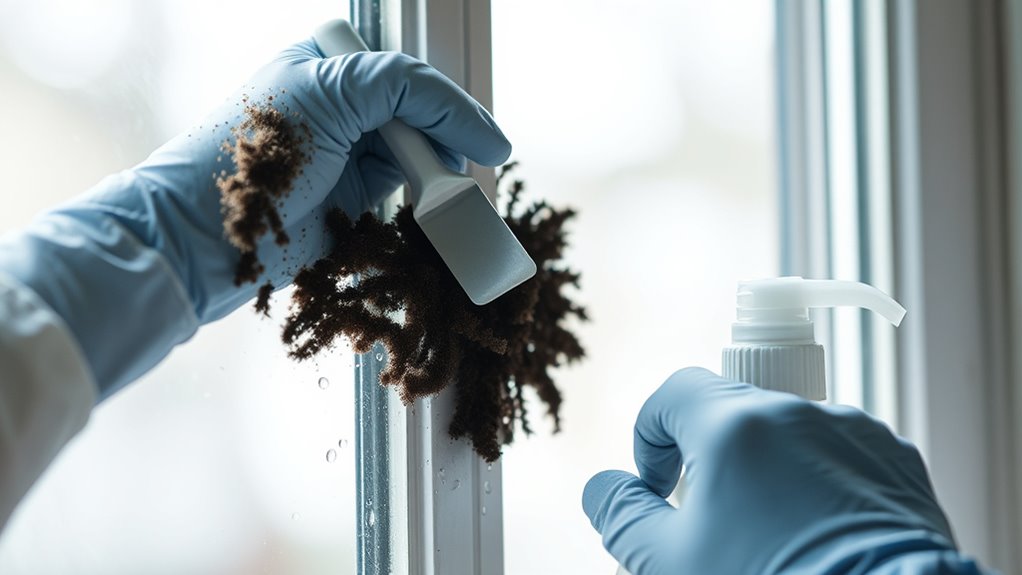
How to Get Rid of Mold Between Window Panes Step by Step
You can’t simply clean mold trapped between window panes because the glass seals block access, meaning you’ll need to replace the window or hire a professional for restoration. Mold between window panes is a common issue caused by moisture getting trapped inside the sealed unit.
First, assess if the window seal has failed and moisture is trapped inside.
Next, consider replacing the entire double-pane unit with a modern, airtight version. Proper installation and controlling indoor humidity will help prevent future mold growth.
Keeping humidity levels low and ensuring good ventilation are key to stopping mold before it starts.
If you’re unsure about the condition of your windows, consult a professional to evaluate and restore them properly. Keep exploring to discover how to maintain your windows and stop mold before it starts.
How to Identify Mold Between Window Panes
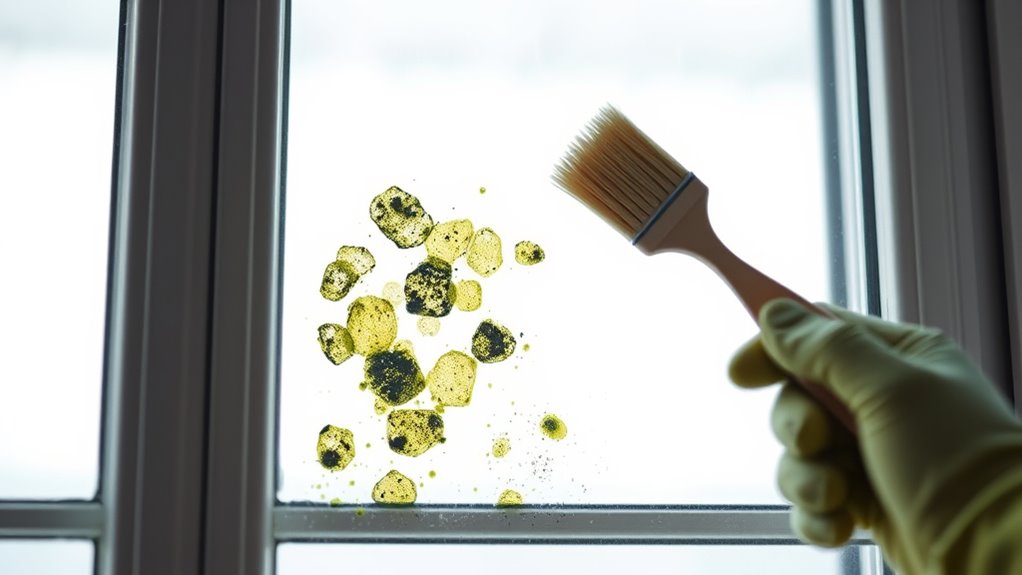
How can you tell if mold is growing between your window panes? Look for fuzzy, powdery, or slimy spots in black, green, or gray colors trapped inside the glass. You might notice a foggy or misty appearance on your window, especially during colder months.
This persistent fogging won’t wipe away, signaling trouble. Mold often appears near condensation buildup on or around the window frames, which means moisture is lurking where it shouldn’t be. When mold shows up between window panes, it usually points to a seal failure.
The broken seal lets moisture and organic matter get trapped, creating the perfect environment for mold to grow. If you spot these signs, it’s vital to act quickly to prevent further damage and maintain a healthy home.
What Causes Mold Between Window Panes?
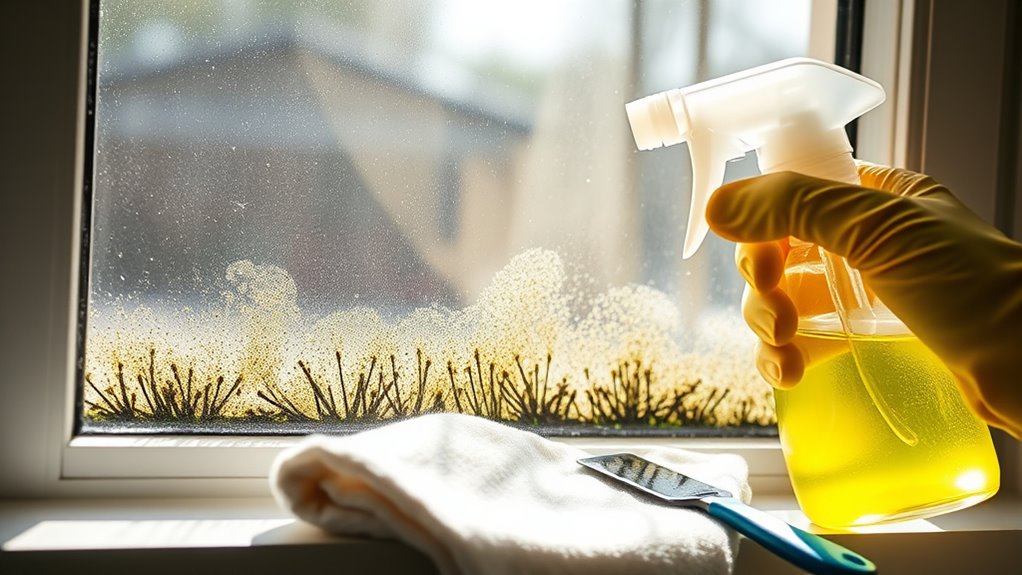
When a window seal fails, moisture sneaks between the panes, creating the perfect spot for mold to grow. Seal failure breaks the airtight barrier, allowing moisture to enter and condensation to form between the glass layers. This damp environment fosters mold growth.
You’ll notice that high indoor humidity and temperature fluctuations make condensation—and therefore mold—more likely. When inert gases like argon escape due to seal depressurization, moisture accumulates even faster. Cold weather worsens the problem by increasing condensation inside the window cavity.
All these factors combine to create an ideal setting for mold to thrive between your window panes. Understanding that seal failure triggers moisture buildup and condensation helps you see why mold growth happens in these hidden spaces.
Can You Clean Mold Between Window Panes?
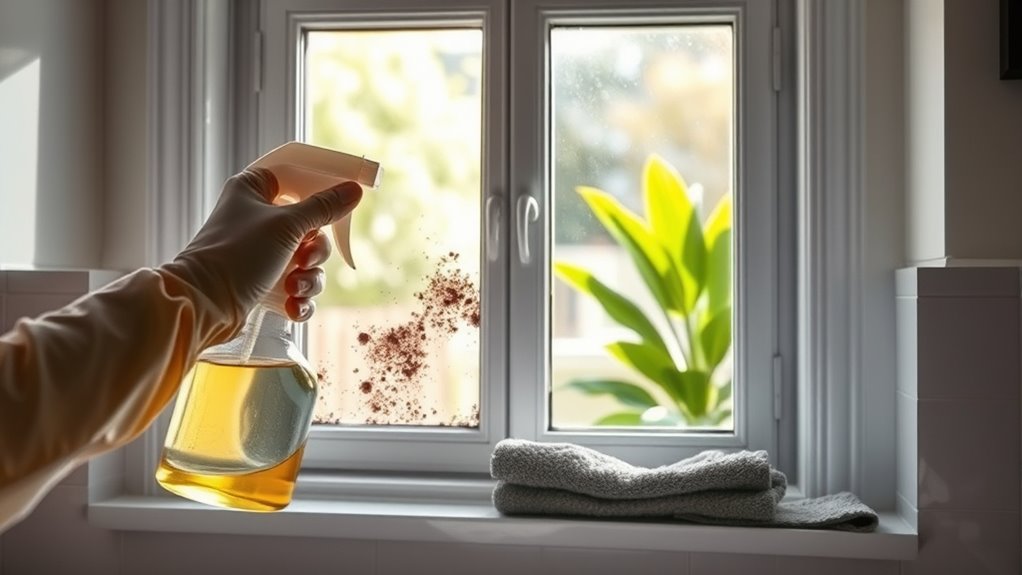
Although you might want to tackle mold between window panes yourself, cleaning it is rarely effective because the mold is trapped behind the sealed glass. Traditional cleaning mold methods won’t reach the mold between window panes and can actually damage the window seals.
Damaging these seals often causes seal failure, which leads to more condensation and mold growth. Using household cleaners like bleach or vinegar won’t help since they can’t penetrate the sealed unit and might worsen the problem.
The most reliable way to deal with mold between window panes is to replace the sealed glass unit or hire specialists who can reseal the window properly. DIY cleaning mold efforts typically don’t solve the issue and may cause more harm to your windows.
How to Remove Mold From Window Surfaces and Frames
Since mold on window surfaces and frames can spread quickly, you’ll want to tackle it promptly and safely. First, wear gloves, goggles, and a mask. Mix a cleaning solution of 3 teaspoons bleach per cup of water.
Apply it with a microfiber cloth or sponge, scrubbing all mold on windows gently. Rinse with clean water and dry thoroughly to stop mold regrowth.
| Step | Action |
|---|---|
| 1 | Wear protective gear |
| 2 | Prepare cleaning solution |
| 3 | Apply solution to window frames |
| 4 | Scrub mold on windows gently |
| 5 | Rinse and dry completely |
Regularly inspect window frames to prevent mold from returning. Removing mold promptly keeps your windows clean and safe.
How to Replace a Double-Pane Window to Eliminate Mold
If you notice persistent mold between your double-pane window, it’s time to assess its condition carefully. You’ll need to choose the right replacement options, focusing on energy-efficient, well-sealed units.
Proper installation is vital to guarantee airtight sealing and prevent mold from coming back.
Assess Window Condition
When you notice fogging or mold between your window panes, start by carefully examining the window for signs of seal failure and measuring its dimensions to see if replacement is possible. Check for condensation or visible mold spores trapped between the glass layers, which indicate the seal has broken. Inspect the window frame closely for any damage or rot that could complicate installation of a new unit.
Take accurate measurements and compare them to the manufacturer’s specifications to confirm replacement feasibility. Also, assess the window’s age and warranty status, as many double-pane windows have coverage for seal failure. If needed, consult a professional to determine whether repairing the seal or fully replacing the window is the best way to eliminate mold spores and restore your window’s integrity.
Choose Replacement Options
Although replacing a double-pane window might seem intimidating, choosing the right replacement option is essential to eliminating mold effectively. When you decide to replace mold trapped between panes, opt for a modern double pane unit with improved seals and inert gas fills. This upgrade dramatically reduces moisture buildup and future mold problems.
For precise window repair, have professionals measure and customize the replacement to fit your existing frames perfectly. Guarantee the new window features a high-quality, durable seal to maintain airtightness, which prevents moisture infiltration. Picking the right replacement unit is critical because it directly impacts how well you can prevent mold recurrence.
Install New Window
Before installing your new double-pane window, you’ll need to measure the existing frame carefully to guarantee a perfect fit. Remove the damaged window by unscrewing or gently prying out the frame, taking care not to damage the surrounding wall or trim.
When you install new window units, ensure they sit level and secure them firmly following the manufacturer’s instructions. Next, apply weatherproof caulking to seal all edges thoroughly. This window seal is vital to prevent air and moisture infiltration, which can lead to mold recurrence between panes.
Finally, test the installation by opening and closing the window, checking for any gaps or leaks. Confirm the window is airtight and properly insulated to maintain a mold-free environment moving forward.
How to Prevent Mold Between Window Panes With Proper Installation
To prevent mold from developing between window panes, you need to guarantee the window frame is sealed tightly during installation to block air and moisture infiltration. Use high-quality sealant and gaskets to keep the double-pane units airtight, preventing moisture buildup. Make sure the installation follows manufacturer guidelines and industry standards, including accurate measurements and proper weatherstripping placement.
Incorporate a vapor barrier as part of the window system to control indoor humidity levels, reducing condensation that encourages mold growth. After installation, regularly inspect the sealant and gaskets for any damage or gaps, addressing issues promptly before mold can form.
How to Control Indoor Humidity to Stop Mold Recurrence
Since mold thrives in moist environments, controlling indoor humidity is key to preventing its recurrence between your window panes. Keep indoor humidity levels between 30% and 50% using a dehumidifier to inhibit mold growth. Proper ventilation plays a vital role; run exhaust fans in kitchens and bathrooms to remove excess moisture.
Open windows daily for at least 30 minutes to enhance air circulation and reduce moisture buildup. Air conditioning units also help by lowering humidity and preventing condensation that promotes mold. Use a hygrometer to monitor indoor humidity and adjust your moisture control strategies accordingly.
When to Call a Professional for Mold Between Window Panes
Managing humidity and ventilation often keeps mold between window panes at bay, but sometimes the problem goes beyond simple fixes. You should call for professional assessment if mold covers more than one square meter or persists despite thorough cleaning. Professionals can spot underlying issues like broken seals or water damage that may cause mold to return.
If you suspect toxic black mold or water damage involving hazardous substances, seek immediate expert help. Also, when windows are old, under warranty, or hard to access, a specialist can decide whether repair or replacement is best. Don’t hesitate to contact professionals if your DIY attempts fail or if the mold situation seems unsafe, ensuring complete removal and protecting your home’s health.
Frequently Asked Questions
How to Get Rid of Mold Between Window Panes?
You can’t clean mold between window panes yourself. Instead, replace the sealed glass unit or the entire window.
Check your warranty first, then contact a professional to fix or replace the window to stop mold growth.
Is There a Way to Clean in Between Double Pane Windows?
You can’t truly clean between double-pane windows without breaking the seal.
Instead, you’ll need a professional service or replace the unit entirely, since any DIY attempts risk damage and won’t effectively remove mold inside.
How to Remove Black Mold From Window Pane?
Removing black mold from your window pane is like peeling off old wallpaper—you’ll need gloves, a bleach solution, and a brush. Spray, wait, scrub gently, rinse, then dry thoroughly to keep mold from coming back.
Is Bleach or Vinegar Better for Killing Mold?
You’ll find bleach better for killing mold quickly and thoroughly on hard surfaces, but use it carefully with ventilation.
Vinegar’s safer and eco-friendly but less potent, so it suits lighter mold or repeated treatments.
Conclusion
Don’t let mold between your window panes turn your home into a science experiment gone wrong! While you can tackle minor mold yourself, ignoring it can lead to a full-blown indoor jungle. By following these steps, you’ll banish that pesky mold and keep your windows spotless.
Remember, controlling humidity and proper installation are your secret weapons. When in doubt, calling a pro can save you from a mold disaster of epic proportions!
Effective mold removal between window panes not only improves your home’s appearance but also promotes a healthier living environment. Taking prompt action and maintaining your windows will prevent mold growth and protect your investment. Keep these tips in mind for successful mold removal between window panes.