How to Get Burnt Oil Off a Non-Stick Pan
To get burnt oil off your non-stick pan, start by letting the pan cool completely.
Then soak it in hot soapy water for 15–30 minutes to help loosen the burnt residue. This initial step is key to making the cleaning process easier and protecting your pan’s surface.
Next, use a soft sponge or silicone spatula to gently scrub away the burnt spots. Be careful to avoid scratching the non-stick coating.
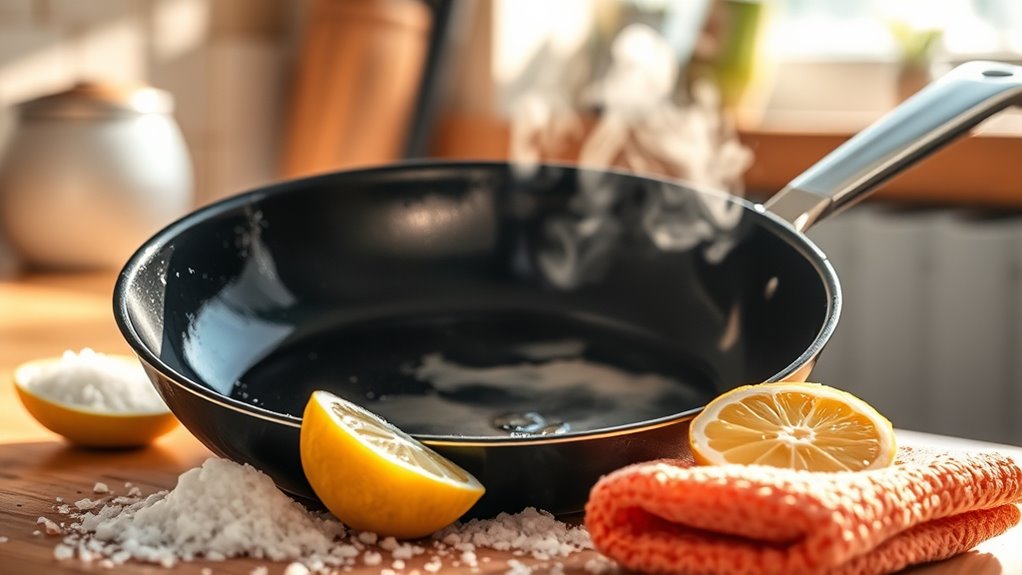
For tougher stains, you can try boiling a mixture of baking soda and vinegar in the pan, which helps lift stubborn grime safely without damaging the surface.
Avoid using abrasive tools like steel wool or harsh scouring pads.
Always rinse your pan thoroughly after cleaning to remove any leftover residue.
Following these steps not only removes burnt oil effectively but also helps keep your non-stick pan pristine and long-lasting.
Understanding Why Burnt Oil Forms on Non-Stick Pans
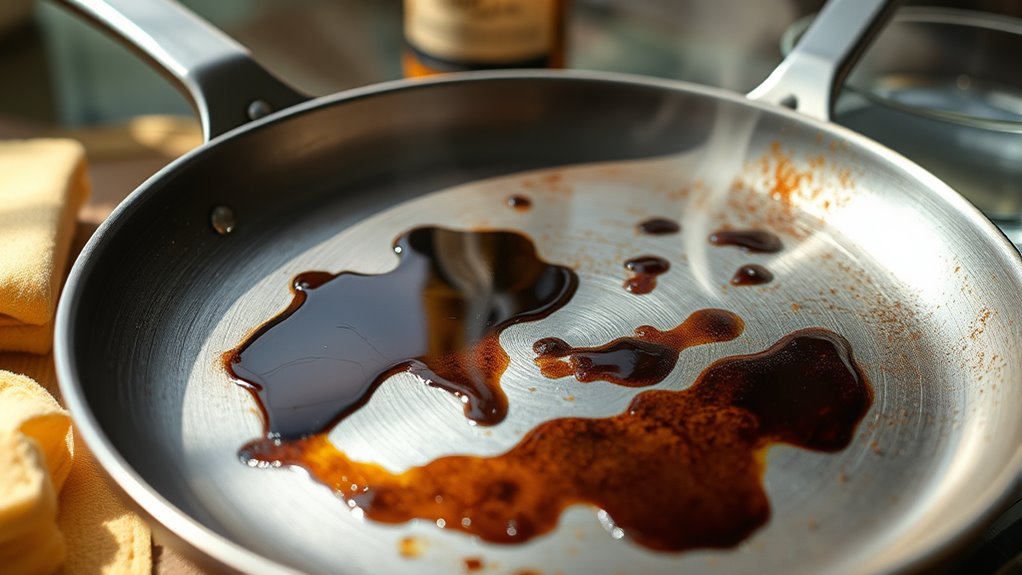
When you heat oil beyond its smoke point, it starts to carbonize and stick to your non-stick pan’s surface, creating burnt residues. This burnt oil forms because cooking oils exposed to high heat break down and leave behind stubborn deposits. If you frequently cook at high temperatures without proper oil management, these residues build up, damaging your pan’s non-stick coating.
Using oils with low smoke points, like olive oil or butter, makes this problem worse since they burn faster. Overheating your non-stick pan without food or liquid also promotes oil burning, causing sticky, discolored spots that are tough to remove. Understanding these causes helps you prevent burnt oil buildup and protects the integrity of your pan’s non-stick coating over time.
Preparing Your Non-Stick Pan and Tools Before Cleaning Burnt Oil
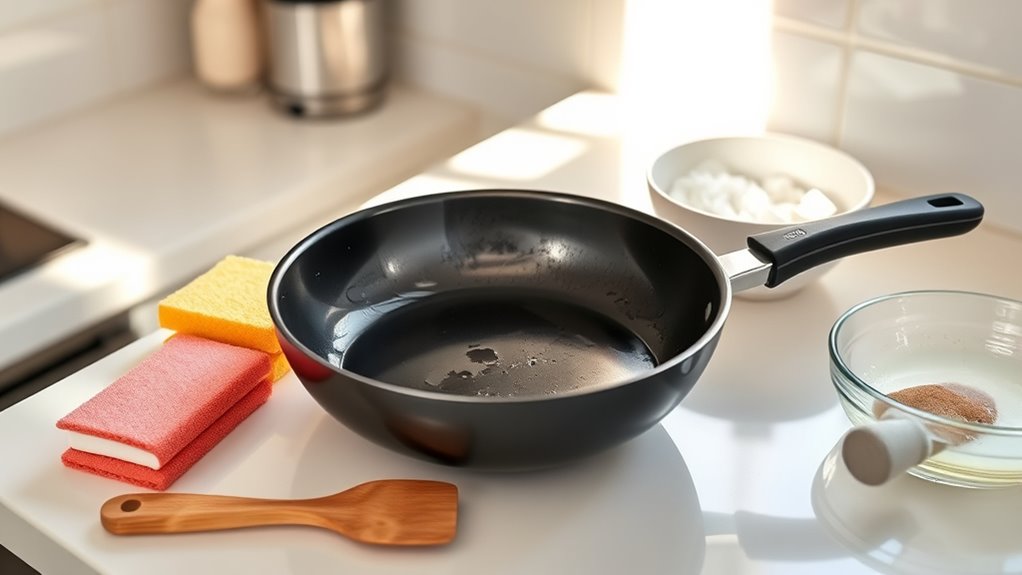
Before you start cleaning burnt oil from your non-stick pan, make sure it has cooled completely to avoid warping or damaging the coating.
Once cool, you’ll want to prepare your cleaning tools and the pan itself for effective removal.
Prepare your cleaning tools and pan carefully once cooled for the best burnt oil removal results.
Here’s how to get ready:
- Gather gentle cleaning tools like soft sponges or non-abrasive scrubbers to protect the pan’s surface.
- Fill your non-stick pan with hot water and add a few drops of dish soap to help loosen burnt oil residues.
- Use a wooden or silicone spatula to carefully scrape off larger burnt patches without scratching.
- Have microfiber cloths ready for final wiping, ensuring the pan stays in great shape.
Proper prep makes cleaning easier and keeps your non-stick pan lasting longer.
How to Use Baking Soda and Vinegar to Remove Burnt Oil
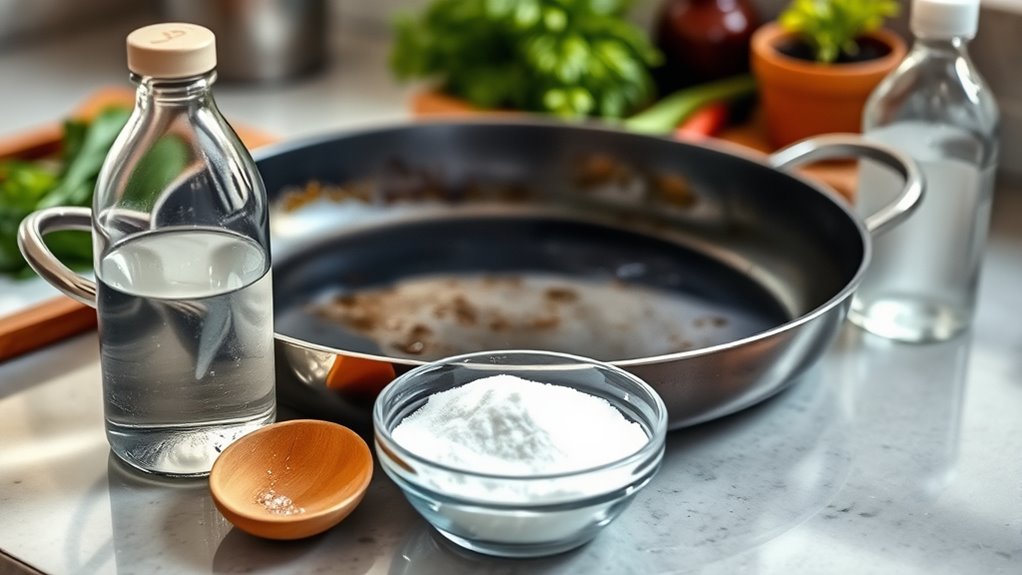
Although burnt oil can be stubborn, you can tackle it effectively by using a simple mixture of baking soda and vinegar. Start by mixing equal parts white vinegar and water, then add 2 tablespoons of baking soda to create a bubbling solution.
Pour this into your burnt pan, making sure it covers the burnt residue. Bring it to a boil and let it simmer for about 5 minutes to loosen the burnt oil. Once done, turn off the heat and let the mixture cool completely.
Then, gently scrub with a soft sponge to lift away the burnt residue. If stubborn spots remain, repeat the boiling process with fresh baking soda and vinegar. Finally, rinse thoroughly with hot water to remove any leftover baking soda and vinegar residue.
How to Clean Burnt Oil With Soap and Hot Water
You’ll want to pick a mild dish soap that’s tough on grease but gentle on your non-stick pan. Hot water helps soften the burnt oil, making it easier to scrub away without damaging the surface.
Use a soft sponge and gentle pressure to lift residue without scratching the coating.
Soap Selection Tips
When tackling burnt oil on your non-stick pan, choosing a mild dish soap like Dawn combined with hot water can make the cleaning process much easier. Creating a proper cleaning solution by mixing the soap thoroughly with hot water helps break down stubborn residues without harming your pan’s coating.
Here are some soap selection tips to keep in mind:
- Pick a gentle dish soap that’s tough on grease but safe for non-stick surfaces.
- Avoid harsh detergents that can strip the pan’s protective layer.
- Use enough soap to create suds in the hot water for effective cleaning.
- Soak the pan in the soap and hot water solution for 15-30 minutes before scrubbing gently.
This approach guarantees burnt oil lifts away without damaging your pan.
Hot Water Benefits
Since burnt oil tends to harden quickly, using hot water before cleaning helps loosen the residue, making it much easier for you to remove without damaging your non-stick pan. When you rinse your non-stick cookware with hot water, it softens the stuck-on grease and prevents it from adhering further.
Adding dish soap to the hot water creates a powerful combination that breaks down oily buildup more effectively. Soaking the pan briefly in this hot, soapy water lets the burnt oil soften, reducing the effort needed during cleaning.
This method not only makes removing burnt oil simpler but also protects your non-stick coating by minimizing abrasive scrubbing. Using hot water is a smart, gentle step to keep your cookware clean and in great shape.
Gentle Scrubbing Techniques
Although burnt oil can be stubborn, soaking your non-stick pan in hot, soapy water for 10-15 minutes softens the residue and makes gentle scrubbing more effective. Use a soft sponge or non abrasive scrubber to gently scrub in circular motions, protecting the pan’s coating.
Follow these steps for a thorough clean:
- Use a gentle scrub to avoid damaging the surface
- Focus on circular motions for even cleaning
- Rinse thoroughly with hot water to remove soap and loosened oil
- Dry with a soft cloth to prevent water spots
If stubborn spots remain, apply a baking soda paste and continue the gentle scrub without pressure. This technique preserves your pan’s non-stick finish while removing burnt oil effectively.
How to Soak and Loosen Stubborn Burnt Residue Safely
To tackle stubborn burnt residue, start by preparing a soaking solution with hot water and a few drops of dish soap or baking soda for added scrubbing power. Let your pan soak for at least 30 minutes to soften the burnt oil before gently loosening it with a wooden spoon or silicone spatula.
Always wait for the pan to cool completely before scrubbing to protect the non-stick surface and avoid damage.
Preparing Effective Soaking Solutions
When you want to loosen stubborn burnt oil on your non-stick pan, start by filling it with hot water and adding a few drops of dish soap to create a gentle soaking solution. For tougher spots, sprinkle baking soda over the burnt areas before pouring in the water.
Adding a splash of white vinegar enhances the soaking process by breaking down grease effectively. Remember to fully submerge the pan without using boiling water to avoid damage.
Here’s how to prepare the perfect soaking solution:
- Use warm water with dish soap for gentle cleaning
- Sprinkle baking soda on burnt oil for extra scrubbing power
- Add white vinegar to cut through grease efficiently
- Ensure the pan is fully submerged but not exposed to boiling water
This approach softens burnt residue safely and prepares your pan for easy cleaning.
Optimal Soaking Duration Tips
If you want to loosen stubborn burnt residue effectively, soaking your non-stick pan for the right amount of time is key. Start by filling the pan with hot water mixed with a few drops of dish soap and let it soak for at least 30 minutes.
For more stubborn stains, extend the soaking time to 1-2 hours or even overnight to ensure the burnt oil softens thoroughly. Adding a cup of white vinegar to the hot water can boost grease breakdown, making residue removal easier.
Always use water hot enough to aid soaking but not so hot that it risks damaging the pan’s coating. Don’t forget to check your manufacturer’s guidelines for the maximum safe soaking duration to protect your pan.
Safe Tools For Loosening
Soaking your non-stick pan properly sets the stage for safely loosening burnt oil without harming the surface. Once soaked, use gentle tools to lift stubborn residue without scratching. Avoid metal utensils that can ruin the coating.
Instead, reach for:
- A soft-bristled brush to delicately scrub away residue without damage
- A non-abrasive sponge to wipe off loosened burnt oil smoothly
- A vinegar and hot water mix for breaking down tough spots before scrubbing
- Baking soda simmered in hot water to gently loosen the hardest burnt oil
Choosing Safe Tools and Techniques to Protect Your Non-Stick Pan
Although burnt oil can be stubborn, you’ll protect your non-stick pan best by choosing soft tools like silicone spatulas and wooden spoons instead of metal utensils. These cleaning tools prevent scratches that damage the non-stick surface, keeping it intact longer. Avoid metal scrubbers or forks, which can cause flaking and reduce your pan’s effectiveness.
Use gentle techniques when cleaning by applying light pressure with non-abrasive sponges in circular motions to lift burnt oil safely. Opt for mild cleaning agents such as dish soap, baking soda paste, or vinegar solutions rather than harsh abrasives. Also, regularly inspect your cleaning tools and replace any worn or scratched sponges promptly.
This careful approach guarantees your non-stick pan stays protected while effectively removing burnt oil.
When Should You Try Commercial Cleaners for Burnt Oil?
When stubborn burnt oil resists your usual cleaning methods, turning to commercial cleaners can save your non-stick pan. These products, like Dawn Power Dissolver, are designed to tackle tough burnt oil that home remedies can’t remove. You should consider commercial cleaners when:
- Burnt oil buildup is severe and won’t budge with gentle scrubbing
- Traditional cleaning methods have failed repeatedly
- You’re prepared to follow manufacturer instructions carefully
- You want to avoid damaging your non-stick coating
Always let the cleaner sit for the recommended time, then gently scrub with a non-abrasive sponge. Afterward, rinse and dry your pan thoroughly to remove any chemical residue.
Using commercial cleaners wisely helps restore your non-stick pans safely without sacrificing their coating or cooking performance.
How to Prevent Burnt Oil Buildup on Your Non-Stick Pan
To keep your non-stick pan free from burnt oil buildup, you need to take a few simple but effective steps during and after cooking. First, wipe your non-stick cookware with a paper towel to remove excess oil before heating. Use moderate heat and choose oils with high smoke points like avocado or grapeseed to minimize burnt oil formation.
After cooking, don’t wait—clean the pan promptly with hot water and a gentle sponge to prevent oil from hardening and sticking. Regularly seasoning your pan by applying a light oil coat and heating it helps maintain a protective layer, making cleaning easier and reducing burnt oil accumulation.
Following these habits will keep your non-stick cookware in great shape and free from stubborn burnt oil residues.
Maintaining Your Non-Stick Pan to Keep It Clean and Last Longer
Keeping your non-stick pan in top condition means cleaning it properly after every use and handling it with care. Avoiding damage and oil residues buildup will keep your pan working like new longer.
Here’s how to maintain your pan effectively:
- Clean with hot, soapy water right after cooking to prevent stubborn oil residues.
- Skip abrasive scrubbers and metal utensils to protect the delicate non-stick surface.
- Soak burnt oil spots with a baking soda and vinegar mix for gentle, thorough cleaning.
- After washing, apply a thin layer of oil to preserve the non-stick coating and prevent sticking.
Frequently Asked Questions
How to Clean a Nonstick Pan With Burnt Oil?
You’ll want to soak your nonstick pan in hot soapy water, then gently scrub with a soft sponge. For stubborn oil, try a baking soda paste or simmer vinegar and water before rinsing thoroughly.
Make sure to avoid abrasive scrubbers that can damage the nonstick coating. After cleaning, dry the pan completely to prevent any water spots or rust.
What Removes Burnt Oil From a Pan?
You can remove burnt oil by soaking the pan in hot soapy water, scrubbing gently with a non-abrasive sponge, or applying a baking soda paste.
Boiling vinegar and water also helps break down stubborn burnt oil spots.
Does Vinegar Remove Burnt Oil?
Yes, vinegar helps remove burnt oil by breaking it down with its acidity. You can simmer a vinegar-water mix in the pan, then scrub gently.
Just rinse thoroughly to protect your non-stick coating.
How to Remove Black From Non-Stick?
You can remove black residue from your non-stick pan by applying a baking soda paste and letting it sit 30 minutes before scrubbing gently.
Did you know 70% of cookware damage happens from harsh cleaning? Be gentle!
Conclusion
Burnt oil on your non-stick pan can feel frustrating and discouraging, but with gentle care, it’s nothing you can’t handle. While stubborn residue may seem like a stubborn enemy, simple homemade solutions and safe tools turn the battle into a quick victory.
Protecting your pan today means enjoying effortless cooking tomorrow. With patience and the right approach, you’ll transform burnt mess into gleaming surfaces—proof that a little care goes a long way.
By following these tips on how to get burnt oil off a non-stick pan, you can maintain your cookware’s quality and extend its lifespan. Keep your non-stick pan clean and ready for all your cooking adventures.