
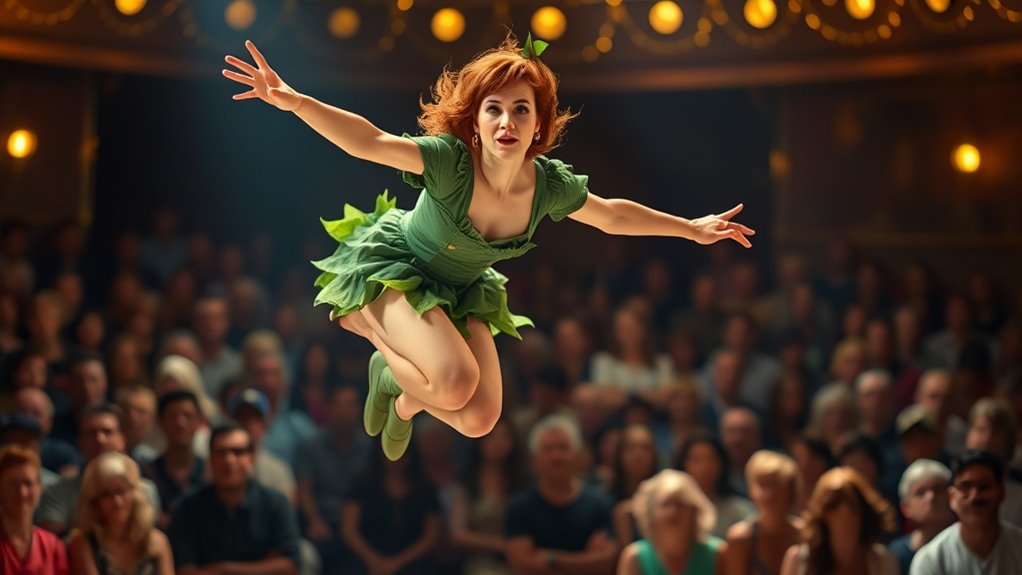
Why Is Peter Pan Played by a Woman?
You’ll find Peter Pan is often played by a woman because early labor laws limited how long boys could work, especially at night. This made women a practical choice for the role. Women bring youthful energy, agility, and a voice that suits Peter’s playful, innocent nature.
Though J.M. Barrie originally pictured a boy in the role, tradition and legal realities shaped this casting.
Discover how this choice enriches Peter Pan’s magical spirit and the fascinating history behind it all.
Why Women Traditionally Play Peter Pan
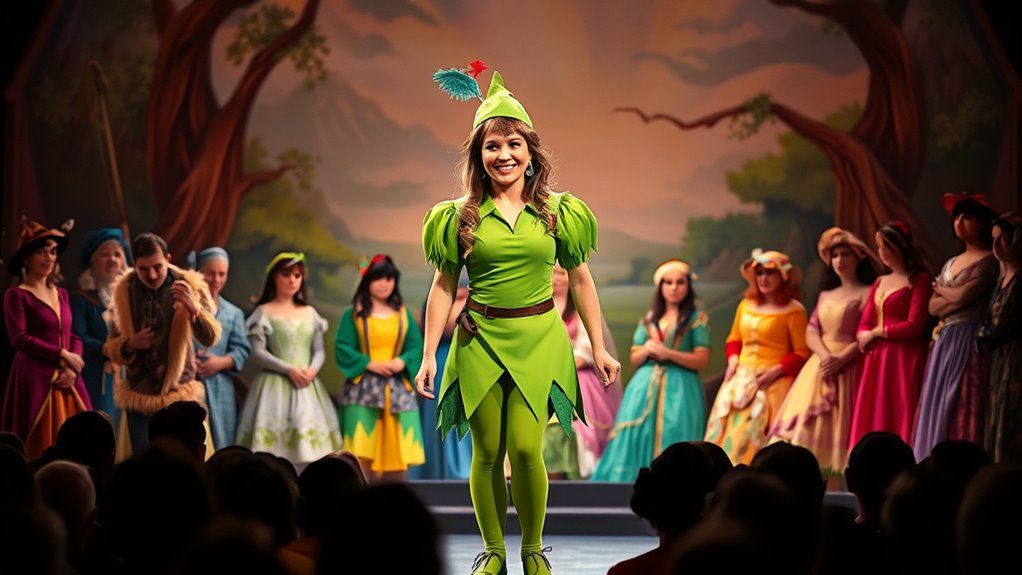
Although J.M. Barrie originally imagined Peter Pan as a boy, the tradition of women playing Peter took hold early on. You might wonder why this shift happened. Well, in the early 20th century, English labor laws limited how long child actors could work, making it tricky to cast a boy for such a demanding role.
To avoid these complications, producers began casting women, who could work longer hours. This practical choice soon became a theatrical tradition. Women like Maude Adams, Mary Martin, and Cathy Rigby brought Peter’s youthful innocence and energy to life, reinforcing the practice.
How Early Labor Laws Shaped Peter Pan Casting

Since early English labor laws restricted minors under 14 from working past 9 p.m., theaters had to find creative solutions for demanding roles like Peter Pan. These early labor laws limited how long child actors could perform, making it tough to cast an actual boy for the lead without breaking rules. By casting women instead, productions cleverly sidestepped those restrictions, since adult actresses weren’t bound by the same regulations.
Charles Frohman even suggested this approach when bringing Peter Pan to America, noting a male child actor wouldn’t be as practical. So, the legal backdrop of early labor laws directly shaped this casting tradition. When you watch Peter Pan, remember that the choice to cast women isn’t just artistic—it’s a smart response to the challenges child actors faced under early labor laws.
Reasons Women Excel Playing Peter Pan on Stage

You’ll notice that women have long been cast as Peter Pan due to both tradition and practical reasons like labor laws. Their agility and youthful energy perfectly capture the character’s playful spirit on stage.
Let’s explore how these historical and performance benefits make women excel in this iconic role.
Historical Casting Influences
Why did women come to dominate the role of Peter Pan on stage? The answer lies largely in historical casting influences shaped by English law. Child labor laws prohibited minors under 14 from performing after 9 p.m., so producers found it easier to cast adult women instead of boys.
Charles Frohman, the original producer, suggested this approach to avoid scheduling headaches and legal issues. This practical solution turned into a tradition, with women like Mary Martin famously embodying Peter Pan’s youthful innocence and spirit. Women offered more flexibility for rehearsals and performances, making them ideal for the role.
Labor Law Considerations
Although the story of Peter Pan centers on a boy, English labor laws made casting actual boys challenging, pushing producers to choose adult women instead. These labor laws prohibited minors under 14 from working after 9 p.m., complicating casting for evening performances. By casting women, productions avoided these restrictions, making scheduling smoother.
Here’s why labor laws influenced casting choices:
- Child actors faced strict limits on working hours.
- Adult women could perform late shows without legal issues.
- Rehearsal schedules were easier to manage with adult performers.
- Early 20th-century labor laws shaped this practical casting tradition.
Tradition And Performance Benefits
Beyond labor laws, the choice to cast women as Peter Pan also brings unique artistic advantages. Tradition plays a key role, as women naturally embody Peter’s youthful innocence and ethereal qualities. You’ll notice their vocal range and emotional versatility enhance the character’s magical essence.
This tradition offers performance benefits by allowing a broader casting pool and aligning with theater’s flexible gender roles, enriching the timeless appeal of Peter Pan.
| Tradition Aspect | Performance Benefit |
|---|---|
| Youthful innocence | Convincing portrayal on stage |
| Ethereal lightness | Enhances magical, whimsical feel |
| Gender flexibility | Broader casting, emotional depth |
Famous Actresses Who Made Peter Pan Iconic
You’ve probably heard of Mary Martin’s legendary Peter Pan, which set the standard for women in the role. Since then, actresses like Sandy Duncan and Allison Williams have brought fresh energy and modern touches to the character.
Let’s explore how these performances made Peter Pan truly unforgettable.
Legendary Peter Pan Performances
When you think of Peter Pan on stage, Mary Martin’s 1955 Broadway performance likely comes to mind, as it set the standard for women playing the role. Her portrayal brought a vibrant energy that shaped all future Peter Pans. Here are some legendary performances you should know:
- Mary Martin’s original Peter Pan defined the role with charm and grace.
- Cathy Rigby, with her gymnast’s agility, added thrilling authenticity in the 70s and 80s.
- Sandy Duncan’s warm and playful interpretation brought a fresh, lovable Peter.
- Charlotte d’Amboise offered a dynamic and modern take on the character.
These women reinforced the tradition of female Peter Pans, making the role iconic and unforgettable for generations.
Mary Martin’s Enduring Legacy
Although Mary Martin first brought Peter Pan to life on Broadway and television in 1955, her performance still influences how you see the character today. Mary Martin captured Peter’s youthful spirit and energy so vividly that her portrayal set the standard for every actress after her. She saw playing Peter Pan as her most important role, and that dedication shines through in her iconic performance.
Because of her success, the tradition of women playing Peter grew stronger, inspiring stars like Cathy Rigby and Sandy Duncan to follow her lead. When you think of Peter Pan on stage or screen, Mary Martin’s legacy shapes that image, reminding you why her spirited interpretation remains a timeless model for anyone stepping into those magical shoes.
Modern Stars’ Interpretations
Since Mary Martin set the standard with her vibrant portrayal of Peter Pan in 1954, numerous actresses have brought their own energy and style to the role. You’ll see how these modern stars have made Peter Pan iconic:
- Cathy Rigby, an Olympic gymnast, added athleticism and authenticity in the 1970s and 1980s.
- Sandy Duncan delivered memorable performances that balanced whimsy and strength.
- Charlotte d’Amboise impressed audiences with her dynamic stage presence.
- Allison Williams revived the tradition in NBC’s 2014 live broadcast, showing the role’s lasting appeal.
Each actress, following Mary Martin’s lead, reinforces why Peter Pan is best played by women—infusing the character with youthfulness, agility, and charm you won’t find elsewhere.
J.M. Barrie’s Original Vision vs. Casting Tradition
Even though J.M. Barrie originally envisioned Peter Pan as a young boy, he never insisted the role had to be played by a woman. You’ll find that Barrie expressed a clear preference for a boy to portray Peter on stage to capture the character’s youthful spirit.
However, the casting tradition evolved differently. Practical theatrical reasons and legal constraints led to women commonly playing Peter, a practice that stuck over time.
When you consider Barrie’s influence and the character’s association with innocence, it makes sense why productions leaned toward female actors. Still, it’s essential to recognize that this long-established casting tradition reflects historical and theatrical conventions more than Barrie’s specific artistic vision for Peter Pan.
When Men Have Played Peter Pan on Stage and Screen
While women have traditionally taken on the role of Peter Pan, men have occasionally stepped into the character’s shoes both on stage and screen. You might find it surprising, but the Real Story Behind Peter includes some notable male portrayals. Here’s what you should know about men playing Peter Pan:
Men have occasionally stepped into Peter Pan’s shoes, revealing surprising and notable portrayals beyond tradition.
- Jack Noseworthy was the only male actor to play Peter Pan on Broadway in Jerome Robbins’ 1989 production.
- The Royal Shakespeare Company has cast adult male actors like Sam Swann since the 1980s.
- J.M. Barrie originally imagined a boy or young man playing Peter, though this rarely happened.
- Despite these instances, men playing Peter Pan remain rare compared to the tradition of women in the role.
These examples highlight a lesser-known aspect of playing Peter Pan.
How Casting Women Influences Peter Pan’s Character
Although the decision to cast women as Peter Pan started as a practical solution to labor laws limiting child actors, it has shaped how you experience the character’s youthful innocence and whimsical spirit. Female casting highlights Peter Pan’s delicate, androgynous nature, allowing you to see beyond traditional gender roles. This gender portrayal blurs lines, making Peter less about being strictly male and more about embodying eternal childhood and fantasy.
When a woman plays Peter, you sense a blend of strength and vulnerability that fits the character’s timeless appeal. This choice enhances your connection to Peter’s playful, adventurous personality, reinforcing why female casting remains a beloved tradition in theater, deeply influencing how Peter Pan’s character comes alive on stage.
Keeping the Tradition Alive in Modern Productions
Since the early 20th century, productions have kept the tradition of casting women as Peter Pan alive, recognizing both its practical benefits and artistic impact. This choice continues to honor the legacy of Mary Martin, whose iconic portrayal set a high standard.
You’ll find this tradition remains popular because it:
- Navigates child labor laws with ease
- Highlights Peter’s youthful innocence through a woman’s performance
- Preserves the fantastical spirit essential to the story
- Pays tribute to theatrical history and past legends
Frequently Asked Questions
Why Are the Lost Boys Only Boys?
You see, the Lost Boys are only boys because the story emphasizes childhood innocence and a boys’ world. It highlights traditional gender roles and the idea of a boys-only haven, contrasting childhood with adulthood.
Why Is Tiger Lily Controversial in Peter Pan?
You might think Tiger Lily’s portrayal is harmless fun, but it’s controversial because it often relies on stereotypes and cultural appropriation that disrespect Indigenous peoples.
You should recognize why many call for change or reimagining her character.
What Is Peter Pan Syndrome?
Peter Pan Syndrome means you avoid adult responsibilities and cling to childlike behaviors. You might struggle with commitment and independence, fearing growing up.
It’s not a formal diagnosis but describes immaturity and resistance to adult roles.
What Is the Dark Theory of Peter Pan?
The dark theory of Peter Pan says you’re seeing a boy who refuses to grow up, avoiding mortality and responsibility.
You’ll notice his eternal youth masks fears of aging, trauma, and emotional pain he can’t face.
Conclusion
You might be surprised how much a woman playing Peter Pan shapes the magic of the story. It’s not just tradition—it’s about capturing the youthful spirit and agility that men often can’t match on stage. Plus, early labor laws made it practical.
When you see a woman as Peter, you’re witnessing a performance that’s as timeless and enchanting as flying to Neverland itself. This casting choice perfectly captures the essence of the character, proving some casting choices are simply too perfect to change.
In conclusion, having a woman play Peter Pan continues to delight audiences, blending tradition with the vibrant energy that defines the story’s magic. This unique approach keeps the spirit of Peter Pan alive and flying high in theater history.