Where Is the Oil Pan Located on a Car?
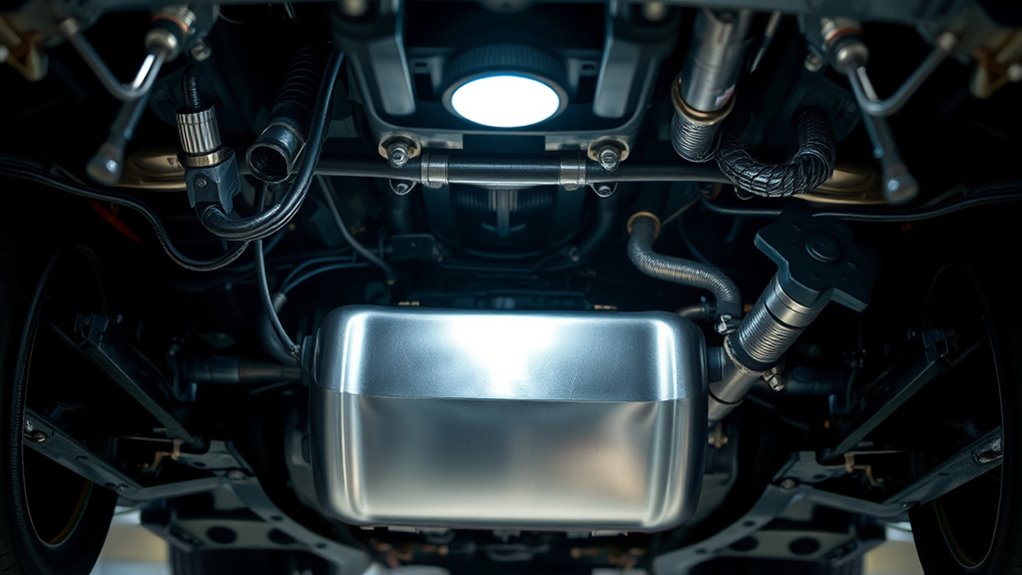
You’ll find the oil pan located right beneath your car’s engine block, serving as the reservoir that holds the engine oil. This essential part is key to the lubrication system and is crucial for your vehicle’s performance.
From underneath, it appears as a shallow, flat bowl made of steel or aluminum, usually secured with bolts.
The oil drain plug is situated on the pan’s underside, allowing for easy oil draining during changes.
Knowing the exact location of the oil pan makes routine maintenance much simpler.
Keep exploring to learn how to access the oil pan and care for it properly to ensure your engine runs smoothly.
Where Is the Oil Pan Located and How to Spot It
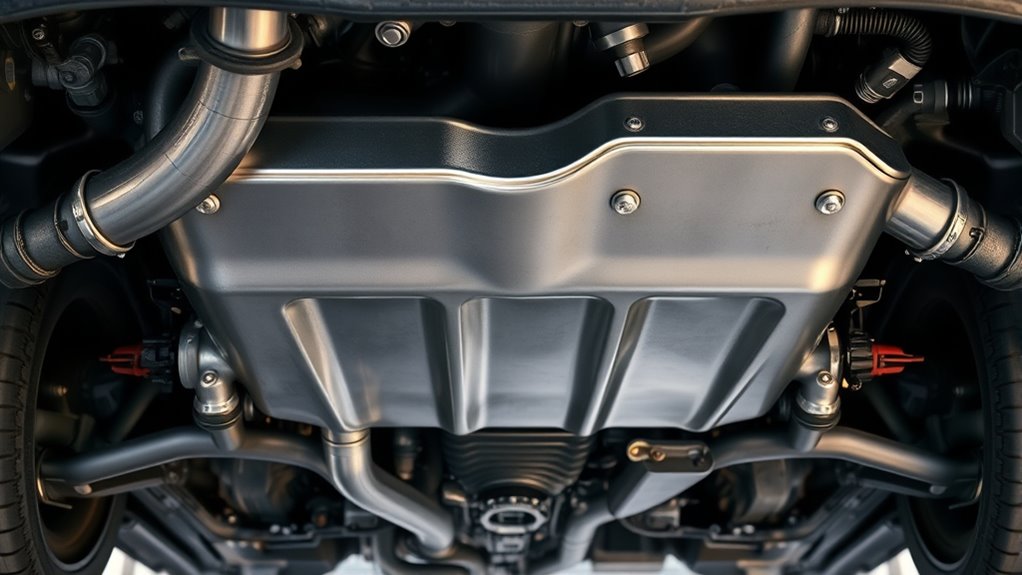
Although it’s tucked beneath your car, you can spot the oil pan by looking at the bottom of the engine block. The oil pan is located directly attached to the engine block at the bottom of the engine, serving as the oil reservoir. From the vehicle underside, you’ll identify it as a flat, shallow bowl usually made of steel or aluminum and secured with bolts.
Look for the oil drain plug on the oil pan’s underside—that’s a clear marker to help you spot it during inspection. Sometimes, the oil pan is covered by a protective shield to guard against road debris. By understanding where the oil pan is located and how to identify it, you’ll be better prepared for routine oil checks and maintenance.
How to Safely Access the Oil Pan Under Your Vehicle
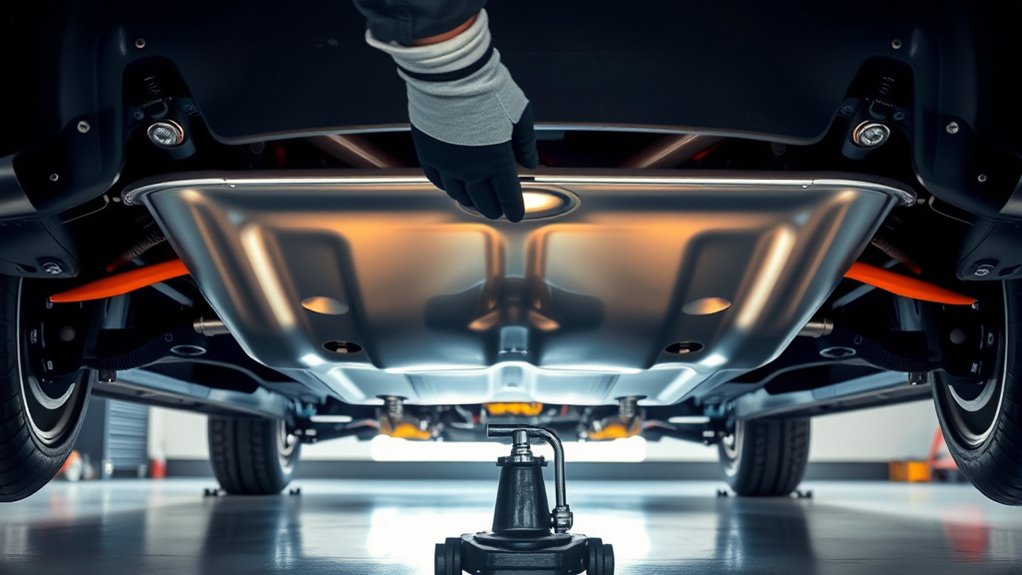
When you need to access the oil pan under your vehicle, start by safely elevating it using a jack or ramps, and then secure it with jack stands to prevent any movement. Make sure the vehicle is on a level surface and the parking brake is engaged for stability. Wear safety gloves and eye protection before crawling underneath.
The oil pan sits at the bottom of the engine, so you’ll find it directly beneath the engine block. Use the proper tools to remove the drain plug and bolts carefully without damaging nearby parts.
Visualize:
- A sturdy jack lifting the vehicle’s front end
- Jack stands firmly supporting the vehicle’s weight
- You working underneath, wrench in hand, accessing the oil pan and drain plug
Following these steps guarantees safe, effective access to the oil pan beneath your vehicle.
Common Oil Pan Leaks and Early Warning Signs
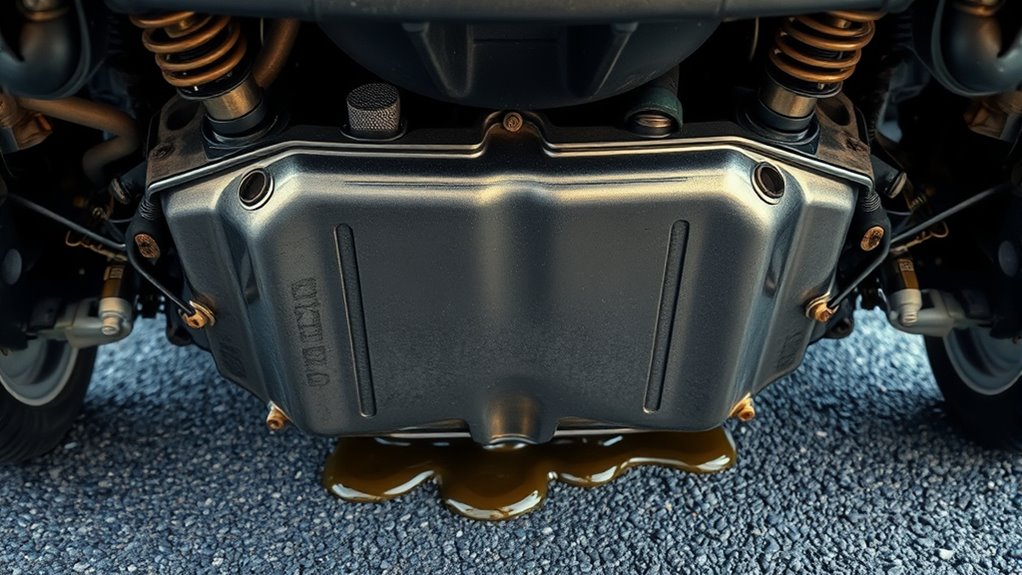
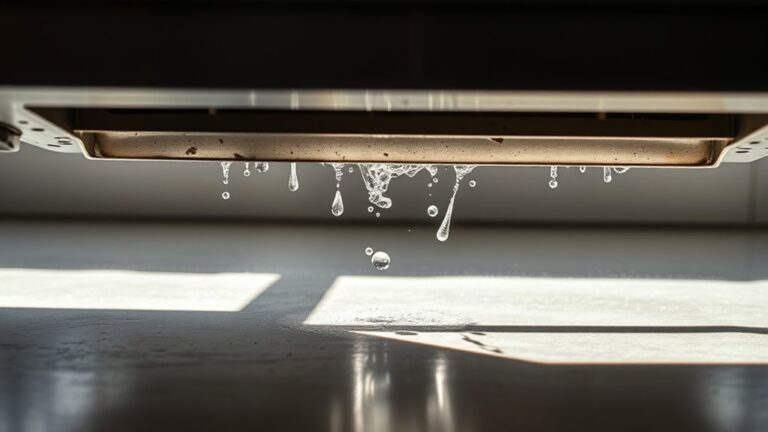
If you notice dark puddles or spots under your vehicle, especially after parking, your oil pan might be leaking. Common sources of oil leaks include a worn gasket, a loose or damaged oil pan plug, or a cracked oil pan from impacts or corrosion. Early warning signs to watch for are a burning oil smell, visible oil seepage around the oil pan, or a drop in oil level.
You might also experience strange engine noises or see dashboard lights alerting you to low oil pressure. If you find yourself topping off engine oil frequently, it could indicate a slow leak. Regular oil changes and replacing the oil filter help maintain oil pressure, but addressing leaks promptly prevents further engine damage.
Tips for Maintaining Your Oil Pan and Engine Health
Noticing early signs of oil pan leaks means you should take steps to maintain both the oil pan and your engine’s health. Regularly check for cracks, dents, or oil leaks around the oil pan and drain plug. Performing timely oil changes—every 3,000 to 5,000 miles—with a quality oil filter helps protect the oil gasket and prevents sludge buildup.
Always check the oil level on a clean, level surface for accuracy. During oil changes, tighten the drain plug to the manufacturer’s torque specs to avoid leaks or damage. Keep the engine bay clean to spot debris or early oil leaks promptly.
- Inspect the oil pan for dents or leaks after off-road trips
- Change oil and oil filter regularly to protect the oil gasket
- Clean engine bay to detect leaks and remove debris promptly
How the Oil Pan’s Location Affects Maintenance and Repairs
Because the oil pan sits at the bottom of the engine and is easily accessible from beneath your vehicle, it plays a crucial role in maintenance and repairs. Its location allows you to quickly reach the drain plug during oil changes, though you’ll often need to lift the vehicle or use ramps for safe access.
Being positioned underneath the vehicle means the oil pan is exposed to potential damage from road debris or impacts, so regular inspections help catch leaks or cracks early. When it comes to repairs, knowing the oil pan’s location simplifies tasks like replacing the gasket or servicing the drain plug, saving you time and money.
Frequently Asked Questions
How Much Does an Oil Pan Cost to Replace?
Replacing your oil pan typically costs between $150 and $250, including parts and labor. Prices vary by car make and model, and you might pay more if you need a gasket or other damaged parts replaced.
Labor costs can also fluctuate depending on the mechanic’s rates and the complexity of the job. It’s a good idea to get multiple quotes to ensure you’re getting a fair price.
Keep in mind that some vehicles may require additional repairs or parts, which can increase the total cost. Always consult with a trusted mechanic for an accurate estimate.
What Does an Oil Pan Look Like?
Did you know oil pans can hold up to 5 quarts of oil?
You’ll spot a flat, shallow metal container, usually rectangular or rounded, with bolt holes and a drain plug at its lowest point for easy oil changes.
How to Find an Oil Pan?
You find the oil pan by crawling under your car on a flat surface, looking for a metal pan with a drain plug at the lowest point.
It’s usually attached to the engine’s bottom and may have a protective shield.
What Are Signs of a Bad Oil Pan?
If you spot oil spots under your car or hear knocking sounds, your oil pan might be leaking or cracked.
You’ll also notice dashboard warning lights and sludge buildup—don’t ignore these signs, or engine damage will follow.
Conclusion
Now that you know the oil pan is tucked right under your engine, accessing it safely becomes a breeze. Keep an eye out for leaks—they’re like tiny alarms warning you before big troubles hit.
Regular maintenance isn’t just a good idea; it’s your engine’s lifeline. Neglecting the oil pan can lead to disasters bigger than a tidal wave, so stay vigilant and keep your ride running smoothly for miles to come!
Remember, the oil pan is a crucial component located beneath your car’s engine. Proper care and attention to the oil pan help ensure your vehicle’s longevity and performance.