
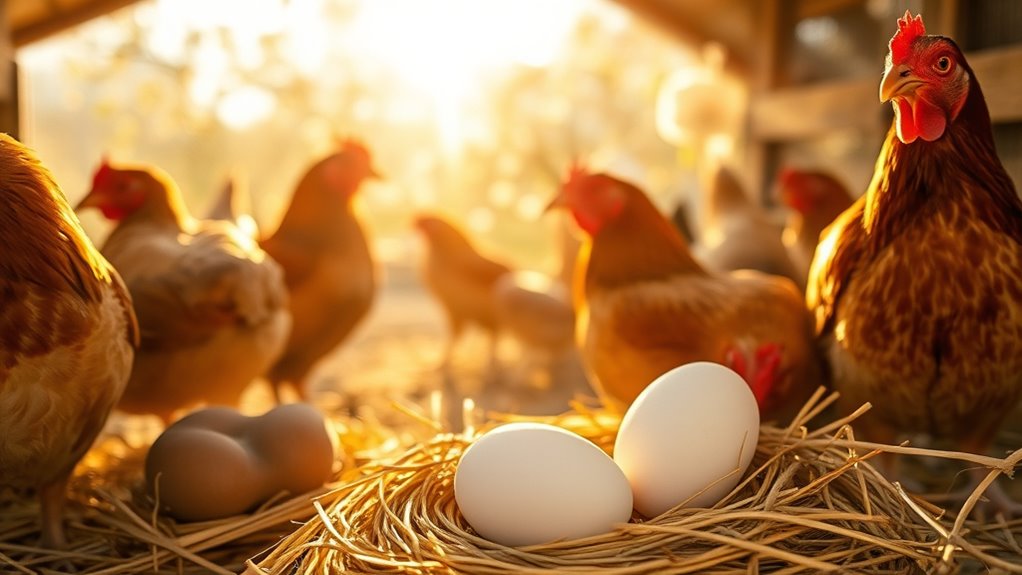
When Do Chickens Start Laying Eggs After Winter?
You’ll see your chickens start laying eggs after winter once daylight reaches about 12 hours, usually in early to mid-spring. Breeds like Leghorns may begin earlier, while others take longer, especially older hens recovering from molting.
Warmer temperatures and better nutrition also help kickstart egg production.
If you want eggs sooner, adding supplemental light can speed things up. Keep an eye on their behavior and environment to support a strong laying season ahead. There’s more to discover about optimizing it.
How Daylight Length Triggers Chickens to Start Laying Again After Winter
When daylight stretches to at least 12 hours a day, your hens’ bodies get the signal to start laying eggs again. The length of the day plays a vital role in this process. During winter, shorter daylight hours—around 8 to 10 hours—cause hens to slow or stop laying.
As days grow longer in spring, the increase in natural light triggers hormonal changes in your chickens, prompting them to start laying once more. This change in light exposure tells their bodies it’s time to resume egg production after the winter pause.
If you want to encourage earlier laying, you can use supplemental lighting to extend the length of the day artificially, helping your hens to start laying eggs before natural daylight fully increases.
Which Chicken Breeds Resume Laying Earliest in Spring
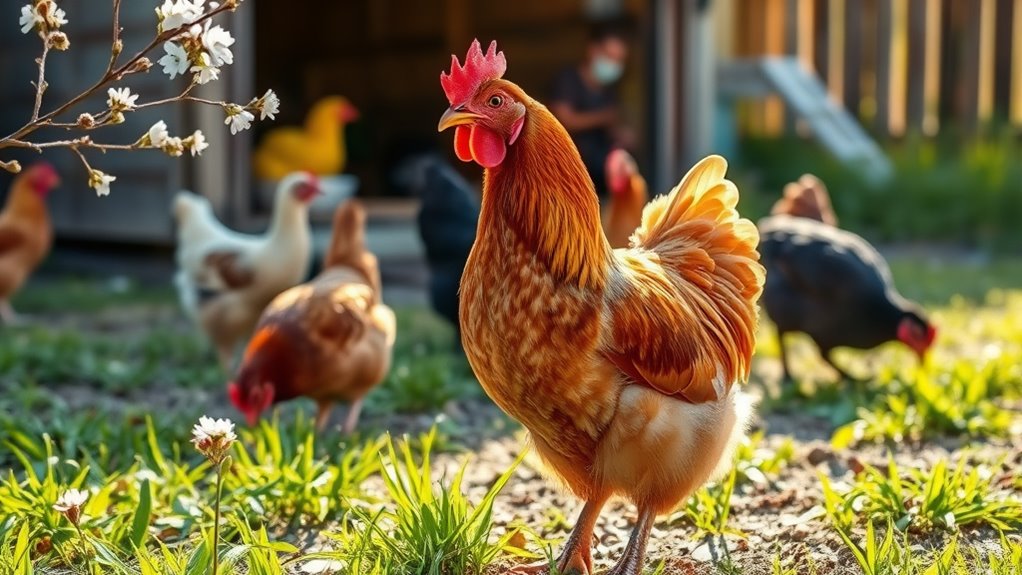
Although daylight length plays a key role in signaling hens to resume laying, the breed you choose also affects how early your chickens start producing eggs in spring. Breeds like Leghorns, with favorable breed genetics, respond quickly to increasing day length and can start as early as late February. Smaller breeds such as Anconas and Andalusians also resume laying earlier than larger breeds.
Rhode Island Reds and Plymouth Rocks typically begin around March, depending on local day length. While older hens’ laying timing varies, breed genetics remain a strong factor.
| Breed | Typical Laying Restart |
|---|---|
| Leghorn | Late February |
| Ancona/Andalusian | Early March |
| Rhode Island Red | March |
| Plymouth Rock | March |
How Hen Age Influences Laying Timing After Winter
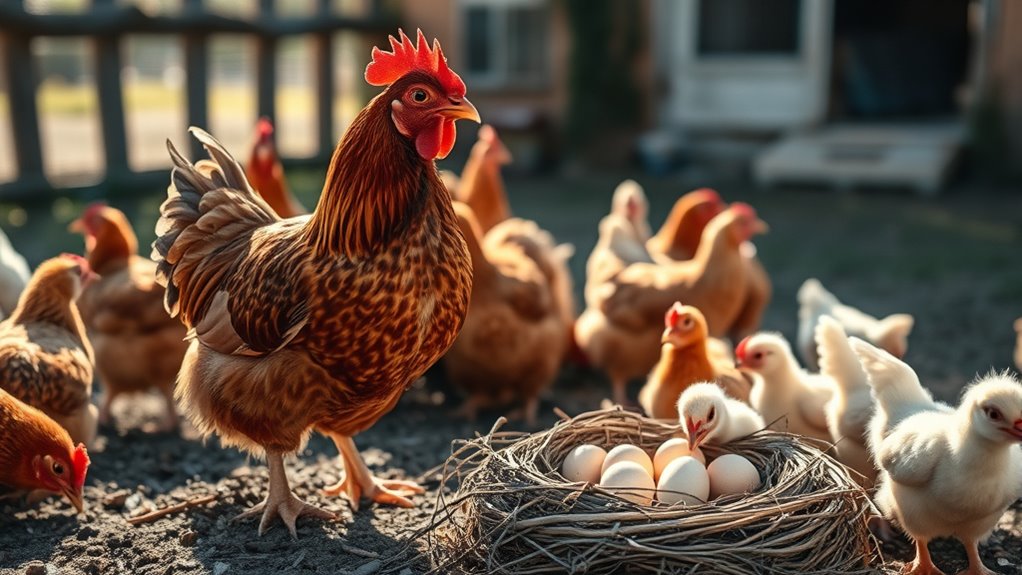
You’ll notice that younger pullets start laying eggs soon after winter ends because they’re reaching maturity. Older hens, on the other hand, often take longer to resume laying or may lay less frequently.
Understanding these age-related patterns helps you predict when your flock will get back to full production.
Older Hens’ Laying Patterns
Since hens age, their egg-laying patterns after winter change noticeably. Older hens, usually over 2-3 years of age, tend to stop laying earlier in the fall and may resume later as daylight increases in spring. You’ll notice they often experience longer breaks during molt and seasonal shifts, leading to irregular or delayed egg production compared to younger hens.
| Age Group | Stop Laying Timing | Resume Laying Timing |
|---|---|---|
| Young Hens | Late fall | Early spring |
| Older Hens | Early fall | Mid to late spring |
| Molting Hens | Cease during molt | Later, after molt ends |
Understanding these patterns helps you manage expectations and care for older hens effectively.
Pullet Maturation Timeline
When pullets reach 16 to 24 weeks old, they generally start laying eggs, but the exact timing depends on their breed and environment. You’ll notice some pullets as young as 16 weeks showing signs like squatting or nesting behavior. However, in colder areas, they often wait until the day length increases in spring.
The longer hours of daylight signal their bodies to begin laying, usually around 20 to 24 weeks. If you provide proper nutrition and guarantee they get enough light exposure, you can help them mature and lay sooner after winter. Keep in mind, some breeds start laying earlier, while others may take up to a year, so adjusting for breed and daylight length is key to understanding their laying timeline.
Age-Related Egg Production
Understanding how pullets mature sets the stage for recognizing how a hen’s age affects her egg-laying patterns after winter. Younger hens, typically between 18 and 22 weeks old, often begin laying soon after winter ends, especially if they hatched late summer or early fall.
In contrast, older hens, particularly those over two years, may reduce or stop laying during colder months and take longer to resume once conditions improve. Your hens’ age plays a vital role in when they restart egg production after winter.
Consider these points:
- Younger hens usually start laying earlier after winter.
- Older hens may lay fewer eggs or pause during winter.
- Environmental improvements trigger laying resumption, linked to age and maturity.
How Molting Affects When Hens Start Laying Again
You’ll notice that molting temporarily stops your hens from laying eggs as their bodies focus on shedding and regrowing feathers. During this time, hormonal changes slow egg production, and your hens need weeks to recover energy before they start laying again.
Understanding this recovery period helps you predict when egg-laying will resume after molting ends.
Molting Impact On Laying
Although molting temporarily halts egg production, it plays a crucial role in your hens’ health by allowing them to regrow feathers. During this time, your hens’ bodies prioritize feather regrowth over laying, causing egg production to pause anywhere from weeks to a few months.
The duration and impact depend on factors like breed, age, and overall health. Molting usually happens in late summer or early fall, affecting when hens will start laying again after winter.
Keep in mind:
- Egg production stops to support feather regrowth
- Molt severity influences how long laying pauses
- Post-molt laying typically resumes within a few weeks if conditions are good
Understanding this helps you anticipate your flock’s laying schedule better.
Recovery Time Required
Since molting forces hens to pause egg production for several weeks, you can expect a recovery period of roughly 4 to 8 weeks before they start laying again. During this time, hens shed old feathers and grow new ones, which takes a lot of energy.
After molting, they need several weeks to regain strength and resume consistent egg production. How quickly your hens bounce back depends on their breed, age, and overall health. Some may start laying within 2 to 4 weeks post-molt, while others might take longer.
To help your hens recover faster, provide them with a balanced diet rich in protein and maintain proper lighting. These factors support their health and encourage a quicker return to laying after molting.
Hormonal Changes During Molt
When hens molt, their bodies shift energy away from egg production to focus on growing new feathers, causing hormone levels like estrogen and progesterone to drop and egg laying to pause. This hormonal shift is essential because it directs resources to feather regeneration instead of eggs.
Once molting finishes, hormone levels rise again, signaling hens to start laying, but this restart often comes with a delay.
Keep these points in mind about hormonal changes during molt:
- Hormone drops during molt stop egg production temporarily.
- Molt duration (6-10 weeks) influences when laying resumes.
- Environmental factors, like light and temperature, affect hormonal recovery and laying timing.
Understanding this helps you predict when your hens will lay eggs again after winter.
What Environmental Factors Affect Spring Egg Laying
As daylight hours increase in spring, hens’ reproductive systems kick into gear, prompting them to start laying eggs again. You’ll notice that warmer temperatures reduce the energy hens spend on staying warm, so they can focus more on producing eggs.
When your chickens get plenty of natural sunlight, it helps them synthesize vitamin D, which is vital for strong eggshells. Keep in mind that sudden cold snaps or storms might temporarily delay laying, as hens react to these stressful environmental changes.
Also, spring brings fresh forage and better nutrition options, improving your hens’ overall health and readiness to lay. By managing these factors, you can support a smoother progression to consistent spring egg production.
Recognizing Signs Your Hen Is Ready to Lay Again
Although the wait can feel long, you’ll know your hen is ready to lay again by spotting clear signs like a bright red, swollen comb and wattles. You’ll also notice her behavior shifts as she starts preparing for egg-laying. Pay attention to these key indicators:
Look for a bright red comb and changing behavior to know when your hen is ready to lay again.
- Nesting behaviors, such as scratching bedding and spending time in nesting boxes
- A rounded abdomen and increased interest in gathering nesting materials
- Responsiveness to your approach, including squatting to signal readiness
Once you see these signs, your hen is gearing up to lay. Sometimes, the first egg appears quietly in the nesting box, confirming she’s back in the laying cycle. Watching for these clues helps you support her during this progression without guesswork.
Using Supplemental Lighting to Encourage Early Egg Laying
You can help your hens start laying eggs earlier by providing 14 to 16 hours of light each day with supplemental lighting. Using a timer and placing a safe, low-watt bulb in the early morning or late afternoon mimics natural daylight and encourages consistent egg production.
Just be sure to increase light gradually and position lights carefully to keep your flock comfortable and safe.
Benefits Of Supplemental Lighting
When you extend the daylight hours to 14-16 using supplemental lighting, your hens will start laying eggs earlier in the season. This simple adjustment tricks their natural rhythms, encouraging egg production even when natural daylight is limited. You’ll notice your flock responds quickly, often beginning to lay several weeks ahead of schedule.
Here’s why supplemental lighting benefits you and your chickens:
- It boosts egg production by mimicking natural dawn and dusk with timed lighting.
- Gradually increasing light exposure reduces stress and helps hens adjust smoothly.
- Consistent, well-placed lighting ensures even coverage, preventing shadows that disrupt laying.
Best Lighting Practices
Three key lighting practices can help you encourage your hens to start laying eggs earlier in the season. First, provide supplemental light for 14-16 hours daily to simulate longer days.
Second, use a timer-connected 60-watt bulb to guarantee consistent, safe light without disturbing your flock. Third, increase light duration gradually over a week to prevent stress and mimic natural dawn.
| Practice | Description | Benefit |
|---|---|---|
| Light Duration | 14-16 hours daily | Early egg laying stimulation |
| Timer & Bulb | 60-watt bulb on timer | Consistent, safe light exposure |
| Gradual Increase | Add light time step-by-step over a week | Reduces stress, mimics dawn |
| Light Intensity | Maintain proper brightness | Healthy laying, less stress |
Following these ensures your hens resume laying smoothly after winter.
Reasons Some Hens Stop Laying in Winter
Although hens can lay eggs year-round, many stop during winter because shorter daylight hours suppress their reproductive cycle. You might notice your hens pause egg production as they respond to natural light changes and colder temperatures.
Molting also plays a big role; during fall or early winter, hens shed and regrow feathers, which demands energy and halts laying temporarily. Additionally, some breeds have a natural rest period in winter, reducing or stopping egg laying altogether.
Key reasons some hens stop laying in winter include:
- Reduced daylight hours limiting reproductive hormones
- Energy focused on molting and feather regrowth
- Natural seasonal rest cycles, especially in heritage breeds
Understanding these factors helps you manage expectations and care for your flock effectively during winter.
Health and Stress Factors That Delay Egg Laying After Winter
Because hens face various health and stress challenges during winter, you might see delays in their egg-laying once the season ends. Stress from poor nutrition, illness, or predators can hold back their return to laying. If your hens are molting—which often happens in late summer or fall—egg production pauses and sometimes stretches into early spring.
Sudden changes in their environment or housing can also cause them to stop laying and delay restarting. Health issues like parasites, infections, or injuries suppress egg production until you address them. Additionally, if hens experience extended periods of inadequate lighting or improper light supplementation, their ability to resume laying after winter will postpone.
Recognizing these factors helps you understand why your hens might not start laying immediately after winter.
How to Support Your Hens for a Strong Laying Season Start
To help your hens start laying strongly after winter, you should provide them with at least 14 to 16 hours of light daily, combining natural sunlight and supplemental lighting if needed. Gradually increase light exposure in early spring to simulate natural day length, which kickstarts their laying cycle.
Provide hens 14–16 hours of light daily to boost laying after winter.
Also, focus on nutrition and comfort to support egg production.
Here’s how you can support your hens effectively:
- Offer a balanced diet rich in calcium and protein to fuel healthy eggs.
- Keep their living space clean and stress-free to encourage steady laying.
- Watch for signs like a red comb and nesting behavior, indicating readiness to lay.
Frequently Asked Questions
When Should Chickens Start Laying Eggs After Winter?
You should expect chickens to start laying eggs again in early to mid-February, as longer daylight encourages them.
Keep in mind, breed and age affect timing, so some hens might begin earlier or later.
What Stimulates Chickens to Start Laying Eggs?
You might think temperature alone triggers laying, but it’s daylight that stimulates chickens.
When you increase light to 12-14 hours daily, their hormones kick in, prompting ovulation and, eventually, egg production.
What Happens if You Don’t Collect Chicken Eggs Daily?
If you don’t collect chicken eggs daily, they’ll get dirty, cracked, or attract pests. Your hens might break them, become broody, or reduce laying frequency.
What Are the Signs That a Chicken Is Ready to Lay Eggs?
Like a musician tuning before a concert, your hen shows signs: bright red comb, nesting behavior, squatting when touched, and slight vent swelling.
You’ll notice her preparing to lay, just like an artist ready to perform.
Conclusion
As winter’s chill melts away, your hens are like sleepy seeds waking to the sun’s gentle call. By understanding daylight’s dance, breed quirks, and the rhythms of molting, you can nurture their return to the nest.
With a sprinkle of extra light and careful care, you’ll coax your flock to bloom into a vibrant laying season. Embrace these rhythms, and watch your hens shed winter’s hush for spring’s bright, egg-filled chorus.
When do chickens start laying eggs after winter? By paying attention to these natural cycles and providing supportive conditions, you can help ensure your hens resume laying eggs promptly as the days grow longer.