
Is It Okay to Eat Fertilized Chicken Eggs Safely?
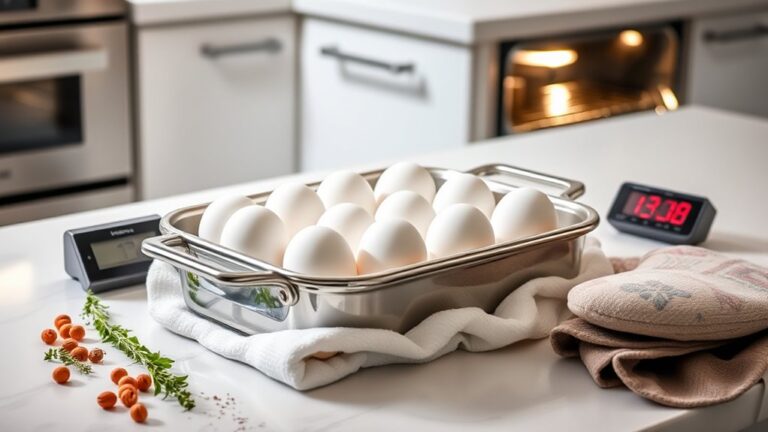
You can safely eat fertilized chicken eggs as long as you handle and store them properly, just like regular eggs. Fertilized eggs are safe to consume and don’t pose additional risks compared to unfertilized eggs.
Keep them refrigerated to stop any embryo development and use them within a few weeks.
Fertilization doesn’t change the taste, nutrition, or safety of the egg when stored right. Just make sure to cook them thoroughly before eating.
If you want to understand how to tell if an egg is fertilized or the best ways to store and prepare them, there’s more to explore.
What Exactly Are Fertilized Chicken Eggs?

Although fertilized chicken eggs come from hens that have mated with roosters, they look just like regular eggs to your eyes. Fertilized eggs contain a germinal disc—a tiny white spot on the yolk—indicating that fertilization has occurred. This happens when sperm from a rooster joins with the hen’s egg inside her oviduct before the shell forms.
Not every egg laid by a hen is fertilized; only those resulting from mating with a rooster are. You won’t notice any difference between fertilized and unfertilized eggs just by looking at them unless you incubate them or use candling to examine the inside.
Are Fertilized Eggs Safe to Eat?

If you handle and store fertilized eggs properly, you can eat them just as safely as unfertilized ones. The key is preventing embryo development, which only happens if fertilized eggs are incubated or left uncollected too long.
Here’s how to keep your fertilized eggs safe:
- Refrigerate fertilized eggs within hours of laying.
- Store them at consistent, cool temperatures.
- Avoid incubating or leaving them at room temperature for extended periods.
- Use fertilized eggs while they’re fresh to ensure safety.
There’s no difference in taste, nutrition, or health risk between fertilized and unfertilized eggs if you follow these steps.
How Do Chickens Fertilize Their Eggs?
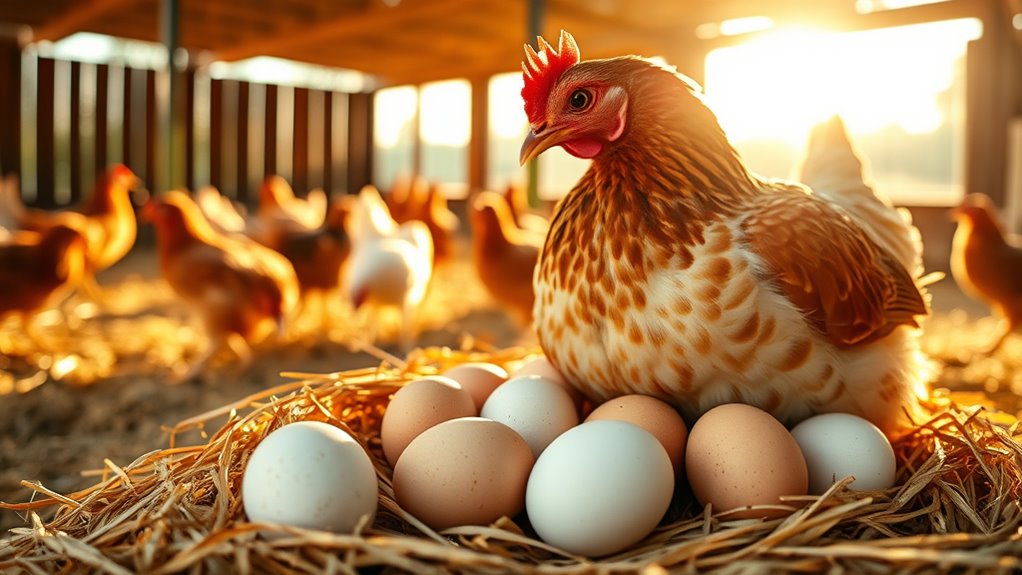
When a rooster mates with a hen, he transfers sperm into her reproductive tract through cloacal contact. This fertilization happens as the egg yolk forms inside the hen before the shell develops.
Understanding this process helps you see how fertilized eggs come to be and the rooster’s vital role.
Mating Process Explained
Since a rooster mates with a hen by briefly touching their cloacas, he deposits sperm into her oviduct, where it fertilizes the eggs during their formation before the shell develops.
To understand the mating process and fertilization, keep these key points in mind:
- The rooster and hen connect cloacas, allowing sperm transfer.
- Sperm travels into the hen’s oviduct to fertilize the egg while it forms.
- A hen can store sperm for several days, fertilizing multiple eggs from one mating.
- Fertilized eggs show a tiny germinal disc, signaling fertilization occurred.
Knowing this helps you grasp how fertilization happens naturally, before the egg’s shell forms, ensuring the egg’s potential to develop into a chick if incubated properly.
Fertilization Timing Details
Although fertilization happens inside the hen’s oviduct, you might wonder how timing plays a crucial role in this process. When a hen mates with a rooster, sperm is deposited into her reproductive tract and can stay viable for up to two weeks. During ovulation, the hen releases an ovum, or yolk, which travels through the oviduct.
If sperm is present during this time, fertilization occurs as the sperm meets the ovum. This fertilized egg then begins forming its shell. Because the sperm can fertilize multiple eggs over several days, one mating can result in many fertilized eggs.
You can identify fertilized eggs by the germinal disc on the yolk, which shows that fertilization successfully happened inside the hen’s body before shell formation.
Role Of Rooster
Because a rooster plays a key role in fertilization, understanding how chickens reproduce starts with his involvement. The role of rooster in fertilizing eggs is vital, yet straightforward. Here’s how it works:
- The rooster mates with the hen, depositing sperm inside her reproductive tract.
- Sperm travels through the hen’s oviduct, fertilizing the ovum before the eggshell forms.
- Fertilization happens internally, so the hen doesn’t need to mate for every egg she lays.
- Fertilized eggs show a germinal disc, marking the rooster’s fertilization.
You should know hens can lay eggs without a rooster, but those eggs won’t be fertilized. So, the rooster’s role is vital for producing fertilized eggs, but not for egg-laying itself.
What Happens If Fertilized Eggs Sit Too Long or Are Incubated?
If fertilized eggs sit too long in warm conditions, an embryo can start developing, which may affect the egg’s safety for eating.
When you incubate eggs at the right temperature, the embryo grows steadily and can hatch into a chick after about 21 days.
However, if embryos aren’t incubated properly or eggs are left too long without refrigeration, the embryo will die and the egg can spoil.
Embryo Development Risks
When fertilized eggs sit at warm temperatures without being collected, embryos can start developing within just a few days. Understanding embryo development risks helps you handle these eggs safely. Here’s what you should know:
- Embryo development begins around day 3 to 4, with growth becoming noticeable by days 7 to 14.
- If eggs aren’t refrigerated or collected promptly, the embryo inside continues to grow, which you can detect by candling.
- Eating eggs with developing embryos might cause an unpleasant taste or texture but usually isn’t harmful if cooked thoroughly.
- Proper collection and refrigeration stop embryo development, reducing potential risks and maintaining egg quality.
Effects Of Incubation
Understanding how embryo development progresses leads us to contemplate what happens if fertilized eggs sit too long or are incubated. If fertilized eggs remain at room temperature beyond 7–10 days, embryo development may begin slowly, visible as dark spots when candled. However, refrigeration stops this process, keeping the eggs from developing.
When fertilized eggs are intentionally incubated at 99–102°F with proper humidity for about 21 days, they hatch into chicks. This means the eggs are no longer suitable to eat but aren’t unsafe if consumed before incubation starts. If fertilized eggs sit too long or are incubated unintentionally, embryo growth makes them unsuitable for consumption.
To avoid this, collect eggs regularly and refrigerate them promptly, ensuring they don’t develop embryos before you use them.
How Can You Identify Fertilized Eggs at Home?
How can you tell if an egg is fertilized at home? Identifying fertilized eggs can be tricky since they look like regular eggs when freshly laid. Here are four ways to check:
- Look for a small white spot called the germinal disc on the yolk; fertilized eggs often show a faint bullseye pattern.
- Use candling by shining a bright light through the egg in a dark room to spot embryo development or blood vessels.
- Remember, if eggs are collected regularly and not incubated, embryos won’t develop, making fertilized eggs hard to distinguish.
- Avoid relying solely on appearance since fertilized and unfertilized eggs look nearly identical without special tools or incubation.
With these tips, you can better identify fertilized eggs at home.
Does Fertilization Affect Egg Taste or Nutrition?
You might wonder if fertilized eggs taste different or offer more nutrition than unfertilized ones. The truth is, scientific studies show no difference in flavor or nutritional value between the two.
Taste Differences Debunked
Although some people worry that fertilized eggs might taste different, you’ll find no noticeable flavor or texture change compared to unfertilized eggs. When you cook fertilized eggs—whether scrambled, fried, or boiled—the taste remains consistent. Here’s what you should know:
- Fertilization doesn’t alter the egg’s flavor or texture.
- The germinal disc on the yolk, a sign of fertilization, doesn’t affect taste.
- Scientific studies confirm no taste difference between fertilized and unfertilized eggs.
- Proper freshness and storage matter more for taste than fertilization.
Nutritional Value Comparison
Since fertilization doesn’t alter the egg’s composition, fertilized and unfertilized chicken eggs offer the same nutritional benefits. When you eat fertilized eggs, you’re getting equal amounts of protein, vitamins, and minerals as you would from any regular egg. The small white spot—the germinal disc—on fertilized eggs doesn’t affect flavor or nutrition in any way.
Fertilization doesn’t introduce toxins or harmful substances, so these eggs remain just as safe and nutritious. Any differences you might notice in taste or texture come down to freshness and cooking methods, not fertilization.
Scientific Evidence Overview
How does fertilization impact the taste and nutrition of chicken eggs? Scientific evidence shows fertilized eggs are just like unfertilized ones when fresh and stored properly. Here’s what you need to know:
- Fertilization doesn’t change the chemical makeup of proteins, fats, or vitamins in eggs.
- Taste and texture remain the same between fertilized and unfertilized eggs.
- Embryo development only starts if fertilized eggs are kept warm for days; otherwise, they stay identical to regular eggs.
- Seeing a germinal disc means the egg’s fertilized, but it doesn’t affect nutrition or safety.
How Do You Store Fertilized Eggs to Keep Them Fresh?
To keep fertilized eggs fresh, you should store them in the refrigerator at 40°F (4°C), which slows embryo development and preserves their quality. Collect eggs daily to prevent embryo growth and maintain safety. Keep the eggs in their original carton on an inside shelf, away from strong odors and temperature fluctuations, which can affect freshness.
Avoid washing eggs before storage, as this removes their natural protective coating and increases the risk of spoilage. For ideal freshness and safety, use eggs within 3–5 weeks of laying, whether fertilized or not. Following these steps ensures your fertilized eggs stay fresh, safe, and suitable for consumption while maintaining their quality over time.
What Cultural Traditions Include Eating Fertilized Eggs?
Although fertilized eggs might seem unusual to some, many cultures have embraced them as traditional foods with rich histories. You’ll find fascinating cultural traditions that include eating fertilized eggs, such as:
- In the Philippines, balut—a boiled partially developed fertilized duck egg—is a popular delicacy.
- Though duck eggs are typical, homemade balut can also use fertilized chicken eggs.
These cultural traditions view fertilized eggs as nutritious snacks and an important part of local cuisine. Proper storage and handling keep these eggs safe, preventing further embryo development while respecting tradition.
Are There Ethical Issues With Eating Fertilized Eggs?
When you consider eating fertilized eggs, ethical concerns often arise because many people believe these eggs contain potential life, making their consumption morally questionable. You might worry that eating fertile eggs is different from unfertilized ones, but many argue there’s no ethical difference since fertile eggs won’t develop into embryos without incubation.
Your perspective may also depend on cultural or religious beliefs; for example, some societies embrace eating fertilized eggs like balut, viewing them as a valued food source. Additionally, animal welfare concerns come into play if you consider how hens are bred for fertilization.
Ultimately, whether you find eating fertile eggs ethical depends on your personal values and how you weigh the potential life inside versus cultural and practical factors.
How Do You Safely Handle and Cook Fertilized Eggs?
Because fertilized eggs require careful handling to guarantee safety, you should treat them just like regular eggs by washing them gently to remove any dirt or bacteria. Proper handling and cooking are essential when dealing with fertile eggs. Follow these steps:
- Store fertile eggs in the refrigerator at 40°F (4°C) and use them within 3-5 weeks to prevent embryo growth.
- Avoid eating eggs that have been at room temperature over a week or show embryo signs.
- Cook fertilized eggs thoroughly until both whites and yolks are firm to eliminate bacteria and embryo risks.
- When boiling, fully submerge eggs and cook for at least 10 minutes to ensure safety.
Frequently Asked Questions
Is It Safe to Eat Backyard Eggs Right Now?
Yes, you can safely eat backyard eggs right now if you’ve collected and refrigerated them promptly.
Just make sure no embryos have developed by checking or candling, especially if eggs sat uncollected or were incubated.
Why Do You Not Put Farm Fresh Eggs in the Refrigerator?
You don’t put farm fresh eggs in the fridge because you’re basically locking in a fragile superhero’s protective shield! That natural bloom keeps them fresh and bacteria-free at room temperature—refrigeration can ruin this magical barrier.
What Country Eats Fertilized Chicken Eggs?
You’ll find fertilized chicken eggs eaten in the Philippines, especially at home, where they’re boiled and enjoyed like balut.
Other Southeast Asian countries also consume fertilized eggs as part of their traditional cuisine, valuing their flavor and nutrition.
Can You Eat a Chicken Egg Right After It’s Laid?
You can eat a chicken egg right after it’s laid—over 90% of eggs consumed worldwide are fresh.
Just make sure to wash it properly to remove dirt, and enjoy its full nutritional benefits safely.
Conclusion
So, yes—you can safely eat fertilized chicken eggs as long as you store and cook them properly. Imagine finding a fertilized egg at your local market, cracking it into a hot pan, and enjoying a nutritious breakfast without worry. Just keep them refrigerated, avoid long storage, and cook thoroughly.
By doing this, you’ll enjoy your eggs safely while respecting the natural process behind them. It’s simple, safe, and part of many food traditions worldwide. Remember, proper storage and cooking are key to eating fertilized chicken eggs safely.