Why Do Stainless Steel Pans Turn Brown During Cooking?
You’ll notice your stainless steel pan turns brown during cooking because high heat causes cooking oils to break down and polymerize, leaving stubborn burned residues on the surface.
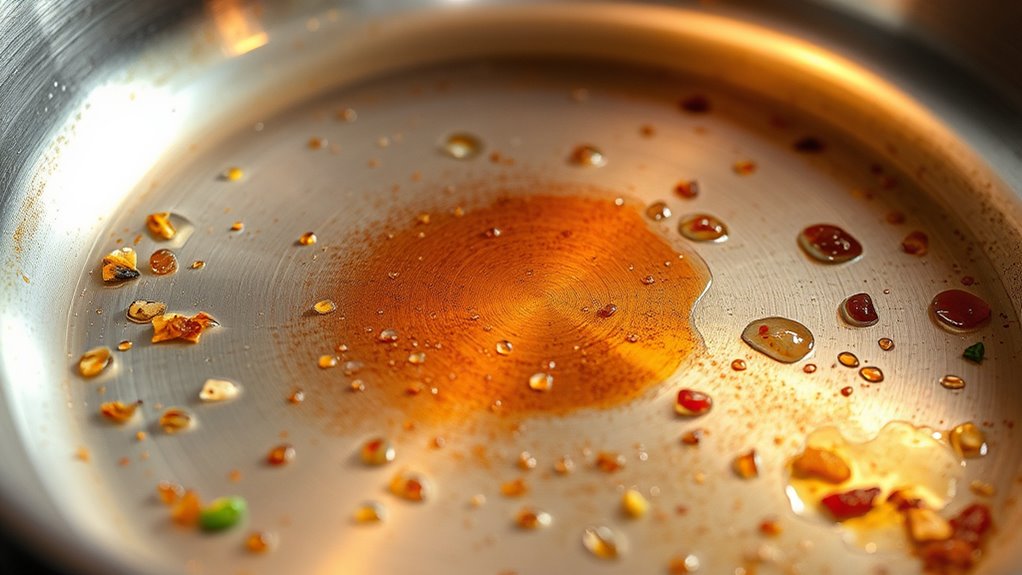
Excessive temperatures vaporize fats, which settle as brown stains both inside and outside the pan. These marks aren’t damage but baked-on oil from overheating or spills.
If you want to keep your pan looking great and learn how to prevent and clean these stains effectively, there’s more helpful information ahead.
Why Stainless Steel Pans Turn Brown During Cooking
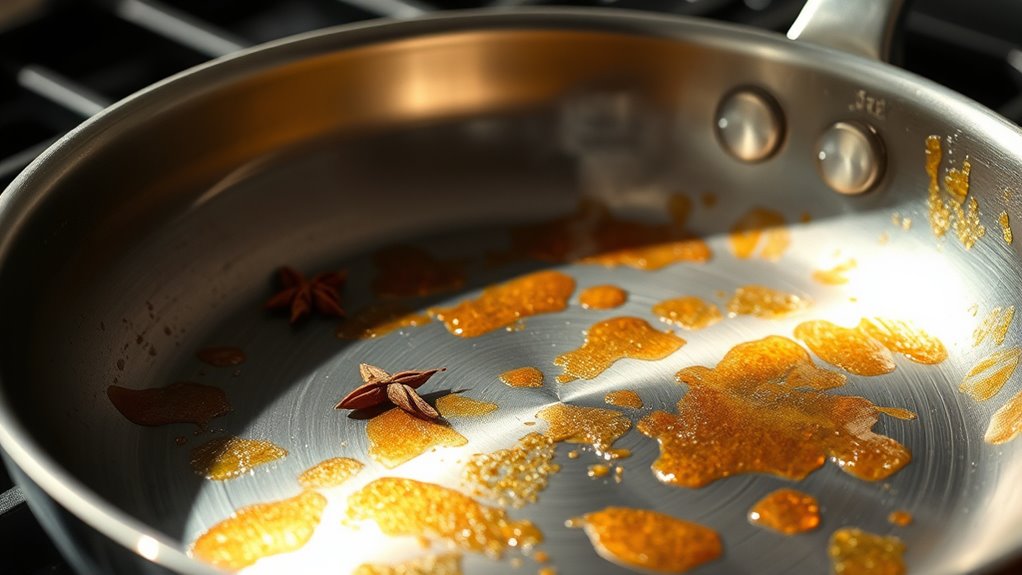
When you cook at high temperatures, oils and fats in your stainless steel pan polymerize and carbonize, causing browning on the surface. This browning happens because the intense heat triggers chemical reactions that transform the fats, creating a brown film that can stick stubbornly to your pan.
It’s not just the inside surface that’s affected; vaporized fats can settle on the pan’s exterior, leading to external browning as well. If you use too much oil or let spills heat too long, those fats can burn onto the pan, adding to the brown buildup. Overheating accelerates these reactions, making browning more noticeable.
Understanding this helps you manage heat and oil amounts to keep your stainless steel pans looking cleaner longer.
How Oil and Heat Cause Browning and Residue
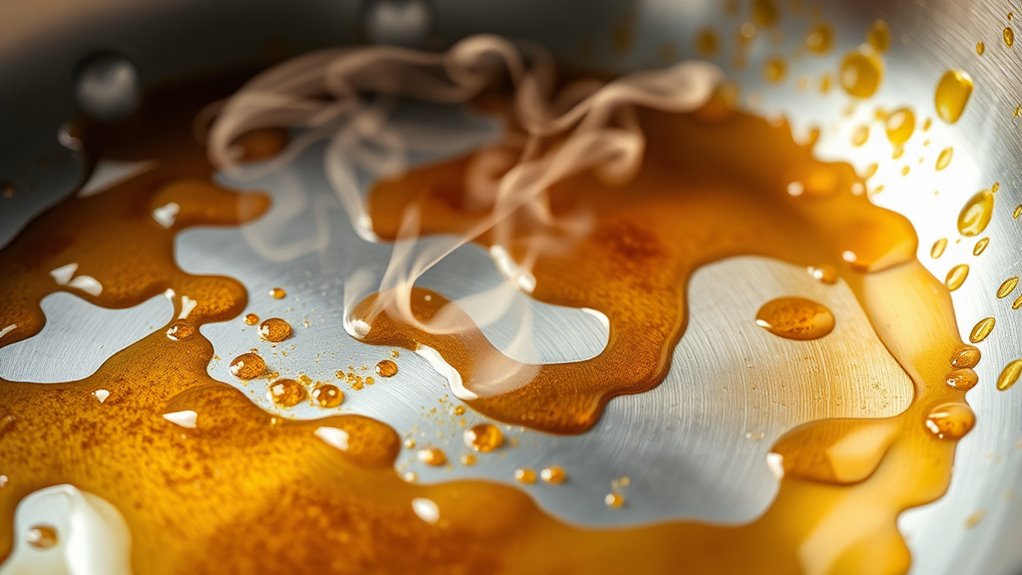
If you cook with oils beyond their smoke points or crank up the heat too quickly, you’ll notice your stainless steel pan developing brown stains and sticky residue. This happens because oils can polymerize and burn, creating a caramelized film that sticks stubbornly to the surface.
Excessive heat also vaporizes fats, depositing brown stains on both the interior and exterior of your stainless steel pan. Rapid heating speeds up oxidation, darkening the residue further. Here’s what occurs:
Excessive heat vaporizes fats, leaving brown stains inside and out, while rapid heating accelerates oxidation and dark residue buildup.
- Oils reach smoke point and break down chemically.
- Burned oils form a sticky, caramelized layer.
- Vaporized fats settle as external brown stains.
- Oxidation causes dark, baked-on residue buildup.
Managing oil type and heat helps keep your stainless steel pans clean and shiny.
How to Spot and Understand Brown Stains on Your Pan
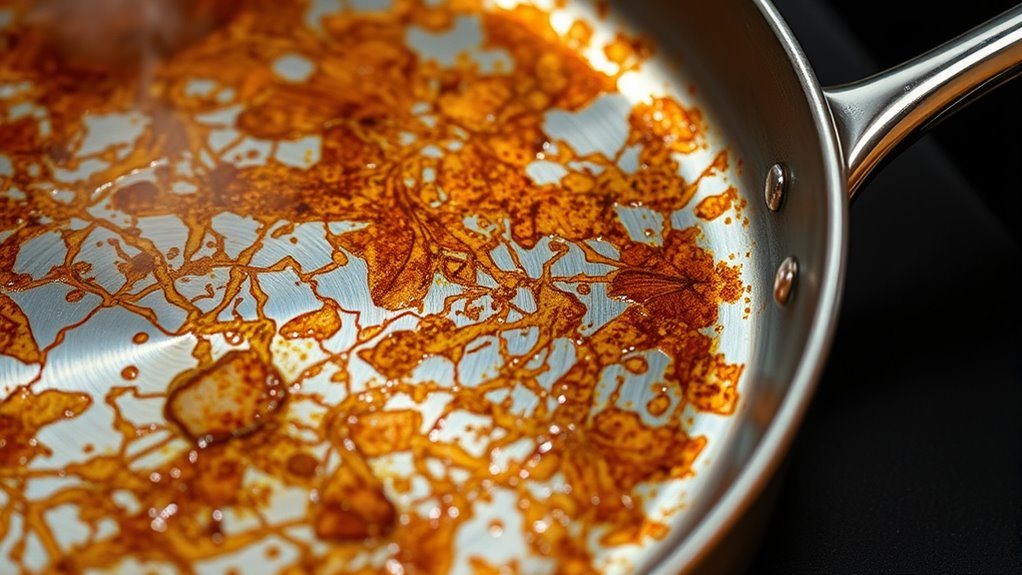
Although brown stains on your stainless steel pan might seem like surface damage, they actually signal burnt or polymerized oils caused by cooking at high temperatures. When you notice brown or tan patches on your pan, these are baked-on residues from overheating or oil spills rather than scratches or corrosion.
The discoloration can range from light brown to dark patches, depending on how long and how intensely the pan was heated. Sometimes, external brown discoloration comes from vaporized fats or oils depositing back onto the pan’s surface during cooking.
Simple Steps to Prevent Browning and Residue Buildup
You can prevent browning by controlling the cooking temperature—preheat your pan on medium heat and avoid overheating.
Clean your pan promptly after each use to stop residue from baking on and causing stains.
Keeping these habits will help your stainless steel stay bright and clean longer.
Control Cooking Temperature
When you control the cooking temperature carefully, you can prevent your stainless steel pans from turning brown and developing residue buildup. Overheating above 500°F causes oil polymerization, leading to discoloration.
Here’s how to keep your stainless pans looking great:
- Preheat the pan on medium heat before adding ingredients to avoid overheating.
- Use a cooking thermometer to monitor and maintain safe temperatures.
- Once the pan is hot, reduce the heat to prevent vaporized fats from depositing brown stains.
- Never leave the pan unattended on high heat to avoid prolonged exposure that causes browning and residue buildup.
Maintain Regular Cleaning
Controlling cooking temperature goes a long way in preventing stainless steel pans from turning brown, but regular cleaning plays an equally important role in keeping them spotless. After each use, wash your stainless steel pan with warm water and mild dish soap to remove food residue before it bakes on. Use a gentle scrub with non-abrasive cleaners like Bar Keepers Friend to tackle stubborn stains early.
Weekly, wipe the pan with a vinegar-water solution to dissolve mineral deposits and prevent discoloration. Don’t let oils or food sit on the surface for too long, as they can cause brown films when baked. Consistent maintenance, including prompt cleaning and thorough drying, keeps your stainless steel pan shiny and free from browning.
Cleaning Stainless Steel Pans to Remove Brown Stains
Although brown stains on stainless steel pans can be stubborn, you can remove them effectively by using simple household ingredients and proper techniques. Start by applying a baking soda and water paste, then gently scrub with a non-abrasive sponge.
For tougher stains, a stainless steel cleaner like Bar Keepers Friend works wonders. You can also clean the pan’s exterior with a vinegar and water mixture to break down baked-on fats.
Here’s how to clean your stainless steel pan:
- Make a baking soda paste and scrub gently.
- Use Bar Keepers Friend for stubborn brown deposits.
- Clean the outside with vinegar and water.
- Rinse thoroughly and dry promptly.
Following these steps helps restore your pan’s look and keeps it ready for your next meal.
Maintaining Your Stainless Steel Pan’s Shine
To keep your stainless steel pan shining, clean it regularly with a gentle, non-abrasive cleaner like Bar Keepers Friend. After cooking, wipe it down with a vinegar and water solution to prevent discoloration and mineral buildup.
Polishing your pan with a soft cloth or stainless steel cleaner will help maintain its bright, lasting shine.
Regular Cleaning Techniques
When you clean your stainless steel pan right after cooking, you prevent residue buildup and keep its shine intact. Follow these regular cleaning techniques to maintain your pan’s brilliance:
- Wash with warm water and mild dish soap using a soft sponge or cloth to avoid scratches.
- For stubborn stains, boil a mixture of vinegar and water in the pan to loosen residues.
- Occasionally apply a stainless steel cleaner or a paste made from baking soda and water to restore luster.
- Avoid abrasive scrubbers like steel wool, which can damage the delicate stainless steel surface.
Preventing Surface Discoloration
Keeping your stainless steel pan clean is only part of the battle; preventing surface discoloration helps maintain its shine longer. Browning results from oils polymerizing or burning onto the pan at high heat. To avoid this, cook at moderate temperatures and use oils with high smoke points.
Clean spills immediately to prevent baked-on residues.
| Action | Reason |
|---|---|
| Use moderate heat | Avoids burning oils that cause browning |
| Choose high smoke point oils | Reduces polymerization on stainless steel |
| Clean spills promptly | Prevents baked-on discoloration |
| Avoid overheating | Protects pan surface integrity |
| Regular maintenance | Keeps stainless steel looking new |
Polishing For Lasting Shine
Although regular cleaning removes most residues, polishing your stainless steel pan is essential to restore and maintain its brilliant shine. To keep your cookware looking pristine, follow these steps:
- Use a stainless steel cleaner or a vinegar-water mix for polishing.
- Always apply polish with a soft cloth or a non-abrasive pad to avoid scratches.
- After cleaning, rub a small amount of mineral oil or stainless steel polish to enhance shine and add protection.
- Avoid abrasive scrubbers like steel wool, which can dull and damage the surface.
Consistent polishing prevents mineral buildup and discoloration, preserving both the appearance and function of your stainless steel pan for years to come.
Frequently Asked Questions
Is It Normal for a Stainless Steel Pan to Turn Brown?
Yes, it’s normal for your stainless steel pan to turn brown. High heat and oils cause a thin oxide layer to form, creating the discoloration.
Don’t worry; it won’t harm your pan or cooking performance.
How to Fix a Browned Stainless Steel Pan?
You can fix a browned stainless steel pan by scrubbing it with a baking soda paste or Bar Keepers Friend, rinsing thoroughly, and drying.
For stubborn stains, boil vinegar and water, then scrub and rinse again.
When Should You Throw Away Stainless Steel Pans?
Don’t throw good money after bad—discard your stainless steel pan when it warps, cracks, or the surface peels.
If it heats unevenly or sticks persistently, it’s time to replace it for safe, efficient cooking.
What Chemical Turns Stainless Steel Brown?
Iron oxide (Fe₂O₃) is the chemical that turns stainless steel brown when you cook at high heat.
It forms as iron in the steel reacts with oxygen, causing that characteristic browning on your pan’s surface.
Conclusion
So, your shiny stainless steel pan turns brown, and you wonder if it’s ruined—ironic, isn’t it? That browning is actually just a sign you’re cooking right, with oil and heat doing their job.
Instead of freaking out, embrace the marks as badges of honor. Just remember, a little cleaning and care keep your pan gleaming, proving that even the messiest moments in the kitchen can lead to something beautiful.
Understanding why stainless steel pans turn brown during cooking helps you appreciate the process. Regular cleaning and proper maintenance ensure your stainless steel cookware stays in great shape for years to come.