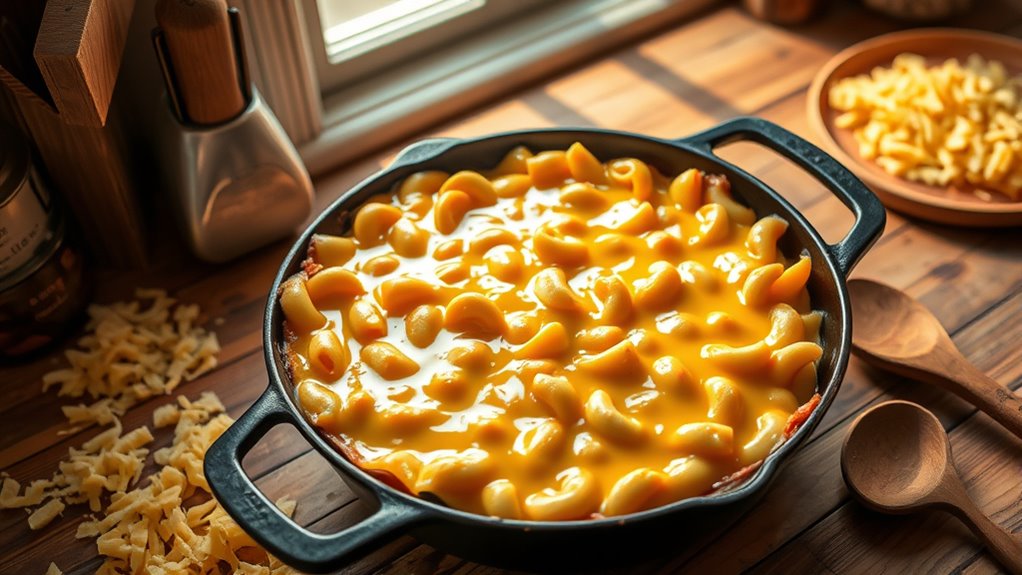
What Size Pan Is Best for Mac and Cheese
For mac and cheese, choosing the right pan size is essential for perfect results. A 9×13-inch pan works best if you’re cooking for a crowd, letting your casserole cook evenly without overflow.
If you’re making a smaller batch or want easier leftovers, go for an 8×8-inch pan to control portions and speed up baking.
The pan size affects baking time and how your cheese browns, so selecting the right one helps you avoid dryness or spills.
Keep exploring to find the perfect fit for your needs.
Best Pan Sizes for Baked Mac and Cheese: A Quick Guide
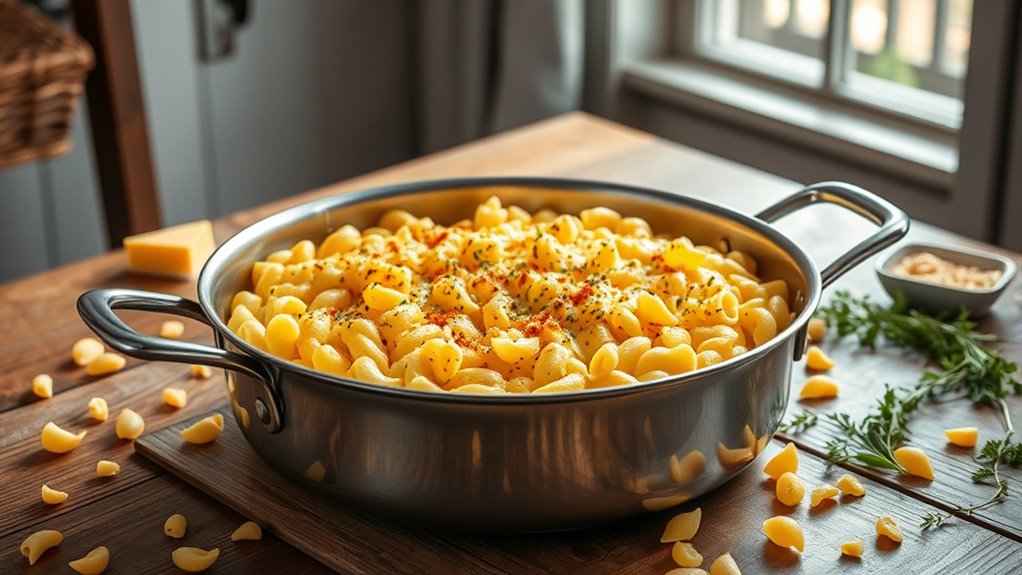
When you’re preparing baked mac and cheese, choosing the right pan size can make a big difference in portion control and cooking time. A 9×13-inch baking dish is your go-to for feeding a large family or crowd, offering plenty of space without overcrowding.
If you’re cooking with a large pot, you’ll want to transfer your mac and cheese into a dish that matches your serving needs. For smaller portions or side servings, an 8×8-inch dish works perfectly for 2-4 people, making it easier to manage leftovers.
Larger pans, like an oval gratin dish around 2.4 quarts, not only hold more but also add a fancy touch for special occasions. Picking the right baking dish helps you control portions and cook evenly every time.
Using Smaller Pans for Small Portions
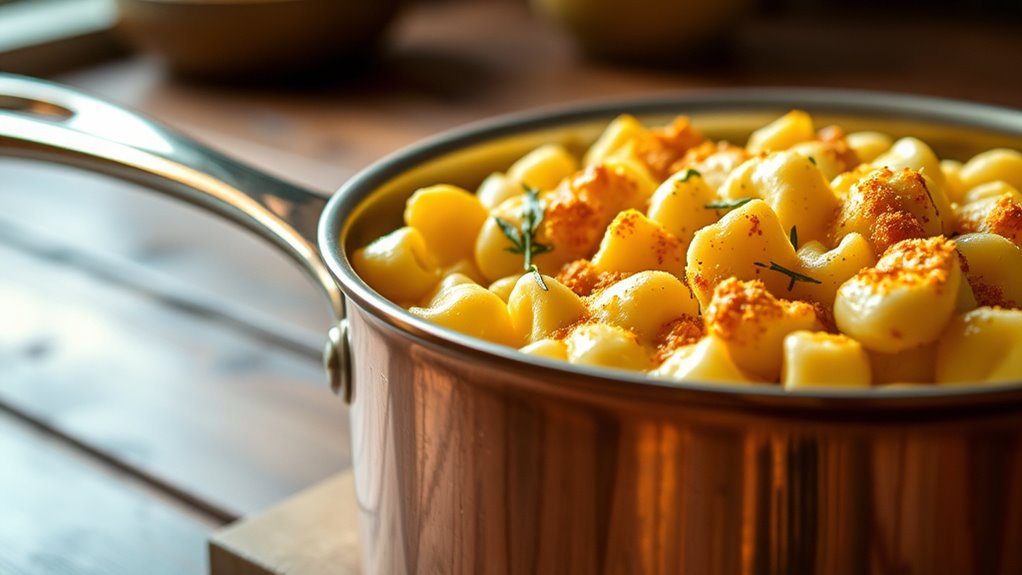
When you use smaller pans for mac and cheese, you get just the right amount without leftovers going to waste. They help you control portions, making it easier to manage meals for one or two people.
Plus, smaller pans are perfect for storing and reheating leftovers without taking up too much space.
Benefits Of Smaller Pans
Although larger pans might seem convenient, smaller pans like an 8×8-inch dish offer distinct advantages when you’re cooking for just a few people. These baking dishes fit perfectly in smaller kitchens and make meal prep simpler.
Here are three key benefits you’ll appreciate:
- Efficient Storage and Reheating: Smaller pans let you store and reheat just the right amount, avoiding waste and extra cleanup.
- Ideal for Portion Control: Using smaller pans helps you manage portion sizes easily, which supports healthier eating habits.
- Versatility in Cooking: These pans handle various recipes, from mac and cheese to casseroles and desserts, making them a practical, multi-use kitchen tool.
Choosing smaller pans means you get convenience, control, and flexibility—all in one compact package.
Portion Control Advantages
Smaller pans, like the 8×8-inch size, give you excellent control over portion sizes, especially if you’re cooking just for yourself or a small group. Using smaller pans helps you serve the right amount, preventing overeating and food waste. When you cook for 2-4 people, these pans ensure the mac and cheese cooks evenly without being over- or underdone due to too much volume.
Plus, smaller pans reduce the amount of ingredients you need, saving you money. While leftovers can still happen, smaller pans limit excess food, making it easier to manage portions and store any extras. Overall, smaller pans are a smart choice when you want precise portion control and want to avoid the hassle of dealing with large quantities of uneaten mac and cheese.
Storage And Leftovers
How can you make storage and leftovers hassle-free with mac and cheese? Using smaller pans, like an 8×8 dish, is your best bet for easy portioning and minimizing waste. Here’s why it works:
Smaller pans simplify storage by fitting neatly in your fridge and allowing airtight containers to keep leftovers fresh longer. Portioning into small pans means you can freeze individual servings, making meal prep quick and convenient.
Reheating leftovers from smaller pans helps preserve the creamy texture without overcooking, ensuring every bite tastes just right.
Why 8×8 and 9×13 Pans Work Well for Mac and Cheese
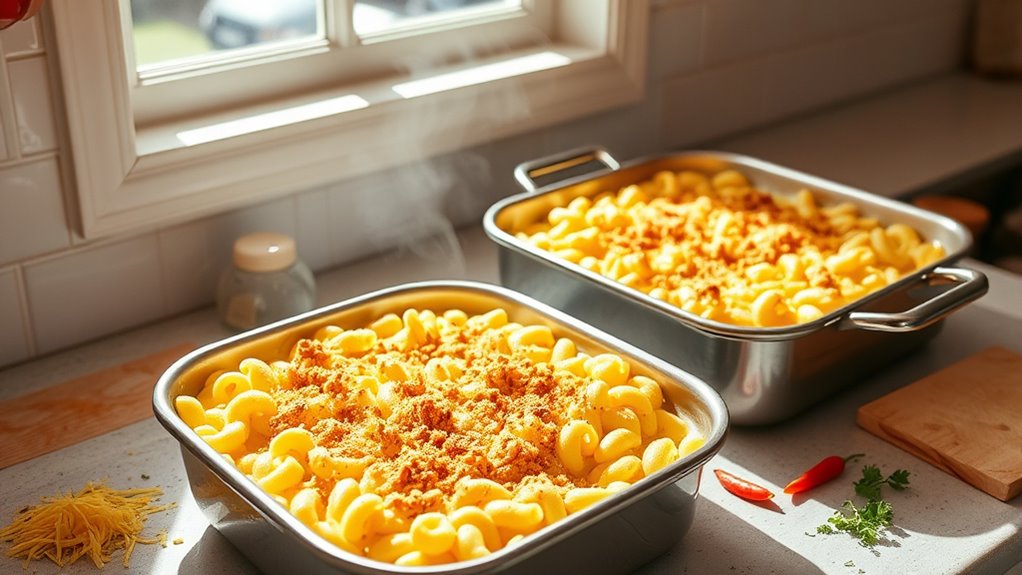
When you want a reliable pan size for mac and cheese, the 8×8 and 9×13-inch dishes stand out as top choices. The 8×8 baking dish fits smaller portion sizes perfectly, serving 2-4 people or leftovers. The 9×13 pan handles larger batches, ideal for family meals.
Both pans ensure even baking and create a consistent cheesy crust. They match standard recipe quantities, avoiding overflow or thin layers, and offer versatile serving and easy storage.
| Pan Size | Portion Size | Benefits |
|---|---|---|
| 8×8 | 2-4 servings | Compact, even baking |
| 9×13 | 6-8 servings | Larger portions |
| Both | Recipe friendly | Easy handling |
| Both | Versatile | Consistent crust |
| Both | Storage friendly | Prevents overflow |
How Pan Size Affects Baking Time and Cheese Browning
Choosing between an 8×8 and 9×13 pan doesn’t just affect portion size—it also influences baking time and the way your cheese browns. The pan size changes how heat penetrates the mac and cheese, affecting both cooking speed and crust development. Here’s what you should keep in mind:
- Smaller pans like 8×8 hold a thicker layer, so cheese browns faster and forms a crispier crust.
- Larger pans such as 9×13 require longer baking times—usually 5 to 10 minutes more—to heat the center thoroughly.
- Shallower pans expose more surface area, promoting quicker cheese browning but less depth for gooey cheese.
Adjust your baking time based on pan size to get perfect cheese browning without overcooking or underheating.
Tips to Prevent Overflow and Dryness in Baked Mac and Cheese Pans
You’ll want to fill your pan about three-quarters full to leave room for the cheese sauce to bubble without spilling over. Using a dish with higher sides, like a 9×13, helps contain the expansion and prevents messes.
To keep your mac and cheese moist, cover it with foil during the first part of baking, then uncover to get that perfect golden crust.
Optimal Pan Filling
Although it may be tempting to fill your pan to the brim, you should only fill it up to three-quarters full to prevent overflow and allow space for the mac and cheese to expand while baking. Choosing the right pan size is essential; a larger baking dish like a 9×13-inch pan gives your mac and cheese plenty of room without spilling.
Here are three tips to optimize your filling level:
- Fill your baking dish up to 75% to avoid bubbling over.
- Evenly spread the cheese mixture for uniform cooking and to prevent dryness.
- Avoid overfilling smaller pans, such as 8×8-inch dishes, to ensure proper heat distribution.
Moisture Retention Techniques
Managing moisture in your mac and cheese is just as important as selecting the right pan size and filling level. To keep your dish creamy and prevent dryness, cover the baking dish loosely with foil during baking. This helps retain moisture and stops the cheese sauce from drying out.
Adding a splash of extra milk or cheese sauce before baking also boosts moisture levels. Using a larger or shallow baking dish improves heat distribution and reduces the chance of overflow. For extra control, place your baking dish inside a larger pan filled with water—a water bath maintains consistent humidity.
Bake at around 375°F and monitor closely to avoid bubbling over or drying. These moisture retention techniques ensure your mac and cheese comes out perfectly moist every time.
Adjusting Your Mac and Cheese Recipe for Different Pan Sizes
When adjusting your mac and cheese recipe for different pan sizes, it’s important to match the quantity to the dish to guarantee even cooking and avoid spills. Proper recipe adjustment assures your baking dish handles the volume without undercooking or overflowing.
Here’s how to do it:
- Use an 8×8-inch pan for smaller portions (4-6 servings), perfect for avoiding leftovers.
- Opt for a 9×13-inch baking dish when making larger batches (12-15 servings), ideal for gatherings.
- When doubling your recipe, always pick a larger pan like the 9×13 to accommodate the extra volume.
Comparing Pan Shapes: Rectangular, Square, and Oval Options
Choosing the right pan shape can make a big difference in how your mac and cheese cooks and looks. Rectangular pans (9×13 inches) handle large batches easily, while square pans (8×8 inches) suit smaller portions and help with storage.
Oval pans, usually around 2.4 quarts, add elegance and cook evenly for moderate servings. Your choice depends on servings, presentation, and storage.
| Pan Shape | Size | Best For |
|---|---|---|
| Rectangular | 9×13 inches | Large batches |
| Square | 8×8 inches | Small portions |
| Oval | ~2.4 quarts | Elegant presentation |
| Rectangular | Versatile | Double/triple recipes |
| Square | Even heating | Easy leftover storage |
Pick the pan shape fitting your needs for perfect mac and cheese results.
Best Pans for Freezing and Reheating Baked Mac and Cheese
Once you’ve picked the ideal pan shape for your mac and cheese, consider how you’ll store and reheat leftovers. Choosing the right baking dishes makes a big difference for freezing and reheating.
- Opt for 9×13-inch or larger freezer-friendly pans to freeze and stack portions easily.
- Aluminum foil pans are lightweight, disposable, and prevent freezer burn—perfect for freezing baked mac and cheese.
- Use smaller 8×8-inch dishes for individual or family-sized portions that reheat quickly and evenly.
Always let your mac and cheese cool completely before wrapping tightly with plastic wrap and foil to keep it fresh. When reheating, place frozen pans in a 350°F oven for 20-30 minutes until hot and bubbly, ensuring the best texture and flavor.
Bakeware Beyond Pans That Makes Mac and Cheese Easier
Though traditional pans work well, exploring bakeware beyond standard dishes can make preparing mac and cheese more convenient and versatile. Using silicone baking molds or mini muffin pans lets you create individual servings, perfect for snacks or quick reheating. Smaller bakeware like 8×8-inch dishes helps with portion control for smaller households, reducing waste.
For elegance and variety, try oval gratin dishes or deep-dish casseroles, which accommodate different portion sizes while enhancing presentation. Plus, using multiple smaller pans or molds makes freezing and reheating easier, maintaining quality and offering flexibility when serving.
Frequently Asked Questions
How Many People Does a 9×13 Pan of Mac and Cheese Feed?
A 9×13 pan of mac and cheese feeds about 10 to 12 people as a main dish, but you can stretch it to 16 or even 20 servings if you serve it as a side or in smaller portions.
What Is the Best Pan for Baking Mac and Cheese?
The best pan for baking mac and cheese is a 9×13-inch dish, like a cozy blanket covering your meal.
It gives you plenty of room, cooks evenly, and creates that perfect crispy, creamy balance you want.
Is a 9×13 Pan a Good All-Purpose Size?
Yes, a 9×13 pan is a great all-purpose size. It fits standard ovens, holds enough for family-sized portions, and guarantees even baking.
You’ll get a perfect cheesy crust without worrying about overflow or uneven cooking.
What’s the Secret to Good Mac & Cheese?
The secret to good mac and cheese is using quality cheese, making a smooth roux, seasoning well, cooking pasta al dente, and baking with a crispy breadcrumb topping.
These steps guarantee creamy, flavorful, and perfectly textured mac and cheese.
Conclusion
Choosing the right pan for your mac and cheese can make all the difference between creamy perfection and a dry mess. You might think size is just a number, but it’s actually the secret ingredient to that golden, bubbly top and gooey center.
Ready to reveal the full potential of your recipe? Pick your pan wisely, and get ready to impress—because your best-ever mac and cheese is just one perfect pan away.
When considering what size pan is best for mac and cheese, aim for one that holds enough to bake evenly without overcrowding. A 9×13 inch pan is often ideal, balancing depth and surface area to ensure creamy, cheesy results every time. Choosing the right pan size truly elevates your mac and cheese to the next level.