What Is the Ideal Temperature for Incubating Chicken Eggs?
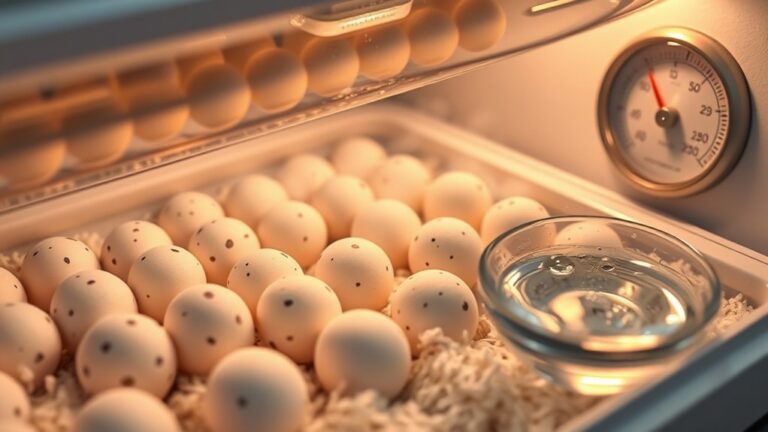
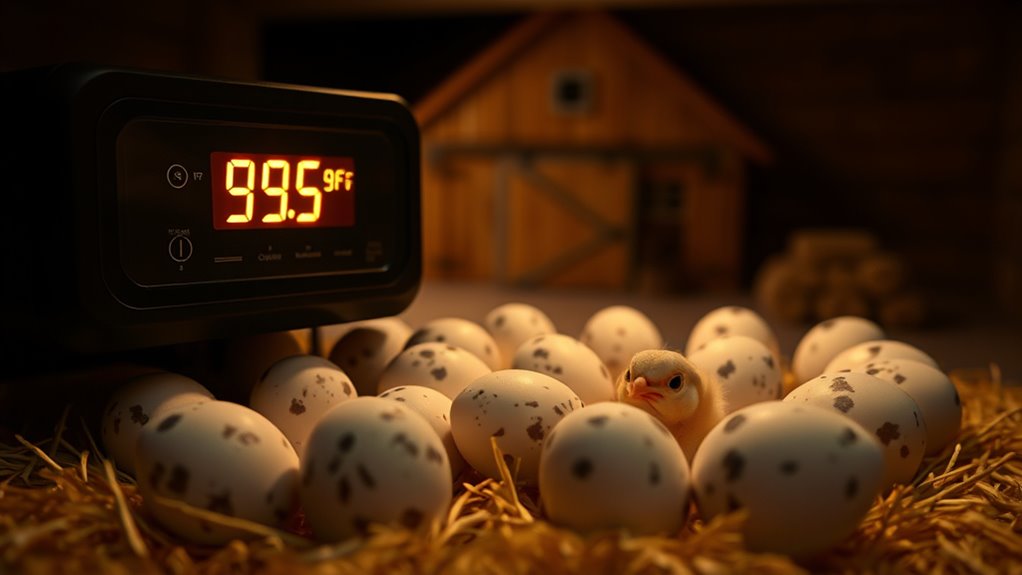
You’ll want to keep your incubator at about 99.5°F if it’s forced-air or around 101.5°F for still-air types to hatch chicken eggs properly. Maintaining the ideal temperature for incubating chicken eggs is crucial for successful hatching.
Consistency matters—a swing of more than 1°F can harm embryo development or lower your hatch rate. Keep your thermometer calibrated and placed at egg level for accurate readings.
Small temperature tweaks may be needed during incubation to support healthy growth. Understanding these details can help you maximize your hatch success.
What Is the Ideal Temperature for Incubating Chicken Eggs?
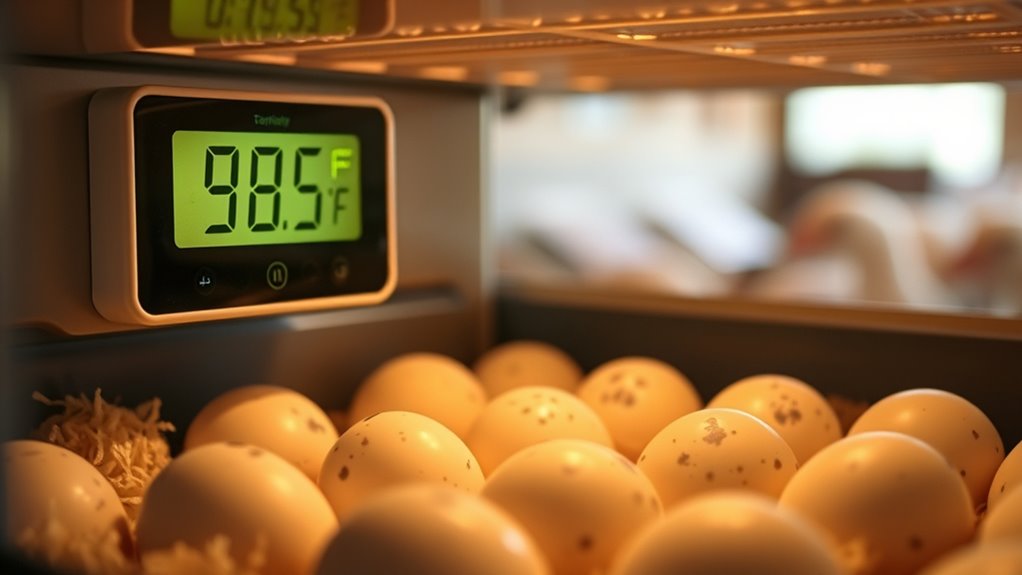
When you’re incubating chicken eggs, keeping the temperature steady around 99.5°F (37.5°C) in a forced-air incubator is vital for healthy embryo development. This ideal temperature supports the embryo throughout incubation, ensuring a successful hatch. If you’re using a still-air incubator, raise the temperature slightly to about 101–102°F (38.3–38.9°C) to offset less airflow.
Maintaining consistent temperature within ±0.5°F is essential—fluctuations over 1°F can delay hatching, cause deformities, or even embryo death. Alongside temperature, monitoring humidity levels helps create the perfect environment for eggs during incubation.
Using a reliable, calibrated thermometer in your incubator lets you keep temperature and humidity in check, maximizing your chances for a healthy hatch and thriving chicks.
Why Temperature Matters for Healthy Chicken Egg Development
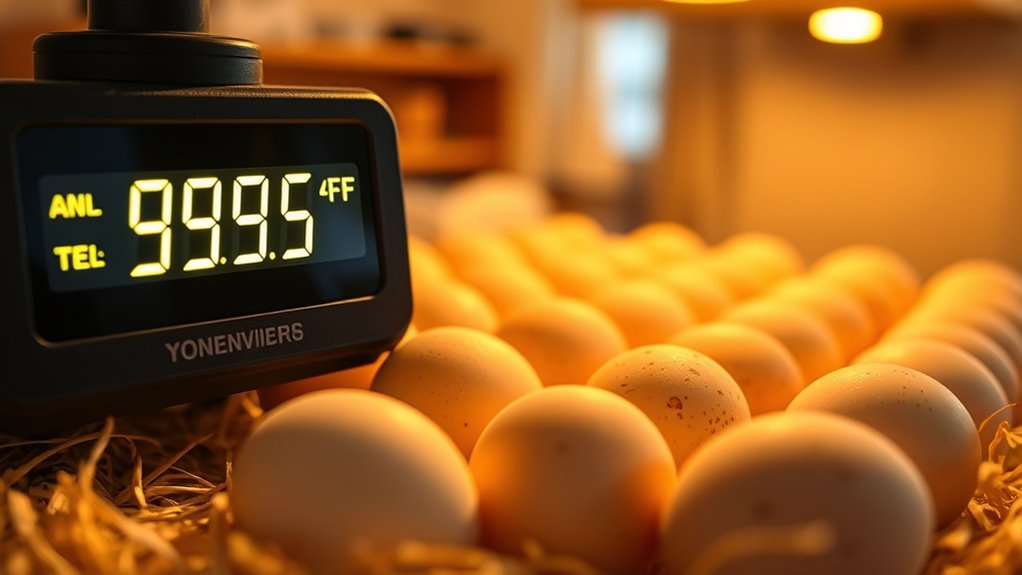
Keeping the temperature steady around 99.5°F (37.5°C) isn’t just a recommendation—it directly affects how well your chicken embryos develop. When incubating chicken eggs, precise temperature control is vital for proper growth and embryo development. If the temperature drops below 99°F, development slows, causing delays or deformities.
Temperatures above 102°F can be fatal to the embryos. Even small fluctuations over 1°F can harm the hatch rate and reduce incubation success. By maintaining a consistent temperature, you guarantee blood vessels and organs form correctly, boosting chick viability.
In short, careful temperature management during incubation isn’t optional—it’s indispensable for healthy embryos and a successful hatch.
Differences Between Forced-Air and Still-Air Incubators’ Temperature Needs
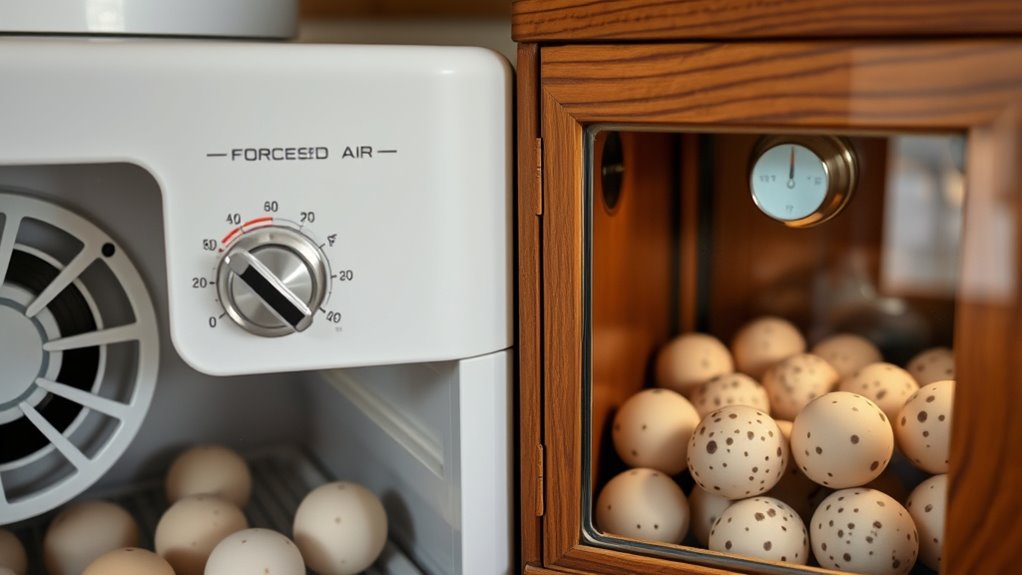
Although both forced-air and still-air incubators serve the same purpose, they demand different temperature settings due to how heat circulates inside them. Forced-air incubators maintain a steady temperature around 99.5°F (37.5°C) thanks to fans that evenly distribute heat, minimizing fluctuations.
Still-air incubators require a slightly higher temperature, about 101.5°F (38.6°C), because heat rises and air circulation is limited.
Keep in mind:
- Measure temperature at the top of eggs in still-air incubators for accuracy.
- Forced-air incubator thermometers can be placed anywhere inside.
- Proper calibration of your thermometer is vital for both types to maintain ideal temperature.
Understanding these differences ensures your incubator provides the best environment for healthy egg development.
How to Measure and Calibrate Your Incubator Thermometer for Accurate Results
Because accurate temperature control is essential for successful incubation, you need to measure and calibrate your incubator thermometer properly. Start by placing the thermometer’s probe at egg level inside the incubator, ensuring correct probe placement for precise measurement. Use a digital hygrometer with a metal probe or a lab-grade thermometer for best results.
Perform a thermometer calibration using the ice water test: submerge the probe in crushed ice and water, then wait for the reading to stabilize at 32°F (0°C). If the reading differs, adjust your incubator temperature settings by adding or subtracting the difference.
Regular temperature verification and recalibration throughout incubation maintain consistent incubator temperature, helping you achieve ideal hatching conditions and healthy chicks.
When and How to Adjust Temperature During the 21-Day Incubation Period
Once you’ve calibrated your incubator thermometer and guaranteed accurate readings, it’s time to focus on adjusting the temperature throughout the 21-day incubation period. Keep the temperature steady—99.5°F for forced-air or 101-102°F for still-air incubators. Use your thermometer to monitor egg-level temperature and adjust only if it drifts beyond ±0.5°F.
During the first 18 days, maintain steady conditions with minor adjustments of 0.2-0.3°F if necessary. In the final days, gently increase temperature by about 0.2°F to support hatching, but always watch embryo response closely.
Remember to:
- Monitor temperature daily with a reliable thermometer
- Adjust thermostat gradually to avoid sudden changes
- Increase temperature slightly during the final days for optimal hatch results
How Temperature Fluctuations Affect Embryo Development and Hatch Rates
You need to keep temperature fluctuations under 1°F to protect embryo development and maintain high hatch rates. Early and late temperature changes can impact growth differently, so you should adjust carefully at each stage.
Preventing overheating is key to avoiding deformities and ensuring healthy chicks.
Impact Of Temperature Variations
Although maintaining the right temperature during incubation might seem straightforward, even small fluctuations greater than 1°F can considerably delay hatch times and increase embryo mortality. Temperature fluctuations disrupt embryo development, causing delays or failure to hatch.
Keeping a steady temperature within the ideal range is essential for high hatch rates and healthy chicks. Consistent incubation temperature below 99.5°F slows development, while above 102°F causes overheating and deformities.
Variations also affect air cell formation, critical for hatching success. To improve outcomes, focus on:
- Maintaining a steady temperature within the ideal range
- Avoiding fluctuations greater than 1°F
- Monitoring incubation temperature regularly to prevent embryo mortality
Early Vs. Late Fluctuations
Temperature fluctuations don’t affect all stages of incubation equally. During early incubation, even minor temperature fluctuations can delay embryo development, extending hatch times and potentially reducing hatch success. Maintaining strict incubation stability in this phase is vital, as the embryo is particularly vulnerable to stress.
In late-stage incubation, temperature drops may lead to weak hatchlings or incomplete hatchings, impacting their survival chances. While small swings within ±1°F might be tolerable, larger fluctuations can harm embryo development or cause mortality. To maximize hatch success, you need to keep temperatures consistent, especially avoiding sudden spikes or drops.
Preventing Overheating Damage
When incubation temperatures climb above 102°F (39°C), developing embryos can die within just a few hours, making overheating one of the most critical risks you need to prevent. Temperature fluctuations beyond the ideal range (99.5°F to 100.5°F) disrupt uniform embryo development, lowering hatch rates.
Even brief overheating during the first 18 days can cause malformations or embryo death, severely reducing hatch success. To protect your eggs, monitor incubation temperature closely and avoid swings greater than 1°F (0.5°C).
- Maintain steady temperature to guarantee consistent embryo development
- Prevent overheating to avoid malformations and death
- Minimize temperature fluctuations to maximize hatch rate
Controlling temperature fluctuations is key to improving hatch success and preventing overheating damage.
Fixing Your Incubator When It’s Too Hot or Too Cold
If your incubator gets too hot or too cold, you need to act quickly to protect the developing embryos. First, use a calibrated digital thermometer placed at egg level to accurately monitor the temperature. If it exceeds 102°F, increase ventilation or turn down the heating source immediately to prevent embryo damage.
If the temperature drops below 99°F, check the heating elements and add insulation to maintain warmth. Consistent temperature is vital; fluctuations outside 99.5°F to 101.5°F can reduce hatch success. Regularly calibrate your thermometer to guarantee accuracy.
Adjust the incubator settings promptly to stabilize the environment, as even small temperature shifts can harm embryo development. By monitoring and adjusting your incubator carefully, you’ll give your eggs the best chance for a healthy hatch.
Temperature Control Tips to Maximize Your Hatch Success
Keeping your incubator’s temperature steady is key to giving your eggs the best chance to hatch successfully. To maximize hatch success, maintain a stable environment with consistent temperature and proper humidity. Use a reliable, calibrated thermometer placed at egg level to monitor temperature closely, ensuring it stays near 99.5°F for forced-air or 101–102°F for still-air incubators.
Stable temperature around 99.5°F (forced-air) or 101–102°F (still-air) is essential for successful hatching.
Avoid fluctuations greater than 1°F, as they can harm embryo development.
Here are essential tips for temperature control:
- Regularly check temperature with a second thermometer to confirm accuracy
- Adjust incubator settings immediately if you notice deviations
- Monitor humidity alongside temperature to support healthy embryo growth
Frequently Asked Questions
What Temperature Do I Set My Incubator for Chicken Eggs?
You should set your incubator to about 99.5°F if it’s forced-air, or slightly higher around 101–102°F for still-air models.
Make sure to monitor temperature closely to keep it stable for successful hatching.
What Are the Mistakes for Incubation Eggs?
You’ll make mistakes if you don’t calibrate your thermometer, rely only on the built-in gauge, place it near the heat source, open the incubator often, or let the temperature fluctuate—these hurt embryo growth and hatch success.
Is 80% Humidity Too High for Hatching?
You might think 80% humidity helps, but it’s actually too high for hatching. It can cause eggs to retain excess moisture, leading to weak chicks and hatching problems.
Keep humidity lower until the last few days.
Is 102 Too Hot for Hatching Eggs?
Yes, 102°F is too hot for hatching eggs; it risks overheating, embryo death, and malformations.
You’ll want to keep the temperature closer to 101.5°F and monitor carefully with a calibrated thermometer to guarantee success.
Conclusion
Getting the temperature just right when incubating chicken eggs isn’t just important—it’s like walking a tightrope over a fiery volcano. Too hot or too cold, and you risk losing your precious embryos.
By carefully monitoring, calibrating, and adjusting your incubator’s temperature, you’ll give your chicks the best chance to hatch healthy and strong. Remember, consistent warmth is the secret ingredient to turning those eggs into fluffy little miracles!
In conclusion, maintaining the ideal temperature for incubating chicken eggs is crucial. Proper temperature control ensures healthy embryo development and successful hatching. Keep your incubator temperature steady and precise to achieve the best results in chicken egg incubation.