Why Is the Beef Industry Important to the Economy?
You rely on the beef industry for more than just your meals—it fuels the economy by supporting over a million jobs, from farmers to veterinarians, and strengthens rural communities. The beef industry plays a crucial role in economic growth and development, contributing significantly to employment and local economies.
It contributes billions in exports, impacting global trade, while providing a steady supply of affordable protein.
Though facing challenges like drought and regulations, the industry innovates to stay efficient and sustainable. Exploring how beef production influences markets and rural economies reveals its essential economic role.
How the Beef Industry Boosts America’s Economy
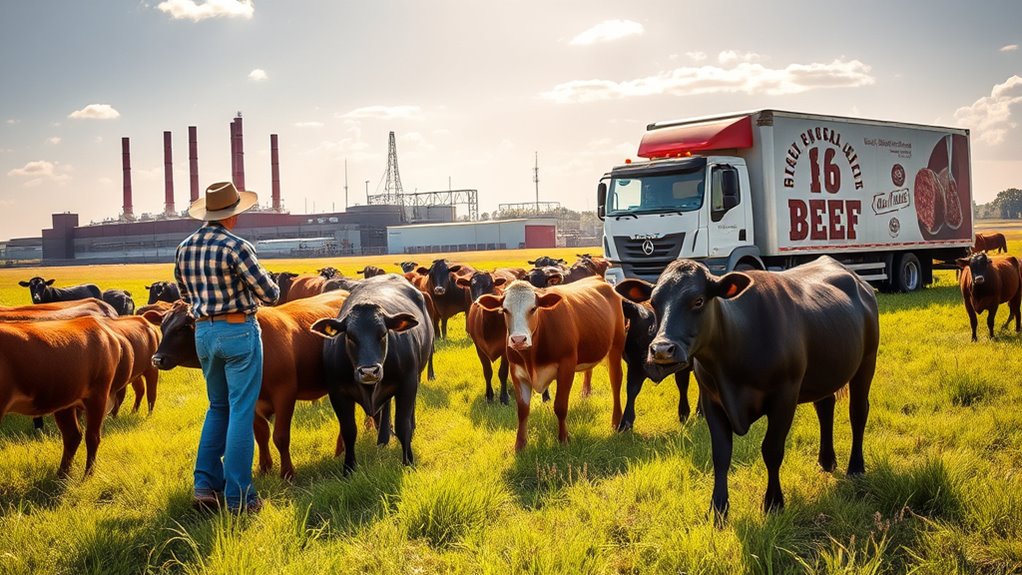
Although you might not always see it, the beef industry plays a huge role in boosting America’s economy. This sector contributes about $167 billion annually, making a significant impact through its wide-ranging economic contributions. With roughly 94 million cattle, cattle production supports a steady food supply, providing high-calorie protein that keeps millions nourished.
You benefit not only from the food but also from the export revenue that reached $9.9 billion in 2021, strengthening the country’s trade balance. The beef industry also drives employment across various sectors, supporting jobs beyond just farming. By sustaining the rural economy and related industries, it accelerates economic activity nationwide.
The Role of Cattle Production in Supporting Rural Jobs
You rely on cow-calf operations and feedlots to provide steady employment in rural areas. These jobs not only support families but also create a ripple effect that strengthens local economies.
Let’s explore how cattle production keeps rural communities thriving.
Employment in Cow-Calf Operations
How does cattle production power rural economies? The cattle industry plays a vital role by creating employment opportunities in ranching and beef cattle management, especially in small operations across rural communities.
When you support cow-calf operations, you support jobs in various sectors. Here’s how:
- Cow-calf farms employ farmworkers, veterinarians, and equipment operators who keep operations running smoothly.
- Small operations, often family-run, provide steady jobs and stimulate local economies.
- Regions like Texas and Missouri rely on these operations for direct employment and related agricultural services.
Feedlot Workforce Contributions
Where do thousands of rural workers find steady employment beyond the ranch? The feedlot workforce plays a pivotal role in the cattle industry, supporting rural employment and beef production.
Large feedlots, which market nearly 88% of fed cattle, rely on skilled labor for livestock management, feeding, and care. Smaller feedlots also provide essential agricultural jobs, maintaining equipment and managing logistics.
These jobs often come with competitive wages, contributing considerably to the local economic impact. By supporting these roles, cattle production strengthens rural communities and job stability.
| Workforce Area | Contribution to Rural Economy |
|---|---|
| Livestock Management | Daily cattle care & feeding |
| Equipment Maintenance | Ensures smooth feedlot ops |
| Industry Logistics | Supports beef production chain |
Rural Economic Multiplier Effects
Although the cattle industry directly employs over a million rural workers, its impact extends far beyond these jobs. You’ll see how cattle production plays a crucial role in supporting rural communities and boosting economic stability through a strong multiplier effect. Here’s why it matters:
- Cattle production drives local economies by creating employment opportunities in farming, processing, and related supporting industries.
- The demand for equipment, feed, transportation, and veterinary care fuels additional jobs in these sectors.
- Income generated from cattle ranching sustains rural households, often serving as a primary or supplemental income source.
Why U.S. Beef Supply Shapes Prices and Food Security
You’ve probably noticed beef prices rising, and that’s closely tied to the shrinking U.S. cattle herd and ongoing drought conditions limiting production. When the herd size drops, supply tightens, pushing prices higher and forcing reliance on imports.
Understanding how these factors and trade influence beef availability helps explain their impact on food security.
Herd Size Impact
Since the U.S. cattle herd has shrunk to its lowest point in 74 years, the beef supply you rely on faces significant pressure. This herd contraction directly affects beef production, causing supply shortages that push beef prices higher.
As beef demand remains strong, cow-calf operations and other animal agriculture sectors must adapt carefully. Here’s why the herd size matters to you:
- A smaller cattle herd means less beef production, tightening the market.
- Beef prices rise, impacting your grocery bills and restaurant costs.
- Rebuilding herds takes about 30 months, so current contractions influence long-term supply and food security.
Understanding these factors helps you see how herd size shapes the beef industry’s economy and your everyday beef availability.
Drought Effects
Shrinking herd sizes aren’t the only challenge tightening the beef supply; drought conditions are making it even harder for producers to maintain and grow their cattle numbers. Drought severely damages pasture conditions, reducing grazing land and forcing ranchers to increase feed costs by hauling hay and water. These higher operational expenses squeeze profit margins, leading many to cull their cattle herd and delay herd rebuilding efforts.
With fewer cattle available, beef production declines, which puts upward pressure on market prices for consumers across the country. Long-term pasture degradation from ongoing drought further limits the ability to expand herds, constraining supply.
As you can see, drought’s impact on beef production directly affects both the availability and affordability of beef, highlighting its critical role in shaping market prices and food security nationwide.
Trade Influence
Although many factors affect beef prices, U.S. trade plays a crucial role in shaping both supply and food security. As the world’s top beef producer and consumer, the U.S. exports over 3 billion pounds annually, influencing international market prices.
You should understand how trade impacts your beef supply:
- Major export markets like Japan, South Korea, and China take 78% of U.S. beef exports; tariffs or disruptions here cause domestic price swings.
- Imports from Australia, Canada, and Brazil help balance supply but also affect market prices and industry competition.
- Changes in trade policies, such as import bans or tariffs, directly impact beef availability and food security in the U.S.
How Beef Exports Influence Global Trade and Markets
When you look at the U.S. beef industry, you’ll see that exports play a crucial role in shaping global trade and market dynamics. Beef exports help maintain strong trade relationships and secure access to key international markets despite trade restrictions.
In 2024, the U.S. exported 3.003 billion pounds of beef, with Japan, South Korea, and China accounting for 78% of export volume. While exports dipped 1% from 2023, they remain essential to the beef industry’s global influence.
| Export Market | Export Volume (Billion lbs) | Trade Impact |
|---|---|---|
| Japan | 1.1 | High demand |
| South Korea | 0.8 | Strong trade ties |
| China | 0.45 | Growing market |
| Canada | Feeder cattle exports | Supply chain partner |
| Mexico | Feeder cattle exports | Regional markets |
Environmental and Regulatory Challenges for Beef Producers
Because environmental standards have tightened, beef producers face increasing regulatory challenges that directly affect their operations. You must navigate complex environmental regulations aimed at reducing manure runoff and controlling air emissions from dense feedlots. These rules demand careful livestock waste management to protect water and air quality.
Tighter environmental standards mean beef producers must carefully manage waste to meet complex regulations and protect natural resources.
Here are three key challenges you’ll encounter:
- Managing compliance costs that rise with stricter environmental oversight.
- Implementing waste management practices that minimize manure runoff and harmful emissions.
- Dealing with limited federal support, especially when natural disasters strike, increasing financial strain.
These challenges force you to balance sustainable practices with economic viability. Staying compliant isn’t just about following the law—it’s essential for protecting your business and the environment in a changing regulatory landscape.
How Innovation Drives Efficiency and Sustainability in Beef
As you embrace new technologies, you’ll find innovation plays a pivotal role in boosting efficiency and sustainability in beef production. Advanced reproductive technologies like embryo transfer enhance genetic progress and herd productivity, making your operations more efficient. Improving feed efficiency through precision feeding and alternative grains helps you reduce resource use and minimize environmental impact.
Frequently Asked Questions
How Does Beef Contribute to the Economy?
Beef boosts the economy by creating jobs in farming, processing, and retail. It generates billions in revenue through sales and exports. This industry also supports related sectors, enhancing overall economic activity.
You benefit from its role in trade and food security every day.
Why Is the Beef Industry Important?
Beef boosts your budget by bringing billions, building jobs, and bolstering communities. You count on its consistent contributions for nutrition, trade, and economic growth.
That’s why the beef industry matters so much to you.
Why Are Beef Cattle so Impactful to the World Economy?
You rely on beef cattle because they drive global trade, support millions of jobs, and provide essential protein worldwide. Their production fuels economic growth, stabilizes markets, and meets international food demands, making them incredibly impactful globally.
What Is the Economic Impact of the Cattle Industry?
You’re looking at an industry that fuels the economy like a roaring engine, generating $167 billion yearly and supporting thousands of jobs.
Your daily beef consumption helps keep this powerhouse thriving across ranching, processing, and export sectors.
Conclusion
You might be surprised to learn that the beef industry contributes over $100 billion annually to the U.S. economy. That’s not just numbers—it means jobs, food security, and global trade opportunities that impact your daily life.
Despite challenges, innovation keeps the industry efficient and sustainable, ensuring beef remains a crucial part of America’s future.
So next time you enjoy a steak, remember the big role beef plays beyond your plate. The beef industry is vital for economic growth, job creation, and maintaining food security in the United States.