Why Does Corned Beef Shrink So Much When Cooked?
When you cook corned beef, it shrinks because heat makes its muscle fibers contract, squeezing out moisture and fat.
Much of this moisture may be water injected during processing, which evaporates or drains away as you cook, causing significant shrinkage. Understanding why corned beef shrinks so much when cooked can help you manage this process better.
Higher cooking temperatures speed up shrinkage, while lower and slower cooking helps retain moisture.
The cut and quality of meat also influence how much it shrinks.
Keep exploring to uncover tips that can help you reduce shrinkage and keep it juicy.
How Corned Beef Shrinks During Cooking
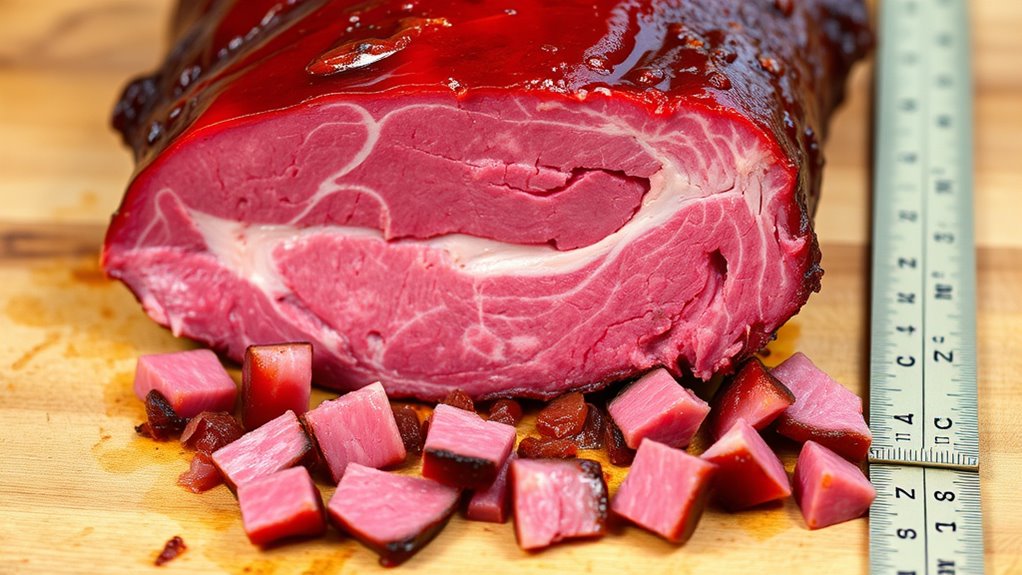
Although corned beef may look bulky before cooking, you’ll notice it shrinks by about 25% to 40% as it cooks. This shrinking happens mainly because of moisture loss and the natural breakdown of muscle fibers.
As heat penetrates the meat, those fibers contract, squeezing out water and fat. The water content in corned beef plays a big role here; when it evaporates or drains away, the meat’s size visibly decreases.
You might also see some fat melting off, adding to the overall shrinkage. Cooking corned beef at lower temperatures for longer periods helps reduce moisture loss, keeping your meat juicier with less shrinkage.
How Water Injection Causes Corned Beef Shrinkage
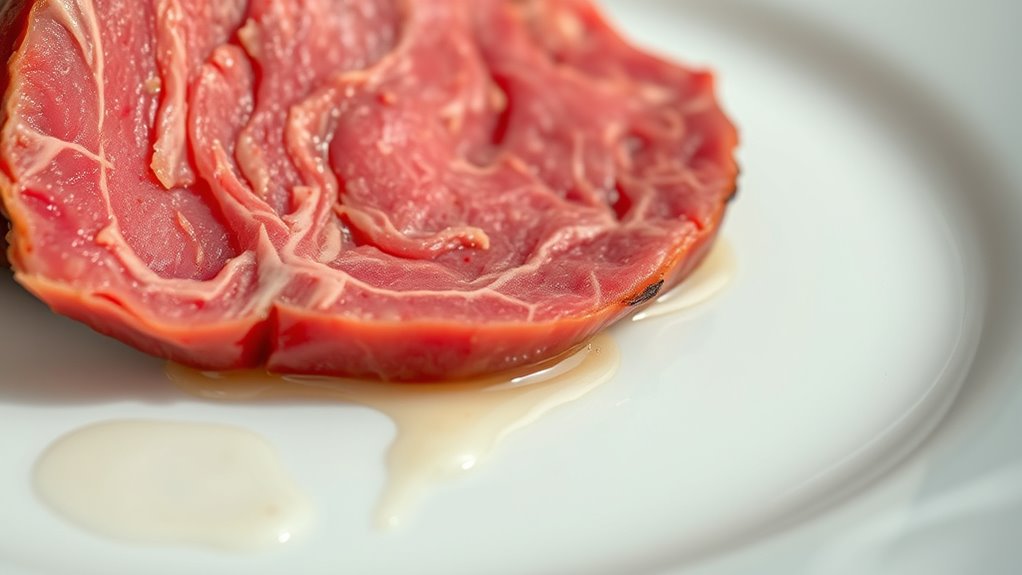
When you buy corned beef, you might not realize that much of its initial weight comes from a watery brine injected during processing. This water injection can add up to 20-35% extra weight, making the meat seem larger before cooking. The brine, containing water, salt, and pickling spices, enhances flavor but also causes significant shrinkage.
As you cook the meat, the injected water leaches out, along with some of the pickling spices, leading to noticeable weight loss and size reduction. This shrinkage happens because the meat loses the extra water it initially held, which was artificially added to boost weight and profit margins.
Understanding water injection helps explain why your corned beef shrinks so much during cooking, despite appearing plump when raw.
How Meat Quality and Cut Affect Corned Beef Shrinkage
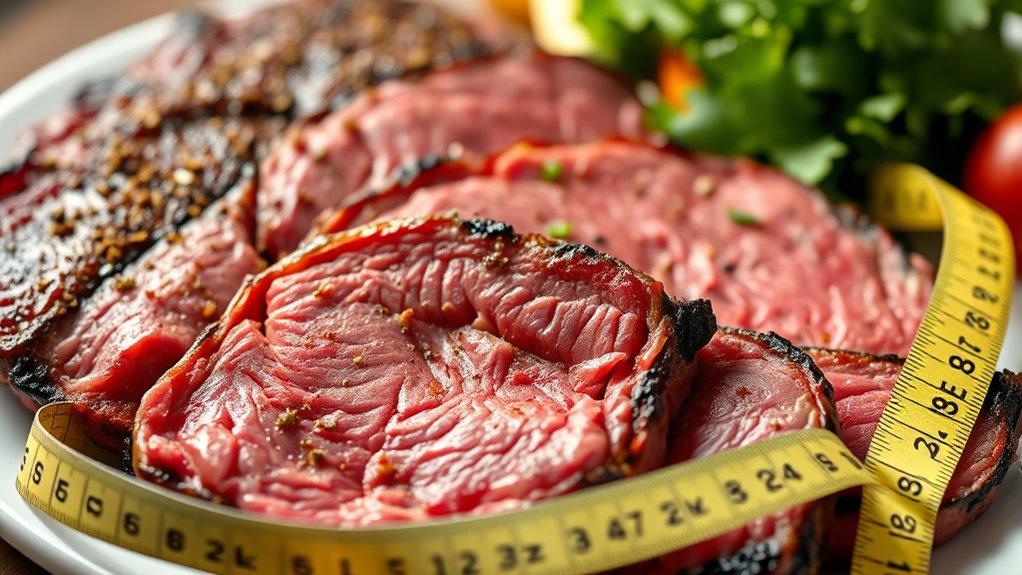
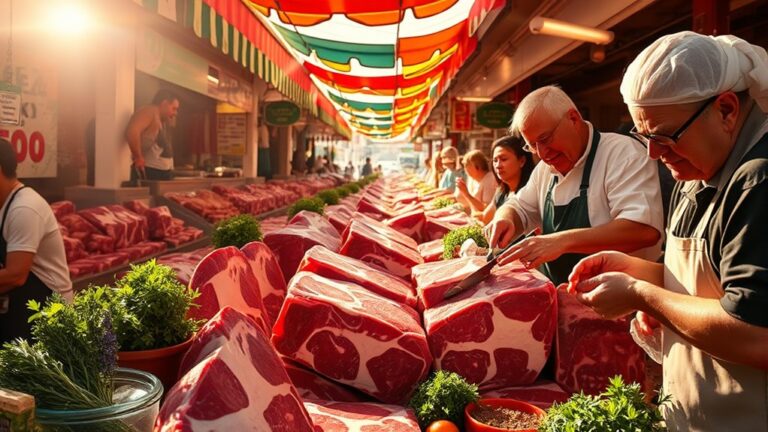
Because meat quality and cut vary widely, they play a crucial role in how much your corned beef shrinks during cooking. When you choose a high-quality corned beef brisket from a local butcher, you’re likely getting minimally processed meat without water injections. This means less added moisture that can evaporate or leak out, reducing shrinking.
In contrast, supermarket corned beef often contains injected water and additives, causing more noticeable size loss once cooked. The cut also matters; brisket with denser muscle fibers and less fat tends to hold up better during cooking.
How Cooking Temperature and Time Influence Shrinkage
Since cooking temperature and time directly affect moisture retention, they play a key role in how much your corned beef shrinks. Higher cooking temperatures, like 180°F, cause more water loss and greater shrinkage.
On the other hand, lower temperatures over longer periods, such as 140°F for 48 hours, help retain moisture and reduce shrinkage by breaking down collagen gently.
| Cooking Temperature | Cooking Time | Effect on Shrinkage |
|---|---|---|
| 180°F | 2-3 hours | High shrinkage |
| 160°F | 6-8 hours | Moderate shrinkage |
| 140°F | 48 hours | Low shrinkage |
| Sous vide 140°F | 24-48 hours | Minimal shrinkage |
| Simmer ~160°F | 6-8 hours | Controlled shrinkage |
Managing temperature and time wisely preserves moisture retention, limiting shrinkage effectively.
Tips to Reduce Corned Beef Shrinkage and Keep It Juicy
To keep your corned beef juicy and reduce shrinkage, you should focus on maintaining moisture throughout the cooking process. Start by adding extra water or broth to the cooking liquid to boost moisture retention. Cook the corned beef at lower temperatures, around 140°F, for a longer time to minimize water loss and keep the meat tender.
Always cover your cooking vessel with a lid or insulative material to reduce evaporation, preserving both weight and juiciness. Choosing high-quality, minimally processed corned beef from a trusted butcher also helps, as it contains less injected water, leading to less shrinkage.
Frequently Asked Questions
What Happens if You Cook Corned Beef Too Long?
If you cook corned beef too long, you’ll end up with dry, tough meat that shrinks a lot. It loses moisture, becomes crumbly, and its flavor and juiciness fade, making it less enjoyable to eat.
What Are the Common Mistakes in Cooking Corned Beef?
You might think overcooking’s the only mistake, but using lean cuts, not rinsing, cooking too hot, or slicing hot all contribute.
Don’t forget to keep it submerged and slice properly to avoid dryness and shrinkage.
What Happens if You Don’t Rinse Corned Beef Before Cooking?
If you don’t rinse corned beef before cooking, you’ll end up with a saltier, overpowering flavor. The leftover curing brine clings to the meat, making the dish excessively salty and masking other subtle flavors you want to enjoy.
How to Stop Beef From Shrinking?
Want to stop beef from shrinking? Choose quality cuts, cook low and slow, and add broth or stock.
Don’t forget to rinse the meat and cover your pot to lock in moisture and keep it juicy.
Conclusion
When you cook corned beef, it shrinks like a wool sweater in hot water—tightening as moisture escapes and proteins contract. Water injection, meat quality, and cooking time all play a role in this shrinkage.
To keep your corned beef juicy and tender, control the temperature, choose good cuts, and avoid overcooking.
With these tips, you’ll enjoy a flavorful, satisfying meal without losing too much size or succulence. Understanding why corned beef shrinks so much when cooked helps you prepare it perfectly every time.