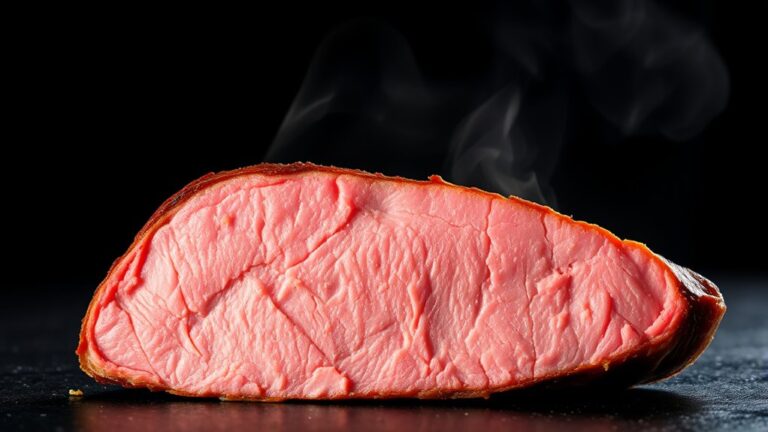
Which Is Better: Flat or Point Corned Beef Brisket?
You’ll find the flat cut corned beef easier to cook and slice neatly, thanks to its lean, uniform shape. It’s perfect if you want a cleaner presentation and faster cooking time. The flat cut is a great choice for beginners looking for simplicity and consistency in their corned beef dishes.
The point cut, with more fat and marbling, delivers richer flavor and juicier tenderness but needs slower cooking and more skill to get it just right. This cut is ideal for those who appreciate a more robust taste and don’t mind the extra effort.
Depending on your taste and experience, one cut will suit you better—keep exploring to uncover all the details.
Choosing between flat or point corned beef brisket really comes down to your cooking style and flavor preference.
What Are the Differences Between Flat and Point Corned Beef?
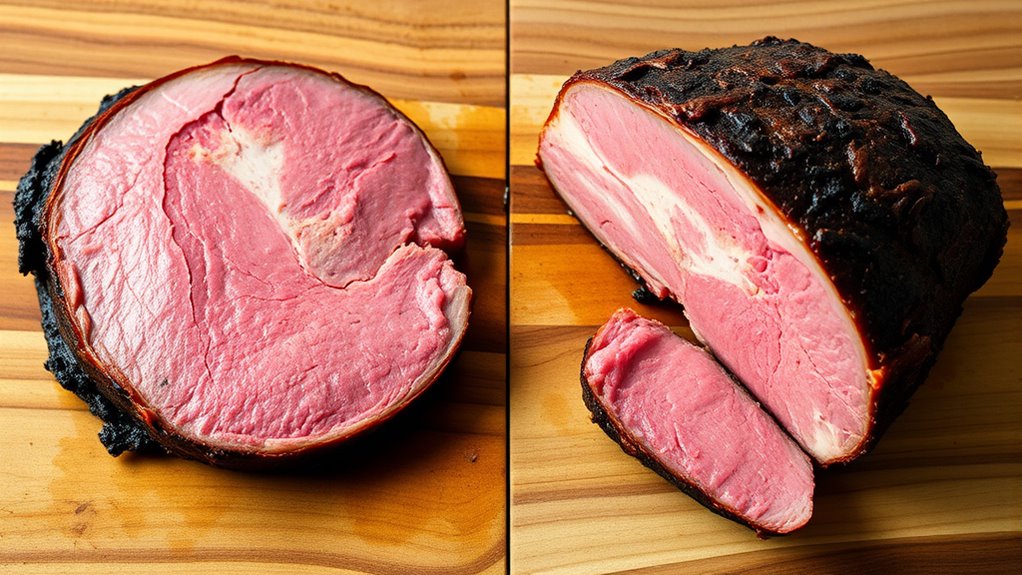
While both cuts come from the brisket, the flat and point corned beef differ markedly in fat content and texture. The flat cut is leaner, with less marbling and a uniform shape that makes slicing straightforward and presentation neat. It has less connective tissue and is typically thinner, so it cooks faster.
On the other hand, the point cut contains more marbling and fat, giving it a richer flavor and increased tenderness, especially when slow-cooked. This fattier section is thicker and juicier, perfect for shredding or braising.
Understanding these differences helps you choose the right cut depending on your cooking style and the texture you prefer in your corned beef. Both come from different parts of the brisket, each offering distinct qualities.
How Does Fat Content Affect Corned Beef Flavor and Texture?
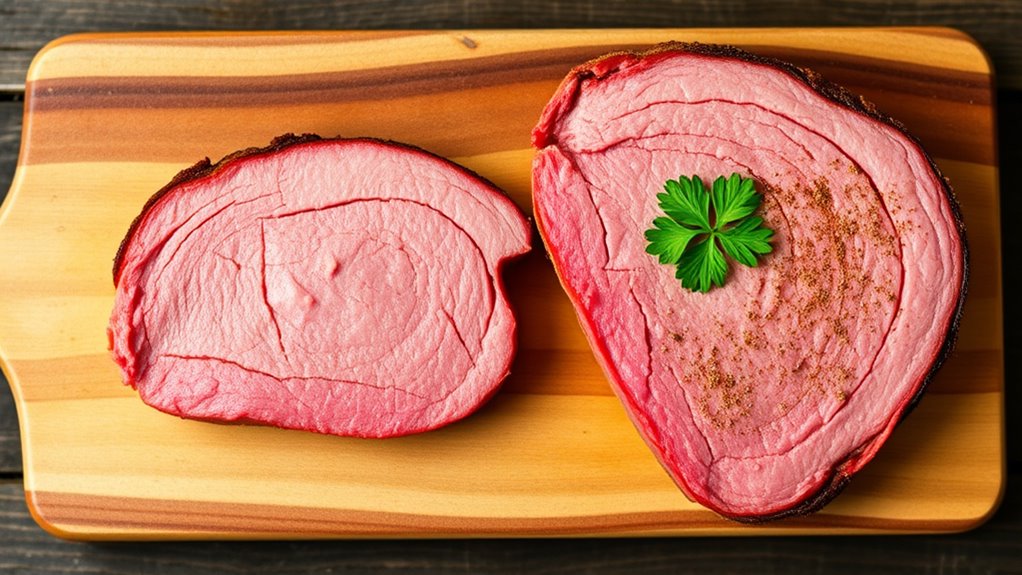
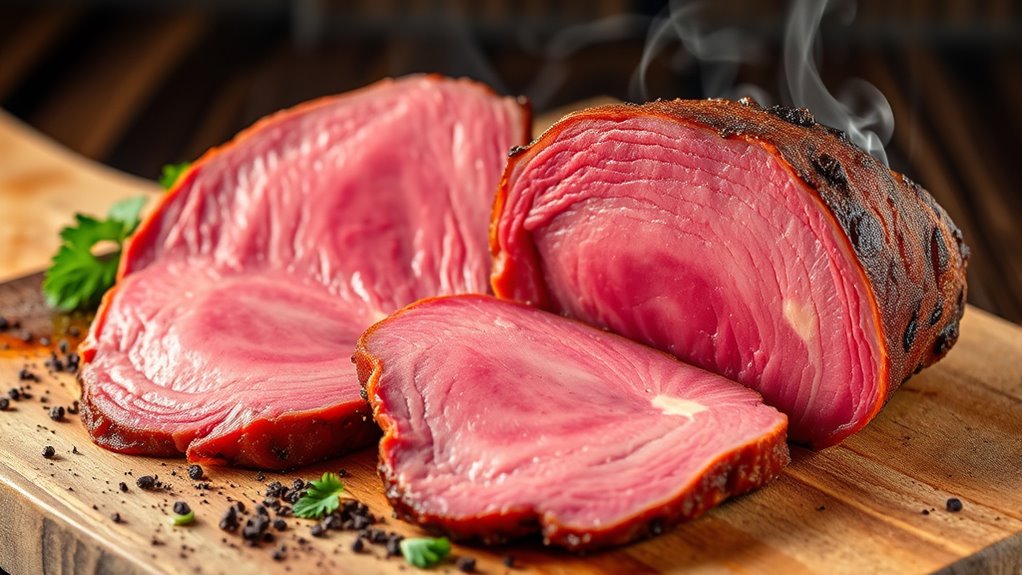
When you cook corned beef with higher fat content, like the point cut, you’ll notice richer flavor and juicier texture. The fat melts slowly, tenderizing the meat and boosting its taste.
Understanding how fat affects flavor and texture helps you choose the best cut and cooking method.
Fat Content And Flavor
Because fat plays a essential role in corned beef, you’ll notice that cuts with higher fat content, like the point, deliver richer flavor and a juicier texture. The marbling of fat throughout the meat melts during cooking, enhancing tenderness and overall flavor.
In contrast, leaner flat cuts can dry out if overcooked, lacking that fat to keep them moist.
Here’s how fat content affects your corned beef experience:
- Fat adds depth to flavor, making each bite more savory.
- Marbling ensures the meat stays tender as fat melts.
- Higher fat content locks in moisture, preventing dryness.
- Lean cuts risk toughness without sufficient fat for juiciness.
Choosing a fattier cut means you get a more flavorful, tender meal every time.
Texture Differences Explained
Although the fat content varies between corned beef cuts, it plays a crucial role in shaping both flavor and texture. When you choose a point cut, its higher fat content and marbling create a tender, juicy texture that many find irresistible. The fat melts during cooking, infusing the meat with richness while the connective tissue breaks down slowly, giving you that melt-in-your-mouth sensation.
In contrast, the flat cut has less fat, resulting in a firmer texture and a drier bite. This leaner cut offers a more uniform slice but lacks the moistness and softness found in fattier cuts. Understanding how fat content and connective tissue influence texture helps you pick the perfect brisket cut to suit your taste and cooking style.
Cooking Impact On Fat
Fat content doesn’t just influence the initial texture of corned beef—it also shapes how the meat cooks and tastes. When you choose a cut with more fat and marbling, like the point, slow cooking melts that fat, tenderizing the meat and infusing it with rich flavor. The leaner flat cut offers a firmer texture and milder taste due to less intramuscular fat.
Keep these in mind:
- Fat melts during slow cooking, adding juiciness and depth of flavor.
- Marbling helps keep the meat moist and tender throughout the cooking process.
- Excess fat can insulate the meat, sometimes extending cooking time.
- Properly rendered fat ensures a moist, flavorful corned beef with a pleasing texture.
Understanding fat’s role lets you pick the cut that best suits your cooking style and flavor preference.
Which Corned Beef Cut Cooks Faster and Why?
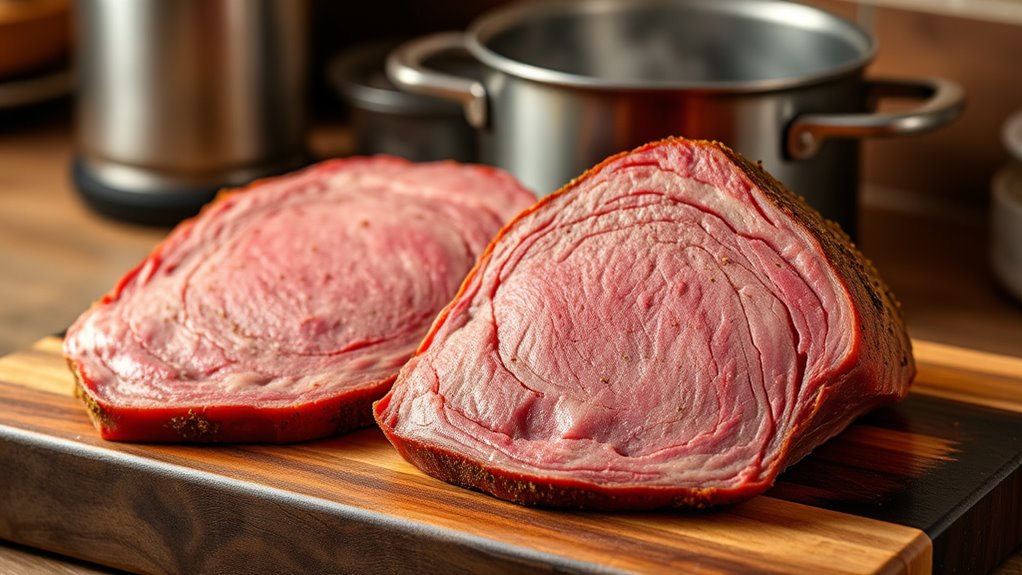
When you cook a flat cut corned beef, you’ll notice it finishes faster because it’s leaner and thinner, letting heat move through quickly.
The point cut takes longer since its extra fat and thickness need more time to soften and render.
Understanding these differences helps you choose the cut that fits your cooking schedule.
Flat Cut Cooking Speed
Because the flat cut has a leaner, more uniform thickness, it cooks faster than the point cut. Its even shape allows heat to penetrate quickly, leading to more consistent, tender results in less time. When you’re aiming for efficient cooking speed, the flat cut is the clear winner.
Here’s why:
- The flat cut’s lean meat heats evenly, avoiding undercooked spots.
- Its uniform thickness means it reaches tenderness quicker.
- Lower fat content reduces insulation, speeding up cooking.
- Typically, it takes 2.5 to 3 hours to cook fully tender, compared to the point cut’s longer time.
Choosing the flat cut means you get a tender, evenly cooked brisket faster without sacrificing quality.
Point Cut Thickness
Although the point cut offers rich marbling and flavor, its greater thickness means it takes longer to cook than the flat cut. You’ll notice that the point cut’s thickness and higher fat content act as insulators, slowing heat penetration during cooking. This marbling, while enhancing taste, requires you to extend the cooking time, often about 30% longer than the leaner flat cut.
The added fat and connective tissue need low-and-slow methods to break down properly, so rushing the process can leave it tough. Because of this, if you want a tender, flavorful brisket, you have to be patient with the point cut. Its thickness and fat content directly influence how long it takes to reach that perfect tenderness compared to the thinner, leaner flat cut.
Fat Content Impact
The thickness and marbling of the point cut directly affect how it cooks, but fat content plays an even bigger role in cooking speed. You’ll notice the point cut’s higher fat content slows heat penetration, requiring longer slow cooking. In contrast, the leaner flat cut cooks faster because it has less fat and marbling to break down.
Here’s why fat content impacts cooking time:
- Fat acts as an insulator, slowing heat transfer in the point cut.
- Slow cooking melts fat gradually, keeping the point cut moist and tender.
- Flat cut’s lower fat content means faster breakdown of connective tissue.
- Overcooking the flat cut risks dryness due to limited fat for moisture.
Understanding fat content helps you pick the cut that fits your cooking time and texture preference.
What Are the Best Cooking Methods for Flat and Point Cuts?
Choosing the right cooking method can make all the difference when preparing flat or point corned beef brisket. Flat cuts, being leaner, roast or slow braise beautifully, preserving their firm texture and allowing neat slicing.
Point cuts, rich in fat, thrive with slow cooking methods like smoking or braising, which tenderize and enhance flavor.
| Cut Type | Best Cooking Method | Key Benefit |
|---|---|---|
| Flat Cuts | Roasting/Braising | Even cooking, firm texture |
| Point Cuts | Smoking/Braising | Melts fat, juicy tenderness |
| Both | Slow Cooking | Optimal tenderness at 195°F–205°F |
How Do You Cook Point Cut Corned Beef for Tenderness?
When you cook point cut corned beef for tenderness, slow and gentle methods work best to break down its rich fat and connective tissues. Using a slow cooker or simmering on low heat helps the meat become tender without drying out. Here’s how to do it right:
Slow, gentle cooking breaks down fat and connective tissue, making point cut corned beef tender and juicy.
- Place the point cut in a slow cooker with water or broth to cover.
- Add aromatics like onions, garlic, and spices to boost flavor and aid tenderness.
- Cook on low for 2.5 to 3 hours, avoiding high heat that toughens connective tissue.
- Let the corned beef rest for 15 minutes before slicing against the grain to maximize tenderness.
This approach guarantees your point cut corned beef is juicy and tender every time.
Which Corned Beef Cut Is Best for Slicing and Presentation?
When you want clean, uniform slices for a polished presentation, the flat cut brisket is your best bet. Its consistent thickness and lean profile make it easier to slice neatly and showcase on the plate.
Let’s explore why this cut shines for both appearance and serving.
Flat Cut Characteristics
Because the flat cut of corned beef is leaner and has a uniform thickness, it’s perfect for slicing and presentation. You’ll find this cut especially handy when you want neat, consistent slices without dealing with excess fat. Its rectangular shape and consistent size make carving straightforward, ideal for serving at the table.
Here’s why the flat cut stands out:
- Leaner meat means quicker cooking and less grease.
- Uniform thickness allows for even slicing every time.
- It absorbs seasonings evenly, giving balanced flavor throughout.
- Perfect for recipes requiring precise slices, like sandwiches or plated dishes.
Choosing the flat cut ensures you get a clean, attractive presentation with reliable texture and taste.
Presentation Advantages
Although both cuts have their merits, the flat cut corned beef stands out as the best choice for slicing and presentation. Its uniform, rectangular shape makes it easy for you to create even slices that look great on any platter.
The flat cut’s leaner composition means each slice is clean and consistent, enhancing the overall presentation of your dish. Because it has minimal marbling, you can achieve precise cuts without ragged edges, giving your meal a professional and polished appearance.
When you serve flat cut corned beef, the uniform thickness ensures every slice maintains its shape and visual appeal. If you want a neat, attractive presentation, the flat cut is your go-to option.
Ideal Slicing Techniques
Since you want clean, even slices that look great on the plate, the flat cut brisket is your best bet for slicing and presentation. Its uniform thickness makes it easier to achieve polished results. When using slicing techniques, here’s what you should keep in mind:
- Always cut against the grain to enhance tenderness and chewability.
- Use a sharp knife to ensure smooth, clean cuts without shredding the meat.
- Aim for uniform thickness in each slice to maintain consistency and visual appeal.
- Slice thinner pieces for a refined texture and better presentation, especially for special occasions.
While the point cut offers more flavor, the flat cut’s leaner profile and consistent surface make it ideal for neat, attractive plating.
What Are the Top Recipes for Each Corned Beef Cut?
When choosing a corned beef recipe, you’ll want to match the cut to the dish to get the best results. The flat cut is perfect for recipes that call for neat, uniform slices, like classic corned beef and cabbage or plated dinners. Its tenderness and shape make it ideal for presentation.
On the other hand, the point cut shines in slow-cooked dishes thanks to its higher fat content and marbling. Use it for juicy pot roasts, braised brisket, or shredded recipes like corned beef hash and sandwiches.
Both cuts fit traditional Irish-American corned beef recipes, but picking flat cut or point cut depends on whether your dish emphasizes slicing or shredding. Choosing wisely elevates your meal every time.
How Does Cost Compare Between Flat and Point Corned Beef?
How much you pay for corned beef often depends on whether you choose the flat or point cut. The cost difference between these cuts can sway your decision, especially if you’re budget-conscious. Here’s a quick rundown of how price compares:
- Flat cut usually costs 10-20% more than point cut due to its leaner profile.
- Point cut is more affordable because of higher fat content and longer cooking needs.
- Flat cuts are often pricier in stores because they’re in higher demand for neat, presentation-ready slices.
- Regional and brand differences affect prices, but point cut generally offers better value for slow-cooked meals.
Choosing between flat cut and point cut often comes down to balancing cost with your cooking style and meal preferences.
Which Corned Beef Cut Should You Choose Based on Your Cooking Skills?
Although both flat and point cuts of corned beef can yield delicious results, your cooking skills should guide your choice. If you’re a beginner, the flat cut is your best bet. It cooks evenly, requires less attention, and is easier to slice for a neat presentation.
You can also trim excess fat on the flat cut to simplify preparation. On the other hand, if you have an advanced skill level, the point cut offers richer flavor thanks to its higher fat content. It shines with slow cooking methods like braising or shredding, which bring out its tenderness.
Why Choose Point Cut for Flavor and Flat Cut for Ease?
Choosing between point and flat cuts comes down to what you value more in your corned beef experience: rich flavor or ease of preparation. The point cut is your go-to if you want a flavorful and tender bite, thanks to its marbling and fat content. On the other hand, the flat cut offers ease of slicing and a neat appearance, perfect for uniform servings.
Here’s why you might pick one over the other:
- Point cut delivers bold, rich flavor due to higher fat.
- Flat cut is leaner, making it easier to slice evenly.
- Point cut stays tender even after long cooking.
- Flat cut’s uniform shape ensures consistent cooking and presentation.
Choose the cut that matches your taste and convenience needs.
Frequently Asked Questions
What Tastes Better, Brisket Flat or Point?
You’ll find the point cut tastes better if you love rich, juicy, and tender meat thanks to its fat.
But if you want leaner, milder flavor with firm texture, the flat cut’s the way to go.
Which Is Better, Flat Cut or Point Cut Corned Beef Brisket?
You’ll find the point cut better if you want rich, juicy flavor and tenderness, especially for slow cooking.
Choose the flat cut if you prefer leaner meat with easy slicing and a neat presentation.
What’s the Best Cut of Corned Beef Brisket to Buy?
You should pick the flat cut if you want leaner meat that’s easier to slice and present.
Choose the point cut for richer flavor and juicier texture, especially if you plan slow cooking like smoking or braising.
Which Is the Most Tender Corned Beef Brisket?
Imagine biting into a buttery cloud—that’s the point cut brisket.
You’ll find it the most tender, thanks to its marbling and fat melting slowly,
keeping every bite juicy and melt-in-your-mouth delicious.
Conclusion
If you want a corned beef experience that’ll blow your taste buds into next week, go for the point cut—it’s packed with juicy, flavorful fat that turns every bite into a savory explosion. The rich marbling makes it perfect for slow cooking and shredding.
But if you’re after simplicity and lean, sliceable perfection, the flat cut’s your best friend. It’s easier to carve and works great for sandwiches or traditional corned beef dinners.
Honestly, choosing between flat vs point corned beef brisket is like picking between a wild party and a cozy night in—either way, you win big with corned beef! Both cuts have their unique benefits, so your choice depends on whether you want bold flavor or lean convenience.