How to Tell If Farm Eggs Are Still Good
To tell if your farm eggs are still good, start by gently inspecting them for cracks or damage. Avoid any eggs that have slime or discoloration on the shell. These visual checks are your first step in ensuring egg freshness.
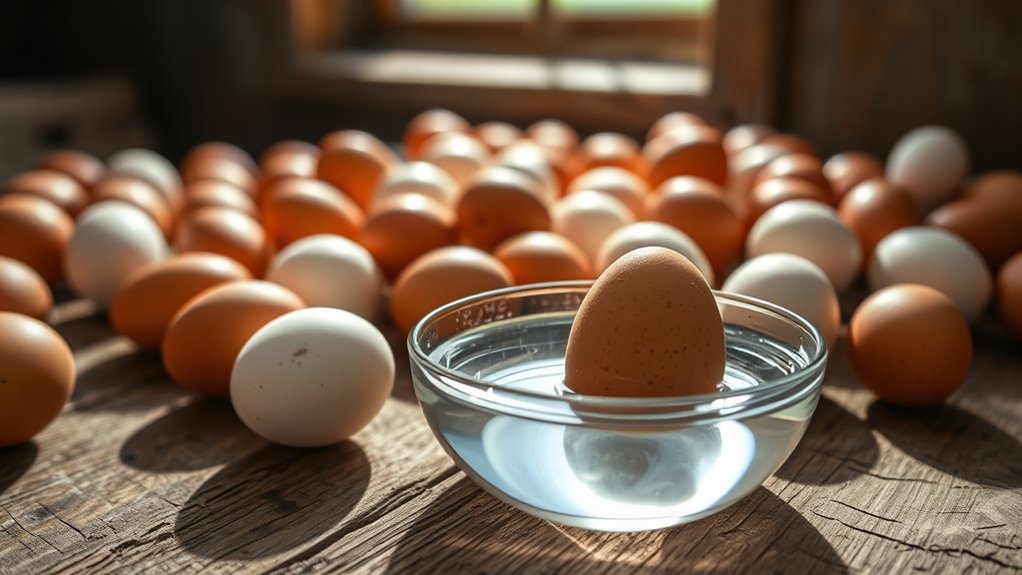
Try the float test by placing eggs in cold water. Fresh eggs will sink and lie flat on the bottom. Older eggs will stand upright, while bad eggs will float to the surface, indicating they should be discarded.
When you crack an egg open, trust your nose. A foul or sulfur-like smell means the egg is no longer good and should be thrown away.
Proper storage and regular collection of eggs help keep them fresh for longer.
Keep checking your farm eggs regularly, and you’ll discover more ways to verify they stay safe and tasty for your meals.
How To Use The Float Test To Check Farm Egg Freshness
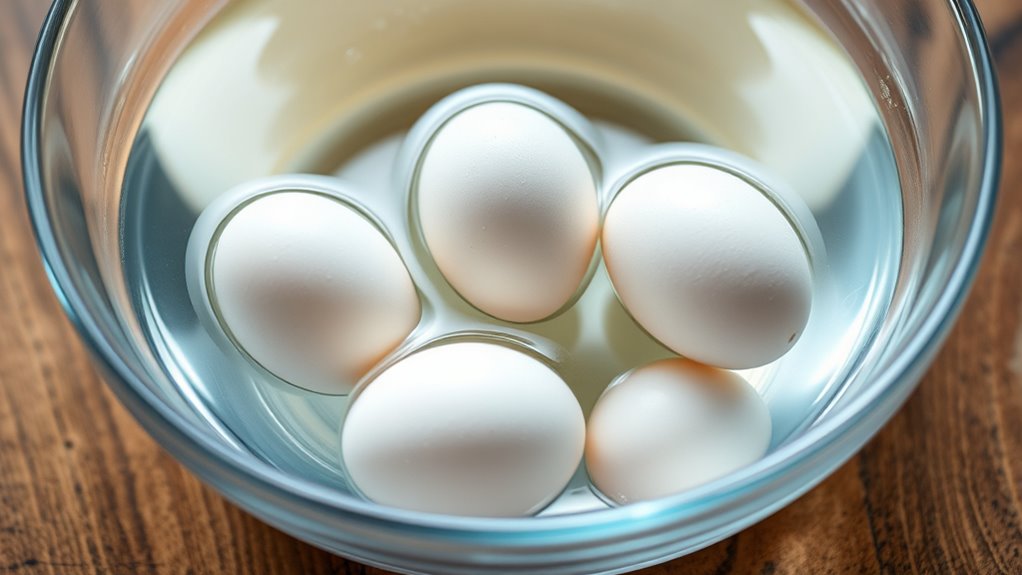
If you want a quick way to check your farm egg’s freshness, try the float test. Fill a glass or bowl with about four inches of cold water and gently place the egg into it. If the egg sinks to the bottom and lies flat on its side, the egg is very fresh and safe to eat.
Eggs still standing upright on their small end are less fresh but still edible; you should use these soon. However, if the egg floats to the surface, it’s too old and should be discarded to avoid spoilage.
How To Identify Cracks And Shell Damage In Farm Eggs
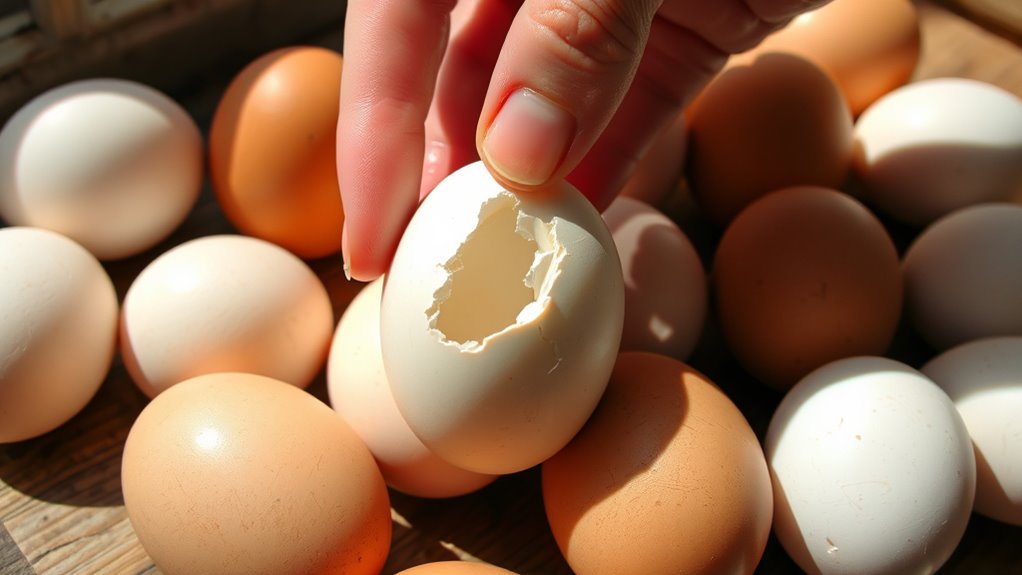
You’ll want to carefully inspect each egg for visible cracks, chips, or hairline fractures before using it. Even small shell damage can let bacteria in, making the egg unsafe to eat.
Recognizing these common types of cracks helps you decide whether to discard the egg or use it immediately in cooked dishes.
Visual Inspection Techniques
When examining farm eggs, closely inspecting the shell is essential to spot any cracks or damage that could compromise freshness. Begin your visual inspection by carefully looking over the eggshell for visible cracks, chips, or hairline fractures that might let bacteria in. Pay attention to irregular textures like rough patches or soft spots, which can indicate thinning or weakness.
Also, watch for discoloration, mold, or slime—signs that the egg may be spoiled or contaminated. Gently hold the egg to feel for any unusual softness or flexibility, as these can reveal internal shell damage. Finally, run your fingers lightly over the shell surface to detect cracks or damage that aren’t immediately obvious but can be felt.
This thorough visual inspection helps ensure your farm eggs are safe and fresh.
Common Crack Types
Although some cracks on farm eggs may seem minor, recognizing the types of shell damage is essential to guarantee safety and freshness. You should carefully inspect eggs for various cracks and shell damage to decide if they’re still good.
Here are common crack types to watch for:
- Hairline cracks: Thin and often barely visible, usually safe unless bacteria enter through them.
- Jagged cracks: Larger and uneven, indicating significant shell damage and higher contamination risk.
- Full-length cracks: Extend from top to bottom, causing leaks of egg white and yolk, showing the egg is no longer intact.
- Multiple small cracks: Increase chances of bacterial entry, making eggs unsafe despite appearing fresh.
Identifying these cracks and shell damage helps you handle eggs properly and avoid potential spoilage.
Impact On Egg Safety
Since cracks and shell damage can let bacteria slip inside, you need to inspect farm eggs carefully before using them. Examine the shell closely for any visible cracks, chips, or hairline fractures. Damaged shells often look rough, uneven, or may have loose fragments, signaling potential contamination points.
Even tiny or microscopic cracks can compromise the egg’s natural barrier, allowing harmful bacteria to enter and increase spoilage risk. If you spot any cracks, it’s safest to discard the egg or cook it thoroughly to kill any bacteria that might have penetrated. Handle eggs gently during inspection, as rough handling can create hidden shell damage you might miss.
Prioritizing careful examination helps you avoid foodborne illness and keeps your farm eggs safe to eat.
How To Spot Spoiled Farm Eggs By Smell And Appearance
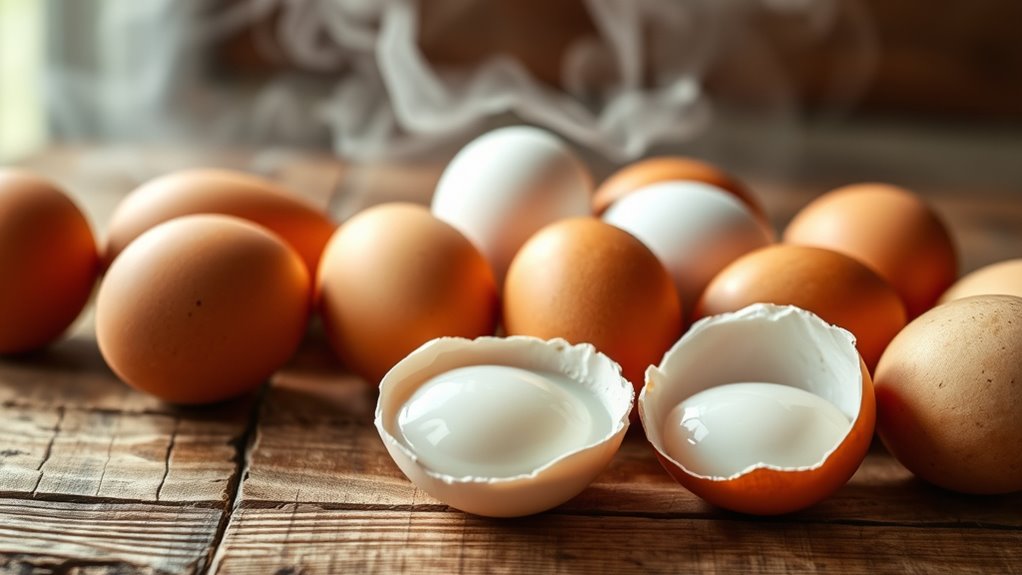
You’ll want to trust your nose first—spoiled farm eggs often give off a strong, foul odor when cracked open.
Next, check the appearance: look for dark spots inside the shell, a slimy or discolored yolk, or cloudy, runny whites.
If any of these signs show up, it’s best to toss the egg to avoid getting sick.
Identifying Off Odors
When you crack open a farm egg, the first thing to check is its smell. Off odors are the most obvious sign that you have a bad egg on your hands. Fresh eggs usually have little to no smell, so any sour or sulfur-like scent is a red flag.
These smells point to bacterial growth and spoilage, making the egg unsafe to eat. If you detect any of these odors, discard the egg immediately. Here’s what to listen for:
- A strong, foul odor that overwhelms the senses
- Sour or acidic smells indicating spoilage
- Sulfur-like or rotten egg scent
- Any unusual, pungent aroma that’s different from fresh eggs
Trust your nose—if it smells off, don’t risk it!
Visual Signs Of Spoilage
Although smell is a key indicator, visual signs can quickly help you spot a spoiled farm egg before cracking it open. Check the shell carefully for mold spots or any discoloration—these are clear warnings of bacterial contamination. If the shell feels slimy or sticky, that’s another strong sign to toss the egg.
Once cracked, look closely at the egg white and yolk; cloudy or abnormal appearance often signals spoilage. Discoloration inside the egg or black and brown patches on the shell also suggest it’s gone bad. Trust your eyes as much as your nose—if anything looks off, it’s safer not to use the egg.
Visual cues help you avoid unpleasant surprises and keep your meals safe.
What Egg White And Yolk Texture Reveal About Farm Egg Age
Since the texture of the egg white and yolk changes noticeably as farm eggs age, you can use these signs to judge their freshness. When you crack open a fresh egg, the egg yolk should be firm, rounded, and sit high, while the egg white remains thick and stays close to the yolk.
As the egg ages, the yolk flattens and becomes fragile, and the egg white thins out, becoming watery and more spread out.
Look for these texture clues:
- Firm, rounded egg yolk indicates freshness
- Thick, viscous egg white hugs the yolk
- Flattened yolk suggests the egg is older
- Watery, cloudy egg white means the egg has lost freshness
These simple observations help you assess your farm eggs quickly and accurately.
When To Discard Farm Eggs Safely
If you notice farm eggs floating in water, you should discard them immediately because this means they’re too old to be safe. Beyond the float test, always check for foul or sulfurous odors after cracking an egg; a bad smell means you should discard eggs without hesitation.
Also, inspect for visible mold, discoloration, or cracks in the shell, as these can let bacteria in, making the egg unsafe to eat. If the egg whites are overly runny or the yolk breaks easily and looks flat, it’s best to discard eggs to avoid any health risks.
Finally, never use eggs past their expiration date. By following these steps, you’ll know exactly when to discard eggs and keep your meals safe to eat.
How Proper Storage Extends The Life Of Farm Eggs
Knowing when to discard farm eggs is important, but you can also extend their freshness by storing them properly. When you handle your eggs right, they’re still good much longer, saving you waste and money.
Proper handling and storage extend farm egg freshness, reducing waste and saving money.
Here’s how to keep your farm eggs fresh:
- Store unwashed eggs at room temperature, but refrigerate washed ones to keep them safe.
- Keep eggs in a cool, steady environment, ideally between 32-40°F if refrigerated.
- Use egg cartons with date labels to track age and use older eggs first.
- Store eggs upright with the pointed end down to preserve the yolk and block air entry.
Why Regular Egg Collection Helps Maintain Farm Egg Quality
While managing a flock, you’ll find that collecting eggs regularly plays a crucial role in maintaining their quality. Regular egg collection prevents hens from developing the habit of eating their eggs, which can cause spoilage and contamination. By gathering eggs multiple times a day, you reduce the chance of cracked eggs piling up and becoming breeding grounds for bacteria.
This frequent harvesting also limits how long eggs are exposed to environmental factors that speed up deterioration. Plus, consistent collection lets you monitor egg freshness closely, so you can quickly remove any damaged or old eggs. Sticking to a regular schedule helps keep your eggs clean, fresh, and safe, ensuring they maintain their quality from coop to kitchen.
How To Keep Your Farm Eggs Fresh Longer
How can you make your farm eggs stay fresh longer? To keep your Farm Fresh Eggs in top condition, proper storage is key. Here’s how to help your eggs last:
- Store unwashed eggs in their original carton in a cool, dry place or the refrigerator to protect them from moisture and odors.
- Avoid washing eggs until just before use; the natural bloom keeps eggs last longer.
- Mark each egg with the collection date so you can use the oldest ones first.
- Perform the float test regularly—eggs that sink and lie flat are freshest, while floating eggs should be discarded.
Frequently Asked Questions
How Do You Know When Farm Eggs Go Bad?
You know farm eggs go bad when they float in water, smell foul, have cracks, or show mold spots.
Also, watery whites or flat yolks mean they’re old, so toss them to stay safe.
Can You Still Eat Eggs That Float?
You can eat eggs that float, but you should crack them open first. If they smell off or look unusual, toss them.
Floating means they’re older, so use them quickly and trust your senses for safety.
When Should You Not Eat a Farm Fresh Egg?
You shouldn’t eat farm fresh eggs if they float, smell foul, show mold or cracks, have runny whites or flat yolks, or if they’ve been unrefrigerated for over three weeks.
Trust your senses to stay safe.
Is the Egg Float Test Actually Accurate?
You can’t just trust eggs to float or sink like some magic trick. The float test gives clues, but it’s not foolproof—always trust your nose and eyes before deciding if farm eggs are still good to eat.
Conclusion
You might think farm eggs spoil quickly, but with simple checks like the float test and inspecting for cracks, you can easily tell if they’re still good. Trust your senses—smell and appearance don’t lie.
Plus, storing eggs properly and collecting them regularly keeps them fresh much longer than you’d expect.
So don’t toss those farm eggs too soon; a little care goes a long way in enjoying their natural goodness safely. Knowing how to tell if farm eggs are still good helps reduce waste and ensures you get the best quality from your eggs every time.