How to Increase Humidity in an Egg Incubator Step by Step
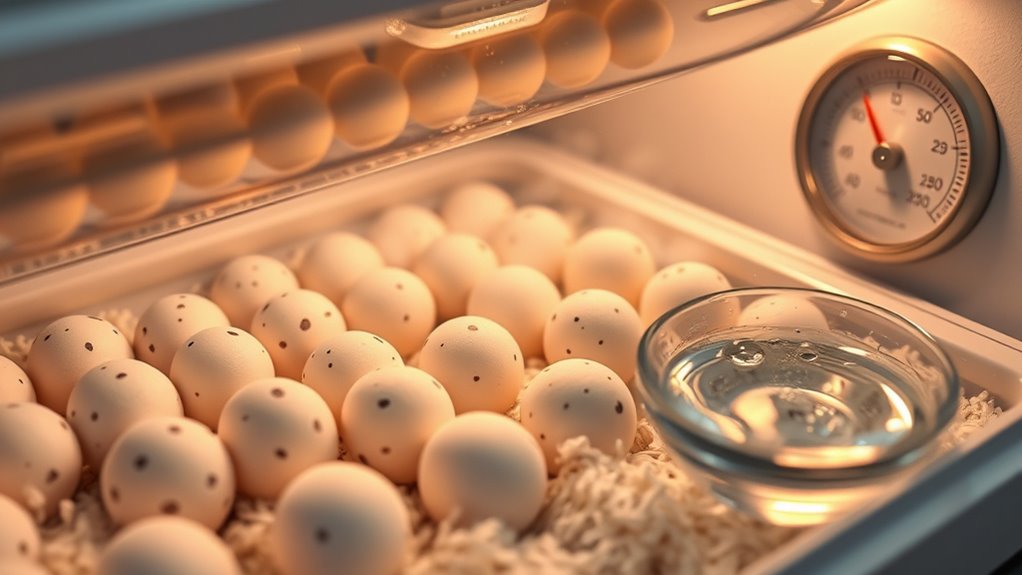
To increase humidity in your egg incubator, start by filling all water trays completely with warm water to boost evaporation.
Adding damp sponges or moist cloths inside can provide extra moisture, enhancing the environment.
Position water trays near heat sources to maximize humidity levels quickly.
Partially close vents to reduce airflow and help retain moisture within the incubator.
Using warm water or steam carefully can offer quick humidity boosts when needed.
Always calibrate your hygrometer for accurate readings and refill water trays regularly to maintain consistent humidity.
Keep a close eye on the conditions inside your incubator. With these steps and further tips, you can fine-tune the perfect hatching environment for your eggs.
Why Humidity Matters for Egg Incubation
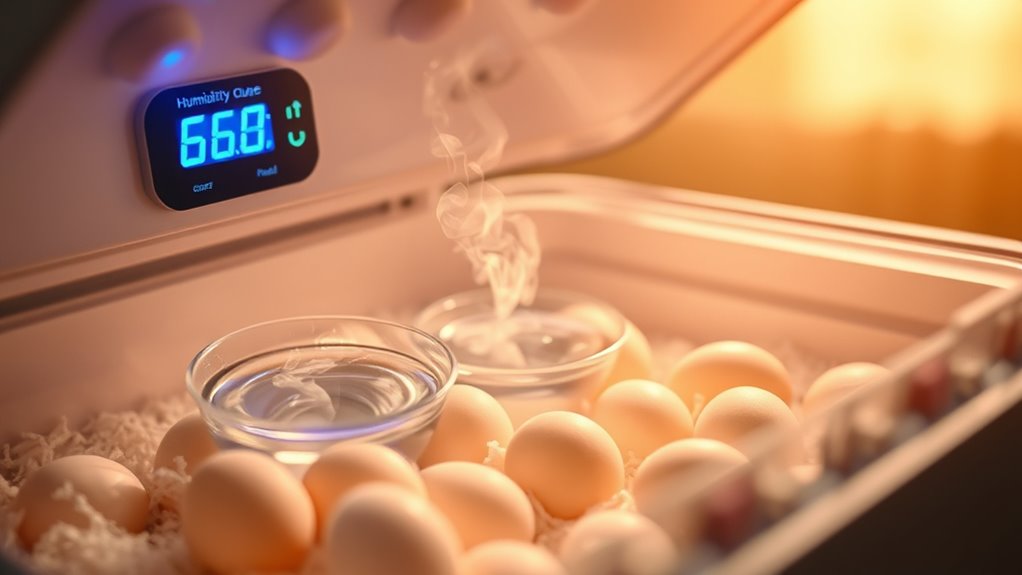
Because eggshells are porous, they naturally lose moisture during incubation, making humidity control essential. You need to maintain proper humidity in your incubator to ensure the chick’s air sac develops correctly.
If humidity is too low, too much water escapes, causing excessive moisture loss and a large air sac, which can lead to hatching difficulties. On the other hand, too much humidity prevents enough moisture from leaving the egg, resulting in a small air sac and potential problems.
The typical moisture loss ranges from 13-15% from setting to hatch, so adding water to your incubator helps regulate humidity levels. By managing humidity carefully, you create the ideal environment for healthy chick development and successful hatching.
Calibrate Your Incubator Hygrometer for Accurate Readings
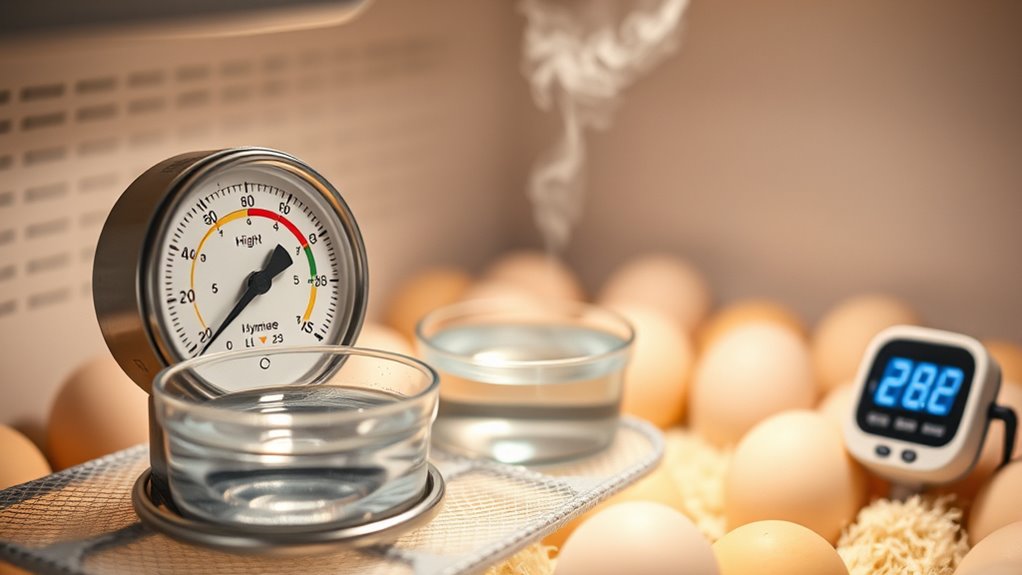
Since accurate humidity readings are essential for successful incubation, you need to calibrate your incubator hygrometer regularly. To do this, compare its reading with a trusted humidity source like a salt test or commercial calibration kit. Place the hygrometer in a sealed container with a saturated saltwater solution at room temperature; it should show 75% relative humidity (RH) if properly adjusted.
Leave it undisturbed for at least 8 hours to get accurate readings. If the hygrometer’s reading differs from 75%, modify its calibration screw or dial per the manufacturer’s instructions. Repeat this calibration process periodically, especially after moving the hygrometer or noticing inconsistent humidity levels during incubation.
This ensures your hygrometer provides reliable data to maintain ideal humidity for your eggs.
Increase Incubator Humidity by Filling Water Trays
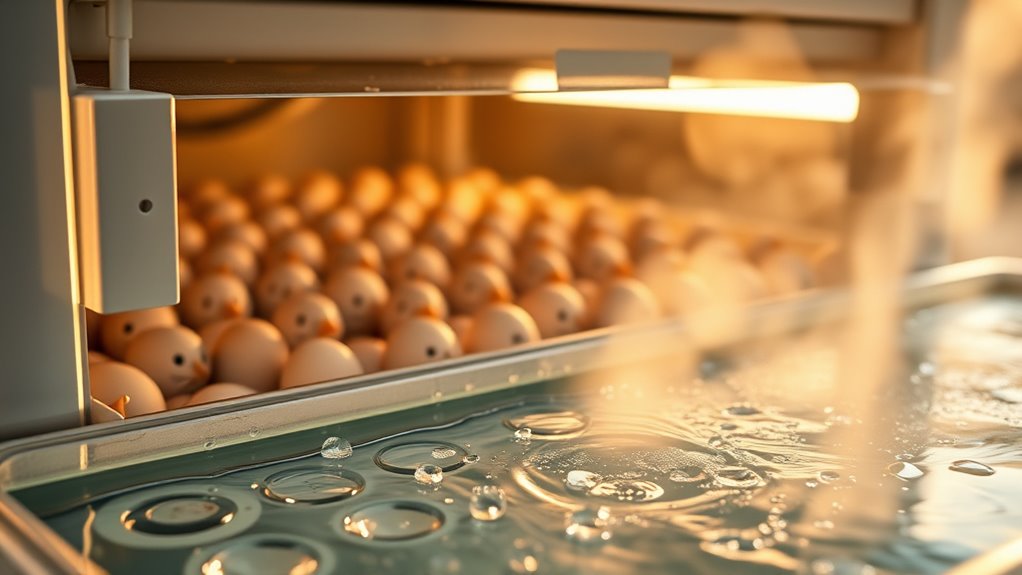
Once your hygrometer shows accurate readings, you can focus on increasing humidity by filling the water trays inside your incubator. Fill all water trays to capacity to maximize the surface area for evaporation, which directly raises humidity levels. Use warm, clean water to ensure consistent moisture release and place the trays on the incubator floor or near the heat source to boost evaporation efficiency.
Regularly check the trays and refill them as needed throughout incubation and hatching to maintain steady humidity. Keeping the water trays clean is essential to prevent contamination and support healthy hatching conditions. By properly filling and maintaining your water trays, you’ll create a suitable humid environment that promotes successful egg development.
Add Sponges or Cloths to Increase Evaporation Surface Area
When you add damp sponges or cloths inside your incubator, you increase the surface area for evaporation, which helps raise humidity levels effectively. Placing multiple damp sponges or moist cloths spread throughout the incubator expands the evaporation surface, boosting moisture in the air.
Make sure the sponges and cloths are thoroughly moist but not dripping—excess water can pool and cause mold. Position them on the incubator floor or near water trays to maximize exposure to warm, dry air, enhancing evaporation.
Check your damp sponges and cloths regularly, re-wetting them as they dry to maintain steady humidity levels throughout incubation. This simple step increases humidity naturally without complex equipment, creating a better environment for your eggs.
Raise Humidity Quickly With Warm Water and Steam
To raise humidity quickly, heat water to create steam and direct it into the incubator.
You can also use a steaming shower or place warm towels nearby to boost moisture levels fast. These simple steps help maintain the ideal environment for your eggs.
Heat Water For Steam
Although raising humidity quickly can be challenging, heating water until it steams offers an effective solution. When you heat water in a kettle or pot until it produces steam, you release extra moisture that can rapidly boost humidity levels inside your incubator.
To do this safely, boil the water outside the incubator, then carefully introduce the warm steam through a vent or opening. Avoid pouring boiling water directly onto incubator parts to prevent damage. Creating steam like this is especially helpful during hatching when incubator humidity drops after opening the lid.
Just remember to closely monitor temperature and incubator humidity after adding steam to avoid excessive moisture or temperature swings. This method helps you quickly restore ideal humidity levels for healthy egg development.
Use Steaming Shower
If you want to raise humidity inside your incubator quickly, using steam from a hot shower can be very effective. Place your incubator near a bathroom or tiled area while running a hot shower to generate warm steam that naturally increases humidity.
Before opening the incubator, turn off the shower to avoid sudden temperature changes, then introduce the steam inside. To retain this moisture, cover the incubator with a towel or cloth, ensuring the humidity stays elevated for longer. Be careful not to let water contact any electrical parts or sensors inside the incubator to prevent damage.
This simple method uses the shower’s steam to rapidly boost humidity, helping create the ideal environment your eggs need during incubation.
Place Warm Towels Nearby
Using steam from a hot shower is a quick way to boost humidity, but placing warm towels nearby offers a simple, controlled method you can manage easily. Dampen a clean, warm towel with water and set it close to your incubator, allowing moisture to evaporate gradually.
This evaporation raises humidity levels efficiently without risking water damage or mold, as long as the towel stays moist but not dripping. To keep humidity consistent, re-wet or replace the towel regularly. Position the towel where airflow is good to help distribute moisture evenly throughout the incubator.
This method lets you quickly adjust humidity levels by controlling how much moisture the warm towels release, ensuring your eggs develop in an ideal environment.
How to Adjust Ventilation to Keep Humidity Steady
When you want to keep humidity steady inside your egg incubator, adjusting ventilation plays a crucial role. You can control humidity by partially closing or sealing vents to reduce airflow, which helps retain moisture. Avoid opening the lid or hatch frequently, especially during critical periods, since this increases ventilation and causes humidity loss.
As you approach the last days before hatching, reduce ventilation further to keep the air moist, aiding chick emergence. If needed, cover vents externally with cloth or plastic to fine-tune airflow without opening the incubator.
Make sure to adjust ventilation gradually and monitor humidity levels closely to prevent sudden changes that might disrupt the incubation environment. By managing ventilation carefully, you’ll maintain consistent humidity and promote healthy development inside your incubator.
Monitor Humidity Levels and Adjust Water as Needed
Although maintaining proper ventilation helps control humidity, you still need to monitor levels regularly using a hygrometer to catch any drops below the ideal range. Keep an eye on the humidity and modify by adding water to the incubator’s water reservoir as needed. Slowly fill water trays or wells to maximize evaporation without flooding.
If humidity dips suddenly, add warm, steaming water to raise moisture quickly without cooling the incubator. You can also place moist sponges or cloths inside to increase surface area for evaporation. By consistently monitoring humidity and adjusting the water reservoir, you’ll maintain the right environment for your eggs.
Don’t forget to weigh eggs every couple of days to ensure moisture loss stays within desirable limits.
Troubleshoot Common Humidity Problems in Incubators
If your incubator’s humidity is consistently low, start by checking for common issues like open vents or insufficient water in the channels.
You might also be missing simple fixes, such as adding moist sponges or increasing water surface area.
Let’s explore how to identify these problems quickly and use effective techniques to boost humidity when needed.
Identifying Low Humidity Causes
Because low humidity can stunt embryo development, you’ll want to pinpoint common causes quickly. Start by checking the water surface area in your incubator; too little exposed water limits moisture evaporation. Ensure water trays are properly placed near heat sources or airflow paths to maximize humidity.
Excessive ventilation or open vents can cause moisture loss, so verify vent settings and seal integrity. Also, consider external factors like dry room air or high temperatures that might lower internal humidity. Don’t rely solely on your incubator’s readings—regularly calibrate your hygrometer to rule out inaccurate measurements.
Common Humidity Control Errors
Low humidity often stems from common mistakes that are easy to overlook. One major error is not providing enough water surface area; small or shallow trays reduce evaporation, hindering effective humidity control. You should also watch how you manage vents—opening the incubator lid or vents too often causes rapid moisture loss.
Vent management is vital, especially since external room conditions can further disrupt humidity levels if vents aren’t sealed properly. Another frequent problem is relying on inaccurate hygrometers or failing to calibrate them, which leads to misreading humidity and improper adjustments.
Effective Humidity Boost Techniques
When you want to quickly raise humidity in your egg incubator, filling all water channels and trays completely is essential to maximize evaporation. This creates a larger surface area for moisture to enter the air. To troubleshoot common humidity problems, try these effective techniques:
- Place damp, warm towels or sponges on the incubator floor or inside water wells to increase moisture release steadily.
- Add hot water to the water wells after opening the incubator to quickly restore humidity without lowering egg temperature.
- Use evaporating cards or cloths in water wells to wick moisture, efficiently boosting internal humidity levels.
Regularly monitor humidity with a calibrated hygrometer and adjust water amounts or moist materials to maintain ideal, perfect, or best conditions. These steps help you increase humidity effectively and keep your incubator environment stable.
Frequently Asked Questions
How Can I Raise the Humidity in My Incubator?
You can raise humidity by filling all water trays, adding damp cloths or sponges inside, placing evaporating cards, and topping water wells with warm water.
Keep a hygrometer handy to monitor and adjust moisture as needed.
What Day to Increase Humidity in Incubator?
You should raise humidity around day 18 or 19, just before hatching begins.
Raising it to 65-75% during the last three days helps soften membranes and ensures your chicks hatch successfully without dehydration.
Can I Use a Sponge to Increase Incubator Humidity?
You can definitely use a sponge to increase incubator humidity. Just keep it moist, not dripping, place it away from heat, and re-wet regularly.
This trick helps keep the air just right, like hitting the nail on the head.
What Causes Low Humidity in an Incubator?
Low humidity in your incubator happens when water levels are too low, vents are open, air flows too much, or the lid isn’t sealed properly.
Also, dry room air and frequent lid openings cause moisture to escape quickly.
Conclusion
You’ve got this! Increasing humidity in your egg incubator isn’t rocket science—it just takes a little attention and the right tweaks.
By filling water trays, adding damp cloths, and adjusting ventilation, you’ll create the perfect cozy environment for your eggs.
Keep an eye on those hygrometer readings like your life depends on it (because, well, it kind of does!).
With these steps, you’ll hatch success faster than you can say “chirp!” Remember, to increase humidity in an egg incubator effectively, consistent monitoring and adjustments are key to providing the best conditions for your eggs.