5 Tips to Improve Egg Production in Chickens
To improve your chickens’ egg production, it is essential to focus on several key factors such as lighting, diet, water, and coop conditions. Providing at least 14-16 hours of light daily helps regulate their laying cycles effectively.
Boost their diet with protein-rich treats and ensure their feed contains 18-20% protein to promote stronger eggshells. Keep fresh, clean water available at all times to support overall health.
Maintain a comfortable, dry coop to reduce stress, which can negatively impact egg laying. Monitor their health closely to catch any issues early.
These simple steps can make a big difference, and exploring more can help you optimize your flock’s output even further.
Why Does Egg Production Vary in Chickens?
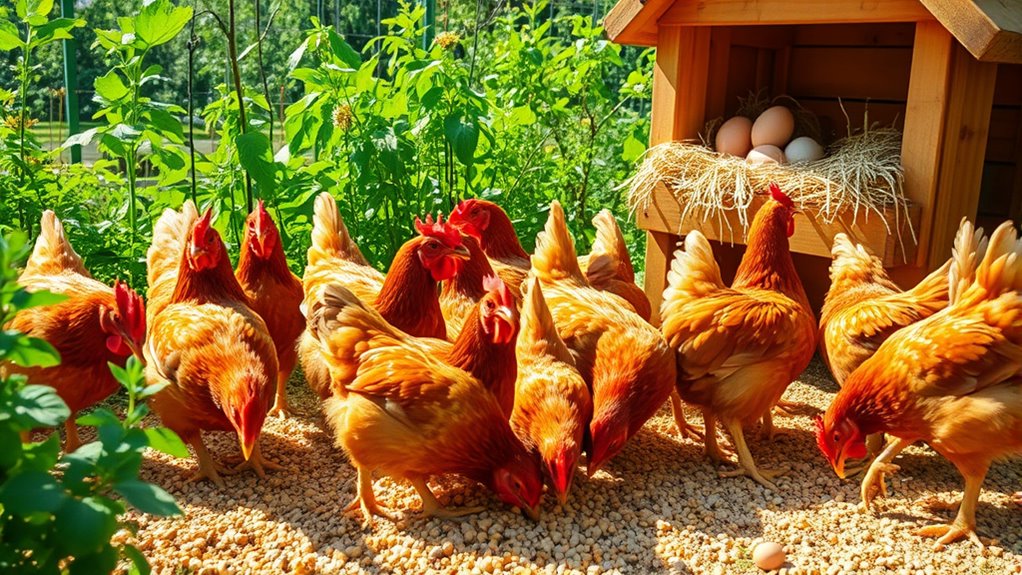
Although you might expect hens to lay eggs consistently, their production varies due to several factors. Light hours play a vital role; hens need around 14-16 hours of daylight to lay regularly, so seasonal variation often causes a drop in egg numbers during autumn and winter. Breed differences also matter—some breeds naturally lay fewer eggs regardless of conditions.
The age of hens impacts production too; after two years, their laying capacity declines. Environmental factors like temperature, stress, and health issues further influence egg production and egg shell quality. Stress, in particular, can reduce both the number of eggs and their shell strength.
Understanding these variables helps you better manage your flock and anticipate fluctuations in egg laying throughout the year.
Provide Optimal Lighting to Boost Egg Production
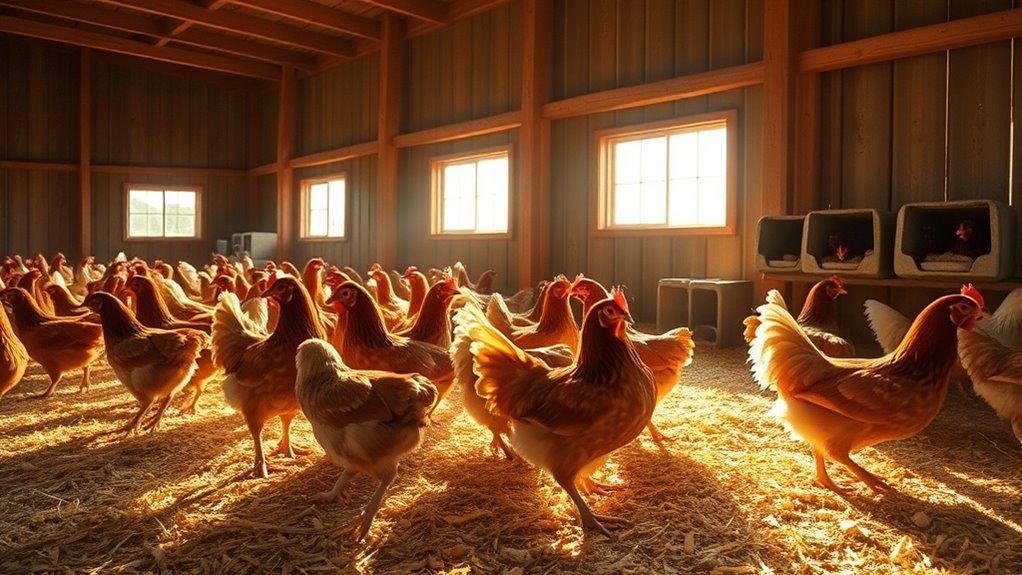
Light plays a major role in how often your hens lay eggs, especially when seasonal changes reduce daylight hours. To boost egg production, aim to provide at least 14 hours of light daily, with 16 hours being ideal. You can use artificial lighting, like a single bulb in the coop, for daylight extension during shorter days.
Consistent light exposure helps regulate your hens’ internal clocks, encouraging regular laying cycles. Be sure to increase lighting gradually to avoid stressing your flock and maintain hen comfort. Also, remember to allow 6-8 hours of darkness each night, so hens get proper rest and avoid fatigue.
Increase Protein Intake to Boost Egg Production
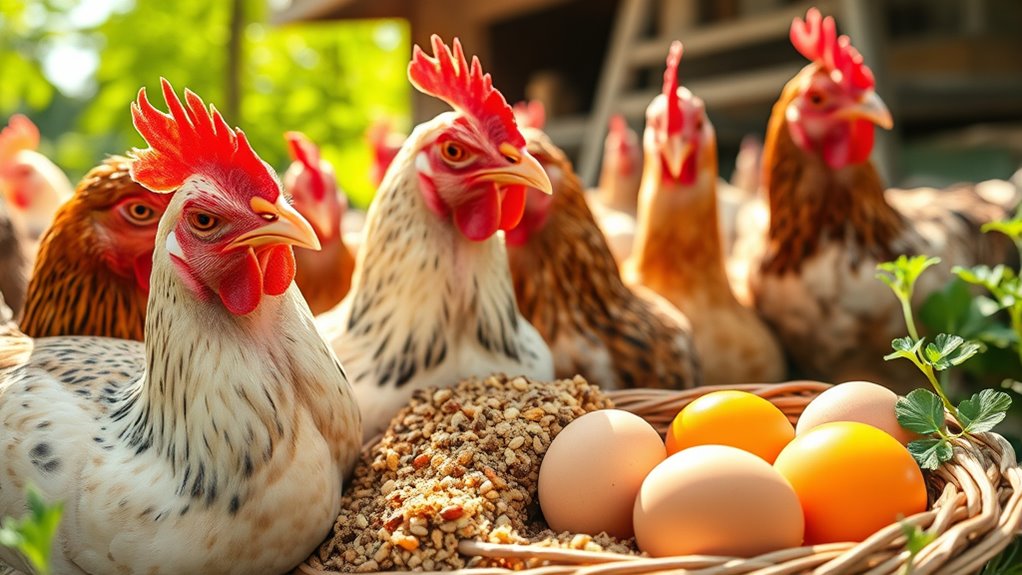
When natural foraging declines in colder months, you need to increase your hens’ protein intake to maintain steady egg production. Cooler temperatures boost their calorie and protein needs, so supplementing their diet is key to supporting chickens egg laying.
To increase protein intake and encourage laying more eggs, try these steps:
- Feed protein-rich treats like meal worms twice daily for essential amino acids.
- Raise dietary protein to 18-20% to strengthen the egg shell and support consistent laying.
- Include sunflower seeds or cooked eggs as tasty, nutrient-dense options.
- Monitor your hens’ diet regularly to ensure they get enough protein for ideal egg production.
This approach helps your flock produce stronger shells and maintain high egg-laying rates, even when natural foraging is limited.
Ensure Fresh Water and a Comfortable Coop
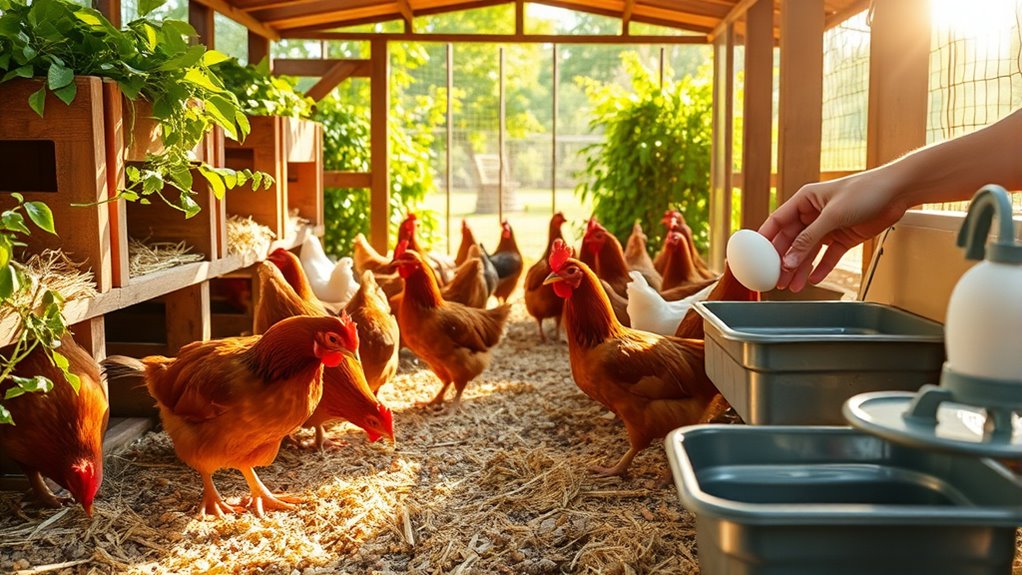
Because hens rely on clean, fresh water to stay healthy and produce eggs consistently, you should provide them with water that’s changed regularly and kept at a comfortable temperature. Using clean water containers prevents bacterial growth and supports hen hydration, which directly impacts egg production.
A cozy coop that’s dry and sheltered encourages hens to drink more and reduces stress, helping maintain ideal chicken health.
| Factor | Importance | Maintenance Tip |
|---|---|---|
| Fresh Water | Supports egg production | Change water multiple times daily |
| Clean Water | Prevents illness | Clean containers regularly |
| Water Containers | Avoid contamination | Use durable, easy-to-clean materials |
| Cozy Coop | Reduces stress | Keep the coop dry and ventilated |
| Hen Hydration | Essential for health | Provide water at a comfortable temperature |
Monitor Hen Health and Stress for Consistent Egg Production
Maintaining your hens’ health and minimizing their stress are essential for steady egg production. To support hen health and promote consistent laying, focus on these key areas:
- Conduct regular health checks, including parasitic control, to catch illnesses early.
- Practice stress management by protecting hens from predators, loud noises, and overcrowding.
- Provide a balanced diet and fresh water to maintain overall environment quality.
- Use behavior monitoring to spot signs like feather pecking or lethargy that may indicate health problems.
Frequently Asked Questions
What Can I Do to Increase Egg Production in My Chickens?
You can boost egg production by providing 16 hours of light daily, increasing protein to 18-20%, offering calcium supplements, keeping their environment clean and stress-free, and giving natural greens like alfalfa to improve health.
Ensuring the chickens have a balanced diet and comfortable living conditions plays a crucial role in maximizing egg output. Regularly cleaning the coop reduces disease risk and stress, which can negatively impact laying.
Additionally, maintaining consistent routines and minimizing sudden changes helps keep your flock healthy and productive.
What Is the 90/10 Rule for Chicken?
The 90/10 rule means you control 90% of egg production through management like lighting, diet, and stress reduction, while genetics only account for 10%.
Focus on care to boost your chickens’ laying potential.
What Can I Give My Chickens to Get More Eggs?
You can give your chickens extra protein like mealworms or sunflower seeds, calcium sources such as crushed eggshells, and occasional treats like beef fat.
Adding apple cider vinegar in their water also helps boost egg production consistently.
What Are 5 Foods That Improve Egg Quality?
You should give your chickens crushed eggshells, oyster shells, mealworms, fresh spinach, and flaxseed. These foods boost shell strength, yolk quality, vitamins, and healthy fats, helping your hens lay better, more nutritious eggs consistently.
Conclusion
By providing ideal lighting, increasing protein intake, ensuring fresh water, and maintaining a comfortable coop, you’ll create the perfect environment for your hens.
By monitoring their health, reducing stress, and staying consistent with care, you’ll encourage steady egg production.
Remember, improving egg production isn’t about quick fixes—it’s about ongoing attention, smart adjustments, and dedicated effort.
Keep these tips in mind, and you’ll enjoy more eggs, healthier hens, and greater satisfaction with your flock’s egg production.