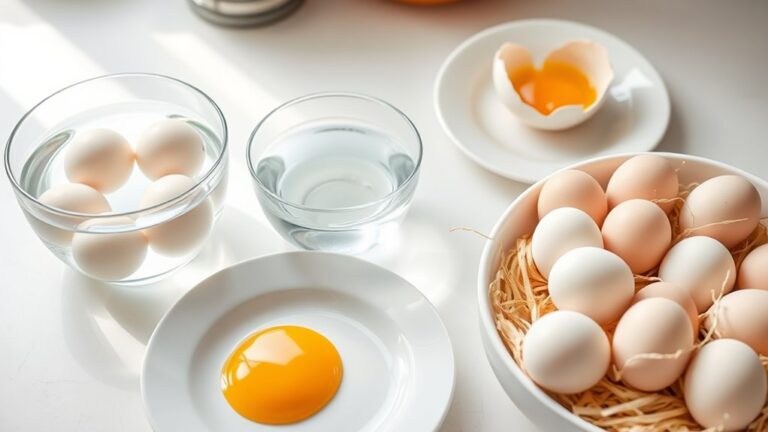
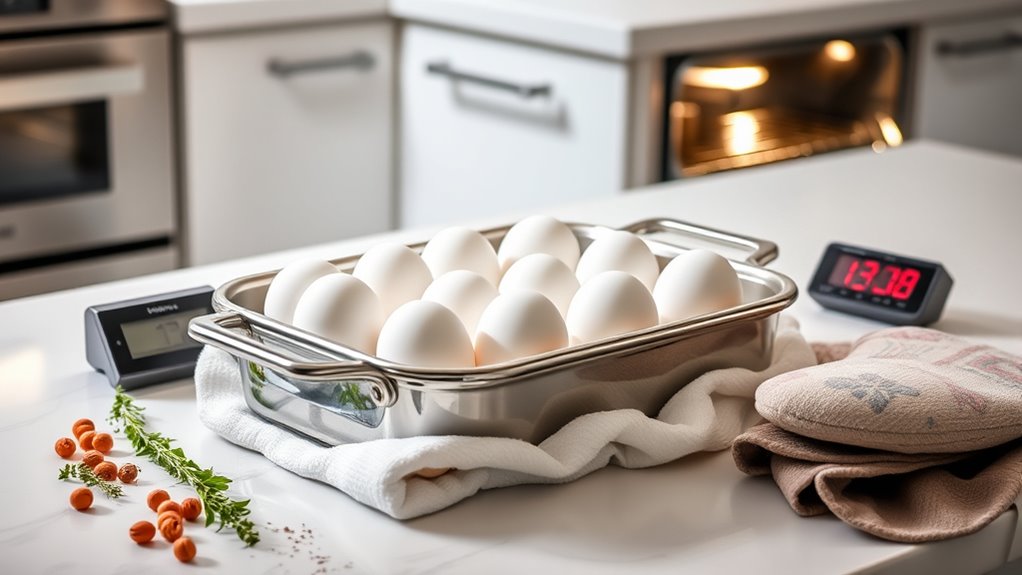
How to Hard Boil Eggs in an Oven in 7 Simple Steps
Preheat your oven to 325°F and place cold eggs in a muffin tin to keep them steady. Baking eggs in the oven is an easy alternative method to boiling and ensures consistent results.
Bake the eggs for about 30 minutes for firm yolks.
Once done, transfer them immediately to an ice water bath to cool for 10-15 minutes. This step stops the cooking process and makes peeling easier.
Gently crack and peel the shells, starting at the wider end. Store unpeeled eggs in an airtight container.
Follow these steps, and you’ll master oven-baked hard boiled eggs in no time.
Preheat Your Oven and Prepare the Muffin Tin for Baking Eggs
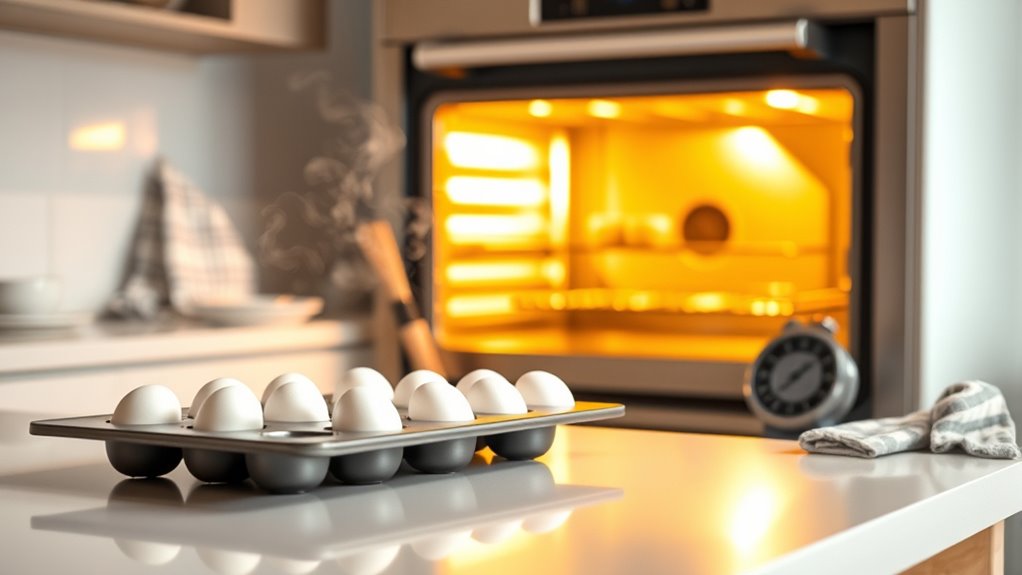
Before you start baking, preheat your oven to 325°F (160°C) to guarantee even cooking. This temperature ensures your eggs cook consistently without overcooking. While the oven warms, prepare your muffin tin—either standard or silicone works well—to hold the eggs securely during baking.
Using a muffin tin prevents the eggs from rolling around, making the process safer and tidier. When you’re ready, place the cold eggs carefully into each muffin cup, making sure they aren’t crowded or stacked. This preparation step is vital to allow heat to circulate evenly around each egg.
Avoid adding water or spray to the tin, as the eggs will bake dry in the oven. Proper preheating and preparation set the stage for perfectly baked eggs every time.
Arrange Cold Eggs Carefully to Prevent Cracking
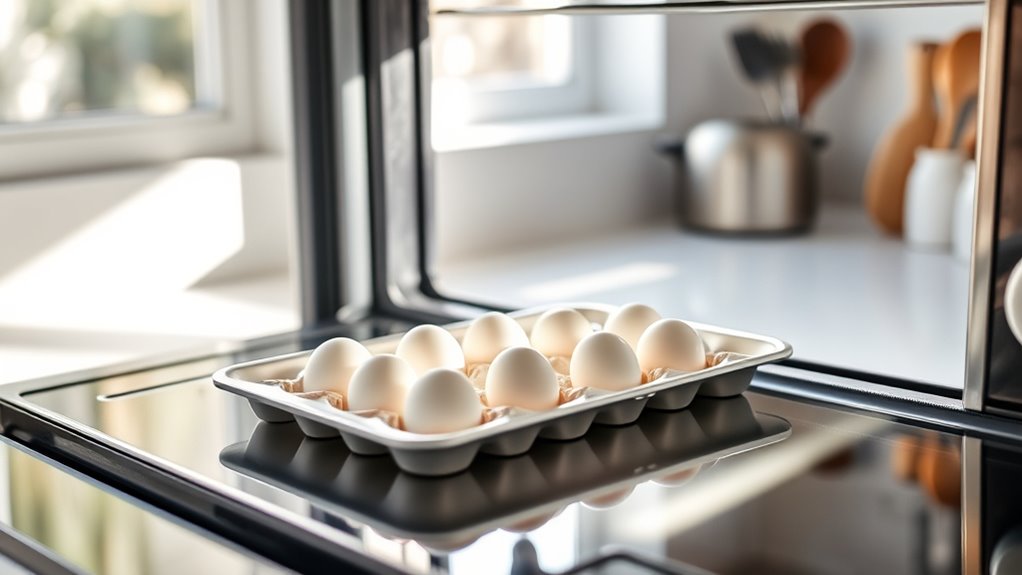
When you place cold eggs into the muffin tin, do so gently to prevent them from bumping into each other and cracking. Use refrigerated eggs straight from the fridge to minimize temperature shock during oven baking, which helps with cracking prevention. Arrange the eggs with enough space around each one, avoiding overcrowding the muffin tin.
This spacing allows for careful handling eggs when transferring the tin into and out of the oven. Always set the muffin tin on a stable, flat surface to reduce vibrations that could cause damage. By handling eggs cautiously and keeping them cold until just before baking, you’ll ensure they remain intact throughout the process, making your oven-baked hard-boiled eggs perfect every time.
Bake Eggs at 325°F for About 30 Minutes
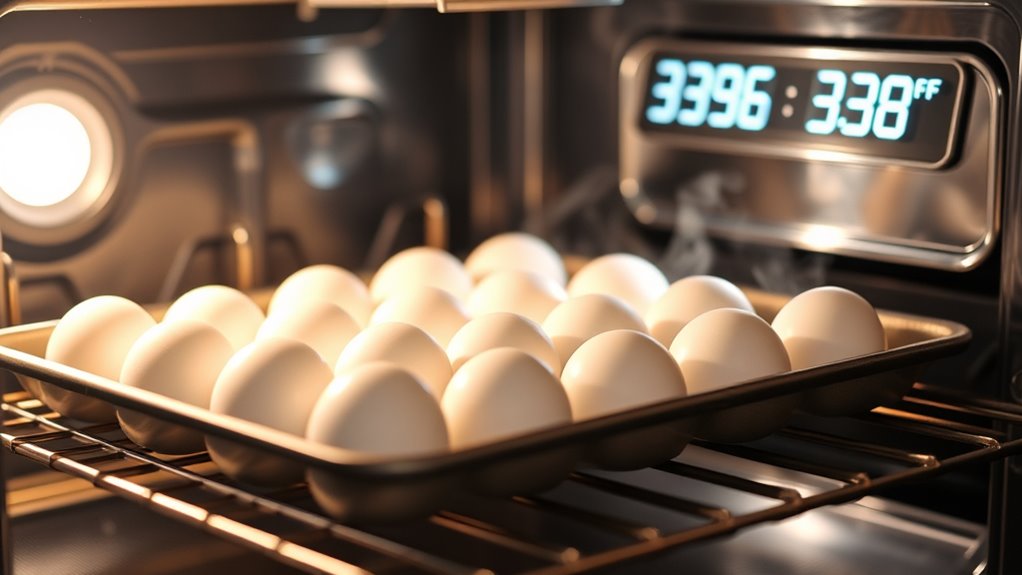
Although it might seem unusual, baking eggs at 325°F (160°C) in a muffin tin guarantees even cooking without the risk of cracking. This oven hard boil method is straightforward and yields perfectly cooked baked eggs.
To bake your eggs at 325°F, follow these steps:
- Preheat your oven to 325°F (160°C).
- Place cold eggs directly into a muffin tin to keep them stable.
- Bake for about 30 minutes to ensure firm yolks.
- Use a timer to monitor the cooking time precisely.
- Once baked, prepare for the next step by readying an ice water bath.
This method produces eggs that are easy to peel and ideal for a variety of recipes.
Cool Oven-Baked Eggs Immediately in an Ice Water Bath
As soon as your eggs come out of the oven, place them in an ice water bath to stop the cooking instantly. This quick cooling helps prevent overcooking, makes peeling easier, and keeps the yolks looking and tasting their best.
You’ll also reduce the chance of cracks by cooling the eggs evenly before handling.
Importance Of Ice Bath
Since oven-baked eggs continue to cook from residual heat, you should immediately cool them in an ice water bath to stop this process. This step is vital for preserving egg quality and guaranteeing perfect texture. When you cool eggs quickly, you prevent overcooking and avoid that greenish ring around the yolk.
An ice water bath also makes peeling eggs easier by contracting the shell.
Here’s why you shouldn’t skip the ice bath:
- Halts cooking instantly, preventing overcooking
- Facilitates smooth peeling by shrinking the shell
- Maintains ideal egg texture and appearance
- Reduces shell cracking during cooling
- Ensures eggs are fully cooled for safe handling and storage
Using an ice water bath is key to mastering oven-baked eggs.
Cooling Benefits Explained
A quick plunge into an ice water bath right after baking stops your eggs from cooking further and makes peeling much easier. By cooling the eggs immediately, you prevent overcooking and avoid that unappetizing green ring around the yolks. The cold temperature causes the shells to contract, which loosen the membrane inside and reduces shell fragments during peeling.
You’ll find that properly cooled eggs peel smoothly and evenly, without cracking or breaking. Immersing the eggs in ice water for 10-15 minutes ensures they cool thoroughly and are ready to handle. This rapid cooling method not only preserves the perfect texture but also makes your peeling process cleaner and more efficient, giving you beautifully cooked eggs every time.
How to Peel Oven-Baked Eggs Easily Without Breaking Them
To peel your oven-baked eggs easily, start by cooling them in an ice water bath for at least 15 minutes to help the shell contract.
Then, gently tap the shell all over and peel from the air pocket end while running cold water to loosen fragments.
Taking your time and peeling slowly will keep the eggs intact and smooth.
Cooling Techniques For Peeling
Plunging your oven-baked eggs into an ice water bath right after baking locks in freshness and makes peeling much easier. This cooling technique contracts the shells, easing the peeling process.
Here’s how to optimize cooling techniques for peeling:
- Place eggs in an ice bath for 10-15 minutes immediately after baking.
- Crack shells gently all over and roll eggs to loosen them before peeling.
- Peel under cold running water to wash away tiny shell fragments.
- Use eggs that are a few days old for smoother peeling, as their membranes separate easier.
- Start peeling from the air pocket end, applying gentle pressure to avoid breaking the egg.
These steps ensure the shells separate cleanly, making your peeling experience quick and frustration-free.
Shell Removal Tips
Although peeling oven-baked eggs can feel tricky at first, following a few simple tips will help you remove the shell smoothly without damaging the egg. Start by cracking the cooled hard-boiled eggs gently all over, then roll them on a hard surface to loosen the shell. Begin peeling from the air pocket end, where the shell typically separates more easily.
Peeling under cold running water can help wash away stubborn shell fragments and reduce the chance of breaking the egg white. For easier shell removal, use slightly older eggs—about a week to 10 days old—as their shells don’t cling as tightly. Apply gentle pressure and be patient during peeling to keep your eggs intact and perfect every time.
How to Store and Use Your Oven-Baked Hard Boiled Eggs
When you finish baking your eggs, storing them properly guarantees they stay fresh and tasty for your next meal. To keep your hard cooked eggs at their best, follow these tips:
- Store unpeeled eggs in an airtight container in the refrigerator to consume within a week.
- Peel the eggs immediately after cooling for easy peeling and maximum freshness.
- Keep peeled eggs covered and consume them the same day to maintain quality.
- Use your oven-baked eggs in salads, sandwiches, or as quick snacks.
- Remember, eggs about one week old peel easier, making future peeling simpler.
Tips and Troubleshooting for Perfect Oven-Baked Eggs
If you want perfectly baked eggs every time, paying close attention to baking temperature and timing is key. Preheat your oven to 325°F and bake the eggs for 20-30 minutes to avoid overcooking, which can cause green yolks and tougher shells. Use a silicone muffin tin to bake eggs uniformly and prevent cracking.
Once baked, immediately transfer them to an ice water bath for at least 15 minutes—this step helps make peeling much easier. For smoother peeling, consider using eggs that are 7-10 days old, as fresh eggs tend to stick more to the shell. If you notice difficulty peeling, double-check your baking time and temperature.
Following these tips will help you achieve consistent, perfectly baked eggs every time.
Frequently Asked Questions
How to Boil an Egg in the Oven?
You preheat your oven to 325°F, place eggs in a muffin tin, and bake for 20-30 minutes. Then, cool them in ice water for 15 minutes before peeling.
This method hard-cooks eggs evenly and easily.
What Temperature Do You Hard Boil Eggs at in the Oven?
You should hard boil eggs in the oven at 325°F. This temperature cooks them evenly and gently, preventing rubbery whites and green yolks.
Bake for 20 to 30 minutes, then cool before peeling for best results.
Is It Safe to Hard Boil Eggs in the Oven?
Yes, it’s safe to hard boil eggs in the oven if you bake them at 325°F for 20-30 minutes.
Then cool them quickly in ice water to prevent bacteria and guarantee they’re fully cooked to 160°F internally.
How Long Does It Take to Boil Eggs at 350 Degrees?
You’d swear you’re baking a tiny egg planet, but it takes about 22-25 minutes at 350°F to hard boil eggs in the oven.
Just pop them in, wait, and enjoy perfectly cooked eggs!
Conclusion
Now that you’ve mastered oven-baking eggs, you might wonder if this method really changes their texture or flavor. Surprisingly, baking at a steady 325°F cooks eggs evenly without the agitation of boiling water, which some say results in creamier yolks and less rubbery whites.
Give it a try yourself—you’ll enjoy the convenience and might just prefer the taste. Once you do, hard boiling eggs in the oven will become your new go-to! This easy oven method not only simplifies the process but also delivers delicious, perfectly cooked eggs every time.