How to Find Out If Eggs Are Fresh in 3 Easy Steps
To check if your eggs are fresh, start by doing the sink or float test: gently place them in cold water—fresh eggs sink and lie flat, older ones stand upright, and bad eggs float. This simple method is a great first step to determine egg freshness quickly.
Next, crack an egg open and see if the white is thick and the yolk round and firm. These characteristics indicate freshness and good quality.
Finally, smell the egg for any foul odors and look for shell cracks or discoloration. Keep exploring these tips to make certain your eggs are always fresh and safe.
How to Use the Sink or Float Test for Egg Freshness
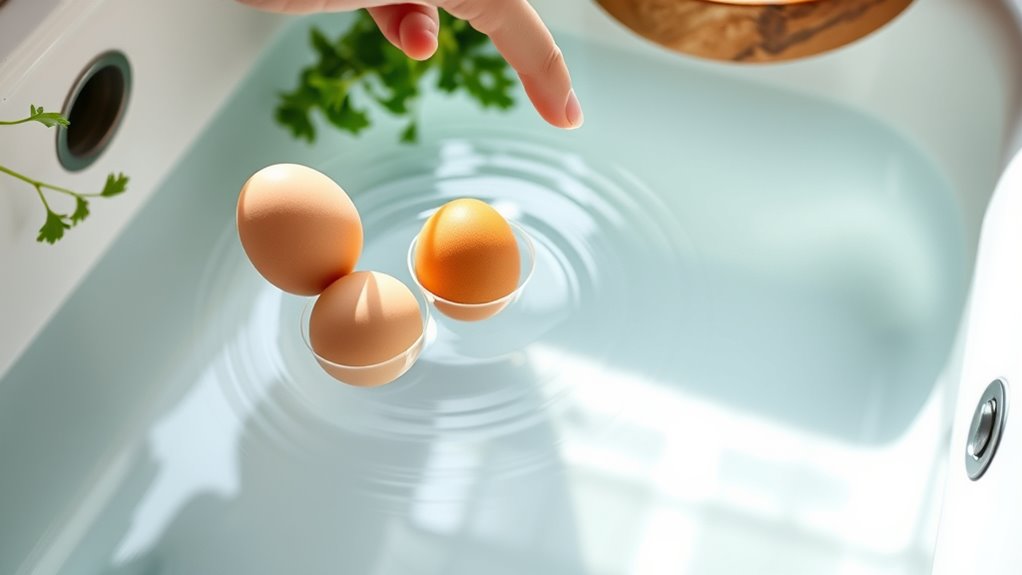
If you want a quick way to check your eggs, try the sink or float test. Fill a bowl with cold water deep enough to submerge the egg completely. Gently place the egg in the water and watch carefully.
If it sinks and lies flat on its side, you’ve got fresh eggs. Eggs that stand upright are a bit older—about 1-2 weeks—but still okay to use. When an egg floats to the surface, it’s time to toss it out.
This simple egg float test helps you gauge egg freshness and eggs age without guessing. To improve accuracy, you can add salt to the water. Remember to store eggs properly in their egg carton inside the fridge to maintain freshness longer.
Using this test saves you from cracking open bad eggs unexpectedly.
How to Read Egg White and Yolk for Egg Freshness
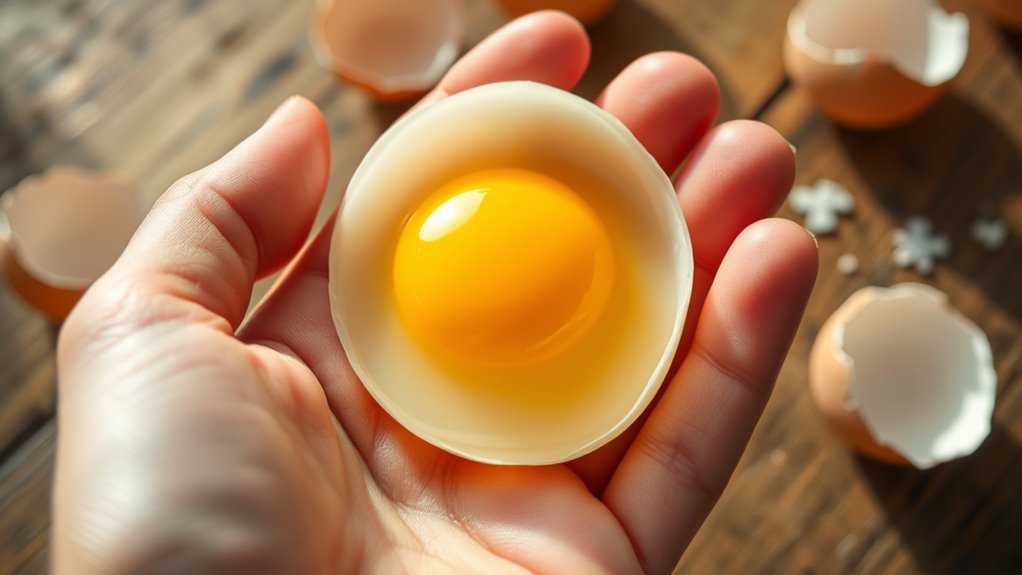
When you crack open an egg, paying attention to the egg white and yolk can reveal a lot about its freshness. Fresh egg whites are thick, slightly opaque, and cling closely to the yolk, showing good consistency. The yolk appears round, firm, and slightly raised, acting as a clear visual cue of freshness.
As the egg ages, the whites become watery, clear, and runny, while the yolk flattens and spreads out more. These changes in appearance and consistency are key indicators in this egg test, helping you assess the egg’s age. While a decline in these qualities signals the egg is older, it might still be safe to eat.
Learning to read egg whites and yolks gives you a quick, reliable way to gauge egg freshness.
How to Spot Spoiled Eggs: Smell and Visual Signs
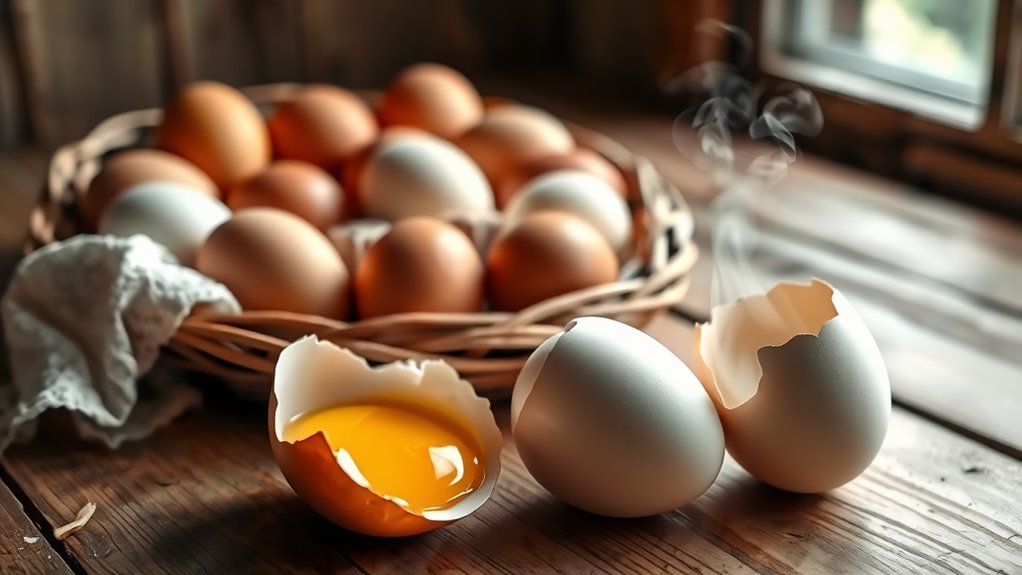
Understanding the appearance of egg whites and yolks helps you judge freshness, but spotting spoiled eggs requires paying attention to smell and visual cues. When examining eggs, check for visual signs like a discolored shell, dark lines, or cracks, as these often indicate bacterial contamination.
Once cracked, a fresh egg features a bright, rounded yolk and thick whites, while spoiled eggs show runny whites and flat yolks. Most importantly, trust your nose: a foul odor or strong sulfur smell signals spoilage.
If you detect any off smell or notice visual signs such as cracks or discoloration, discard the egg immediately. These simple checks prevent foodborne illness and ensure you only use fresh eggs for your meals.
Frequently Asked Questions
How to Identify Fresh Eggs?
You can identify fresh eggs by placing them in cold water—they’ll sink and lie flat.
Crack them open; the yolk should be firm and round, and the white thick. No bad smell means they’re fresh.
What Are the Six Ways to Check the Freshness of Eggs?
You can check egg freshness by doing the sink or float test, cracking it open to examine the whites, smelling for odors, inspecting the shell for cracks or discoloration, observing the white’s firmness, and checking if the yolk stands tall.
What Are 5 Qualities of a Fresh Egg?
To know if an egg’s the real McCoy, check these five qualities: firm, round yolk; thick, slightly opaque whites; egg sinks flat in water;
clean, uncracked shell; and whites hold together without spreading.
How to Do a Float Test on Eggs?
You fill a bowl with cold water, then gently place the egg inside. Watch it carefully: if it sinks and lies flat, it’s fresh; if it stands upright, it’s older but safe; floating means discard it.
Conclusion
Now that you know how to float eggs like little boats, check their whites and yolks, and sniff out any suspicious smells, you’re ready to pick only the freshest eggs. Trust your senses—they’re your best compass in the kitchen sea.
Fresh eggs will brighten your meals and keep you safe, while spoiled ones are like storm clouds you want to avoid. Keep these simple steps in mind, and you’ll always crack open the best!
By following these easy steps to find out if eggs are fresh, you ensure delicious and safe cooking every time. Use the float test, inspect the egg’s contents, and rely on your sense of smell to identify freshness. These practical tips help you avoid bad eggs and enjoy quality meals.