How Old Is a Chicken When It First Lays Eggs?
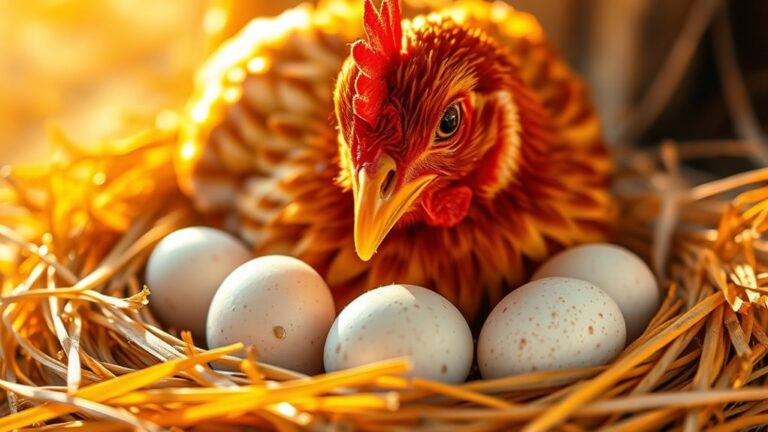
You can expect your chicken to lay her first egg between 16 and 22 weeks old. This timing varies by breed—lighter breeds like Leghorns tend to lay earlier, while heavier ones start later.
Keep in mind, daylight and nutrition also play big roles in when she begins laying. Watch for signs like a bright red comb and nesting behavior to know she’s ready.
Creating the right environment will help her settle in. There’s more to learn about encouraging steady egg laying.
When Do Chickens Typically Start Laying?
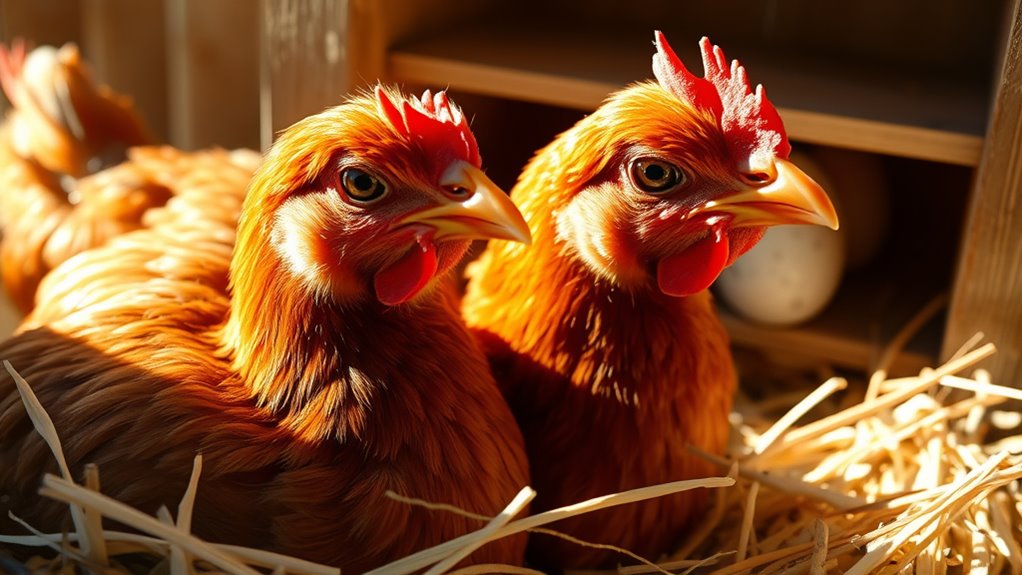
Although the exact age varies, chickens typically start laying eggs between 16 and 22 weeks old. You’ll notice most hens begin laying around 20 to 22 weeks of age, though some can start as early as 16 weeks.
When your chicken approaches this age range, keep an eye out for signs like a swollen, bright red comb and wattles, increased nesting behavior, and squatting when you approach. These clues tell you she’s gearing up to lay her first egg soon.
Factors such as light exposure, nutrition, and housing conditions also influence when laying begins, so providing a good environment can help your hen start laying on time.
Understanding this typical age range helps you prepare for that exciting first egg.
How Breed Affects When Chickens Start Laying Eggs
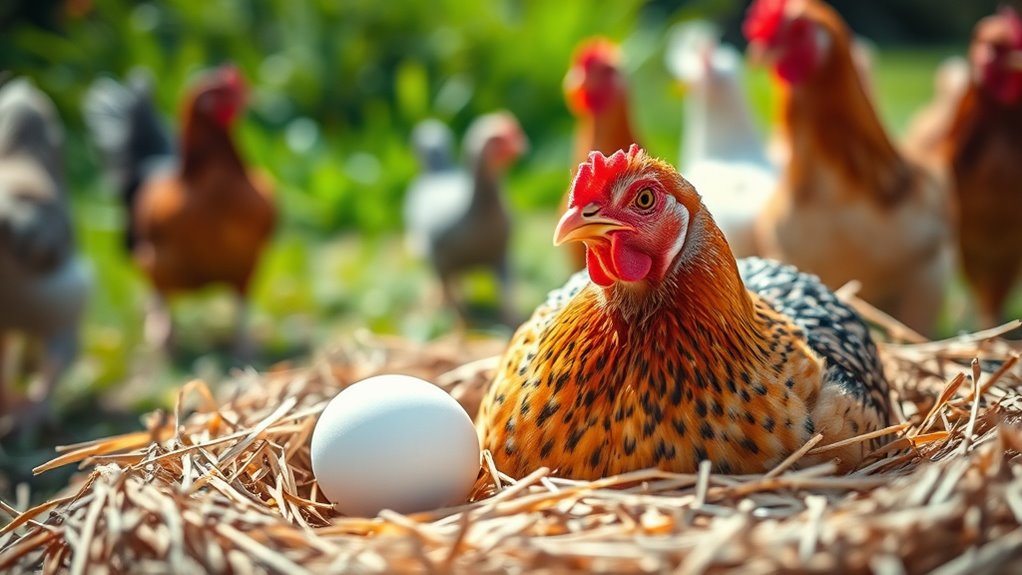
Because different breeds mature at varying rates, when your chickens start laying eggs can depend heavily on their breed. For example, fast-maturing breeds like Leghorns and Rhode Island Reds typically reach their laying age around 17-18 weeks, producing their first egg earlier.
On the other hand, heavier breeds such as Orpingtons and Wyandottes often reach maturity later, usually starting to lay between 20-22 weeks. Some breeds may even take up to 28-32 weeks to begin laying due to slower maturity rates. Understanding your breed helps you predict when to expect that first egg.
While individual variation exists, breed traits strongly influence laying age, so knowing your chickens’ breed gives you a clearer picture of their egg-laying timeline.
How Lighting and Season Affect When Chickens Start Laying Eggs
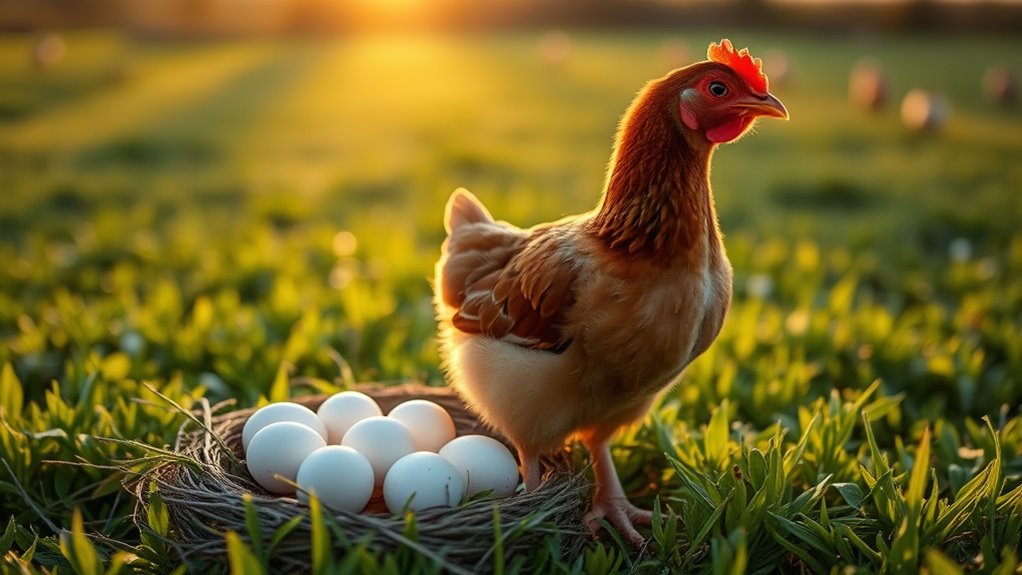
When daylight hours drop below 14, your chickens’ egg production slows or stops altogether. Lighting and season play vital roles in regulating when hens start egg-laying. During fall and winter, shorter daylight hours signal hens to pause laying until spring.
To maintain consistent egg production, you can provide supplemental lighting in the coop, extending daylight hours to 14-16 daily. Using a 25-watt incandescent bulb or energy-efficient lights helps mimic natural day length, encouraging hens to lay even in darker months.
It’s important to increase artificial lighting gradually to avoid stressing your chickens. By managing lighting according to the season, you can guarantee your hens start and continue egg-laying more reliably, regardless of natural daylight fluctuations.
How to Spot When Your Hen Is Ready to Lay
As your hen approaches the age to start laying eggs, you’ll notice several clear signs that show she’s ready. Physical changes like a bright red comb and wattles become more pronounced. She’ll show increased interest in nesting boxes, often sitting or exploring them, signaling preparation for her first egg.
Behavioral cues such as squatting when you approach indicate readiness. You might also observe a rise in egg song vocalizations, a unique sound hens make as they get close to laying.
- Bright red, swollen comb and wattles
- Increased exploration and use of nesting boxes
- Squatting behavior when handled or approached
- Vocal egg songs signaling readiness
- More vibrant facial coloration and appetite
Watching for these signs helps you know exactly when your hen is ready to lay.
Behavioral Signs Your Hen Is About to Lay Her First Egg
You’ll notice your hen spending more time exploring the nesting box as she gets ready to lay her first egg. She might start squatting when you approach, signaling she’s preparing for egg-laying.
Listen for increased clucking or unique egg songs, which often happen just before she lays.
Nesting Box Exploration
If your hen starts spending more time in the nesting box, sitting or squatting quietly, she’s probably getting ready to lay her first egg. This nesting behavior often begins one to two weeks before the first egg appears, with your hen exploring boxes more frequently. You’ll notice signs of laying such as pecking, scratching, and testing the box with her feet.
Physical changes like reddening of her comb and wattles accompany this phase. Sometimes, hens bring in false eggs or golf balls to encourage laying in that spot, showing their instinctual preparation.
Key nesting box exploration signs include:
- Increased time spent sitting or squatting quietly in the box
- Pecking and scratching around the nesting area
- Testing the box with feet
- Carrying fake eggs into the nest
- Swelling and reddening of comb and wattles
Vocalizations And Squatting
Alongside increased nesting box activity, hens often start making distinctive vocalizations known as “egg song” just before laying their first egg. This egg song is a clear behavioral sign that your hen is ready to lay. You’ll also notice squatting behavior—when your hen lowers her body and stays still when you approach or handle her.
This squatting is another important sign indicating she’s preparing to lay. Along with these behaviors, watch for a bright red, swollen comb and wattles, which often accompany vocalizations and squatting. Together, these signs give you a reliable indication that your hen’s first egg is imminent, helping you anticipate this exciting milestone in her development.
What to Expect From Your Hen’s First Eggs
When your hen starts laying, expect her first eggs to be small and sometimes irregular, with soft shells or even double yolks. Most hens start laying between 18 and 22 weeks, but initial eggs can be unpredictable. Don’t worry if laying is sporadic at first; it usually becomes more consistent within a week.
Here’s what to expect:
- First egg size will be smaller than usual
- Shells may feel soft or fragile
- Double yolks can occur occasionally
- Laying age varies by breed and environment
- Nesting behavior and comb changes signal readiness
Understanding these signs helps you anticipate when your hen’s laying age approaches and sets realistic expectations for her initial eggs.
How Nutrition Helps Your Hen Start Laying Eggs
You’ll want to provide your hen with a balanced layer feed rich in protein and calcium to support strong eggshell development.
Adding extra calcium sources like oyster shells can make a big difference in egg quality. By focusing on proper nutrition, you help your hen start laying healthy eggs on time.
Balanced Layer Feed
Although hens start laying eggs around 16 to 20 weeks, their nutrition plays a crucial role in this process. Feeding your hen a balanced layer feed ensures she gets the right nutrients to support healthy egg production as she reaches the hen’s age for laying.
Switching from starter to layer feed at the right time helps provide:
- A complete mix of vitamins and minerals essential for egg development
- High-quality protein for strong egg formation
- Adequate calcium sources like oyster shells for durable eggshells
- Nutrient balance to maintain consistent egg production
- Support to help your hen start laying promptly and stay healthy
Calcium and Protein
Since calcium and protein directly impact your hen’s ability to lay strong, healthy eggs, providing the right amounts is essential as she approaches laying age. You’ll want to offer a layer feed containing 16-20% protein to support her growth and reproductive development.
Adequate calcium sources, like oyster shells or crushed eggshells, are crucial for strong eggshell formation and encourage timely egg production. If your hen’s diet lacks sufficient calcium or protein, she might start laying late or produce weak, soft eggs.
Around 16-20 weeks, shift her from starter to layer feed to guarantee she gets the nutrients needed. Consistent nutrition with balanced calcium and protein helps her develop a healthy reproductive system and promotes regular, quality egg production.
How to Prepare Nesting Boxes for First-Time Layers
When preparing nesting boxes for first-time layers, focus on creating a comfortable and inviting space that encourages hens to settle in and lay eggs. Providing privacy is key; hens prefer a quiet, dark corner for their first egg to feel secure. You want the nesting boxes to be uniform and cozy so they’ll recognize and reuse the same laying site.
Creating cozy, private nesting boxes helps first-time layers feel safe and encourages consistent egg laying.
Here’s how to prepare them effectively:
- Create one nesting box per four hens, about 12 inches square.
- Line boxes with straw or shavings for comfort.
- Position boxes in a quiet, private corner of the coop.
- Keep nesting areas clean and dry, removing soiled bedding regularly.
- Manage access if hens favor specific boxes to reduce stress and egg breakage.
This setup helps your hens feel safe and ready to lay.
Tips to Encourage Consistent Egg Laying
Setting up comfortable nesting boxes lays the groundwork, but encouraging your hens to lay eggs consistently requires attention to several other factors. Ensure your hens get 14-16 light hours daily to stimulate laying eggs. Provide balanced nutrition rich in calcium, like oyster shells, to strengthen eggshells.
Keep nesting areas clean, dark, and quiet to reduce stress and support steady laying.
| Factor | Tip |
|---|---|
| Light Hours | Provide 14-16 hours of light |
| Nutrition | Feed balanced diet with calcium |
| Environment | Keep nesting boxes clean and dark |
| Stress Control | Minimize noise and disturbances |
Frequently Asked Questions
What’s the Youngest a Chicken Can Lay an Egg?
The youngest a chicken can lay an egg is around 16 weeks old. If you provide ideal nutrition, lighting, and care, your hen might start laying early, especially if it’s a fast-maturing breed like Leghorns.
Can You Eat the First Chicken Egg?
You might be surprised, but yes, you can eat that very first chicken egg. It may look odd or have a softer shell, but if you clean and cook it properly, it’s perfectly safe and tasty.
Is a Rooster Necessary for Chickens to Lay Eggs?
No, you don’t need a rooster for hens to lay eggs. They’ll produce unfertilized eggs regularly on their own.
A rooster’s only role is to fertilize eggs if you want chicks to hatch from them.
How Do I Know My Hen Is Ready to Lay Eggs?
Picture a queen preparing her throne—your hen’s bright red comb, nesting curiosity, and gentle squats signal she’s ready to lay eggs.
Listen to her songs; they’re her royal announcement of impending arrival.
Conclusion
You’ll be on the edge of your seat, heart pounding, when your hen finally lays her first egg—it’s like witnessing a tiny miracle! With the right breed, lighting, nutrition, and cozy nesting box, you’re practically guaranteeing a superstar layer. Don’t be surprised if you become obsessed, checking the coop every five minutes.
That first egg isn’t just a milestone; it’s the beginning of a beautiful, egg-filled adventure you’ll never forget! Knowing how old a chicken is when it first lays eggs helps you prepare and provide the best care. This knowledge ensures your hen stays healthy and happy as she starts her egg-laying journey.