
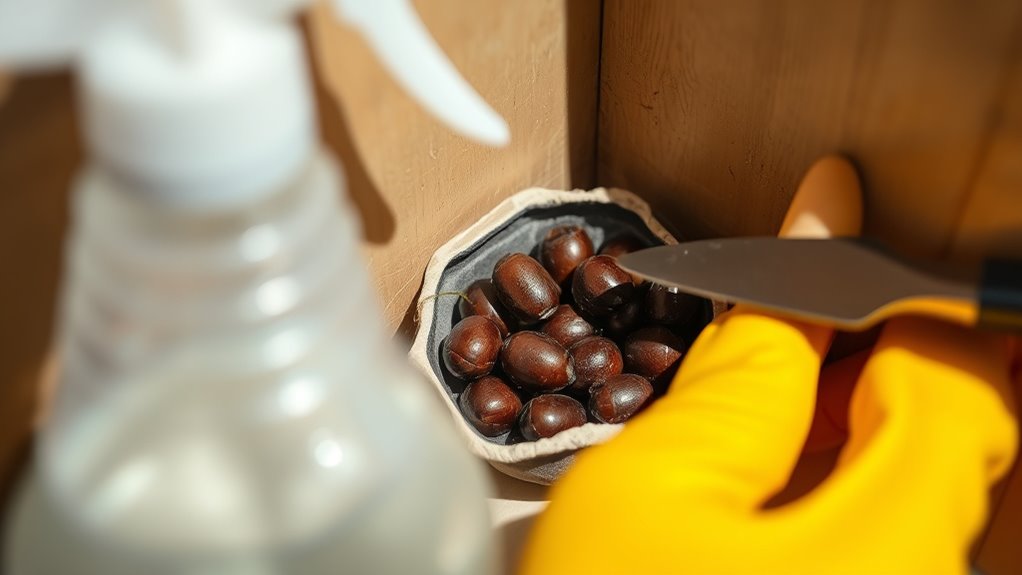
How to Get Rid of Roach Eggs Step by Step
To get rid of roach eggs, start by spotting small, brown oval egg cases in dark, moist areas like behind appliances or under sinks. Identifying these egg cases early is crucial for effective roach control.
Wear gloves, carefully collect and crush or soak the eggs in soapy water, or vacuum them up and dispose of the bag outdoors.
Apply boric acid or insect growth regulators to kill eggs and prevent hatching. These treatments help break the roach life cycle.
Seal cracks and clean clutter to stop new eggs from being laid.
If this sounds tough, there are deeper control methods you can apply.
Consistent monitoring and treatment will help ensure roach eggs are eliminated from your home.
How to Spot Roach Eggs in Your Home
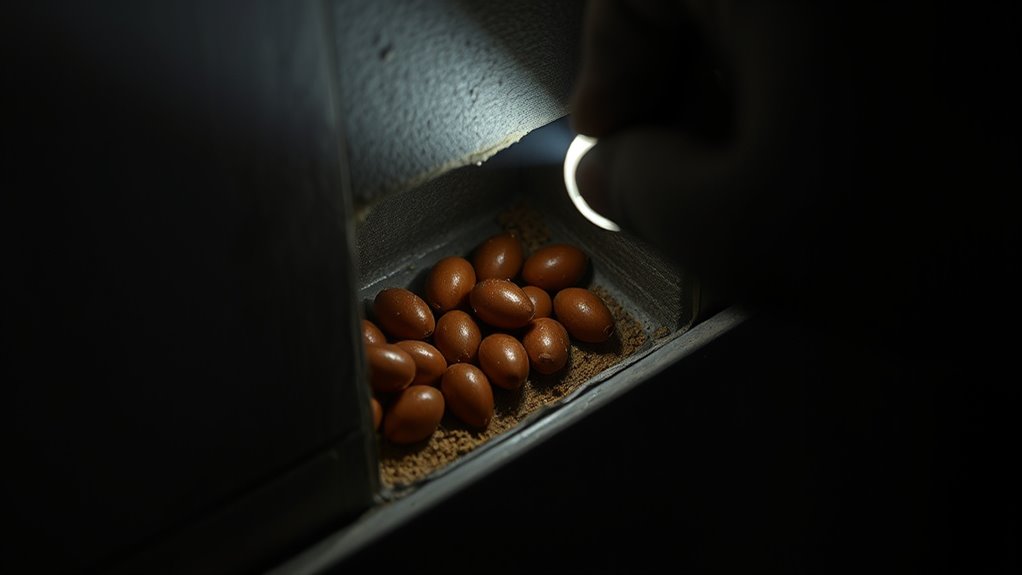
When you’re trying to spot roach eggs in your home, look for small, hardened capsules called oothecae that measure 5 to 10 mm and range from brown to reddish in color. To identify roach eggs, focus your inspection on dark areas and common hiding spots like cracks and crevices, behind appliances, or inside cabinets.
These egg cases often appear near food sources or in warm, moist environments. Keep an eye out for egg casings alongside other signs of infestation such as shed skins or droppings, which indicate active roach activity.
Where Do Roaches Usually Hide Their Eggs?
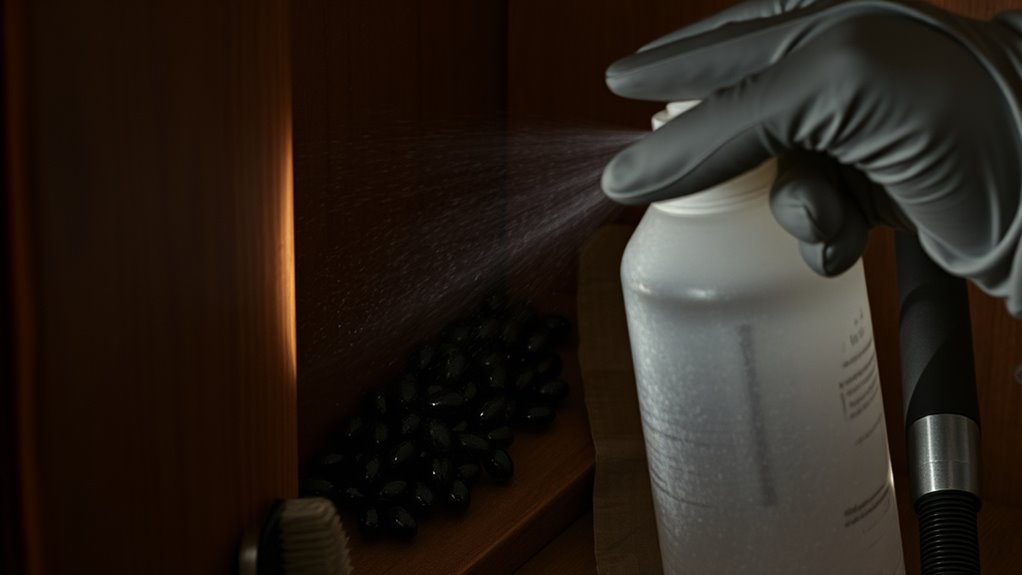
You’ll often find roaches hiding their eggs in dark, warm spots like behind appliances, inside cabinets, and under sinks. They choose places that stay humid and close to food or water, such as basements or laundry rooms.
Look carefully in cracks, crevices, and cluttered areas where egg cases can stay hidden and undisturbed.
Common Egg-Laying Spots
Because roaches seek out dark, hidden spots, you’ll often find their eggs tucked behind appliances, inside cabinets, or under sinks. These common egg-laying spots are ideal hiding places because they offer darkness, humidity, and concealment.
Roach eggs often hide in cracks and crevices along baseboards, inside cluttered storage areas, and in concealed locations like wall voids or under furniture. Dark and humid areas such as basements, bathroom corners, and near plumbing fixtures are prime spots for egg cases.
You should also check pantries, laundry rooms, and near trash bins since roaches prefer spots with easy access to food and water. By focusing on these typical hiding places, you can better locate and eliminate roach eggs to prevent infestations.
Hidden Egg Case Areas
Although roaches prefer dark, hidden spots, they often choose very specific areas to hide their eggs. You’ll find hidden egg cases tucked away in cracks and crevices, wall voids, and dark corners. Common spots include behind appliances, under sinks, and inside cabinets where warmth and moisture attract them.
Plumbing areas are especially popular since they provide the damp environment roaches love. Don’t overlook electrical outlets and cluttered spaces like drawers or boxes, as these also serve as prime egg-laying sites. By focusing on these key areas, you can better target and eliminate roach egg cases effectively.
Knowing where roaches usually hide their eggs helps you act swiftly and prevent infestations before they escalate.
How to Safely Remove and Destroy Roach Eggs

To safely remove roach eggs, start by spotting the small, oval-shaped egg cases tucked away in dark corners or behind appliances. You’ll want to carefully collect them using gloves and a tissue, then destroy them by crushing or soaking in soapy water.
Afterward, apply insecticides or diatomaceous earth to the area to stop any eggs you missed from hatching.
Identifying Roach Egg Cases
When you spot small, hardened capsules that are brown or reddish, you’re likely looking at roach egg cases called oothecae. These oothecae contain 16 to 40 cockroach eggs and often hide in dark moist areas like behind appliances, under sinks, or inside cabinets. To effectively identify them, inspect cracks and other common hiding spots carefully.
German cockroach oothecae measure about 1/4 inch and may be carried by females, while other species have larger, more visible capsules. Once you find these hideouts, you’ll want to remove eggs safely to prevent infestation growth. Use gloves or a vacuum to collect oothecae, then dispose of eggs in sealed bags outdoors.
Recognizing and targeting these roach egg cases is a vital step to eliminate eggs and control cockroach populations.
Effective Egg Destruction Methods
Since roach eggs hide in tight, dark spots, you’ll need to carefully remove them using gloves or a vacuum cleaner. First, inspect hiding spots like under sinks, behind appliances, and inside cabinets to locate egg cases. To effectively eliminate eggs, crush the ootheca with a tool or your foot, then seal and dispose of it outdoors.
For thorough egg destruction, apply diatomaceous earth or boric acid powder directly onto areas where roach eggs are found; these substances dehydrate and kill the eggs. Consistent inspection and treatment help control roaches by preventing new hatchlings. Additionally, using insect growth regulators can stop eggs from developing into mature roaches, further helping you prevent infestation.
Combining these methods ensures a safer, more effective way to get rid of roach eggs.
Top Products to Kill Roach Eggs
Effective roach egg elimination starts with choosing the right products designed to target both eggs and the roaches that carry them. To kill cockroach eggs and exterminate roaches effectively, use boric acid powders like Harris Boric Acid Roach Powder, which attacks egg cases on contact.
Harris Famous Roach Tablets work slowly but target egg-laying females and nymphs, disrupting the cycle. Roach traps offer a chemical-free option to monitor and reduce a roach infestation by capturing adults before they lay more eggs.
For thorough roach control, combine these with residual sprays. Don’t forget to inspect dark areas where roach eggs hide. While Growth Regulators help prevent egg hatching, focus first on these proven products to eliminate existing roach eggs and curb your infestation efficiently.
How to Use Insect Growth Regulators to Prevent Roach Egg Hatching
Although roach eggs can be tough to eliminate, using Insect Growth Regulators (IGRs) can stop them from hatching by interfering with the roaches’ development. IGRs disrupt molting and reproductive cycles, helping to reduce infestation by preventing roach egg hatching.
To use IGRs effectively, you should:
- Treat cracks and crevices where roaches hide and lay eggs
- Apply IGRs regularly for continuous application and lasting results
- Target areas with visible roach eggs to reduce egg development
- Consider professional pest control for accurate and safe usage
- Monitor treated spots to ensure the roach population declines
How to Seal and Clean Areas to Keep Roaches From Laying New Eggs
To keep roaches from laying new eggs, you need to seal entry points like cracks and crevices around baseboards, pipes, and window frames with caulk. Next, block entry points using weatherstripping and door sweeps on doors and windows.
Clean hiding spots thoroughly to disinfect areas where roaches might nest. Remove clutter to eliminate dark, undisturbed nesting sites that encourage egg-laying. After sealing gaps and crevices, apply residual insecticide to kill any existing eggs and prevent new ones.
| Action | Area to Focus On | Purpose |
|---|---|---|
| Seal cracks | Baseboards, pipes | Block entry points |
| Clean hiding spots | Behind appliances | Disinfect areas |
| Remove clutter | Cardboard, papers | Remove nesting sites |
| Apply insecticide | Cracks, crevices | Prevent egg-laying |
When to Call a Professional for Roach Egg Control
If you keep spotting roaches or their egg casings despite your efforts, it’s time to call a professional. Persistent signs of roaches often indicate a large infestation or hidden eggs beyond DIY control. Seeking expert assistance guarantees thorough pest control, especially when severe infestation threatens your home.
You should consider professional help when:
You should consider professional help when roach signs persist despite your cleaning and treatment efforts.
- Roach eggs or egg casings appear repeatedly after treatments
- You detect musty odors or increasing droppings, signs of infestation
- Roaches hide in hard-to-reach areas, making eggs tough to find
- Roach activity spikes despite your cleaning and sealing efforts
- Weeks pass without improvement, suggesting a severe infestation
Professional pest control experts use specialized tools to eradicate roach eggs and stop infestation in its tracks.
Frequently Asked Questions
What Kills Roach Eggs Fast?
You can kill roach eggs fast by pouring boiling water directly onto them, which instantly destroys the capsules.
For quick and lasting results, combine this with insect growth regulators and residual pesticides to stop hatching effectively.
What Do I Do if I See Roach Eggs?
If you see roach eggs, put on gloves, carefully remove them with a vacuum or tool, and seal them in a plastic bag.
Then, treat the area with boric acid or insect growth regulators to prevent hatching.
How Long Do Roach Eggs Last?
Don’t put off till tomorrow what you can do today—roach eggs last about 2 to 6 weeks, depending on conditions.
If you act quickly, you can stop them before they hatch and multiply.
Do Roach Eggs Stick to Walls?
Roach eggs don’t usually stick firmly to walls. You’ll find them tucked in cracks or crevices instead.
Since they’re loosely attached, you can easily remove them by vacuuming or crushing without much hassle.
Conclusion
Getting rid of roach eggs takes patience and precision. While some believe simply killing adult roaches stops infestations, the truth is eggs can hatch unnoticed, restarting the cycle. You need to find and destroy the eggs directly, use growth regulators, and seal hiding spots to break their lifecycle.
If the problem persists despite your efforts, don’t hesitate to call a professional. Sometimes expert intervention is the only way to fully eliminate these resilient pests. Remember, effective roach control means addressing both the adults and the eggs to prevent future infestations.