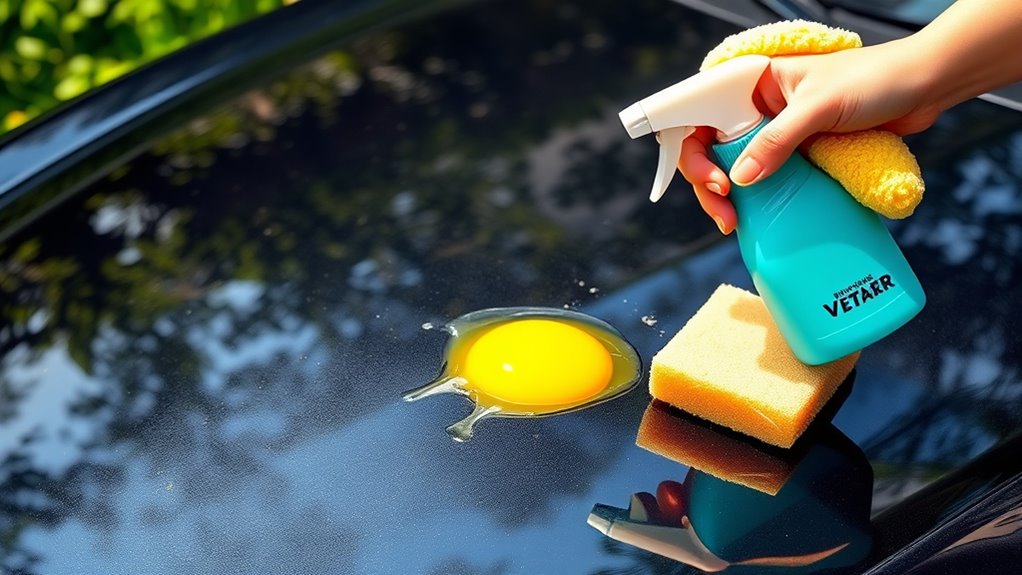
How to Get Egg Off a Car Quickly and Easily
You should act fast to prevent egg acids from damaging your car’s paint. Removing egg from a car quickly and easily is essential to avoid stains and corrosion.
Start by gently soaking the area with warm, soapy water or a vinegar solution to soften the egg.
Use a soft microfiber cloth to wipe away residue carefully, avoiding scratches.
Rinse thoroughly and dry before applying wax for protection.
Avoid harsh scrubbing or chemicals that can worsen damage.
Keep going to discover more tips for stubborn spots and post-cleaning care.
Why You Need to Remove Egg From Your Car Quickly
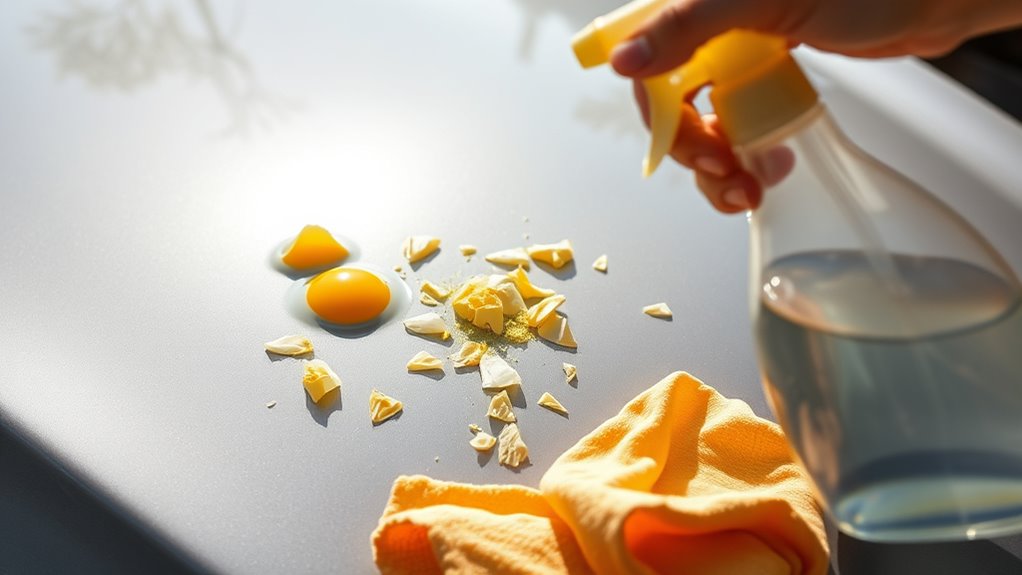
Because egg proteins and acids can start damaging your car’s paint within minutes, you need to remove egg from your car quickly. When egg sits on your car paint, its acids begin to chemically etch the surface, causing permanent damage. If you wait too long, dried egg shells and residues harden, making them tougher to remove without scratching.
Prompt removal prevents the egg from baking onto the paint, which reduces the risk of staining and surface cracking. The longer you leave egg on your car, the more likely you’ll face costly repairs like repainting or buffing. Acting fast not only protects your car paint but also saves you time and money by minimizing damage and keeping your vehicle looking its best.
The Best Tools to Get Egg Off Your Car
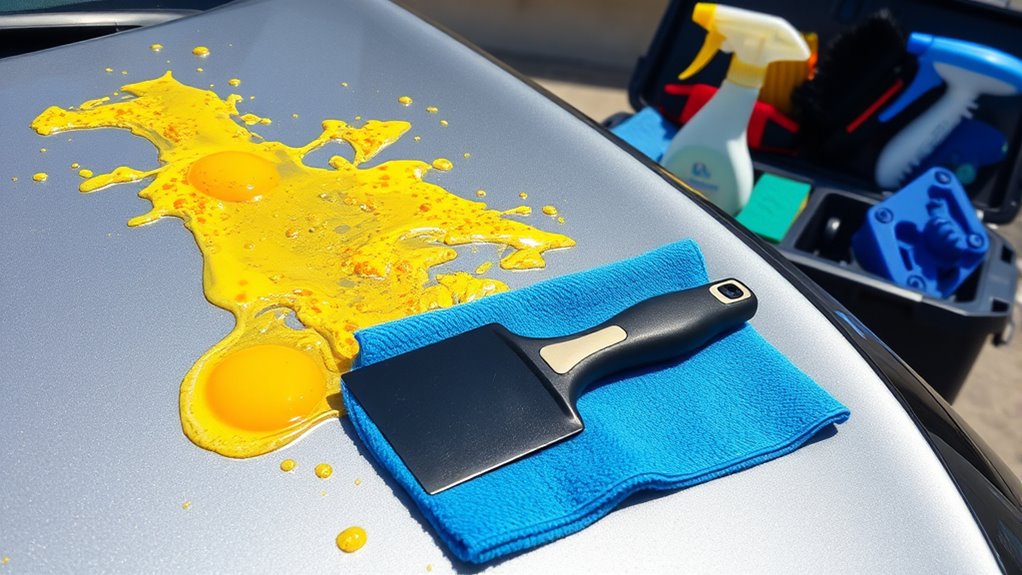
To effectively remove egg from your car before it causes lasting damage, you’ll need the right tools at hand. Start with a soft microfiber cloth to gently wipe away egg residues without scratching your paint. A spray bottle filled with a vinegar-water solution or a specialized car cleaner helps loosen stubborn egg stains, making them easier to remove.
For baked-on shells, plastic scrapers or clay bars work well to lift debris safely. Don’t forget automotive-specific cleaning brushes with soft bristles to reach crevices and badges. Finally, use a pressure washer cautiously to rinse off loosened egg without harming your vehicle’s finish.
Having these tools ready guarantees you can tackle egg removal efficiently and protect your car’s surface.
How to Remove Egg From Your Car: Step-by-Step
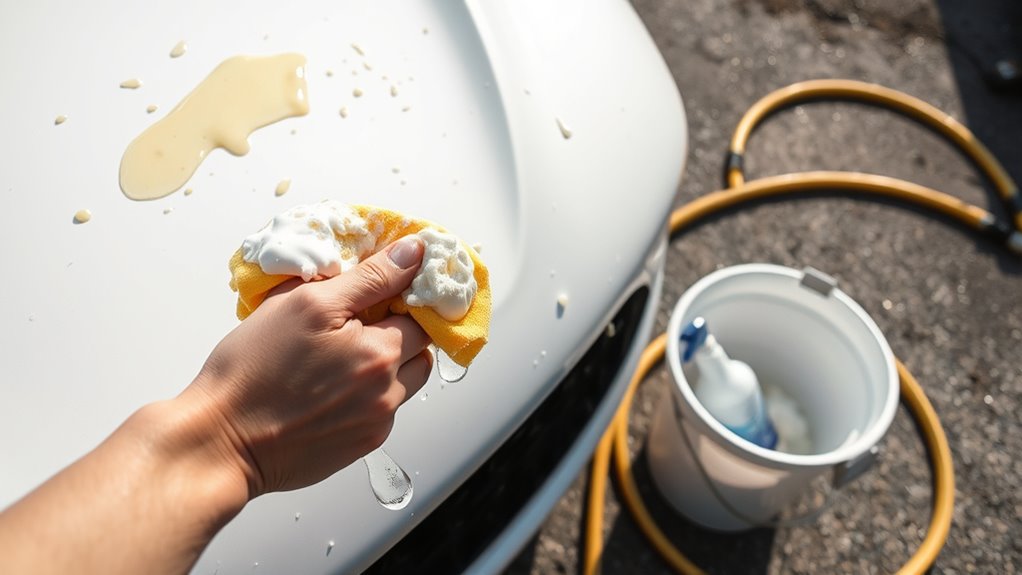
Start by gently picking off any eggshell fragments to avoid scratching your car’s paint.
Next, soften the egg residue with a warm, soapy water or vinegar solution before wiping it away carefully.
Finally, rinse the area well and repeat if necessary to guarantee your car looks spotless.
Removing Eggshell Fragments
When eggshell fragments remain on your car, you’ll want to remove them carefully to avoid scratching the paint. Start by picking up large eggshell pieces with your fingers or a plastic scraper.
Next, use a damp microfiber cloth soaked in warm water to gently loosen smaller fragments. Applying distilled white vinegar directly on the residue helps break down the shell. Then, wipe softly with a microfiber towel to lift away tiny shards.
Finally, rinse the area with clean water to clear any leftover particles.
| Step | Tool/Material | Purpose |
|---|---|---|
| 1. Pick up fragments | Fingers/Plastic scraper | Prevent scratching |
| 2. Soften residue | Damp microfiber cloth | Loosen eggshell pieces |
| 3. Apply vinegar | Distilled white vinegar | Break down shell material |
| 4. Wipe fragments | Microfiber towel | Remove small eggshell pieces |
| 5. Rinse area | Clean water | Clear leftover shards |
Softening Egg Residue
Although dried egg residue can be stubborn, you can soften it effectively by soaking the area with a warm, damp microfiber cloth for several minutes. Start by wetting the cloth with warm water and pressing it firmly against the egg residue to loosen it. Next, spray distilled white vinegar directly onto the affected spot.
The vinegar helps break down the egg’s proteins, making it easier to soften egg residue without damaging your car’s paint. Hold the vinegar-soaked cloth against the area for a few more minutes to let it penetrate fully. Once softened, gently lift the residue using a plastic scraper or your fingernails.
If needed, repeat the soaking and vinegar treatment until the egg residue loosens enough for safe removal.
Final Cleaning Steps
Once you’ve softened and loosened the egg residue, you’ll want to rinse the area thoroughly with water to remove any loose eggshells and prevent scratches.
Next, mix a gentle car wash solution with warm water and a bit of dish soap. Soak a microfiber cloth in the solution, then gently wipe the egg-stained area using light pressure to lift any remaining residue.
Afterward, rinse the spot again with clean water to wash away soap and egg remnants. Finally, dry the surface with a clean microfiber towel to avoid water spots.
To protect your car’s paint and restore its shine, apply a coat of wax or sealant, ensuring the area is well-protected from future damage.
How to Use Vinegar, Alcohol, and Other Cleaners
Because dried egg residues can firmly adhere to your car’s surface, using vinegar, alcohol, and other cleaners can effectively break them down without harming the paint. Start with distilled white vinegar, which loosens the dried egg thanks to its acetic acid. Apply it with a microfiber cloth or sponge, letting it sit for 5-10 minutes to soften the egg.
This makes it easier to clean egg off without scratching or damaging the paint. Rubbing alcohol can also dissolve egg proteins but use it sparingly to avoid potential paint harm. After treatment, gently wipe the area and rinse thoroughly with water to remove any leftover vinegar or alcohol.
This careful approach guarantees a clean egg removal and protects your car’s paint finish.
How to Get Egg Off Your Windshield Without Damage
To safely remove egg from your windshield, start by spraying a mixture of vinegar and water or a glass cleaner and let it sit for about 10 minutes to loosen the baked-on residue. Then, use a soft microfiber cloth or sponge to gently wipe the egg away, taking care not to scratch the glass surface.
For stubborn egg spots, apply WD-40 directly to the residue, wait five minutes, and wipe clean with a damp cloth. If stains persist, sprinkle baking soda on the windshield, let it absorb for 15 minutes, then wipe clean.
Always check your windshield wipers for egg debris before use to avoid scratching. Following these steps will help you clean your windshield effectively without causing damage.
How to Remove Dried or Baked-On Egg Residue
When dried or baked-on egg residue sticks to your car, you’ll need to soften it first to avoid damaging the paint. Start by applying white vinegar to the dried egg to loosen the proteins and fats, making it easier to remove the egg without scratching.
To safely remove dried egg from your car, first soften it with white vinegar to avoid paint damage.
Next, place a warm, damp microfiber cloth over the area to hydrate the residue further. Use a plastic scraper or a clay bar with lubricant like Clay Lube to gently lift stubborn egg remnants.
For heavily baked egg, soak with vinegar and lightly buff with a polishing pad to restore the finish. Always test these methods on a small area first.
After removing the dried egg, complete your car wash to clean and protect the surface properly.
How to Protect Your Car’s Paint After Egg Removal
Once you’ve removed the egg residue, applying a high-quality wax creates a protective barrier that shields your paint from future damage. Make sure to reapply wax every few months to keep that defense strong against contaminants and UV rays.
This simple step helps prevent staining and keeps your car looking its best longer.
Applying Protective Wax
Although you’ve already removed the egg, protecting your car’s paint with a high-quality wax or sealant is essential to prevent future damage. First, make sure the surface is completely dry to help the wax adhere properly. Then, use a soft applicator pad or microfiber cloth to apply wax in circular motions, covering every exposed area evenly.
This creates a protective layer that shields your car from contaminants and prevents staining, etching, and minor scratches. To keep this protection effective, reapply wax every 3-4 months. Regular waxing not only maintains your vehicle’s shine but also enhances resistance against environmental damage, ensuring your car’s paint stays smooth and protected long after egg removal.
Preventing Future Surface Damage
Applying protective wax sets the stage for ongoing care that keeps your car’s paint strong after egg removal. To prevent future damage from egg residue and other contaminants, maintain a consistent protection routine.
Here’s how you can safeguard your car paint effectively:
- Wash regularly with pH-balanced car soap to avoid buildup and preserve wax protection.
- Use high-quality wax or sealants to create a barrier against stains and pollutants.
- Consider ceramic coating for long-lasting defense against UV rays, dirt, and egg residue.
- Avoid parking under trees or in areas prone to bird droppings and other corrosives.
When to Call a Pro for Egg Damage
If an egg has baked onto your car’s paint for several hours, you should consider calling a professional to prevent permanent damage. Dried egg can cause serious paint damage that DIY methods might worsen. If you notice severe scratching, peeling, or bubbling after cleaning, it’s a clear sign you need professional repair.
When stubborn egg residue won’t come off without risking further harm, a pro’s expertise can save your paint. Chemical etching or corrosion from the egg also requires expert treatment to restore your car’s finish. For high-value or vintage cars, professional cleaning ensures delicate paint receives proper care, minimizing long-term damage.
Don’t hesitate to contact a body shop if you’re unsure; timely professional intervention can protect your vehicle’s appearance and value.
Frequently Asked Questions
How Do You Get an Egg off a Car Without Damaging Paint?
You gently remove eggshells, spray vinegar on the spot, let it sit, then wipe carefully with a microfiber cloth. Avoid scrubbing hard to protect paint, rinse thoroughly, and dry.
Repeat if needed for stubborn residue.
Will WD-40 Remove Eggs From Car?
Yes, WD-40 will remove eggs from your car. Don’t worry about damage if you use it sparingly—apply, wait a few minutes, then gently wipe and rinse thoroughly to protect your paint and finish.
What Dissolves Dried Eggs?
You’ll want to use white vinegar or a warm water and dish soap mix to dissolve dried eggs.
Alternatively, rubbing alcohol or commercial egg removers work well, but be careful not to damage your car’s paint.
Is Egg Hard to Clean off a Car?
Cleaning egg off your car can be tricky—it’s like trying to erase sharp pencil marks; if you wait too long, the egg etches into the paint.
Act quickly, use gentle cleaners, and avoid scrubbing harshly to protect your finish.
Conclusion
Don’t let egg turn your car into a gooey disaster zone! Acting fast with the right tools will save you from a crusty, stubborn mess that could ruin your paint job forever.
Picture your shiny ride, spotless and gleaming again, not buried under a slimy egg apocalypse. Follow these simple steps, and you’ll have your car looking fresh and flawless in no time—like it just rolled out of the showroom, not a breakfast battle!
By cleaning egg off your car quickly and easily, you protect your paint and keep your vehicle looking its best. Remember, timely action and the right method are key to removing egg stains efficiently.