
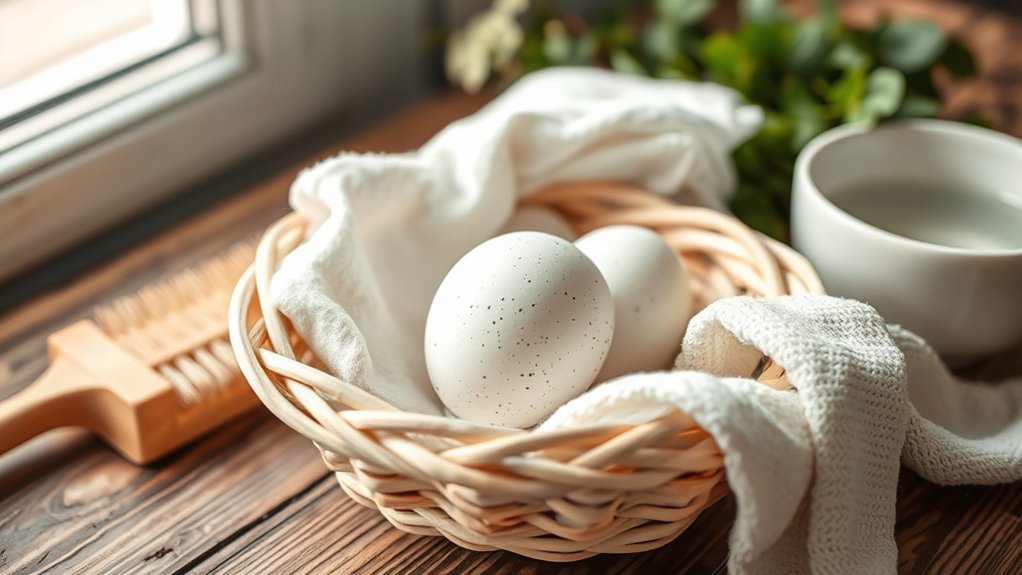
10 Tips to Clean Eggs Without Removing the Bloom
To clean eggs without removing the protective bloom, gently dry-clean them using a soft cloth or brush to brush off dirt.
Avoid cold water; if needed, use warm water warmer than the egg’s surface to lightly wipe away stubborn spots.
Skip harsh scrubbing and use mild sanitizers sparingly to keep the coating intact.
Always dry eggs immediately and store them refrigerated after cleaning.
Keep your coop clean to reduce dirty eggs.
Explore these tips to keep your eggs fresh longer and cleaner.
How To Identify Eggs That Need Cleaning
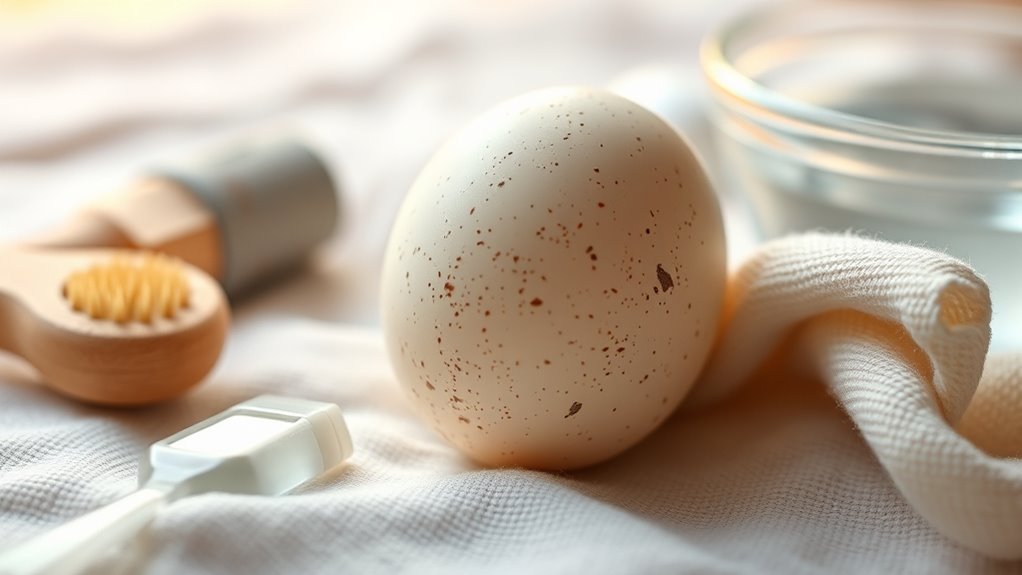
Although not every egg needs cleaning, you should always check for visible dirt, feces, or mud before use. If you spot manure or stubborn dirt on the shell, it’s a clear sign that cleaning is necessary. Eggs found outside the nesting box or on the ground often carry more dirt and contaminants, increasing the need for cleaning.
However, eggs with just a light dusting of dirt might only need a gentle wipe, preserving the bloom that naturally protects the egg. The bloom acts as a barrier against bacteria, so you want to avoid removing it unnecessarily. By carefully inspecting your eggs and determining the level of dirt, you can decide when cleaning is essential without compromising the bloom’s protective benefits.
Why You Should Preserve The Bloom When Cleaning Eggs

You want to keep the egg’s natural bloom intact because it acts as a protective barrier against bacteria and moisture loss.
Preserving this coating helps your eggs stay fresh longer without refrigeration. When you clean eggs gently, you maintain their natural defense and extend their shelf life.
Importance Of Natural Protection
Because the egg’s bloom acts as a natural seal over the shell’s pores, it plays a crucial role in keeping bacteria out and moisture in. This protective bloom is a natural coating that guards your eggs against contamination and prevents them from drying out. When you clean eggs, preserving this layer is essential to maintain their natural defense system.
Removing the bloom exposes the shell’s pores, allowing bacteria to enter and moisture to escape, which compromises freshness and increases spoilage risk. By using gentle cleaning methods that avoid stripping away this coating, you help your eggs stay safe and fresh longer.
Benefits For Egg Freshness
When you preserve the egg’s bloom during cleaning, you maintain its natural barrier that keeps bacteria out and locks in moisture. This protective layer seals the eggshell’s pores, reducing moisture loss and preventing microbial invasion, which is key to maintaining egg freshness.
By keeping the bloom intact, you can store eggs at room temperature for up to 2-3 months without compromising quality. Gentle cleaning methods that avoid stripping the bloom help you keep your eggs safe and fresh longer, especially if you gather eggs from backyard hens or farms.
Scientific studies confirm that washing eggs carefully with mild solutions doesn’t markedly damage the bloom, making it easier to preserve egg freshness while still cleaning effectively. Remember, preserving the bloom is essential for prolonging your eggs’ shelf life.
How To Dry-Clean Eggs Without Removing The Bloom
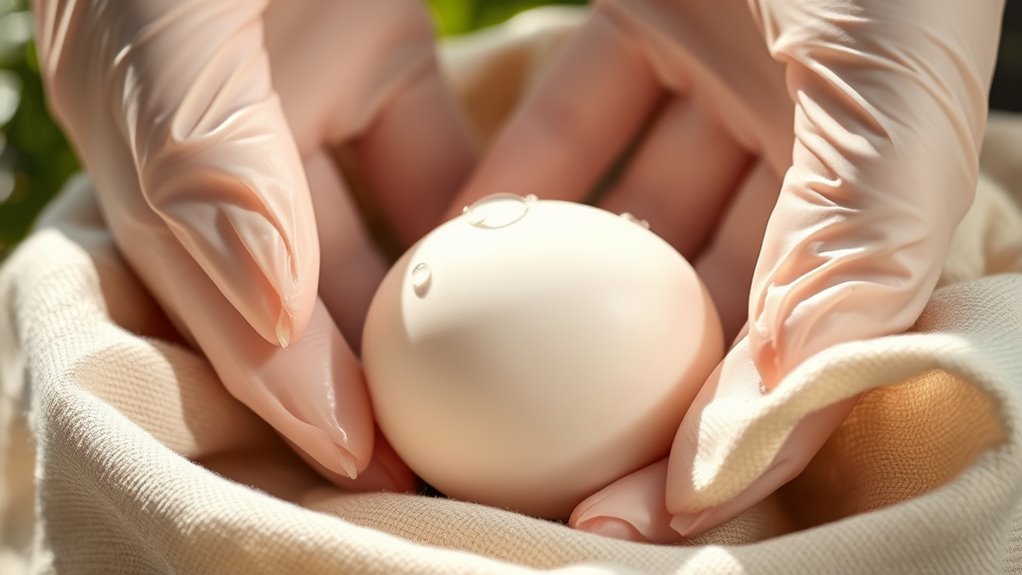
You can clean your eggs effectively by gently wiping them with a dry, soft cloth or sponge to remove dirt without adding moisture.
If some dirt sticks stubbornly, use a soft-bristled brush to carefully brush it away while keeping the egg dry.
This method helps you preserve the bloom and keep your eggs protected.
Gentle Dry Wiping
How can you clean eggs without stripping away their natural protective bloom? Use a dry cloth for a gentle wipe to remove surface dirt while preserving the protective layer. Avoid any moisture since liquids can damage this natural coating.
A dry paper towel or microfiber cloth works best, especially for light debris. Handle eggs delicately to prevent cracks and maintain bloom integrity.
| Step | Tool Used | Purpose |
|---|---|---|
| 1 | Dry cloth | Remove loose dirt |
| 2 | Microfiber cloth | Gentle wipe, preserve bloom |
| 3 | Paper towel | Clean minor debris |
Using Soft Brushes
Although dry wiping can handle light dirt, using a soft-bristled brush lets you remove stubborn debris without damaging the egg’s protective bloom. Choose a dry, clean soft-bristled brush to gently scrub eggshells in a circular motion. This gentle scrub targets dirt without wetting the eggs, preserving their natural coating.
Make sure to handle eggs carefully during this process to avoid cracks or shell damage that could compromise the bloom. If you encounter particularly stubborn dirt, lightly wipe the egg with a damp cloth only as a last resort, then dry immediately with a clean towel.
How To Use Warm Water Without Removing The Bloom
When washing eggs, using warm water that’s warmer than the egg itself—typically between 90 and 120°F—helps push dirt and bacteria out of the shell pores without damaging the protective bloom. To clean eggs effectively with warm water, rinse them quickly under a gentle stream, avoiding soaking.
This method keeps the bloom intact and prevents bacteria from entering. After washing, dry eggs thoroughly with a soft cloth to remove moisture that could invite bacteria.
- Feel confident knowing you’re preserving the natural bloom
- Enjoy cleaner eggs without harsh scrubbing
- Protect your family by reducing bacteria risks
- Appreciate how warm water gently cleanses
- Experience the satisfaction of perfectly clean, safe eggs
Using warm water is key to clean eggs while keeping their bloom intact.
Why Avoid Cold Water When Cleaning Eggs
You’ll want to avoid cold water when cleaning eggs because it causes the shell to contract, pulling bacteria inside through the pores. This temperature shock also disrupts the protective bloom, increasing contamination risks.
Using warm water helps keep that natural barrier intact and prevents harmful bacteria from entering.
Risks Of Cold Water
If you clean eggs with cold water, you risk drawing bacteria and contaminants inside through the shell’s pores. Cold water causes the pores to contract, creating a vacuum effect that pulls in harmful bacteria, compromising egg safety. This bacterial infiltration is dangerous, especially if eggs are already contaminated.
Cold water also fails to effectively remove dirt and microbes, increasing the risk of foodborne illnesses. To keep your eggs safe, avoid cold water and use warm or room temperature water instead.
- Imagine harmful bacteria sneaking inside your eggs unnoticed
- Picture the disappointment of spoiled eggs ruining your meal
- Feel the frustration of risking your family’s health
- Think about the invisible dangers lurking on your breakfast table
- Remember, cold water can turn safe eggs unsafe in seconds
Temperature Effects On Bloom
Because cold water causes the egg’s pores to contract, it can actually pull bacteria and dirt inside rather than wash them away. To protect the egg’s natural protective bloom, always use warm water close to the egg’s temperature when cleaning.
Warm water prevents pore contraction, preserving the bloom and reducing contamination risk.
| Water Temperature | Effect on Bloom | Contamination Risk |
|---|---|---|
Cold (| Pores contract |
High – bacteria pulled in |
|
| Warm (~Egg Temp) | Bloom intact | Low – safe cleaning |
| Hot (>Egg Temp) | Bloom may degrade | Moderate – bloom damage |
Maintaining proper temperature guarantees you clean eggs safely without compromising their protective bloom.
Preventing Bacterial Contamination
Maintaining the right water temperature when cleaning eggs not only preserves the bloom but also plays a key role in preventing bacterial contamination. Avoid using cold water because it can create a vacuum effect that pulls bacteria and dirt into the eggshell pores. Cold water also causes the shell to contract, increasing the risk of cracks where bacteria can enter.
Using warm water helps protect the delicate protective bloom, maintaining the egg’s natural defense. To keep your eggs safe and fresh, always wash them with water warmer than their surface temperature.
- Protect your eggs from harmful bacteria
- Preserve the natural protective bloom
- Avoid cracks that let contamination in
- Use warm water to keep eggs safe
- Prevent unintentional bacterial ingress during cleaning
How To Spot-Clean Stubborn Dirt Gently On Eggs
When you encounter stubborn dirt on eggs, use a dry, soft-bristled brush or a slightly damp cloth to gently lift the soil without soaking the shell. If the dirt won’t budge, lightly moisten a paper towel or damp cloth with warm water and carefully wipe the area, avoiding harsh scrubbing.
Don’t aggressively scrub, as this can damage the protective bloom that keeps eggs fresh. Focus on spot-cleaning only the dirty patches to preserve the shell’s natural barrier. Always handle eggs gently during cleaning to prevent cracks.
If you rinse any spot with warm water, dry it immediately with a clean towel to reduce bacterial risks. This careful approach ensures you remove stubborn dirt while maintaining the egg’s natural coating.
How To Use Mild Sanitizers Without Damaging The Bloom
If you want to sanitize your eggs without harming their natural bloom, choose a mild, food-grade sanitizer with chlorine levels between 50 and 100 ppm. Using mild sanitizers ensures the protective coating stays intact, keeping your eggs fresh longer. Immerse eggs gently for 1-3 minutes—don’t rub or scrub.
Rinse with warm water, warmer than the eggs, to help push away bacteria without damage. Finally, let eggs air dry completely to avoid moisture buildup that invites bacteria.
- Protect the bloom that guards your eggs’ freshness
- Feel confident handling sanitized, safe eggs
- Avoid harsh chemicals that strip natural barriers
- Keep egg shells strong and vibrant
- Trust simple steps that preserve quality and safety
How To Dry Eggs To Maintain Their Protective Coating
Although cleaning eggs is essential, drying them properly is just as crucial to preserve their natural protective coating. After washing, gently pat each egg dry with a soft, lint-free cloth or paper towel to avoid removing the bloom. Make sure to remove any residual moisture or cleaning solution carefully without rubbing or scrubbing, which can damage the shell.
You can also air dry eggs at room temperature in a well-ventilated area, placing them pointy side down to prevent moisture buildup near the yolk. Avoid heat sources like hairdryers, as they risk cracking shells or degrading the protective layer. Taking these steps ensures your eggs stay clean and maintain their natural defenses against bacteria.
Why You Should Refrigerate Eggs After Washing
Two key reasons make refrigerating eggs after washing a must: washing removes the bloom, exposing eggs to bacteria, and refrigeration slows down bacterial growth. Since washing strips away the natural protective layer, you need to refrigerate eggs immediately to protect them from spoilage and contamination.
Unwashed eggs can stay fresh at room temperature for months, but once you wash them, that safety disappears. Refrigeration not only preserves freshness but also extends shelf life significantly.
Remember to:
- Always refrigerate washed eggs promptly
- Handle eggs gently to avoid cracking
- Store eggs in their carton to maintain moisture
- Keep your fridge temperature steady below 40°F
- Avoid leaving washed eggs out for long periods
How To Prevent Dirty Eggs In Your Coop And Nesting Boxes
Keeping your coop and nesting boxes clean plays a crucial role in preventing dirty eggs. To guarantee clean eggs, regularly replace bedding in your nesting boxes to reduce dirt and manure buildup that can soil shells. Position nesting boxes lower than roosting bars so hens don’t accidentally poop on eggs after laying.
Encourage hens to use designated nesting boxes by providing comfortable, private spaces, which helps keep eggs cleaner. Collect eggs daily to avoid dirt and feces accumulation on shells. Maintaining good coop hygiene by frequently removing waste and old bedding minimizes external contaminants that can dirty eggs.
Frequently Asked Questions
How to Clean Fresh Eggs Without Removing Blooms?
You clean fresh eggs gently by wiping them with a dry or slightly damp cloth. If needed, rinse briefly in warm water matching the egg’s temperature, then air dry completely to preserve the bloom and protect freshness.
Do You Have to Wash the Bloom off Eggs Before Cooking?
You don’t have to wash the bloom off eggs before cooking. It protects freshness and bacteria.
Only wash if eggs are dirty, using warm water gently to avoid removing that natural protective coating.
How to Store Fresh Eggs With Bloom?
Think of the bloom as your egg’s natural armor—store your fresh eggs pointy side down in a cool, dry spot away from sunlight and ventilation shifts.
Don’t wash them; keep that shield intact to preserve freshness.
How Long Will Eggs Last With the Bloom on Them?
You can keep eggs with the bloom on at room temperature for 2-3 months, and if you refrigerate them, they’ll stay fresh for over 4 months.
Just make sure the bloom remains intact for best results.
Conclusion
Cleaning your eggs without removing the bloom is like gently brushing away dust from a delicate painting—you want to protect that natural shield. By using warm water, mild sanitizers, and dry-cleaning techniques, you keep your eggs safe and fresh longer.
Remember to avoid cold water and always dry them properly before refrigerating. These simple steps help maintain the egg’s natural protective coating.
With these easy tips, you’ll preserve the bloom and enjoy cleaner, healthier eggs straight from your coop every time. Following these 10 tips to clean eggs without removing the bloom ensures your eggs stay fresh and safe for consumption.