How Old Do Chickens Have to Be to Lay Eggs Step by Step Guide
You can expect your chickens to start laying eggs around 17 to 24 weeks old, depending on their breed and care. How old do chickens have to be to lay eggs is a common question among poultry keepers.
Commercial breeds usually lay earlier, while heritage breeds may take a bit longer.
Look for signs like bright red combs, softening pelvic bones, and nesting behavior to know when they’re ready. Preparing cozy nesting boxes will help them settle in easily.
Keep watching, and you’ll discover how to support your hens through every stage of their egg-laying journey.
When Do Chickens Typically Start Laying Eggs?
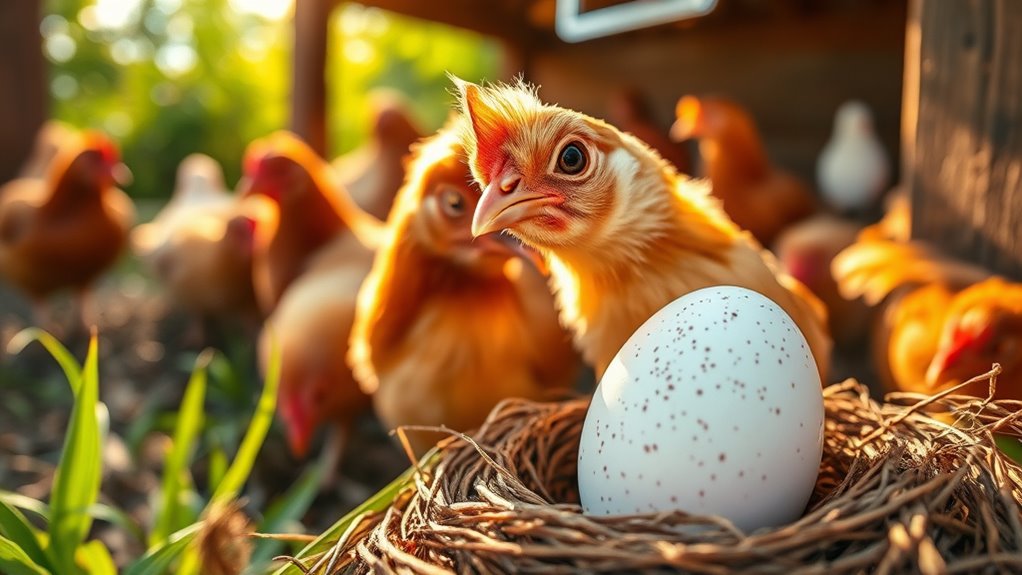
Although the exact age varies by breed and health, most hens start laying eggs between 17 and 24 weeks. You’ll notice commercial breeds like Leghorns often reach laying age earlier, around 17 to 20 weeks old, kicking off egg production sooner. Heritage breeds, such as Cochins, take more time, sometimes waiting until 24 to 30 weeks.
Before your hen’s first egg, watch for signs of hen maturity like a swollen comb and nesting interest. Lighting and diet also play essential roles, speeding up or delaying the start. If you provide ideal conditions, your hens will likely begin laying around 20 weeks.
Knowing these factors helps you anticipate when your flock’s egg production will begin, making it easier to plan for fresh eggs on your table.
How Your Hen’s Age and Breed Affect Egg Laying
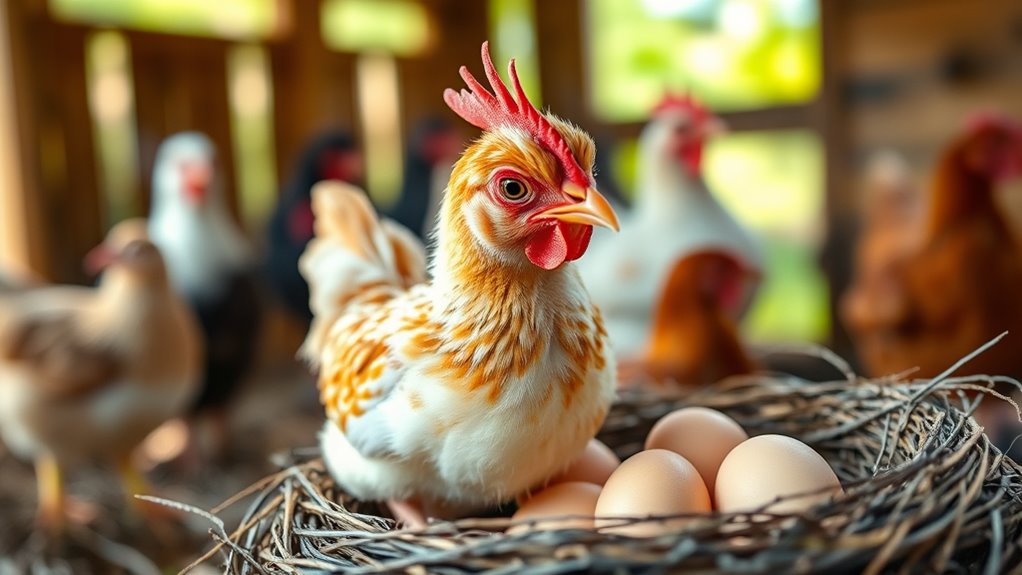
Because each breed matures at its own pace, your hen’s age and breed play key roles in when she starts laying eggs and how consistently she produces them. Different breed differences affect the egg laying timeline substantially. For example:
- Commercial hybrids usually start laying eggs earlier, around 17-20 weeks.
- Heritage breeds often begin later, between 20-30 weeks.
- Young hens initially lay smaller eggs; egg size grows as they mature.
- Egg production peaks around 2 years old and declines afterward.
Your hen’s age influences not just when chickens start laying but also the egg size and overall egg production. Knowing these breed and age factors helps you predict and manage your flock’s laying age and productivity effectively.
How to Recognize When Your Chicken Is About to Lay Eggs
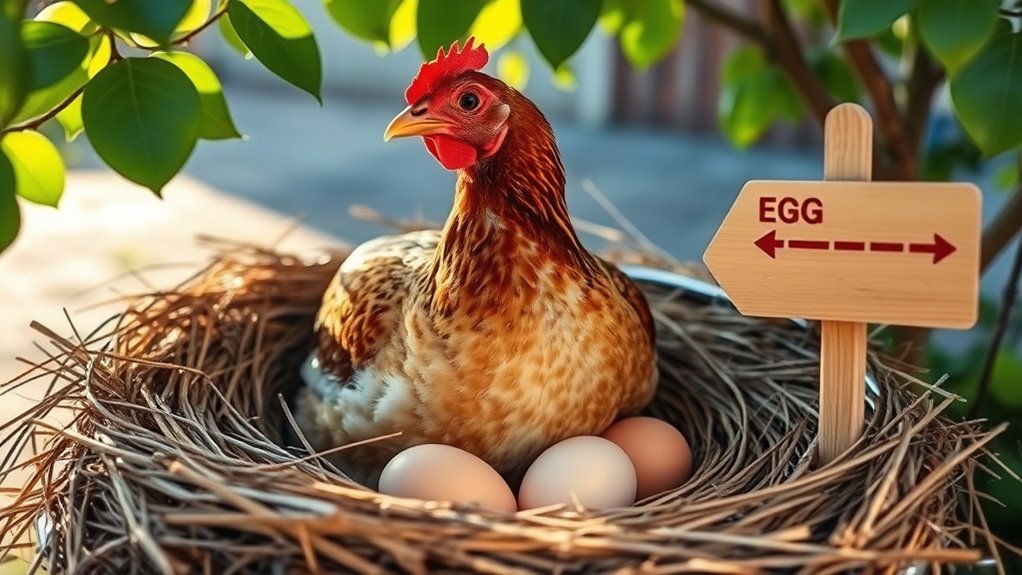
Understanding your hen’s age and breed gives you a good idea of when she might start laying eggs, but recognizing the signs she’s about to begin can help you prepare even better. Around 17 to 24 weeks old, depending on her development and breed, your hen will show clear signs of readiness.
Look for a swollen, deep red comb and wattles—these physical cues indicate she’s nearing laying age. You’ll also notice behavioral changes: she might squat or raise her tail when approached and show increased interest in nesting boxes by sitting or rooting in them.
These behaviors, combined with more frequent vocalizing and curiosity about her surroundings, are strong signs your hen is about to start laying eggs soon. Paying attention to these cues guarantees you’re ready to support her transition.
What Physical Signs Show a Hen Is Ready to Lay
How can you tell when your hen is ready to lay eggs? Look for clear physical signs that show she’s entering her laying phase. Key changes include her comb and wattles becoming bright red, swollen, and larger, signaling hormonal readiness.
You’ll also notice her pelvic bones becoming more flexible, which helps her sit on eggs comfortably. Watch for nesting behaviors, such as spending time in nesting boxes or rooting and squatting.
Here are 4 physical signs your hen is ready to lay:
- Bright red, enlarged comb and wattles
- Flexible pelvic bones
- Nesting behaviors like sitting in nesting boxes
- A rounded, low-hanging vent
These signs mean your hen is physically ready for laying eggs.
Preparing Your Flock for Their First Eggs
Once your hens show signs like bright red combs and nesting behaviors, it’s time to prepare their environment for egg-laying. At the typical laying age of 17 to 24 weeks, focus on clean, private nesting boxes filled with straw or sawdust to encourage natural laying behavior.
Maintaining stable environmental conditions, like proper lighting and calm surroundings, supports hen maturity and smooth shift to egg production. Monitoring physical signs helps you anticipate the first eggs. Healthy hens in suitable conditions lay consistently.
| Aspect | Action | Purpose |
|---|---|---|
| Nesting Boxes | Provide with fresh bedding | Encourage first eggs |
| Environmental Conditions | Control light and noise | Support laying behavior |
| Chicken Health | Monitor physical signs | Ensure readiness by age of hens |
Frequently Asked Questions
What Is the Earliest Age a Chicken Can Lay Eggs?
You can expect some fast-maturing chickens to lay eggs as early as 16 weeks old. Just remember, breed, nutrition, and environment affect timing, so your chickens might start a bit earlier or later depending on their conditions.
What Is the 90/10 Rule for Chickens?
The 90/10 rule means you’ll get 90% of a hen’s eggs in her first two years, then production drops to about 10% by year five.
It helps you plan when to replace aging hens.
How to Tell When Hens Are Ready to Lay Eggs?
You’ll know hens are ready to lay when their combs and wattles turn bright red and swell. They’ll squat for you, show nesting interest, and become more vocal.
These signs mean eggs are coming soon.
Is It Safe to Eat a Chicken’s First Egg?
Yes, you can safely eat a chicken’s first egg. Just handle it gently since the shell might be thin, and make sure to wash it thoroughly to remove any dirt or bacteria before eating.
Conclusion
Now that you know when your chickens usually start laying and what signs to watch for, the real excitement is just beginning. You’re on the brink of witnessing those first precious eggs, a rewarding moment that’ll make all your care feel worthwhile.
Keep a close eye on your flock—they might surprise you sooner than you think. Get ready, because the day your hens lay their very first egg is one you won’t want to miss!
Understanding how old chickens have to be to lay eggs helps you prepare and care for them effectively. With patience and proper care, you’ll enjoy fresh eggs from your happy, healthy hens in no time.