How Old Are Hens When They Start to Lay Eggs?
You can expect your hens to start laying eggs between 16 and 24 weeks old, with most beginning around 20 weeks. Breed plays a big role—lighter breeds start earlier, heavy breeds later. Daylight and environment also affect timing since hens need about 14-16 hours of light to lay consistently.
Look for bright red combs and nesting behavior as signs they’re ready. Proper nutrition helps too.
Keep exploring to discover more tips on encouraging your hens to lay regularly.
When Do Hens Usually Start Laying Eggs?
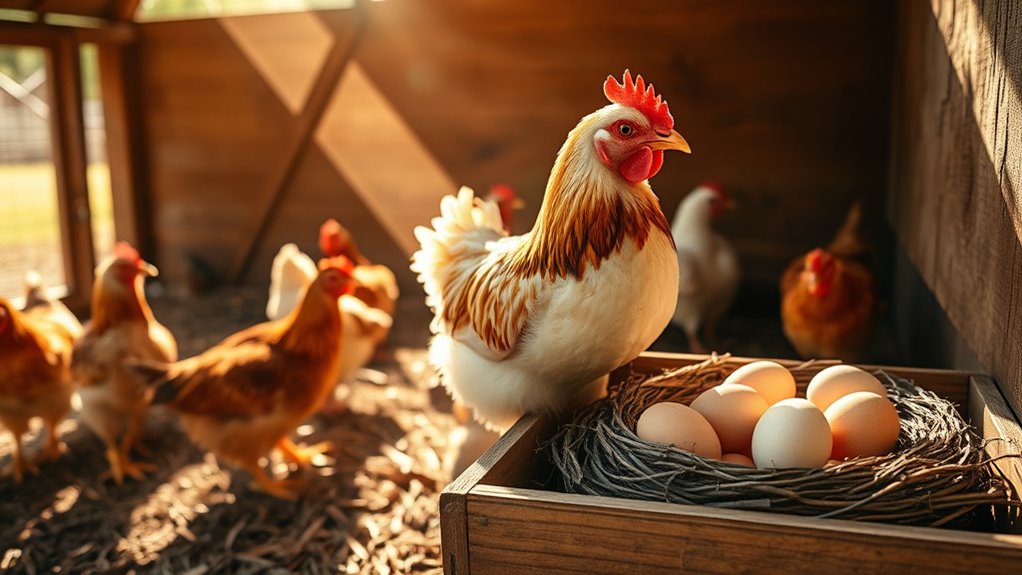
Although the exact timing varies, most hens start laying eggs between 16 and 24 weeks old. You’ll find that the average age hens begin laying is around 20 to 22 weeks, though this can shift based on several factors.
Most hens begin laying eggs between 16 and 24 weeks, typically around 20 to 22 weeks old.
When your layers have just started, their egg production might be sporadic at first. It usually takes a few weeks before they lay consistently.
While breed plays a role in when hens start laying, your environment matters just as much. Light exposure, proper nutrition, and overall health all impact when hens begin producing eggs.
If you provide a good environment, you’ll likely see your hens start laying sooner and maintain steady egg production as they mature.
How Breed Affects When Hens Start Laying Eggs
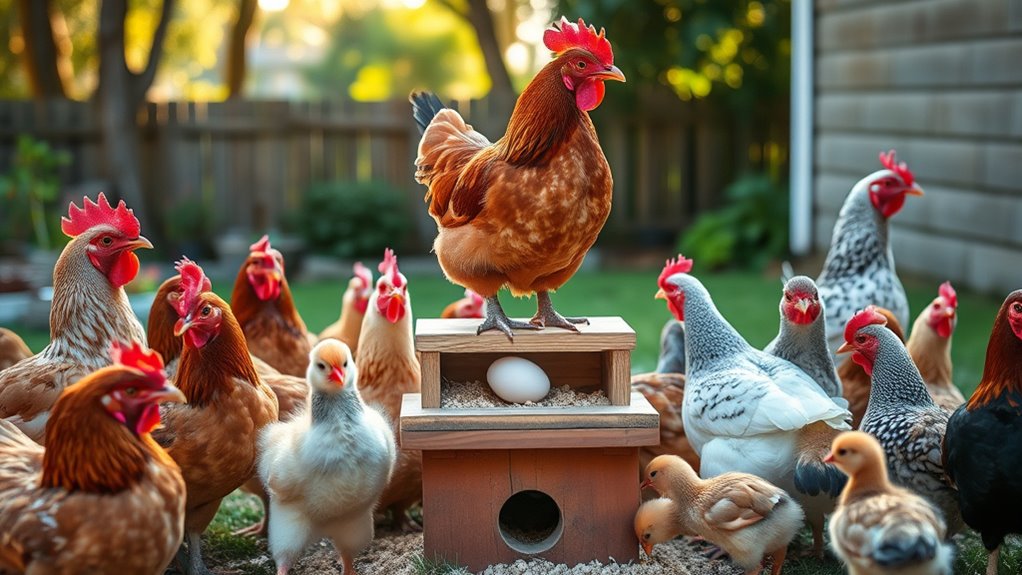
Because breed plays a key role in when hens start laying eggs, you’ll notice that lighter breeds like Leghorns and Australorps begin producing eggs earlier than heavier breeds such as Orpingtons and Barred Rocks. Breed traits influence the chicken age at which egg production starts, with early layers maturing faster, while late layers take longer to develop.
Understanding these differences helps you manage expectations for your flock’s development and egg output.
| Breed Type | Start Laying Age (weeks) |
|---|---|
| Early Layers | 16-20 |
| Heavy Breeds | 20-24 |
| Late Layers | 28+ |
Knowing how breed affects maturation ensures you can better plan for egg production based on your hens’ breed traits.
How Daylight and Environment Affect Egg Laying
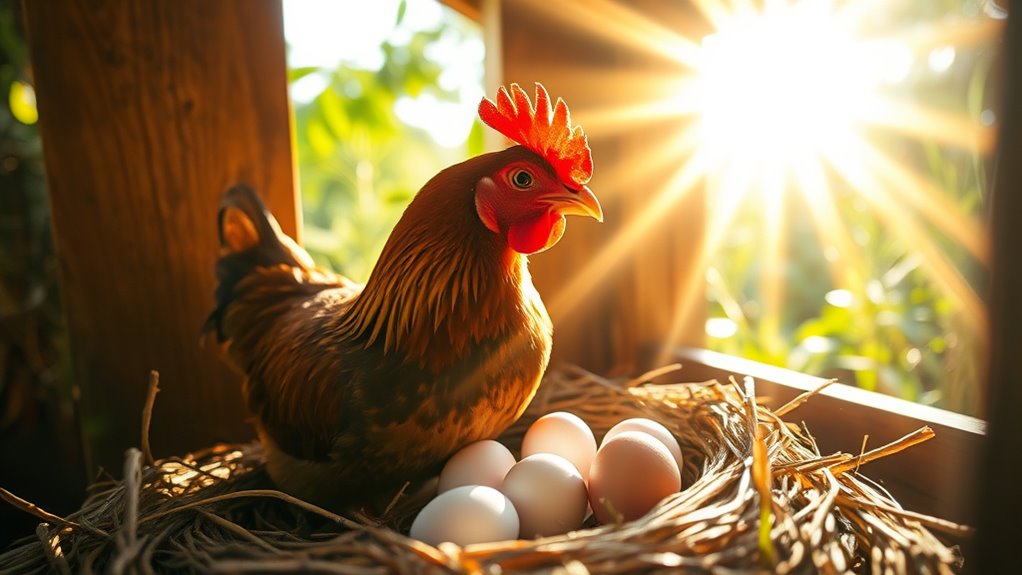
Besides breed, daylight and your hens’ environment play a big role in when and how consistently they lay eggs. Hens need at least 14-16 hours of daylight hours daily to keep steady egg production. Shorter days during seasonal variation cause hormonal changes, reducing egg laying and making combs paler.
You can counter this by providing artificial lighting in the coop environment, like a 60-watt bulb on a timer, to offer light supplementation.
Providing a 60-watt bulb on a timer helps supplement daylight and boost egg production.
To support your hens’ egg production, remember these key points:
- Maintain consistent daylight hours with artificial lighting during fall and winter.
- Create a stable, well-lit coop environment to minimize stress.
- Monitor seasonal variation effects and adjust light supplementation accordingly.
Physical and Behavioral Signs Your Hen Is Ready to Lay
When your hen’s combs and wattles swell and turn bright red, she’s signaling she’s close to laying eggs. These enlarged combs and wattles are clear physical signs driven by hormonal changes preparing her body. You’ll notice her comb color becoming more vibrant, another key indicator.
Along with these, nesting behavior intensifies—she’ll spend more time investigating and sitting in nest boxes. This nesting activity, paired with behavioral cues like squatting when approached, shows she’s hormonally ready. Listen for the “egg song,” a vocalization hens use as they near laying.
Paying attention to these physical and behavioral signs helps you know when your hen is ready to lay, ensuring you provide the right environment and support as she begins this new phase.
Nutrition Tips to Help Hens Start Laying Eggs
To help your hens start laying eggs on time, you need to provide a balanced diet rich in essential nutrients. A nutrient-rich diet supports healthy development and encourages early laying. Focus on these key nutrition tips:
- Offer high-quality layer feed containing 16-17% protein to meet hens’ growth needs as they reach laying hen age.
- Provide ample calcium sources like oyster shells or crushed eggshells to guarantee strong eggshell formation.
- Supplement with vitamin D3 to improve calcium absorption, which boosts overall egg production.
Avoiding nutritional deficiencies is vital; a balanced diet from the start helps your hens reach their laying potential sooner. By prioritizing these elements, you’ll see improved egg production and healthier hens ready to lay.
Frequently Asked Questions
How Do You Know When Your Chickens Are Ready to Lay Eggs?
You’ll know your chickens are ready to lay when their combs and wattles turn bright red and enlarge. They start nesting behaviors and make egg songs.
Their pelvic bones also spread slightly. Keep an eye on these signs!
Can You Eat the First Egg Your Chicken Lays?
Yes, you can eat the first egg your chicken lays. Yes, it’s safe, yes, it’s nutritious, and yes, it might be smaller or have a thinner shell.
Just wash it right before you cook or store it.
At What Age Does a Hen Start Mating?
Hens typically start mating between 16 to 24 weeks old. You’ll notice physical signs like a bright red comb when they’re ready.
Keep in mind, actual mating depends on breed and individual development stages.
What Is the Earliest a Chicken Can Lay an Egg?
The earliest a chicken can lay an egg is around 16 weeks old. Some fast-maturing breeds might lay sooner, but it’s rare.
You can help by providing good nutrition and proper lighting to encourage earlier laying.
Conclusion
You’ll be surprised to learn that most hens start laying eggs around 18 to 22 weeks old, but this can vary based on breed and environment. By understanding these factors and watching for physical signs, you can better prepare your hens for egg production.
Remember, providing proper nutrition and plenty of daylight boosts their chances to lay consistently. With the right care, your hens can surprise you with a steady supply of fresh eggs sooner than you think!
Knowing how old hens are when they start to lay eggs helps in managing their diet and environment effectively. This knowledge is key to ensuring your hens remain healthy and productive.