How Old Are Hens When They Start to Lay Eggs?
You can expect hens to start laying eggs between 16 and 24 weeks old, though it depends on their breed and care. Knowing how old hens are when they start to lay eggs helps you prepare for this exciting stage.
Lighter breeds often begin earlier, around 17-18 weeks, while heavier breeds might take up to 24 weeks or more.
Nutrition, health, and daylight also play big roles in when they’re ready. Proper care ensures your hens lay eggs consistently and stay healthy.
If you want to know how to spot when your hen’s about to lay and how to prepare, keep exploring these helpful insights.
When Do Hens Start Laying Eggs? (Age and Breed Factors)
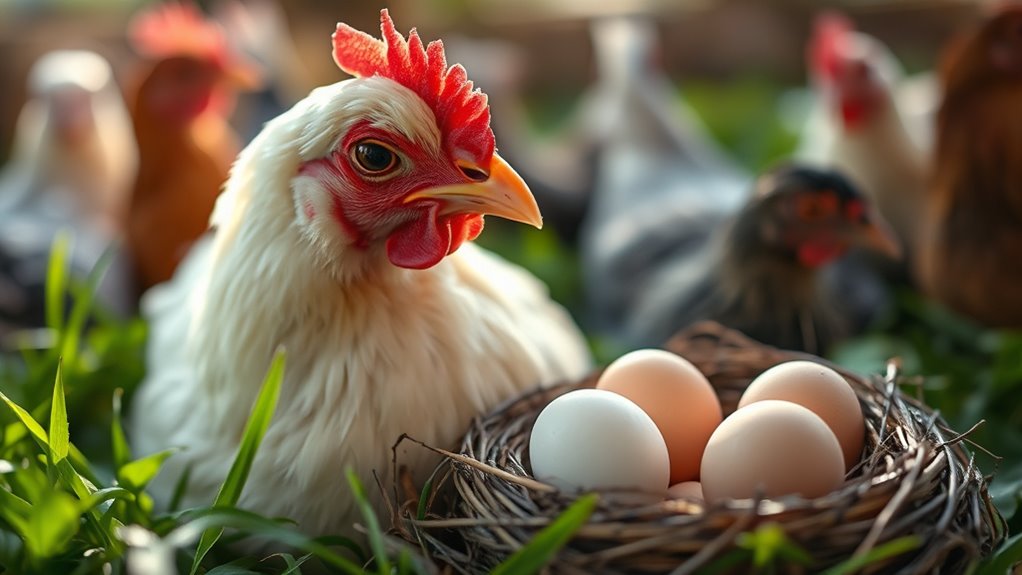
Although the exact timing varies, most hens start laying eggs between 16 and 24 weeks of age, influenced largely by their breed and individual growth. If you have lighter breeds like Leghorns, expect their first egg around 17 to 18 weeks since they tend to mature faster.
Heavier breeds such as Orpingtons or Wyandottes usually begin laying later, closer to 20 to 24 weeks. Keep in mind that while breed plays a big role, age isn’t the only factor. Nutrition, health, and environment also impact when your hen lays her first egg.
Some hens might surprise you by starting as early as 16 weeks, while others take longer, even up to 28 weeks. So, don’t worry if your hen’s laying age falls outside the average range.
How Do Daylight and Seasons Affect Egg Laying?
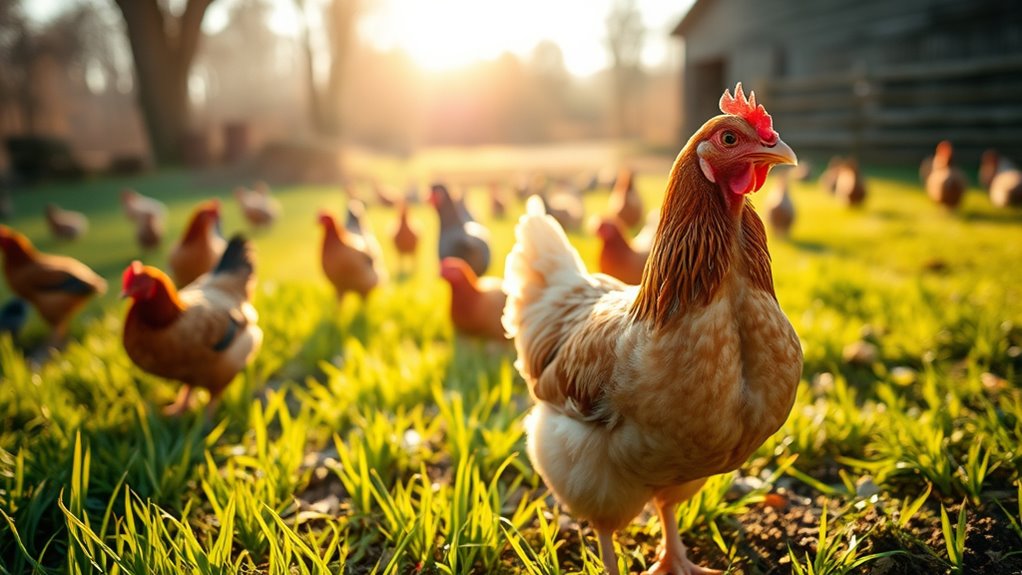
Since hens rely heavily on daylight to regulate their reproductive cycles, the length of the day plays an essential role in egg laying. Longer daylight hours of 14-16 hours boost egg production, while shorter days during seasonal changes reduce it.
Once hens reach the typical egg laying age of 18 to 22 weeks, daylight becomes necessary for consistent laying. You can use artificial lighting to extend daylight hours, encouraging hens to keep laying even in fall and winter.
| Season | Daylight Hours | Egg Production | Lighting Tip |
|---|---|---|---|
| Spring | 12-14 | Increasing | Natural light suffices |
| Summer | 14-16+ | Peak | No extra lighting |
| Fall | 10-12 | Decreasing | Add artificial light |
| Winter | 8-10 | Low/Pause | Use artificial light |
How to Tell When Your Hen Is Ready to Lay Eggs
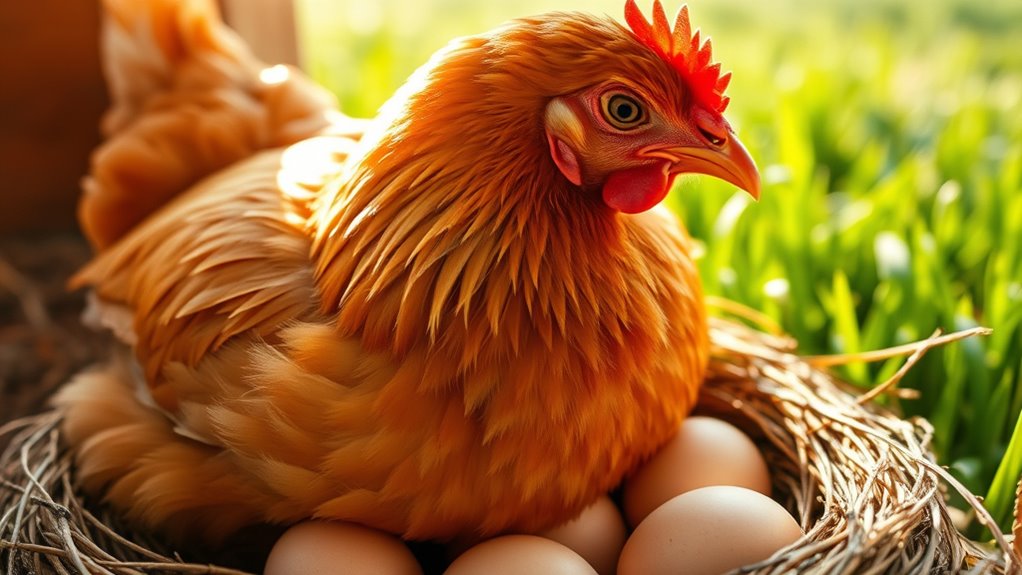
You’ll notice your hen’s comb and wattles turning bright red and swelling as she gets ready to lay eggs. Watch for changes in her behavior, like nesting or squatting when you approach.
You can also check if her pelvic bones have spread, which usually means she’s about to start laying.
Physical Laying Signs
When your hen’s comb and wattles grow bright red and swollen, it’s a clear physical sign she’s nearly ready to lay eggs. You’ll notice her comb and wattles becoming more vibrant due to hormonal changes. She may start showing interest in nesting, often testing or sitting in nest boxes.
Check her vent area for slight swelling and gently feel if her pelvic bones have separated, indicating physical development toward laying readiness.
| Sign | Description | What to Do |
|---|---|---|
| Comb & Wattles | Bright red, swollen, vibrant | Monitor color changes |
| Nesting Behavior | Increased interest in nest boxes | Provide clean nesting areas |
| Vent Area | Slightly swollen, pelvic bones separated | Gently check vent for development |
| Physical Development | Overall readiness signs | Prepare for egg collection |
Behavioral Changes Noted
Although physical changes provide clear clues, you’ll also notice distinct behavioral shifts that signal your hen is ready to lay eggs. One key behavioral change is increased nesting behavior—your hen will often sit in or test nest boxes, showing she’s preparing for egg-laying.
You might also observe changes in her comb and wattles; they grow larger and brighter due to hormonal shifts. Vocalizations become more frequent, including the characteristic “egg song” and clucking sounds that indicate she’s about to lay. Additionally, her curiosity spikes as she explores nesting areas more ardently.
Paying attention to these behavioral changes alongside physical signs helps you accurately tell when your hen is close to laying her first egg.
Pelvic Bone Assessment
Since a hen’s pelvic bones soften and become more flexible as she nears laying age, you can gently check their spacing to gauge her readiness. To assess egg readiness, carefully feel the pelvic bones just below the vent. If you notice the bones are spaced about 0.5 to 1 inch apart, it’s a strong sign your hen has reached the right stage of maturity and is ready to lay.
If the pelvic bones feel tightly closed, she likely needs a few more weeks to develop. Regularly checking bone separation helps you predict when your hen will begin laying eggs, usually between 16 and 24 weeks old. Monitoring pelvic bone flexibility offers a reliable, hands-on way to track hen maturity and egg readiness.
Why Layer Feed Matters Before Egg Laying
Because hens need specific nutrients to develop strong eggshells and maintain overall health, switching to layer feed around 16 weeks old is essential. This *changeover* supports hen development by providing balanced nutrition, including increased calcium intake, vitamin D3, and protein, all *crucial* for egg production.
Layer feed prepares the hen’s reproductive system for consistent, healthy laying by ensuring she gets what she needs before egg laying begins. Using a high-quality layer feed, like Nutrena NatureWise, can encourage *ideal* egg size and shell quality while promoting overall hen *vitality*.
Preparing Nesting Boxes for Egg Laying Hens
When your hens start laying eggs, setting up comfortable, accessible nesting boxes is essential to encourage consistent egg-laying behavior. Provide one nesting box for every four hens to reduce competition and promote early laying. Place boxes about 12 inches square, 18 inches off the ground, in a quiet, dark corner of your coop.
Line them with straw or shavings for comfort and cleanliness. Position nesting boxes in low-traffic, private areas to help hens lay eggs regularly. Don’t forget to clean and refresh bedding often to keep egg production steady.
| Aspect | Recommendation |
|---|---|
| Number of boxes | 1 per 4 hens |
| Size | 12 inches square |
| Height | 18 inches off ground |
| Location | Quiet, dark, low-traffic corner |
| Bedding | Straw, shavings, or shredded paper |
What to Expect During Your Hen’s First Weeks of Laying
What changes should you expect as your hens begin laying eggs? When your hens are around 18 to 22 weeks old, they’ll show increased nesting behavior, like sitting in boxes and exploring, signaling their first egg is near.
During the first weeks of laying, expect small, irregular eggs that may have soft shells or even double yolks. Their egg size and appearance will vary as their reproductive systems adjust.
The laying pattern can be inconsistent at first, with hens laying every other day or skipping days. It often takes 4 to 8 weeks before they settle into a steady routine, producing larger, more uniform eggs daily.
Understanding these changes will help you support your hens during this pivotal transition.
Frequently Asked Questions
How Do You Know When Your Chickens Are Ready to Lay Eggs?
You’ll know your chickens are ready to lay when their combs and wattles turn bright red, they explore nest boxes, their pelvic bones spread, they squat when you approach, and you start seeing small eggs appearing.
Can You Eat the First Egg Your Chicken Lays?
Think of that first egg as a young artist’s debut—imperfect but genuine. Yes, you can eat it, but expect quirks like softness or odd shapes.
Clean it well, and enjoy this humble beginning.
At What Age Does a Hen Start Mating?
You’ll see hens start mating around 16 to 24 weeks old, once they reach sexual maturity. They show interest in roosters, and mating usually happens when their reproductive organs are fully developed, typically by 18 to 20 weeks.
What Is the Earliest a Chicken Can Lay an Egg?
Did you know some chickens can lay eggs as early as 14 weeks? You might see yours start laying around 16 to 20 weeks, depending on breed and care.
But 14 weeks is the earliest recorded age.
Conclusion
By the time your hen starts laying eggs, usually around 18 to 24 weeks old, you’ll see her blossom like a flower in spring.
Remember, daylight, diet, and a cozy nesting box all play starring roles in this transformation. Keep an eye on her behavior and feed her right to encourage those first precious eggs.
With a little patience and care, you’ll soon enjoy the rewarding rhythm of fresh eggs right from your own backyard. Understanding how old hens are when they start to lay eggs helps you provide the best care for your flock and maximize egg production.